


Qiraat Africa
عربي  |  Fr
Advertisement
  • News
    • All
    • Climate Change
    • Economy
    • Education
    • Energy
    • Health
    • Migration
    • Mining
    • Politics
    • Security
    • Society
    • Sport
    Gabon opposition leader and former PM Alain-Claude Bilie-By-Nze arrested

    Gabon opposition leader and former PM Alain-Claude Bilie-By-Nze arrested

    Pope Leo, in Cameroon, decries ‘handful of tyrants’ ravaging the world

    Pope Leo, in Cameroon, decries ‘handful of tyrants’ ravaging the world

    Nigerian airlines threaten to halt flights over soaring jet fuel prices

    Nigerian airlines threaten to halt flights over soaring jet fuel prices

    South Africa’s Malema faces political crisis after jail sentence in firearm case

    South Africa’s Malema faces political crisis after jail sentence in firearm case

    South Africa arrests activist Kemi Seba, wanted by Benin for ‘inciting rebellion’

    South Africa arrests activist Kemi Seba, wanted by Benin for ‘inciting rebellion’

    Nigeria orders probe and defends deadly airstrike in insurgent-held Jilli

    Nigeria orders probe and defends deadly airstrike in insurgent-held Jilli

    Kenyan court fines and jails Chinese man in ant-smuggling case

    Kenyan court fines and jails Chinese man in ant-smuggling case

    Why Julius Malema from South Africa touched a nerve in Kenya

    South African politician Malema back in court as prosecutors seek 15-year prison sentence

    DR Congo says it will receive third-country deportees under new deal with US

    DR Congo to receive first group of deportees from US this week, sources say

  • Analysis
    • All
    • Climate Change
    • Digital & Tech
    • Economy
    • Energy & Power
    • Health
    • Politics
    • Security
    • Society
    Impact of Kenya’s long-overdue new infrastructure fund may be limited by design problems

    Impact of Kenya’s long-overdue new infrastructure fund may be limited by design problems

    Why Africans Are Targeted by Recruitment Networks in the Ukraine-Russia War?

    Why Africans Are Targeted by Recruitment Networks in the Ukraine-Russia War?

    From Water Security to Geopolitical Realignment: Key Takeaways and Outcomes of the 39th African Union Summit 2026

    From Water Security to Geopolitical Realignment: Key Takeaways and Outcomes of the 39th African Union Summit 2026

    Rohingya Genocide: Why The Gambia Demands Justice at the International Court

    Rohingya Genocide: Why The Gambia Demands Justice at the International Court

    Security expert explains why the US can destroy terrorist bases in Nigeria but not terrorism

    Security expert explains why the US can destroy terrorist bases in Nigeria but not terrorism

    Africa’s informal economy taxation: the potential and drawbacks of technology

    Africa’s informal economy taxation: the potential and drawbacks of technology

    Ethiopia expects preliminary deal on IMF review within days, finance minister says

    Key events in Ethiopia’s journey towards debt restructuring

    BRICS Plus and the Shifting Global Power Balance: Implications of South Africa’s Role

    BRICS Plus and the Shifting Global Power Balance: Implications of South Africa’s Role

    African Union suspends Niger over coup, prepares sanctions; France denies report it asked Algeria to use airspace for a Niger operation

    Leaders in Africa’s human rights institutions are being elected. Why it matters

  • Studies
    60 new cosmic structures have been discovered by South Africa’s MeerKAT telescope, which is mapping previously unseen gaps between galaxies

    60 new cosmic structures have been discovered by South Africa’s MeerKAT telescope, which is mapping previously unseen gaps between galaxies

    Benin government says armed forces foil coup attempt

    Coup contagion? A rash of African power grabs suggests copycats are taking note of others’ success

    One in three South Africans have never heard of AI: what this means for policy

    One in three South Africans have never heard of AI: what this means for policy

    Social Media as a Catalyst for the Spread of Dangerous Wealth Ritual Myths

    Social Media as a Catalyst for the Spread of Dangerous Wealth Ritual Myths

    Overcoming Education Barriers for Young Mothers in Sub-Saharan Africa

    Overcoming Education Barriers for Young Mothers in Sub-Saharan Africa

    Youth Empowerment Through Vocational Training in Rural Sub-Saharan Africa

    Youth Empowerment Through Vocational Training in Rural Sub-Saharan Africa

    Manufacturers in Ghana and Nigeria claim that although corruption damages businesses, digital technologies provide a chance to combat it

    Manufacturers in Ghana and Nigeria claim that although corruption damages businesses, digital technologies provide a chance to combat it

    Environmental Threats and Conservation Efforts in Namibia

    Environmental Threats and Conservation Efforts in Namibia

    Your teachers’ level of knowledge affects how well you perform in class: perspectives from 14 French-speaking African nations

    Your teachers’ level of knowledge affects how well you perform in class: perspectives from 14 French-speaking African nations

  • Infographics
  • Figures
    Samora Machel (1933–1986): Mozambican politician and revolutionary

    Samora Machel (1933–1986): Mozambican politician and revolutionary

    Murtala Ramat Mohammed (1938–1976): Military officer and former President of Nigeria

    Murtala Ramat Mohammed (1938–1976): Military officer and former President of Nigeria

    Miriam Makeba (1932-2008): South African civil rights activist, singer and actress

    Miriam Makeba (1932-2008): South African civil rights activist, singer and actress

    Ahmed Sékou Touré (1922–1984): Revolutionary and First President of Guinea

    Ahmed Sékou Touré (1922–1984): Revolutionary and First President of Guinea

    Changamire Dombo I (1684–1695): Leader who expelled Portuguese invaders

    Changamire Dombo I (1684–1695): Leader who expelled Portuguese invaders

    Sobhuza II (1899-1982): Former Ngwenyama of Eswatini who led independence transition

    Sobhuza II (1899-1982): Former Ngwenyama of Eswatini who led independence transition

    Alpha Oumar Konare: historian, archaeologist, and former President of Mali

    Alpha Oumar Konare: historian, archaeologist, and former President of Mali

    Felix Konotey-Ahulu (1930-2025): Ghanaian physician and scientist

    Felix Konotey-Ahulu (1930-2025): Ghanaian physician and scientist

    Joaquim Chissano, Former President of Mozambique

    Joaquim Chissano, Former President of Mozambique

  • History
    The Land of Punt (modern Somalia, Eritrea, Ethiopia, or eastern Sudan)

    The Land of Punt (modern Somalia, Eritrea, Ethiopia, or eastern Sudan)

    Avenue of the Baobabs, Madagascar

    Avenue of the Baobabs, Madagascar

    Lopé-Okanda (Gabon)

    Lopé-Okanda (Gabon)

    The Sudd wetland

    The Sudd wetland

    Khami Ruins (Zimbabwe), the capital of the Torwa state

    Khami Ruins (Zimbabwe), the capital of the Torwa state

    Royal Palace, Porto-Novo, Republic of Benin

    Royal Palace, Porto-Novo, Republic of Benin

    W-Arly-Pendjari Complex, the West African wildlife sanctuary

    W-Arly-Pendjari Complex, the West African wildlife sanctuary

    Royal Court of Tiébélé, Burkina Faso

    Royal Court of Tiébélé, Burkina Faso

    Lake Tanganyika, the world’s longest freshwater lake

    Lake Tanganyika, the world’s longest freshwater lake

  • Others
    • Culture / Literature
    • Interview
    • Opinion
  • Countries
    • Country profiles
    • Regions
      • Central Africa
      • East Africa
      • Southern Africa
      • West Africa
No Result
View All Result
  • News
    • All
    • Climate Change
    • Economy
    • Education
    • Energy
    • Health
    • Migration
    • Mining
    • Politics
    • Security
    • Society
    • Sport
    Gabon opposition leader and former PM Alain-Claude Bilie-By-Nze arrested

    Gabon opposition leader and former PM Alain-Claude Bilie-By-Nze arrested

    Pope Leo, in Cameroon, decries ‘handful of tyrants’ ravaging the world

    Pope Leo, in Cameroon, decries ‘handful of tyrants’ ravaging the world

    Nigerian airlines threaten to halt flights over soaring jet fuel prices

    Nigerian airlines threaten to halt flights over soaring jet fuel prices

    South Africa’s Malema faces political crisis after jail sentence in firearm case

    South Africa’s Malema faces political crisis after jail sentence in firearm case

    South Africa arrests activist Kemi Seba, wanted by Benin for ‘inciting rebellion’

    South Africa arrests activist Kemi Seba, wanted by Benin for ‘inciting rebellion’

    Nigeria orders probe and defends deadly airstrike in insurgent-held Jilli

    Nigeria orders probe and defends deadly airstrike in insurgent-held Jilli

    Kenyan court fines and jails Chinese man in ant-smuggling case

    Kenyan court fines and jails Chinese man in ant-smuggling case

    Why Julius Malema from South Africa touched a nerve in Kenya

    South African politician Malema back in court as prosecutors seek 15-year prison sentence

    DR Congo says it will receive third-country deportees under new deal with US

    DR Congo to receive first group of deportees from US this week, sources say

  • Analysis
    • All
    • Climate Change
    • Digital & Tech
    • Economy
    • Energy & Power
    • Health
    • Politics
    • Security
    • Society
    Impact of Kenya’s long-overdue new infrastructure fund may be limited by design problems

    Impact of Kenya’s long-overdue new infrastructure fund may be limited by design problems

    Why Africans Are Targeted by Recruitment Networks in the Ukraine-Russia War?

    Why Africans Are Targeted by Recruitment Networks in the Ukraine-Russia War?

    From Water Security to Geopolitical Realignment: Key Takeaways and Outcomes of the 39th African Union Summit 2026

    From Water Security to Geopolitical Realignment: Key Takeaways and Outcomes of the 39th African Union Summit 2026

    Rohingya Genocide: Why The Gambia Demands Justice at the International Court

    Rohingya Genocide: Why The Gambia Demands Justice at the International Court

    Security expert explains why the US can destroy terrorist bases in Nigeria but not terrorism

    Security expert explains why the US can destroy terrorist bases in Nigeria but not terrorism

    Africa’s informal economy taxation: the potential and drawbacks of technology

    Africa’s informal economy taxation: the potential and drawbacks of technology

    Ethiopia expects preliminary deal on IMF review within days, finance minister says

    Key events in Ethiopia’s journey towards debt restructuring

    BRICS Plus and the Shifting Global Power Balance: Implications of South Africa’s Role

    BRICS Plus and the Shifting Global Power Balance: Implications of South Africa’s Role

    African Union suspends Niger over coup, prepares sanctions; France denies report it asked Algeria to use airspace for a Niger operation

    Leaders in Africa’s human rights institutions are being elected. Why it matters

  • Studies
    60 new cosmic structures have been discovered by South Africa’s MeerKAT telescope, which is mapping previously unseen gaps between galaxies

    60 new cosmic structures have been discovered by South Africa’s MeerKAT telescope, which is mapping previously unseen gaps between galaxies

    Benin government says armed forces foil coup attempt

    Coup contagion? A rash of African power grabs suggests copycats are taking note of others’ success

    One in three South Africans have never heard of AI: what this means for policy

    One in three South Africans have never heard of AI: what this means for policy

    Social Media as a Catalyst for the Spread of Dangerous Wealth Ritual Myths

    Social Media as a Catalyst for the Spread of Dangerous Wealth Ritual Myths

    Overcoming Education Barriers for Young Mothers in Sub-Saharan Africa

    Overcoming Education Barriers for Young Mothers in Sub-Saharan Africa

    Youth Empowerment Through Vocational Training in Rural Sub-Saharan Africa

    Youth Empowerment Through Vocational Training in Rural Sub-Saharan Africa

    Manufacturers in Ghana and Nigeria claim that although corruption damages businesses, digital technologies provide a chance to combat it

    Manufacturers in Ghana and Nigeria claim that although corruption damages businesses, digital technologies provide a chance to combat it

    Environmental Threats and Conservation Efforts in Namibia

    Environmental Threats and Conservation Efforts in Namibia

    Your teachers’ level of knowledge affects how well you perform in class: perspectives from 14 French-speaking African nations

    Your teachers’ level of knowledge affects how well you perform in class: perspectives from 14 French-speaking African nations

  • Infographics
  • Figures
    Samora Machel (1933–1986): Mozambican politician and revolutionary

    Samora Machel (1933–1986): Mozambican politician and revolutionary

    Murtala Ramat Mohammed (1938–1976): Military officer and former President of Nigeria

    Murtala Ramat Mohammed (1938–1976): Military officer and former President of Nigeria

    Miriam Makeba (1932-2008): South African civil rights activist, singer and actress

    Miriam Makeba (1932-2008): South African civil rights activist, singer and actress

    Ahmed Sékou Touré (1922–1984): Revolutionary and First President of Guinea

    Ahmed Sékou Touré (1922–1984): Revolutionary and First President of Guinea

    Changamire Dombo I (1684–1695): Leader who expelled Portuguese invaders

    Changamire Dombo I (1684–1695): Leader who expelled Portuguese invaders

    Sobhuza II (1899-1982): Former Ngwenyama of Eswatini who led independence transition

    Sobhuza II (1899-1982): Former Ngwenyama of Eswatini who led independence transition

    Alpha Oumar Konare: historian, archaeologist, and former President of Mali

    Alpha Oumar Konare: historian, archaeologist, and former President of Mali

    Felix Konotey-Ahulu (1930-2025): Ghanaian physician and scientist

    Felix Konotey-Ahulu (1930-2025): Ghanaian physician and scientist

    Joaquim Chissano, Former President of Mozambique

    Joaquim Chissano, Former President of Mozambique

  • History
    The Land of Punt (modern Somalia, Eritrea, Ethiopia, or eastern Sudan)

    The Land of Punt (modern Somalia, Eritrea, Ethiopia, or eastern Sudan)

    Avenue of the Baobabs, Madagascar

    Avenue of the Baobabs, Madagascar

    Lopé-Okanda (Gabon)

    Lopé-Okanda (Gabon)

    The Sudd wetland

    The Sudd wetland

    Khami Ruins (Zimbabwe), the capital of the Torwa state

    Khami Ruins (Zimbabwe), the capital of the Torwa state

    Royal Palace, Porto-Novo, Republic of Benin

    Royal Palace, Porto-Novo, Republic of Benin

    W-Arly-Pendjari Complex, the West African wildlife sanctuary

    W-Arly-Pendjari Complex, the West African wildlife sanctuary

    Royal Court of Tiébélé, Burkina Faso

    Royal Court of Tiébélé, Burkina Faso

    Lake Tanganyika, the world’s longest freshwater lake

    Lake Tanganyika, the world’s longest freshwater lake

  • Others
    • Culture / Literature
    • Interview
    • Opinion
  • Countries
    • Country profiles
    • Regions
      • Central Africa
      • East Africa
      • Southern Africa
      • West Africa
No Result
View All Result
Qiraat Africa
عربي  |  Fr
No Result
View All Result
Home Studies

Guinea at a crossroads: revising the constitution to stay in power?

August 20, 2019
Guinea at a crossroads: revising the constitution to stay in power?
Share on FacebookShare on Twitter

By Alix Boucher

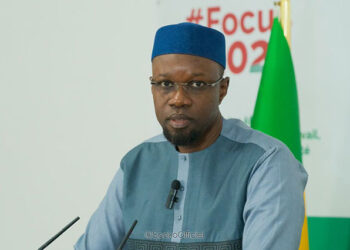
Guinea’s 81-year old president, Alpha Condé, who was elected in 2010 and re-elected in 2015, wishes to rewrite the country’s constitution so that he can run for a constitutionally prohibited third presidential term in October 2020. Condé’s government has a history of cracking down on the opposition, delaying local and parliamentary elections, and trying to limit press freedom. More recently, the president has endeavored to subvert institutional barriers to a third term by manipulating Guinea’s political institutions, particularly the constitutional court and the electoral commission.

Overriding these institutions, changing the constitution, and allowing Condé to stay in power for another term would be a deeply problematic development that risks triggering a constitutional crisis and political instability. The Guinean constitution clearly stipulates that presidents are limited to two terms in office, thus creating a peaceful mechanism for political transitions. Guinea’s political institutions support the organization of credible and fair elections where political differences are resolved through the ballot box rather than by decree, repeated constitutional changes, or violent coups and conflict. Abiding by these institutional processes would contribute to the consolidation of democratic norms and practices in the country.

Condé’s ongoing efforts to remain in office, however, risk derailing Guinea’s nascent democratic transition and sending the country on an unpredictable path of instability. Popular support for democratic institutions in Guinea remains high, and it is far from certain that a new constitution drafted by Condé would pass in a referendum. A 2018 Afrobarometer survey found that 82 percent of Guineans endorse the idea of a two-term limit. Moreover, more than 70 percent disapprove of single party rule, one-man rule, and military rule, calling democracy preferable. In March 2018, Guineans began protesting against the potential of a new constitution—protests that Condé has unsuccessfully tried to ban. Opposition leader Cellou Dalein Diallo, who ran against Condé in the last two presidential elections, was even prevented from attending one round of demonstrations on the dubious ground that police could not ensure his safety.

West Africa has a strong historical record of enforcing term limits and discouraging leaders from changing their country’s constitutions. This has had a positive impact on stability in the region. Of the 18 countries in Africa without term limits, a third suffer from armed conflict. In contrast, just 2 of the 21 countries with term limits are in conflict. Condé’s continued attempts to remain in power, thus, increase the prospects of conflict in Guinea. They also pose a challenge to region’s hard-earned norm of respecting term limits.

Guinea’s Shrinking Democratic Space

After 50 years of repressive authoritarian rule with strong communist influences, Guinea was impoverished and economically isolated when it began its democratic transition in 2010. Condé emerged as the leader of Guinea following a December 2008 military coup, the September 28, 2009, massacre of over 150 protesters and systematic rape of dozens of women by security forces, and the December 2009 assassination attempt of coup leader Moussa Dadis Camara. These events culminated in a political transition that organized the country’s first free and fair multiparty elections in late 2010. Condé won the vote in the second round and assumed office in December 2010. His election sparked hope that Guinea would adopt a path of democratic consolidation and end the repression of opposition figures.

Condé, however, has often ruled in an authoritarian style and systematically worked to weaken the opposition. He has continuously thwarted the opposition’s peaceful protests and failed to hold security forces accountable for the killing of protesters. Since Condé was re-elected in 2015 in a vote marred by irregularities, hopes have dimmed that he would bring about meaningful change. His administration has failed to make substantive progress in improving transparency and accountability and attacked the political institutions intended to provide checks and balances within Guinea’s political system.

Significantly, in March 2018, Condé began efforts to remove the head of the Constitutional Court, Kéléfa Sall, who had pointedly warned Condé during his 2015 inauguration to “not fall for the siren call of revisionism” and to abide by constitutional term limits. By October 2018, Sall had been removed by his pro-Condé colleagues. (Sall died in July 2019 after an illness.) This came just weeks after the Minister of Justice, Cheick Sako, resigned his position due to his opposition to constitutional changes, noting that he had not been involved in effort to draft the new constitution. He also condemned the government’s failure to provide his ministry with a budget to organize the trial of the suspected perpetrators of the 2009 massacre.

Read also

Nigerian airlines threaten to halt flights over soaring jet fuel prices

South Africa arrests activist Kemi Seba, wanted by Benin for ‘inciting rebellion’

Nigeria orders probe and defends deadly airstrike in insurgent-held Jilli

In September 2018, the Condé administration sought to silence opposition by banning protests until further notice, a move that the opposition called illegal and defied three times during the subsequent month. On June 14, 2019, security forces violently repressed additional protests against the proposed constitutional changes, wounding at least 28 people. In July 2019, the National Assembly passed a law that allows police to “fire on any obstacle or threat” and not be subject to judicial prosecution. Human rights groups immediately criticized the new law arguing that it opens the way for further repression of the opposition.

Additional examples of Condé’s growing authoritarian style include shutting down media outlets and arresting opposition politicians. On April 5, 2019, for instance, Faya Millimouno, a leader of the Bloc libéral opposition group was arrested for demanding a date be set for long-delayed parliamentary elections. They were supposed to have been held in February after being delayed from the legally mandated December 2018 date. The elections remain to be scheduled based on the rationale that they cannot be held until the recommendations from an audit of the electoral rolls have been implemented. Since Condé’s party, the Rassemblement du peuple de Guinée (RPG), holds only a slim majority in Parliament, these delays ensure him the votes needed to endorse the proposed constitution and call for a referendum.

Low Institutional Trust and a Lack of Checks and Balances

Given Guinea’s long and dark legacy of authoritarianism, the drafters of the current constitution took careful steps to avoid precisely this form of political maneuvering. The 2010 Constitution (Article 27) explicitly states that “the duration of the president’s term is five years, renewable once. In no circumstances can a person serve more than two terms, consecutive or not.” Moreover, Article 154, which details the modalities for changing the Constitution prohibits any modification to Article 27 by stating “the number and duration of presidential mandates cannot be subject to revision.” As such, the only option for Condé is to write a new constitution, obtain its approval through the Constitutional Court and the National Assembly, and finally pass the text by popular referendum.

Guineans oppose such a change and increasingly are losing trust in the institutions charged with ensuring democracy and stability, including the Commission électorale nationale indépendante (CENI), the courts, the Parliament, and the President himself. According to Afrobarometer, trust in the CENI dropped from 48 percent in 2015 to 36 percent in 2018. Similarly, trust in the President dropped from 59 percent in 2015 to 46 percent in 2018, trust in Parliament dropped from 53 percent to 38 percent, and trust in the judicial system dropped from 43 percent to 34 percent. This declining trust in Guinea’s institutions could also contribute to instability if a referendum is held and passed under dubious circumstances.

Despite the lack of popular support, the opposition is concerned that Condé could still be successful in getting a new constitution approved. They argue that widespread accusations of irregularities and fraud marred Condé’s 2015 re-election, as well as local and parliamentary elections. However, they were forced to accept the results to avoid further instability. Today, the opposition believes Condé would be able to fraudulently win a referendum thanks to his increased control over the CENI, which has been restructured under Condé, to further ensure the ruling party’s electoral dominance. The new CENI only admits parties as members if they participated in the two most recent presidential and legislative elections and if they have at least two seats in parliament. This means that most small parties are excluded and that Condé’s party and its allies effectively control any electoral process, including the potential referendum on constitutional reform.

Similarly, there is little trust in the Guinean security sector, which has long been perceived as bloated and prone to committing systematic human rights abuses. Condé began his first term with a strong commitment to reforming this sector. One of his first steps in office was to retire 4,000 troops from the security services. However, hopes that the security sector would be reformed to protect citizens and democracy rather than the regime appear to have been dashed. Despite an EU-funded security sector reform program aimed at rationalizing the size of the security forces and strengthening human rights standards, improving trust levels among the population has proved to be challenging. In 2018, only 42 percent of Guineans said they trusted the police, down from 47 percent in 2015. On the other hand, trust in the Army remained low, at just 51 percent.

This is especially problematic in the current context because the military has long intervened in Guinean politics. Previous president Lansana Conté took power in military coups, as did Moussa Dadis Camara, in 2008. Condé’s failure to hold the military accountable for the massacre of civilians in September 2009 is another reason popular trust in institutions has eroded. The fact that police have regularly used deadly force against protesters and have not been held accountable contributes to this perception of the security sector. These actions and the long history of military intervention in Guinea’s political arena suggest that opposition to a third term for Condé will continue to be violently repressed.

Priority Steps to Avoid Backsliding

If Condé succeeds with his plans to change presidential term limits and remain in power, he will join just two other countries in the Economic Community of West African States (ECOWAS) without constitutional term limits: Togo, where the Gnassinbé family has ruled for five decades, and Gambia, where President Adama Barrow says he supports the enactment of such limits after the abuses of the Yahya Jammeh era. Alternatively, opposition leader Cellou Dalein Diallo says Condé could emulate former Congolese president Joseph Kabila by simply delaying presidential elections to extend his term, as he has done for parliament.

ECOWAS has played an important role in removing member state leaders who refuse to step down after they have lost elections. As a result, West Africa has earned distinction on the continent for its upholding of term limit norms. In Côte d’Ivoire in 2010, it supported the removal of Laurent Gbagbo after he lost to opponent Alassane Ouattara. In Gambia in 2017, ECOWAS supported Senegal’s military intervention to remove longtime dictator Jammeh after he lost the presidential election to Barrow. Condé himself played a key part in obtaining Jammeh’s departure. Avoiding an institutional breakdown in Guinea will require ECOWAS leaders and other partners to reinforce the importance of term limits in ensuring stability in the country.

External partners who support stability in Guinea should emphasize this message and denounce statements of support, for instance from Russia, for changing the constitution. The EU has an especially pivotal role to play in this regard.

Guinean citizens, including the opposition, media, and civil society, will undoubtedly continue to use the available political space to have their voices heard and challenge Condé’s assertion that a constitutional change is necessary or even legitimate. In addition to the direct consequences for stability, how this challenge is navigated will have far-reaching implications for shaping Guinea’s governance trajectory—either reasserting the democratic transition or reverting to the lawlessness and inequities that typified the country’s long spell under authoritarianism.

Additional Resources

Joseph Siegle, “Democratization Trends in Africa: Protests, Crackdowns, and Breakthroughs,” video presentation, Africa Center for Strategic Studies, June 18, 2019.

Paul Nantulya, “Different Recipes, One Dish: Evading Term Limits in Africa,” Spotlight, Africa Center for Strategic Studies, July 28, 2018.

Africa Center for Strategic Studies, “Term Limits for African Leaders Linked to Stability,” Infographic, February 23, 2018.

Paul Nantulya, “Lessons from Gambia on Effective Regional Security Cooperation,” Spotlight, Africa Center for Strategic Studies, March 27, 2017.

Joseph Siegle, “Why Term Limits Matter for Africa,” CSS blog, Center for Security Studies, July 3, 2015.
Source: Qiraat Africa
Tags: Alpha CondéGuinea constitution

Related Posts

From Abuja to Dar es Salaam: Transportation and its Concerns in Sub-Saharan Africa
Economy

Nigeria to cut import duties on food, vehicles to curb inflation

April 14, 2026
Wadagni claims landslide victory in Benin presidential vote
Featured

Wadagni claims landslide victory in Benin presidential vote

April 14, 2026
Togo to ask UN member states to use map showing Africa’s true size
Featured

Togo to ask UN member states to use map showing Africa’s true size

April 14, 2026
Nigeria shuts some schools in Kwara state after church attack
Featured

Nigeria police arrest 33-member gang over Kwara church abductions

April 14, 2026
Nigeria’s economy growing but high food prices a burden, World Bank says
Economy

Nigeria seeks IMF, World Bank support as Iran shock hits reforms

April 13, 2026
France’s Macron swears in angry exchange with residents of cyclone-hit Mayotte
Featured

Ghana says France is open to engaging on slavery reparations

April 13, 2026

Search Qiraat Africa

No Result
View All Result

Follow on Twitter

Follow @africanqiraat

Trending

Burkina Faso junta dismisses army and intelligence chiefs

Togo expels ex-Burkina Faso leader after coup plot claim, sources say

January 21, 2026
The Great Mosque of Djenne, Mali

The Great Mosque of Djenne, Mali

March 25, 2025
Kumbi Saleh, the capital of the ancient Ghana Empire

Kumbi Saleh, the capital of the ancient Ghana Empire

October 13, 2025
Tunka Manin (c. 1010–1078), the last ruler of the Ghana Empire

Tunka Manin (c. 1010–1078), the last ruler of the Ghana Empire

December 12, 2025
Brief History and Culture of the City of Lagos, Nigeria

Brief History and Culture of the City of Lagos, Nigeria

July 24, 2024
Steve Biko (1946-1977): South Africa’s anti-apartheid activist and voice of Black liberation

Steve Biko (1946-1977): South Africa’s anti-apartheid activist and voice of Black liberation

August 15, 2025

Facebook

Sections

  • About Us
  • Privacy Policy
  • Opinion
  • Infographics
  • News
  • Analysis
  • Figures
  • Culture & Literature
  • Follow Ups
  • Historical Readings
  • Interview
  • Studies


© Copyright Qiraat Africa. Developed by Bunnaj Media .

No Result
View All Result
  • News
  • Analysis & Report
  • Studies
  • Opinion
  • Interview
  • Culture & Literature
  • Figures
  • Historical Readings
  • Regions

© 2021 Copyright Qiraat Africa.