





Qiraat Africa
عربي  |  Fr
Advertisement
  • News
    • All
    • Climate Change
    • Economy
    • Education
    • Energy
    • Health
    • Migration
    • Mining
    • Politics
    • Security
    • Society
    • Sport
    Tanzania’s president dismisses foreign, information ministers

    US to give Tanzania $1.3 billion under five-year health pact

    Kenyan activists launch new court case against luxury lodges in Maasai Mara reserve

    Kenyan activists launch new court case against luxury lodges in Maasai Mara reserve

    Ethiopia says Ghebreyesus, WHO chief has links to rebellious Tigrayan forces

    Trial for Bundibugyo Ebola treatment starts in DRC, WHO says

    Ukraine says Niger’s move to cut relations is ‘regrettable’

    Niger arrests at least 16 for same-sex sexual acts, judicial source says

    South African labour unions urge workers to shun anti-migrant protests

    Over 900 arrested during South African anti-migrant protests

    Burkina Faso assembly votes to send troops to Niger

    Burkina Faso: what will change after the diplomatic rupture with France?

    Zimbabwe: Mnangagwa faces internal revolt over his legitimacy

    Zimbabwean parliament approves extending presidential term by two years

    AU grants $10.4m for Mpox emergency response

    Africa CDC: Uganda health ministry confirms isolated Marburg case

    South Africa says over 900 arrested during nationwide anti-migrant protests

    South Africa says over 900 arrested during nationwide anti-migrant protests

  • Analysis
    • All
    • Climate Change
    • Digital & Tech
    • Economy
    • Energy & Power
    • Health
    • Politics
    • Security
    • Society
    Ulysses in isiZulu: Why an African translation of the classic Irish novel is important in today’s world

    Ulysses in isiZulu: Why an African translation of the classic Irish novel is important in today’s world

    The promise and risks of Kenya’s ambitious new strategy to close refugee camps

    The promise and risks of Kenya’s ambitious new strategy to close refugee camps

    Al Qaeda-linked militants curb their brutality in seized Malian territory

    Al Qaeda-linked militants curb their brutality in seized Malian territory

    Five Years After the Coup in Mali: Are Stability and Growth Within Reach?

    The Political Economy of Insecurity in Mali: Armed Groups, Resources, and State Fragility

    Ghana to evacuate 300 citizens from South Africa after xenophobic attacks

    Xenophobic Violence and Human Security in South Africa: Causes and Consequences

    Inside an African lab that helped crack the hantavirus outbreak

    Inside an African lab that helped crack the hantavirus outbreak

    Nigeria’s Agricultural sector: Problems and challenges

    Agriculture in Africa: science and research cannot have an impact without investments and good policies

    Mali’s junta creates a new ministerial-level post to oversee the mining sector

    African Mineral Resources: The Controversial Link to US Health Deals

    Ghana curbs offshore investments to protect cedi, boost stability

    Ghana’s mining law attempts to eradicate speculation, but leaves communities in limbo: insights from a lithium case study

  • Studies
    Angola’s lengthy war shaped the way farmers utilised fire—why it matters

    Angola’s lengthy war shaped the way farmers utilised fire—why it matters

    Schooling is the most severely affected by conflict when children are the target – Study

    Schooling is the most severely affected by conflict when children are the target – Study

    Pensions for Botswana’s elderly are expanding, but care services are lacking—study follows 20 years

    Pensions for Botswana’s elderly are expanding, but care services are lacking—study follows 20 years

    60 new cosmic structures have been discovered by South Africa’s MeerKAT telescope, which is mapping previously unseen gaps between galaxies

    60 new cosmic structures have been discovered by South Africa’s MeerKAT telescope, which is mapping previously unseen gaps between galaxies

    Benin government says armed forces foil coup attempt

    Coup contagion? A rash of African power grabs suggests copycats are taking note of others’ success

    One in three South Africans have never heard of AI: what this means for policy

    One in three South Africans have never heard of AI: what this means for policy

    Social Media as a Catalyst for the Spread of Dangerous Wealth Ritual Myths

    Social Media as a Catalyst for the Spread of Dangerous Wealth Ritual Myths

    Overcoming Education Barriers for Young Mothers in Sub-Saharan Africa

    Overcoming Education Barriers for Young Mothers in Sub-Saharan Africa

    Youth Empowerment Through Vocational Training in Rural Sub-Saharan Africa

    Youth Empowerment Through Vocational Training in Rural Sub-Saharan Africa

  • Infographics
  • Figures
    Eduardo Mondlane (1920-1969): Mozambican Revolutionary and Anthropologist

    Eduardo Mondlane (1920-1969): Mozambican Revolutionary and Anthropologist

    William Tubman (1895-1971): Liberian politician and longest-serving president in the country’s history

    William Tubman (1895-1971): Liberian politician and longest-serving president in the country’s history

    Abebe Bikila (1932-1973): Ethiopian marathoner and first black African to win an Olympic medal

    Abebe Bikila (1932-1973): Ethiopian marathoner and first black African to win an Olympic medal

    W. E. B. Du Bois (1868-1963): Sociologist, historian, and Pan-Africanist civil rights activist

    W. E. B. Du Bois (1868-1963): Sociologist, historian, and Pan-Africanist civil rights activist

    Frantz Fanon (1925-1961): Psychiatrist and political philosopher

    Frantz Fanon (1925-1961): Psychiatrist and political philosopher

    Percy Lavon Julian (1899-1975): African American researcher and chemist

    Percy Lavon Julian (1899-1975): African American researcher and chemist

    Harriet Tubman (Araminta Ross, 1822-1913): American abolitionist and social activist

    Harriet Tubman (Araminta Ross, 1822-1913): American abolitionist and social activist

    Dorothy Vaughan (1910-2008): African American mathematician and human computer

    Dorothy Vaughan (1910-2008): African American mathematician and human computer

    George Washington Carver (1864-1943): African American agricultural scientist and inventor

    George Washington Carver (1864-1943): African American agricultural scientist and inventor

  • History
    Laas Geel, Somalia

    Laas Geel, Somalia

    Lakes Of Ounianga, Chad

    Lakes Of Ounianga, Chad

    Nok Caves, Togo

    Nok Caves, Togo

    The Land of Punt (modern Somalia, Eritrea, Ethiopia, or eastern Sudan)

    The Land of Punt (modern Somalia, Eritrea, Ethiopia, or eastern Sudan)

    Avenue of the Baobabs, Madagascar

    Avenue of the Baobabs, Madagascar

    Lopé-Okanda (Gabon)

    Lopé-Okanda (Gabon)

    The Sudd wetland

    The Sudd wetland

    Khami Ruins (Zimbabwe), the capital of the Torwa state

    Khami Ruins (Zimbabwe), the capital of the Torwa state

    Royal Palace, Porto-Novo, Republic of Benin

    Royal Palace, Porto-Novo, Republic of Benin

  • Others
    • Culture / Literature
    • Interview
    • Opinion
  • Countries
    • Country profiles
    • Regions
      • Central Africa
      • East Africa
      • Southern Africa
      • West Africa
No Result
View All Result
  • News
    • All
    • Climate Change
    • Economy
    • Education
    • Energy
    • Health
    • Migration
    • Mining
    • Politics
    • Security
    • Society
    • Sport
    Tanzania’s president dismisses foreign, information ministers

    US to give Tanzania $1.3 billion under five-year health pact

    Kenyan activists launch new court case against luxury lodges in Maasai Mara reserve

    Kenyan activists launch new court case against luxury lodges in Maasai Mara reserve

    Ethiopia says Ghebreyesus, WHO chief has links to rebellious Tigrayan forces

    Trial for Bundibugyo Ebola treatment starts in DRC, WHO says

    Ukraine says Niger’s move to cut relations is ‘regrettable’

    Niger arrests at least 16 for same-sex sexual acts, judicial source says

    South African labour unions urge workers to shun anti-migrant protests

    Over 900 arrested during South African anti-migrant protests

    Burkina Faso assembly votes to send troops to Niger

    Burkina Faso: what will change after the diplomatic rupture with France?

    Zimbabwe: Mnangagwa faces internal revolt over his legitimacy

    Zimbabwean parliament approves extending presidential term by two years

    AU grants $10.4m for Mpox emergency response

    Africa CDC: Uganda health ministry confirms isolated Marburg case

    South Africa says over 900 arrested during nationwide anti-migrant protests

    South Africa says over 900 arrested during nationwide anti-migrant protests

  • Analysis
    • All
    • Climate Change
    • Digital & Tech
    • Economy
    • Energy & Power
    • Health
    • Politics
    • Security
    • Society
    Ulysses in isiZulu: Why an African translation of the classic Irish novel is important in today’s world

    Ulysses in isiZulu: Why an African translation of the classic Irish novel is important in today’s world

    The promise and risks of Kenya’s ambitious new strategy to close refugee camps

    The promise and risks of Kenya’s ambitious new strategy to close refugee camps

    Al Qaeda-linked militants curb their brutality in seized Malian territory

    Al Qaeda-linked militants curb their brutality in seized Malian territory

    Five Years After the Coup in Mali: Are Stability and Growth Within Reach?

    The Political Economy of Insecurity in Mali: Armed Groups, Resources, and State Fragility

    Ghana to evacuate 300 citizens from South Africa after xenophobic attacks

    Xenophobic Violence and Human Security in South Africa: Causes and Consequences

    Inside an African lab that helped crack the hantavirus outbreak

    Inside an African lab that helped crack the hantavirus outbreak

    Nigeria’s Agricultural sector: Problems and challenges

    Agriculture in Africa: science and research cannot have an impact without investments and good policies

    Mali’s junta creates a new ministerial-level post to oversee the mining sector

    African Mineral Resources: The Controversial Link to US Health Deals

    Ghana curbs offshore investments to protect cedi, boost stability

    Ghana’s mining law attempts to eradicate speculation, but leaves communities in limbo: insights from a lithium case study

  • Studies
    Angola’s lengthy war shaped the way farmers utilised fire—why it matters

    Angola’s lengthy war shaped the way farmers utilised fire—why it matters

    Schooling is the most severely affected by conflict when children are the target – Study

    Schooling is the most severely affected by conflict when children are the target – Study

    Pensions for Botswana’s elderly are expanding, but care services are lacking—study follows 20 years

    Pensions for Botswana’s elderly are expanding, but care services are lacking—study follows 20 years

    60 new cosmic structures have been discovered by South Africa’s MeerKAT telescope, which is mapping previously unseen gaps between galaxies

    60 new cosmic structures have been discovered by South Africa’s MeerKAT telescope, which is mapping previously unseen gaps between galaxies

    Benin government says armed forces foil coup attempt

    Coup contagion? A rash of African power grabs suggests copycats are taking note of others’ success

    One in three South Africans have never heard of AI: what this means for policy

    One in three South Africans have never heard of AI: what this means for policy

    Social Media as a Catalyst for the Spread of Dangerous Wealth Ritual Myths

    Social Media as a Catalyst for the Spread of Dangerous Wealth Ritual Myths

    Overcoming Education Barriers for Young Mothers in Sub-Saharan Africa

    Overcoming Education Barriers for Young Mothers in Sub-Saharan Africa

    Youth Empowerment Through Vocational Training in Rural Sub-Saharan Africa

    Youth Empowerment Through Vocational Training in Rural Sub-Saharan Africa

  • Infographics
  • Figures
    Eduardo Mondlane (1920-1969): Mozambican Revolutionary and Anthropologist

    Eduardo Mondlane (1920-1969): Mozambican Revolutionary and Anthropologist

    William Tubman (1895-1971): Liberian politician and longest-serving president in the country’s history

    William Tubman (1895-1971): Liberian politician and longest-serving president in the country’s history

    Abebe Bikila (1932-1973): Ethiopian marathoner and first black African to win an Olympic medal

    Abebe Bikila (1932-1973): Ethiopian marathoner and first black African to win an Olympic medal

    W. E. B. Du Bois (1868-1963): Sociologist, historian, and Pan-Africanist civil rights activist

    W. E. B. Du Bois (1868-1963): Sociologist, historian, and Pan-Africanist civil rights activist

    Frantz Fanon (1925-1961): Psychiatrist and political philosopher

    Frantz Fanon (1925-1961): Psychiatrist and political philosopher

    Percy Lavon Julian (1899-1975): African American researcher and chemist

    Percy Lavon Julian (1899-1975): African American researcher and chemist

    Harriet Tubman (Araminta Ross, 1822-1913): American abolitionist and social activist

    Harriet Tubman (Araminta Ross, 1822-1913): American abolitionist and social activist

    Dorothy Vaughan (1910-2008): African American mathematician and human computer

    Dorothy Vaughan (1910-2008): African American mathematician and human computer

    George Washington Carver (1864-1943): African American agricultural scientist and inventor

    George Washington Carver (1864-1943): African American agricultural scientist and inventor

  • History
    Laas Geel, Somalia

    Laas Geel, Somalia

    Lakes Of Ounianga, Chad

    Lakes Of Ounianga, Chad

    Nok Caves, Togo

    Nok Caves, Togo

    The Land of Punt (modern Somalia, Eritrea, Ethiopia, or eastern Sudan)

    The Land of Punt (modern Somalia, Eritrea, Ethiopia, or eastern Sudan)

    Avenue of the Baobabs, Madagascar

    Avenue of the Baobabs, Madagascar

    Lopé-Okanda (Gabon)

    Lopé-Okanda (Gabon)

    The Sudd wetland

    The Sudd wetland

    Khami Ruins (Zimbabwe), the capital of the Torwa state

    Khami Ruins (Zimbabwe), the capital of the Torwa state

    Royal Palace, Porto-Novo, Republic of Benin

    Royal Palace, Porto-Novo, Republic of Benin

  • Others
    • Culture / Literature
    • Interview
    • Opinion
  • Countries
    • Country profiles
    • Regions
      • Central Africa
      • East Africa
      • Southern Africa
      • West Africa
No Result
View All Result
Qiraat Africa
عربي  |  Fr
No Result
View All Result
Home Figures

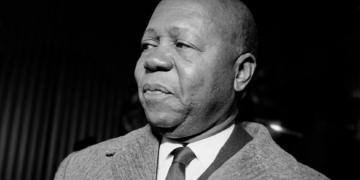
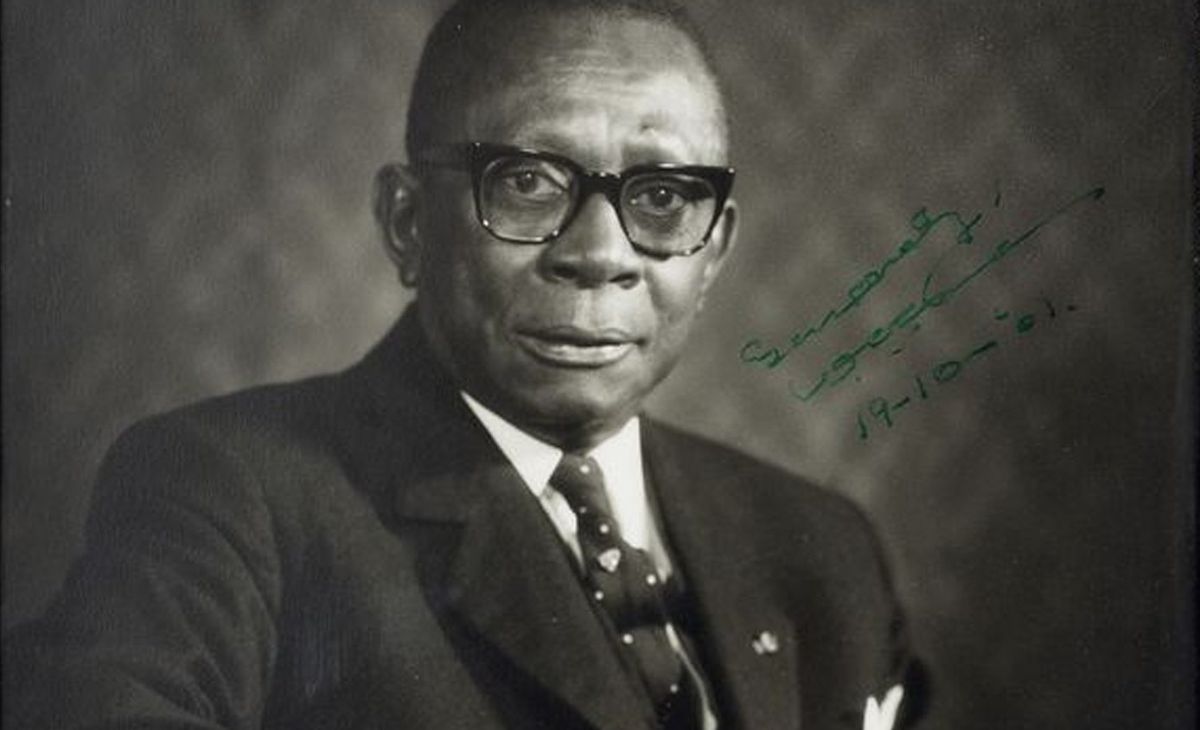
William Tubman (1895-1971): Liberian politician and longest-serving president in the country’s history

May 7, 2026
William Tubman (1895-1971): Liberian politician and longest-serving president in the country’s history

Photo of William Tubman by JFK Library.

Share on FacebookShare on Twitter

William Tubman served seven consecutive terms as president of Liberia, from 1944 until his death in 1971, making him the longest-serving president in the country’s history. This 27-year period was marked by radical transformations that moved Liberian society from isolation and economic stagnation to global cooperation and constitutional institutionalisation. However, it also coincided with the consolidation of one-man power and the deepening of political divisions between the ruling elite and the indigenous majority.

William Vacanarat Shadrach Tubman was born on November 29, 1895, in Harper, Liberia, to parents belonging to the Americo-Liberian class, descendants of freed enslaved Africans who emigrated from the United States in the 19th century to establish the nation. He received his early education in local schools, then studied law and passed the bar exam in 1917, allowing him to enter the judiciary and administration at an early age.

His formal political career began with his joining the True Whig Party (TWP), the political organisation that had held power in the country since 1878. Tubman was elected to the Senate in 1923, becoming its youngest member, and rose through the ranks of the constitutional system until he was appointed a Supreme Court Justice in 1937. This dual legal and political background gave him a deep understanding of the mechanisms of government and the clan and class balances within Liberian society, paving the way for his candidacy and victory in the 1943 presidential election. He officially assumed office in January 1944.

When Tubman took office, Liberia was suffering from severe financial hardship and stifling economic isolation, relying almost entirely on rubber production revenues through old agreements with the American company Firestone. To change this reality, Tubman introduced a development strategy known as the “Open Door Policy”.

This policy was based on two main principles: attracting foreign investment by offering significant tax incentives, guaranteeing investors the freedom to repatriate profits, and removing restrictions on foreign ownership of investment projects; and diversifying income sources, as the government focused on exploiting natural resources other than rubber, primarily iron ore in the Nimba Mountains, in addition to developing the maritime shipping sector through a “flag of convenience” system that allowed international ships to register under the Liberian flag for low fees.

This policy led to a significant economic boom; capital flowed in from the United States and Europe, and government revenues soared to unprecedented levels. These funds were used to build essential infrastructure, such as paving roads, expanding the Monrovia Free Port, constructing power plants, and establishing modern telecommunications networks and hospitals. Despite this quantitative growth, economic analysts argue that this boom was characterised by a phenomenon of “growth without development”. Wealth became concentrated in the hands of foreign companies and the ruling elite in the capital, without being reflected in a balanced increase in the productivity of the local population or the creation of a sustainable national economy.

Since its founding, Liberia has faced a sharp structural division. The minority of “Americo-Liberians” (comprising less than 5% of the population) controlled political and economic power, while the indigenous African tribes (who constitute the vast majority) were excluded from decision-making and subjected to legal and social marginalisation.

Recognising that the continuation of this division threatened the long-term stability of the state, Tubman launched the “National Unification Policy”. The most prominent measures of this policy included amending the constitution to grant indigenous people and women the right to vote in elections and stipulating tribal representation in parliament; and abolishing the dual administrative system that treated the interior as “colonies” subordinate to the coast while dividing the country into provinces with equal legal rights. The policy also expanded the construction of government schools in the interior and provided scholarships for tribal children to enable them to enter public service.

These steps helped to alleviate ethnic tensions and integrate large segments of the indigenous population into the political fabric of the state. However, historical studies confirm that this integration was conditional on “cultural assimilation”; that is, tribal members had to adopt a Western lifestyle, change their names, and join the Protestant Church and the “True Whig Party” (TWP) to ensure social advancement. This means that the system maintained the dominance of Americo-Liberian culture while only superficially changing the rules of the game.

Tubman successfully led Liberia to a prominent position on the international and regional stage during the era of decolonisation and the rise of the Cold War. His foreign policy was based on forging close ties with the West and the United States in particular, with Monrovia becoming a strategic ally of Washington in West Africa and a hub for important American monitoring and communications stations.

On the continental level, his positions were characterised by pragmatism and quiet diplomacy. He actively supported African independence movements with both financial and diplomatic aid, and Liberia was one of the founding members of the Organization of African Unity (now the African Union) in 1963. Amidst heated debates about the future of the continent, Tubman opposed the “radical” vision of Ghanaian President Kwame Nkrumah, which called for immediate unification and a single African government. Instead, he spearheaded the “Monrovia Group”, which advocated for gradual economic cooperation and political coordination while respecting the sovereignty and borders of each state—a vision that ultimately prevailed and formed the basis of the continental organisation’s charter.

Behind the democratic and institutional stance that Tubman carefully cultivated for the outside world, an internal governing mechanism operated, based on extreme centralisation and the personalisation of power. Throughout his rule, effective political opposition was suppressed, either through co-optation and appointment to government positions or through legal and security repression.

Read also

Niger arrests at least 16 for same-sex sexual acts, judicial source says

Burkina Faso: what will change after the diplomatic rupture with France?

Senegal to hold national referendum after controversial constitutional change

The regime developed a vast intelligence apparatus that infiltrated educational institutions, the civil service, and tribal structures to monitor any activities deemed hostile to the president. In 1955, following a failed assassination attempt against him, the authorities launched a widespread campaign of political purges, including the banning of opposition parties and the arrest of their leaders, effectively leaving the TWP as the only functioning political force.

The constitution was repeatedly amended to remove term limits, and this was accompanied by the growth of a “cult of personality”. Streets, buildings, and institutions were named after Tubman, and annual rallies were held to urge him to remain in power, effectively stripping the electoral process of any real competitiveness.

William Tubman died on July 23, 1971, in a London hospital from complications following prostate surgery. His body was transported to Monrovia, where he was given a state funeral. His deputy, William Tolbert, succeeded him, inheriting a seemingly stable nation burdened by internal contradictions.
Tags: LiberiaWilliam Tubman

Related Posts

Ghana agrees to accept West Africans deported from US, president says
Featured

Rights groups sue Ghana over US third-country deportations

June 30, 2026
Somalia launches Centennial Vision 2060 roadmap for ‘peace, prospertity and progress’
Featured

EU imposes visa restrictions on Somalis after readmission row with Mogadishu

June 29, 2026
Guinea plans regional gold refining hub as West African race intensifies
Featured

Guinea plans regional gold refining hub as West African race intensifies

June 29, 2026
International financial crime watchdog removes Senegal from ‘grey list,’ adds some others
Featured

Senegal police fire tear gas at constitutional reform protesters

June 29, 2026
Ghana president taps retired army officer as envoy to junta-led Sahel states
Energy

Ghana’s President Mahama announces $3.5bn investment to boost country’s oil production

June 28, 2026
Burkina Faso junta extends its transition term by 5 years
Economy

France considers measures after Burkina Faso breaks off relations

June 28, 2026

Search Qiraat Africa

No Result
View All Result

Follow on Twitter

Follow @africanqiraat

Trending

Kumbi Saleh, the capital of the ancient Ghana Empire

Kumbi Saleh, the capital of the ancient Ghana Empire

October 13, 2025
Abdon Atangana: Cameroonian scientist and professor of applied mathematics

Abdon Atangana: Cameroonian scientist and professor of applied mathematics

July 28, 2025
Tuareg: The Blue People of the Sahara

Tuareg: The Blue People of the Sahara

May 23, 2025
Ex-Credit Suisse chief executive Tidjane Thiam eyeing Ivory Coast 2025 presidential contest

Tidjane Thiam, Ivorian businessman and politician

October 10, 2025
New date set for return of Patrice Lumumba’s tooth

Patrice Lumumba (1925-1961), Congolese politician and independence leader

March 4, 2025
Côte d’Ivoire (Ivory Coast)

Côte d’Ivoire (Ivory Coast)

January 30, 2025

Facebook

Sections

  • About Us
  • Privacy Policy
  • Opinion
  • Infographics
  • News
  • Analysis
  • Figures
  • Culture & Literature
  • Follow Ups
  • Historical Readings
  • Interview
  • Studies


© Copyright Qiraat Africa. Developed by Bunnaj Media .

No Result
View All Result
  • News
  • Analysis & Report
  • Studies
  • Opinion
  • Interview
  • Culture & Literature
  • Figures
  • Historical Readings
  • Regions

© 2021 Copyright Qiraat Africa.