


Qiraat Africa
عربي  |  Fr
Advertisement
  • News
    • All
    • Climate Change
    • Economy
    • Education
    • Energy
    • Health
    • Migration
    • Mining
    • Politics
    • Security
    • Society
    • Sport
    Tanzanian opposition leader appears in court for treason trial

    Tanzania: Tundu Lissu denounces ‘political case’ as treason trial starts

    DR Congo ex-president Kabila lambasts justice system after vote to lift his immunity

    DRC: Ex-president Kabila challenges US sanctions in court

    Nigeria: Kano State records 5,000 Human Trafficking returnees in 3 years

    Nigeria: Kano State records 5,000 Human Trafficking returnees in 3 years

    Former Zambian minister killed in post-election security raid

    Former Zambian minister killed in post-election security raid

    Central African Republic artisanal gold mine collapses, killing more than 100

    Central African Republic artisanal gold mine collapses, killing more than 100

    Rebels in Congo see Ebola as chance to show governing credentials

    Congo’s M23 rebels introduce new movement restrictions over Ebola concerns

    Liberia agrees to accept up to 1,200 third-country deportees from US

    Liberia agrees to accept up to 1,200 third-country deportees from US

    Kenya Airways says its fuel cost up 72% due to Middle East conflict

    Kenya Airways says its fuel cost up 72% due to Middle East conflict

    Nigeria declares state of emergency in Rivers State over pipeline vandalism

    As campaigns begin in Nigeria, Tinubu’s re-election bid puts his party on trial

  • Analysis
    • All
    • Climate Change
    • Digital & Tech
    • Economy
    • Energy & Power
    • Health
    • Politics
    • Security
    • Society
    African Finance Corp says Gabon political situation a ‘good coup’

    Why African countries must rethink how they grow their economies

    DR Congo says it will receive third-country deportees under new deal with US

    Beyond the Outbreak: How Ebola Reshaped East & Central Africa’s Economies

    What Happens After Dandora? Kenya’s Green Transition Faces Its Hardest Test

    What Happens After Dandora? Kenya’s Green Transition Faces Its Hardest Test

    African entrepreneurs work in challenging environments, and others may benefit from the skills they have developed

    African entrepreneurs work in challenging environments, and others may benefit from the skills they have developed

    Ethiopia’s 2026 General Election: Progress, Challenges, and Implications

    Ethiopia’s 2026 General Election: Progress, Challenges, and Implications

    Israeli recognition of Somaliland is a ‘calculated distraction,’ Somali diplomat says

    Sixty-Six Years On, the Promise of Somali Independence Remains Unfulfilled.

    Senegal’s top opposition leader Sonko vows to help win March 24 election

    Senegal at a Political Crossroads: The Faye–Sonko Rivalry and the Future of Democratic Governance

    Ulysses in isiZulu: Why an African translation of the classic Irish novel is important in today’s world

    Ulysses in isiZulu: Why an African translation of the classic Irish novel is important in today’s world

    The promise and risks of Kenya’s ambitious new strategy to close refugee camps

    The promise and risks of Kenya’s ambitious new strategy to close refugee camps

  • Studies
    China could drive Africa’s renewable energy revolution, report says

    A study shows wind and solar projects in Kenya and South Africa don’t always benefit the communities that host them

    Angola’s lengthy war shaped the way farmers utilised fire—why it matters

    Angola’s lengthy war shaped the way farmers utilised fire—why it matters

    Schooling is the most severely affected by conflict when children are the target – Study

    Schooling is the most severely affected by conflict when children are the target – Study

    Pensions for Botswana’s elderly are expanding, but care services are lacking—study follows 20 years

    Pensions for Botswana’s elderly are expanding, but care services are lacking—study follows 20 years

    60 new cosmic structures have been discovered by South Africa’s MeerKAT telescope, which is mapping previously unseen gaps between galaxies

    60 new cosmic structures have been discovered by South Africa’s MeerKAT telescope, which is mapping previously unseen gaps between galaxies

    Benin government says armed forces foil coup attempt

    Coup contagion? A rash of African power grabs suggests copycats are taking note of others’ success

    One in three South Africans have never heard of AI: what this means for policy

    One in three South Africans have never heard of AI: what this means for policy

    Social Media as a Catalyst for the Spread of Dangerous Wealth Ritual Myths

    Social Media as a Catalyst for the Spread of Dangerous Wealth Ritual Myths

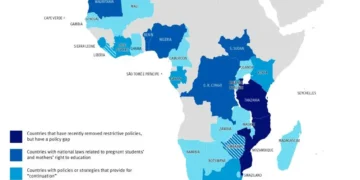
    Overcoming Education Barriers for Young Mothers in Sub-Saharan Africa

    Overcoming Education Barriers for Young Mothers in Sub-Saharan Africa

  • Infographics
  • Figures
    Zumbi dos Palmares (1655-1695): Afro-Brazilian leader of the great Palmares Quilombo

    Zumbi dos Palmares (1655-1695): Afro-Brazilian leader of the great Palmares Quilombo

    Léon M’ba (1902-1967): First president of independent Gabon

    Léon M’ba (1902-1967): First president of independent Gabon

    Namibia to vote in toughest election yet for ruling party

    Netumbo Nandi-Ndaitwah: President of Namibia

    Ahmadu Bello (1910-1966): Nigerian statesman

    Ahmadu Bello (1910-1966): Nigerian statesman

    Cameroon President Paul Biya marks 41 years in power

    Paul Biya: President of Cameroon

    Al-Hajj Salim Suwari (fl. c. 13th–15th century): West African Soninke Islamic scholar

    Al-Hajj Salim Suwari (fl. c. 13th–15th century): West African Soninke Islamic scholar

    Strive Masiyiwa: Zimbabwean businessman and philanthropist

    Strive Masiyiwa: Zimbabwean businessman and philanthropist

    Diébédo Francis Kéré: Burkinabé-German architect

    Diébédo Francis Kéré: Burkinabé-German architect

    Herbert Wigwe (1966-2024): Nigerian banker and businessman

    Herbert Wigwe (1966-2024): Nigerian banker and businessman

  • History
    Lower Valley of the Omo, Ethiopia

    Lower Valley of the Omo, Ethiopia

    Sudano-Sahelian style mosques, northern Côte d’Ivoire

    Taï National Park, Côte d’Ivoire

    Taï National Park, Côte d’Ivoire

    Medinas, the Historic Sultanates of the Comoros

    Medinas, the Historic Sultanates of the Comoros

    Aldabra Atoll, Seychelles

    Aldabra Atoll, Seychelles

    Le Morne Cultural Landscape, Mauritius

    Le Morne Cultural Landscape, Mauritius

    Mount Nimba Strict Nature Reserve, Guinea and Côte d’Ivoire

    Mount Nimba Strict Nature Reserve, Guinea and Côte d’Ivoire

    Sangha Trinational, north-western Congo Basin

    Sangha Trinational, north-western Congo Basin

    Kasubi Tombs, Kampala, Uganda

    Kasubi Tombs, Kampala, Uganda

  • Others
    • Culture / Literature
    • Interview
    • Opinion
  • Countries
    • Country profiles
    • Regions
      • Central Africa
      • East Africa
      • Southern Africa
      • West Africa
No Result
View All Result
  • News
    • All
    • Climate Change
    • Economy
    • Education
    • Energy
    • Health
    • Migration
    • Mining
    • Politics
    • Security
    • Society
    • Sport
    Tanzanian opposition leader appears in court for treason trial

    Tanzania: Tundu Lissu denounces ‘political case’ as treason trial starts

    DR Congo ex-president Kabila lambasts justice system after vote to lift his immunity

    DRC: Ex-president Kabila challenges US sanctions in court

    Nigeria: Kano State records 5,000 Human Trafficking returnees in 3 years

    Nigeria: Kano State records 5,000 Human Trafficking returnees in 3 years

    Former Zambian minister killed in post-election security raid

    Former Zambian minister killed in post-election security raid

    Central African Republic artisanal gold mine collapses, killing more than 100

    Central African Republic artisanal gold mine collapses, killing more than 100

    Rebels in Congo see Ebola as chance to show governing credentials

    Congo’s M23 rebels introduce new movement restrictions over Ebola concerns

    Liberia agrees to accept up to 1,200 third-country deportees from US

    Liberia agrees to accept up to 1,200 third-country deportees from US

    Kenya Airways says its fuel cost up 72% due to Middle East conflict

    Kenya Airways says its fuel cost up 72% due to Middle East conflict

    Nigeria declares state of emergency in Rivers State over pipeline vandalism

    As campaigns begin in Nigeria, Tinubu’s re-election bid puts his party on trial

  • Analysis
    • All
    • Climate Change
    • Digital & Tech
    • Economy
    • Energy & Power
    • Health
    • Politics
    • Security
    • Society
    African Finance Corp says Gabon political situation a ‘good coup’

    Why African countries must rethink how they grow their economies

    DR Congo says it will receive third-country deportees under new deal with US

    Beyond the Outbreak: How Ebola Reshaped East & Central Africa’s Economies

    What Happens After Dandora? Kenya’s Green Transition Faces Its Hardest Test

    What Happens After Dandora? Kenya’s Green Transition Faces Its Hardest Test

    African entrepreneurs work in challenging environments, and others may benefit from the skills they have developed

    African entrepreneurs work in challenging environments, and others may benefit from the skills they have developed

    Ethiopia’s 2026 General Election: Progress, Challenges, and Implications

    Ethiopia’s 2026 General Election: Progress, Challenges, and Implications

    Israeli recognition of Somaliland is a ‘calculated distraction,’ Somali diplomat says

    Sixty-Six Years On, the Promise of Somali Independence Remains Unfulfilled.

    Senegal’s top opposition leader Sonko vows to help win March 24 election

    Senegal at a Political Crossroads: The Faye–Sonko Rivalry and the Future of Democratic Governance

    Ulysses in isiZulu: Why an African translation of the classic Irish novel is important in today’s world

    Ulysses in isiZulu: Why an African translation of the classic Irish novel is important in today’s world

    The promise and risks of Kenya’s ambitious new strategy to close refugee camps

    The promise and risks of Kenya’s ambitious new strategy to close refugee camps

  • Studies
    China could drive Africa’s renewable energy revolution, report says

    A study shows wind and solar projects in Kenya and South Africa don’t always benefit the communities that host them

    Angola’s lengthy war shaped the way farmers utilised fire—why it matters

    Angola’s lengthy war shaped the way farmers utilised fire—why it matters

    Schooling is the most severely affected by conflict when children are the target – Study

    Schooling is the most severely affected by conflict when children are the target – Study

    Pensions for Botswana’s elderly are expanding, but care services are lacking—study follows 20 years

    Pensions for Botswana’s elderly are expanding, but care services are lacking—study follows 20 years

    60 new cosmic structures have been discovered by South Africa’s MeerKAT telescope, which is mapping previously unseen gaps between galaxies

    60 new cosmic structures have been discovered by South Africa’s MeerKAT telescope, which is mapping previously unseen gaps between galaxies

    Benin government says armed forces foil coup attempt

    Coup contagion? A rash of African power grabs suggests copycats are taking note of others’ success

    One in three South Africans have never heard of AI: what this means for policy

    One in three South Africans have never heard of AI: what this means for policy

    Social Media as a Catalyst for the Spread of Dangerous Wealth Ritual Myths

    Social Media as a Catalyst for the Spread of Dangerous Wealth Ritual Myths

    Overcoming Education Barriers for Young Mothers in Sub-Saharan Africa

    Overcoming Education Barriers for Young Mothers in Sub-Saharan Africa

  • Infographics
  • Figures
    Zumbi dos Palmares (1655-1695): Afro-Brazilian leader of the great Palmares Quilombo

    Zumbi dos Palmares (1655-1695): Afro-Brazilian leader of the great Palmares Quilombo

    Léon M’ba (1902-1967): First president of independent Gabon

    Léon M’ba (1902-1967): First president of independent Gabon

    Namibia to vote in toughest election yet for ruling party

    Netumbo Nandi-Ndaitwah: President of Namibia

    Ahmadu Bello (1910-1966): Nigerian statesman

    Ahmadu Bello (1910-1966): Nigerian statesman

    Cameroon President Paul Biya marks 41 years in power

    Paul Biya: President of Cameroon

    Al-Hajj Salim Suwari (fl. c. 13th–15th century): West African Soninke Islamic scholar

    Al-Hajj Salim Suwari (fl. c. 13th–15th century): West African Soninke Islamic scholar

    Strive Masiyiwa: Zimbabwean businessman and philanthropist

    Strive Masiyiwa: Zimbabwean businessman and philanthropist

    Diébédo Francis Kéré: Burkinabé-German architect

    Diébédo Francis Kéré: Burkinabé-German architect

    Herbert Wigwe (1966-2024): Nigerian banker and businessman

    Herbert Wigwe (1966-2024): Nigerian banker and businessman

  • History
    Lower Valley of the Omo, Ethiopia

    Lower Valley of the Omo, Ethiopia

    Sudano-Sahelian style mosques, northern Côte d’Ivoire

    Taï National Park, Côte d’Ivoire

    Taï National Park, Côte d’Ivoire

    Medinas, the Historic Sultanates of the Comoros

    Medinas, the Historic Sultanates of the Comoros

    Aldabra Atoll, Seychelles

    Aldabra Atoll, Seychelles

    Le Morne Cultural Landscape, Mauritius

    Le Morne Cultural Landscape, Mauritius

    Mount Nimba Strict Nature Reserve, Guinea and Côte d’Ivoire

    Mount Nimba Strict Nature Reserve, Guinea and Côte d’Ivoire

    Sangha Trinational, north-western Congo Basin

    Sangha Trinational, north-western Congo Basin

    Kasubi Tombs, Kampala, Uganda

    Kasubi Tombs, Kampala, Uganda

  • Others
    • Culture / Literature
    • Interview
    • Opinion
  • Countries
    • Country profiles
    • Regions
      • Central Africa
      • East Africa
      • Southern Africa
      • West Africa
No Result
View All Result
Qiraat Africa
عربي  |  Fr
No Result
View All Result
Home Featured

One in three South Africans have never heard of AI: what this means for policy

September 17, 2025
One in three South Africans have never heard of AI: what this means for policy

3rdtimeluckystudio/Shutterstock

Share on FacebookShare on Twitter

By Leah Davina Junck*, & Rachel Adams*


Artificial intelligence or AI uses computers to perform tasks that would normally have needed human intelligence. Today AI is being put to use in many aspects of everyday life, like virtual banking assistants, health chatbots, self-driving cars, even the recommendations you see on social media.

Read also

Tanzania: Tundu Lissu denounces ‘political case’ as treason trial starts

DRC: Ex-president Kabila challenges US sanctions in court

Former Zambian minister killed in post-election security raid

A new survey of over 3,000 South Africans from all walks of life asked how people feel about AI. It reveals that most South Africans can’t relate to AI in meaningful ways – despite the global hype about its pros and cons. We asked two of its authors to tell us more.

What did you find?

The research set out to capture how South Africans understand, experience and imagine AI. It aimed to provide representative insights into levels of awareness, perceptions of impact, and degrees of trust in the institutions developing and deploying AI. The aim is to help create an empirical basis for more responsive and inclusive AI governance in the country.

We found that for most South Africans (73%) the term “AI” barely registers. AI increasingly plays a role in public life – often behind the scenes in areas like healthcare, credit scoring and social media moderation. But 37% of the survey respondents had never heard of AI, while 36% indicated they’d heard of it but knew very little about it and the role it might already be playing in their lives.

The survey also gives us a sense of why awareness remains so low. Most information comes through social media. Only 4% learn about AI through formal education, and a meagre 2% through their workplaces or professional training.

What also stands out is uncertainty. While nearly 47% of people felt AI’s social impact was largely positive, 40% had no clear leaning either way. So while AI is becoming more influential, it does not seem to be visible or real enough in everyday life for many to form solid opinions.

Economic threat is a central concern: people have worries about being replaced or devalued by machines, or targeted by scams.

But trust in both government and big tech is measured and pragmatic. It’s hoped that big tech will help provide connectivity and jobs. The government is seen as most trustworthy when it comes to using AI in areas like health and education.

Yet, these are the very areas where unease surfaced. Respondents called for lines to be drawn with unsupervised, AI-driven care tasks. They felt that learning based on human experience should be preserved. Social media, while a key source of AI-related information, is also a site of worry, especially around data privacy and children’s exposure to harmful content. People felt there should be guardrails and human oversight.

Looking ahead at the next 10 years, respondents said they hoped AI would help create a better future, especially in health and job creation.

How was the survey conducted?

Since 2003 the Human Sciences Research Council has been capturing how South Africans experience social change through the annual National Social Attitudes Survey. This time, the think tank Global Center on AI Governance contributed an AI-specific component to the survey through its project The African Observatory on Responsible AI, funded by the AI4D programme of the International Development Research Centre of Canada and the Foreign and Commonwealth Development Office, UK.

Trained fieldworkers surveyed a diverse cross-section of South Africans, covering all nine provinces, both rural and urban areas. They interviewed people over the age of 16 across a range of socio-economic backgrounds and in their preferred official language. Over 3,000 people were interviewed.


The survey included both structured and open-ended questions, asking how people learnt about these technologies, how they felt about their impact, and the degree of trust they placed in different institutions using them.

The findings offer rare evidence into the social views shaping the ways AI may be taken up or contested, and how public opinion might start to inform decisions about how technology is shaped and used.

What can we learn from these findings?

The survey shows how difficult it is to get to grips with a technology like AI in a country where there is a stark digital divide. Access to information is uneven, trust in institutions is limited, and there isn’t a shared language to understand or question AI use. For many, AI remains largely opaque and abstract.

This matters because a lack of basic knowledge prevents meaningful public debate about AI.

Uncertainty and lack of information open the door for hype, misinformation, even exploitation. There’s a danger that fears about AI replacing human skills and jobs will overshadow more optimistic views of its possible benefits.


Still, there’s a cautious hope that AI can improve livelihoods and access to information. Concerns about technology are less about it taking over and more about how to use it or even just access it.

This is a crucial moment because public opinion about AI is still developing. Policy-makers and tech leaders across sectors have an opportunity to define AI’s use and value from a people-centred perspective.

What needs to be done about this?

To bridge the knowledge gaps and address uneven access to information, AI literacy needs to be established on a common understanding. For example in India, the Indian Institute of Technology has launched a free online training course on all aspects of AI for teachers, so that they can pass knowledge on to their students.

AI literacy efforts should be built on shared language and rooted in daily concerns and aspirations, allowing people to relate AI to their personal experiences.

Companies must invest and build AI in collaboration with local communities. Civil society organisations and researchers have a vital role to play in raising awareness, tracking harms and ringing alarm bells when accountability in AI use is sidestepped.


Public projects can help educate and inform South Africans about AI. For example, the University of the Western Cape partnered with a theatre company and a high school to create The Final Spring, a play about a robot. Storytelling can help translate complex ideas about technology into accessible, culturally resonant forms of AI literacy.

As South Africa moves towards a national AI strategy following the publication of a National AI Policy Framework, the focus must be on broadening access to reliable information on AI, not just through schools, but also for older generations and others who feel left out of the discourse.

ـــــــــــــــــــــ

* Honorary Research Fellow of The Ethics Lab, University of Cape Town
Source: The Conversation Africa
Tags: Artificial Intelligence (AI)South Africa

Related Posts

Central African Republic artisanal gold mine collapses, killing more than 100
Central Africa

Central African Republic artisanal gold mine collapses, killing more than 100

August 20, 2026
Liberia agrees to accept up to 1,200 third-country deportees from US
Featured

Liberia agrees to accept up to 1,200 third-country deportees from US

August 19, 2026
Kenya Airways says its fuel cost up 72% due to Middle East conflict
East Africa

Kenya Airways says its fuel cost up 72% due to Middle East conflict

August 19, 2026
Nigeria declares state of emergency in Rivers State over pipeline vandalism
Featured

As campaigns begin in Nigeria, Tinubu’s re-election bid puts his party on trial

August 19, 2026
Senegal’s legislative elections: Prime minister calls for retaliation against “attacks” on supporter
Featured

Senegal tightens asset disclosure rules amid Faye-Sonko rift

August 18, 2026
Is Ethiopia’s Tigray barreling towards another war?
East Africa

Ethiopia: Authorities in Tigray accuse Addis Ababa of drone strike near Mekelle

August 18, 2026

Search Qiraat Africa

No Result
View All Result

Follow on Twitter

Follow @africanqiraat

Trending

South Sudan steps up Ebola preparedness along porous DRC border

South Sudan steps up Ebola preparedness along porous DRC border

August 18, 2026
Africa’s 10 Strongest Currencies in June 2026

Africa’s 10 Strongest Currencies in June 2026

July 8, 2026
Walter Sisulu (1912 – 2003): South African activist

Walter Sisulu (1912 – 2003): South African activist

December 5, 2025
Kumbi Saleh, the capital of the ancient Ghana Empire

Kumbi Saleh, the capital of the ancient Ghana Empire

October 13, 2025
Equatorial Guinea

Equatorial Guinea orders crackdown on sex in government offices after videos leaked

November 6, 2024
The Zande in Central Africa

The Zande in Central Africa

August 19, 2024

Facebook

Sections

  • About Us
  • Privacy Policy
  • Opinion
  • Infographics
  • News
  • Analysis
  • Figures
  • Culture & Literature
  • Follow Ups
  • Historical Readings
  • Interview
  • Studies


© Copyright Qiraat Africa. Developed by Bunnaj Media .

No Result
View All Result
  • News
  • Analysis & Report
  • Studies
  • Opinion
  • Interview
  • Culture & Literature
  • Figures
  • Historical Readings
  • Regions

© 2021 Copyright Qiraat Africa.