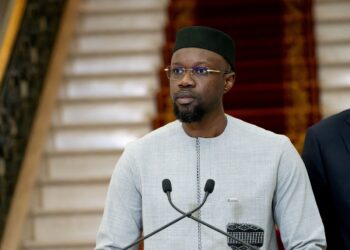

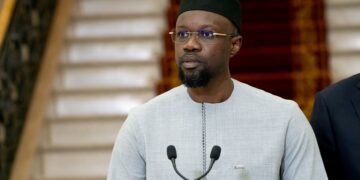







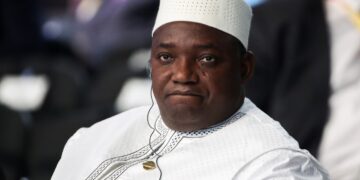









Senegal’s ousted prime minister, Ousmane Sonko, softened his tone on debt restructuring in an interview broadcast on Monday, saying he does not hold “rigid positions” on the issue, a departure from his previous staunch opposition to such a move.
While he was dismissed by President Bassirou Diomaye Faye, who dissolved the government last month, lawmakers then voted to make Sonko speaker of the National Assembly, giving him a powerful position to influence government policy.
In his new role, Sonko could have considerable ability to obstruct Faye’s agenda, including potentially resisting reforms required for a new IMF programme. An IMF team is expected to resume talks this week over a new lending programme.
In the interview with French outlets RFI and France 24, Sonko said policymakers must respond pragmatically to the country’s mounting debt crisis, the result of misreported debt under former President Macky Sall’s government.
“We don’t hold rigid positions in the absolute sense. We are examining the situation with clarity,” Sonko said, adding that any solution should “meet the requirements of the moment”.
The comments mark a shift from his stance last November, when he said at a rally that the IMF was pushing for debt restructuring and that it would be a “disgrace”.
The IMF suspended Senegal’s previous $1.8 billion lending programme after the misreported debt came to light.
‘WE ARE NOT HERE TO OBSTRUCT’, SONKO SAYS
In the interview published on Monday, Sonko said he had opposed “reckless restructuring”, arguing that it was not necessary because Senegal was meeting its debt repayment obligations and had good growth prospects. However, he acknowledged that conditions have since worsened in part because of the U.S.-Israeli war with Iran.
“Today, I believe we can assess developments step by step,” he said. “We are not here to obstruct.”
Still, Sonko warned he would resist any approach that undermines Senegal’s long-term economic goals, saying measures focused solely on short-term metrics would not be acceptable.
The West African country is grappling with debts that reached 132% of gross domestic product at the end of 2024, according to the IMF.