




Qiraat Africa
عربي  |  Fr
Advertisement
  • News
    • All
    • Climate Change
    • Economy
    • Education
    • Energy
    • Health
    • Migration
    • Mining
    • Politics
    • Security
    • Society
    • Sport
    South Africa arrests over 200 in illegal mining crackdown

    South Africa arrests over 200 in illegal mining crackdown

    Nigeria’s Dangote refinery starts production after years of delays

    Dangote to fund proposed Kenya refinery with cash, bonds and an IPO

    Zimbabwe: Mnangagwa faces internal revolt over his legitimacy

    Zimbabwe’s Mnangagwa signs law extending his presidency to 2030

    Ghana president taps retired army officer as envoy to junta-led Sahel states

    Ghana delays South Africa meetings over anti-migrant violence

    Johannesburg, other municipalities face funding freeze over high spending

    Johannesburg, other municipalities face funding freeze over high spending

    Guinea-Bissau to hold referendum on expanding presidential power

    Guinea-Bissau to hold referendum on expanding presidential power

    Nigerian First Lady tells critics her husband is not a magician

    Nigeria to investigate tech firms over news content use

    Senegal’s President Faye says ruling party, led by PM Sonko, risks ‘collapse’

    Senegal’s Faye plans to form his own political party

    In Democratic Republic of Congo, Ebola At Its Brim

    Second Ebola treatment centre opens in North Kivu

  • Analysis
    • All
    • Climate Change
    • Digital & Tech
    • Economy
    • Energy & Power
    • Health
    • Politics
    • Security
    • Society
    Senegal’s top opposition leader Sonko vows to help win March 24 election

    Senegal at a Political Crossroads: The Faye–Sonko Rivalry and the Future of Democratic Governance

    Ulysses in isiZulu: Why an African translation of the classic Irish novel is important in today’s world

    Ulysses in isiZulu: Why an African translation of the classic Irish novel is important in today’s world

    The promise and risks of Kenya’s ambitious new strategy to close refugee camps

    The promise and risks of Kenya’s ambitious new strategy to close refugee camps

    Al Qaeda-linked militants curb their brutality in seized Malian territory

    Al Qaeda-linked militants curb their brutality in seized Malian territory

    Five Years After the Coup in Mali: Are Stability and Growth Within Reach?

    The Political Economy of Insecurity in Mali: Armed Groups, Resources, and State Fragility

    Ghana to evacuate 300 citizens from South Africa after xenophobic attacks

    Xenophobic Violence and Human Security in South Africa: Causes and Consequences

    Inside an African lab that helped crack the hantavirus outbreak

    Inside an African lab that helped crack the hantavirus outbreak

    Nigeria’s Agricultural sector: Problems and challenges

    Agriculture in Africa: science and research cannot have an impact without investments and good policies

    Mali’s junta creates a new ministerial-level post to oversee the mining sector

    African Mineral Resources: The Controversial Link to US Health Deals

  • Studies
    Angola’s lengthy war shaped the way farmers utilised fire—why it matters

    Angola’s lengthy war shaped the way farmers utilised fire—why it matters

    Schooling is the most severely affected by conflict when children are the target – Study

    Schooling is the most severely affected by conflict when children are the target – Study

    Pensions for Botswana’s elderly are expanding, but care services are lacking—study follows 20 years

    Pensions for Botswana’s elderly are expanding, but care services are lacking—study follows 20 years

    60 new cosmic structures have been discovered by South Africa’s MeerKAT telescope, which is mapping previously unseen gaps between galaxies

    60 new cosmic structures have been discovered by South Africa’s MeerKAT telescope, which is mapping previously unseen gaps between galaxies

    Benin government says armed forces foil coup attempt

    Coup contagion? A rash of African power grabs suggests copycats are taking note of others’ success

    One in three South Africans have never heard of AI: what this means for policy

    One in three South Africans have never heard of AI: what this means for policy

    Social Media as a Catalyst for the Spread of Dangerous Wealth Ritual Myths

    Social Media as a Catalyst for the Spread of Dangerous Wealth Ritual Myths

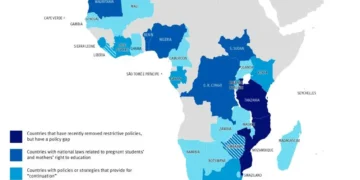
    Overcoming Education Barriers for Young Mothers in Sub-Saharan Africa

    Overcoming Education Barriers for Young Mothers in Sub-Saharan Africa

    Youth Empowerment Through Vocational Training in Rural Sub-Saharan Africa

    Youth Empowerment Through Vocational Training in Rural Sub-Saharan Africa

  • Infographics
  • Figures
    Marcus Garvey (1887-1940): Activist, Black nationalist, and Pan-Africanist

    Marcus Garvey (1887-1940): Activist, Black nationalist, and Pan-Africanist

    John B. Russwurm (1799–1851): Jamaican-born American abolitionist, publisher, and colonial governor

    John B. Russwurm (1799–1851): Jamaican-born American abolitionist, publisher, and colonial governor

    Winnie Mandela (1936-2018): South African politician and anti-apartheid activist

    Winnie Mandela (1936-2018): South African politician and anti-apartheid activist

    Abdias do Nascimento (1914-2011): Prominent African Brazilian scholar, artist, and politician

    Abdias do Nascimento (1914-2011): Prominent African Brazilian scholar, artist, and politician

    Edward Wilmot Blyden (1832-1912): Educator and former Secretary of State of Liberia

    Edward Wilmot Blyden (1832-1912): Educator and former Secretary of State of Liberia

    Eduardo Mondlane (1920-1969): Mozambican Revolutionary and Anthropologist

    Eduardo Mondlane (1920-1969): Mozambican Revolutionary and Anthropologist

    William Tubman (1895-1971): Liberian politician and longest-serving president in the country’s history

    William Tubman (1895-1971): Liberian politician and longest-serving president in the country’s history

    Abebe Bikila (1932-1973): Ethiopian marathoner and first black African to win an Olympic medal

    Abebe Bikila (1932-1973): Ethiopian marathoner and first black African to win an Olympic medal

    W. E. B. Du Bois (1868-1963): Sociologist, historian, and Pan-Africanist civil rights activist

    W. E. B. Du Bois (1868-1963): Sociologist, historian, and Pan-Africanist civil rights activist

  • History
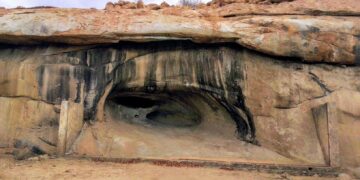
    Laas Geel, Somalia

    Laas Geel, Somalia

    Lakes Of Ounianga, Chad

    Lakes Of Ounianga, Chad

    Nok Caves, Togo

    Nok Caves, Togo

    The Land of Punt (modern Somalia, Eritrea, Ethiopia, or eastern Sudan)

    The Land of Punt (modern Somalia, Eritrea, Ethiopia, or eastern Sudan)

    Avenue of the Baobabs, Madagascar

    Avenue of the Baobabs, Madagascar

    Lopé-Okanda (Gabon)

    Lopé-Okanda (Gabon)

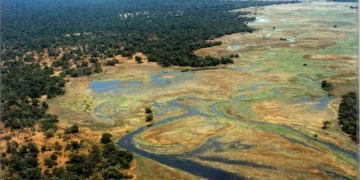
    The Sudd wetland

    The Sudd wetland

    Khami Ruins (Zimbabwe), the capital of the Torwa state

    Khami Ruins (Zimbabwe), the capital of the Torwa state

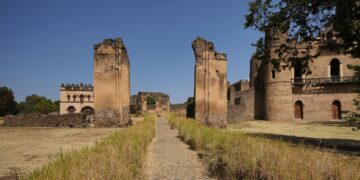
    Royal Palace, Porto-Novo, Republic of Benin

    Royal Palace, Porto-Novo, Republic of Benin

  • Others
    • Culture / Literature
    • Interview
    • Opinion
  • Countries
    • Country profiles
    • Regions
      • Central Africa
      • East Africa
      • Southern Africa
      • West Africa
No Result
View All Result
  • News
    • All
    • Climate Change
    • Economy
    • Education
    • Energy
    • Health
    • Migration
    • Mining
    • Politics
    • Security
    • Society
    • Sport
    South Africa arrests over 200 in illegal mining crackdown

    South Africa arrests over 200 in illegal mining crackdown

    Nigeria’s Dangote refinery starts production after years of delays

    Dangote to fund proposed Kenya refinery with cash, bonds and an IPO

    Zimbabwe: Mnangagwa faces internal revolt over his legitimacy

    Zimbabwe’s Mnangagwa signs law extending his presidency to 2030

    Ghana president taps retired army officer as envoy to junta-led Sahel states

    Ghana delays South Africa meetings over anti-migrant violence

    Johannesburg, other municipalities face funding freeze over high spending

    Johannesburg, other municipalities face funding freeze over high spending

    Guinea-Bissau to hold referendum on expanding presidential power

    Guinea-Bissau to hold referendum on expanding presidential power

    Nigerian First Lady tells critics her husband is not a magician

    Nigeria to investigate tech firms over news content use

    Senegal’s President Faye says ruling party, led by PM Sonko, risks ‘collapse’

    Senegal’s Faye plans to form his own political party

    In Democratic Republic of Congo, Ebola At Its Brim

    Second Ebola treatment centre opens in North Kivu

  • Analysis
    • All
    • Climate Change
    • Digital & Tech
    • Economy
    • Energy & Power
    • Health
    • Politics
    • Security
    • Society
    Senegal’s top opposition leader Sonko vows to help win March 24 election

    Senegal at a Political Crossroads: The Faye–Sonko Rivalry and the Future of Democratic Governance

    Ulysses in isiZulu: Why an African translation of the classic Irish novel is important in today’s world

    Ulysses in isiZulu: Why an African translation of the classic Irish novel is important in today’s world

    The promise and risks of Kenya’s ambitious new strategy to close refugee camps

    The promise and risks of Kenya’s ambitious new strategy to close refugee camps

    Al Qaeda-linked militants curb their brutality in seized Malian territory

    Al Qaeda-linked militants curb their brutality in seized Malian territory

    Five Years After the Coup in Mali: Are Stability and Growth Within Reach?

    The Political Economy of Insecurity in Mali: Armed Groups, Resources, and State Fragility

    Ghana to evacuate 300 citizens from South Africa after xenophobic attacks

    Xenophobic Violence and Human Security in South Africa: Causes and Consequences

    Inside an African lab that helped crack the hantavirus outbreak

    Inside an African lab that helped crack the hantavirus outbreak

    Nigeria’s Agricultural sector: Problems and challenges

    Agriculture in Africa: science and research cannot have an impact without investments and good policies

    Mali’s junta creates a new ministerial-level post to oversee the mining sector

    African Mineral Resources: The Controversial Link to US Health Deals

  • Studies
    Angola’s lengthy war shaped the way farmers utilised fire—why it matters

    Angola’s lengthy war shaped the way farmers utilised fire—why it matters

    Schooling is the most severely affected by conflict when children are the target – Study

    Schooling is the most severely affected by conflict when children are the target – Study

    Pensions for Botswana’s elderly are expanding, but care services are lacking—study follows 20 years

    Pensions for Botswana’s elderly are expanding, but care services are lacking—study follows 20 years

    60 new cosmic structures have been discovered by South Africa’s MeerKAT telescope, which is mapping previously unseen gaps between galaxies

    60 new cosmic structures have been discovered by South Africa’s MeerKAT telescope, which is mapping previously unseen gaps between galaxies

    Benin government says armed forces foil coup attempt

    Coup contagion? A rash of African power grabs suggests copycats are taking note of others’ success

    One in three South Africans have never heard of AI: what this means for policy

    One in three South Africans have never heard of AI: what this means for policy

    Social Media as a Catalyst for the Spread of Dangerous Wealth Ritual Myths

    Social Media as a Catalyst for the Spread of Dangerous Wealth Ritual Myths

    Overcoming Education Barriers for Young Mothers in Sub-Saharan Africa

    Overcoming Education Barriers for Young Mothers in Sub-Saharan Africa

    Youth Empowerment Through Vocational Training in Rural Sub-Saharan Africa

    Youth Empowerment Through Vocational Training in Rural Sub-Saharan Africa

  • Infographics
  • Figures
    Marcus Garvey (1887-1940): Activist, Black nationalist, and Pan-Africanist

    Marcus Garvey (1887-1940): Activist, Black nationalist, and Pan-Africanist

    John B. Russwurm (1799–1851): Jamaican-born American abolitionist, publisher, and colonial governor

    John B. Russwurm (1799–1851): Jamaican-born American abolitionist, publisher, and colonial governor

    Winnie Mandela (1936-2018): South African politician and anti-apartheid activist

    Winnie Mandela (1936-2018): South African politician and anti-apartheid activist

    Abdias do Nascimento (1914-2011): Prominent African Brazilian scholar, artist, and politician

    Abdias do Nascimento (1914-2011): Prominent African Brazilian scholar, artist, and politician

    Edward Wilmot Blyden (1832-1912): Educator and former Secretary of State of Liberia

    Edward Wilmot Blyden (1832-1912): Educator and former Secretary of State of Liberia

    Eduardo Mondlane (1920-1969): Mozambican Revolutionary and Anthropologist

    Eduardo Mondlane (1920-1969): Mozambican Revolutionary and Anthropologist

    William Tubman (1895-1971): Liberian politician and longest-serving president in the country’s history

    William Tubman (1895-1971): Liberian politician and longest-serving president in the country’s history

    Abebe Bikila (1932-1973): Ethiopian marathoner and first black African to win an Olympic medal

    Abebe Bikila (1932-1973): Ethiopian marathoner and first black African to win an Olympic medal

    W. E. B. Du Bois (1868-1963): Sociologist, historian, and Pan-Africanist civil rights activist

    W. E. B. Du Bois (1868-1963): Sociologist, historian, and Pan-Africanist civil rights activist

  • History
    Laas Geel, Somalia

    Laas Geel, Somalia

    Lakes Of Ounianga, Chad

    Lakes Of Ounianga, Chad

    Nok Caves, Togo

    Nok Caves, Togo

    The Land of Punt (modern Somalia, Eritrea, Ethiopia, or eastern Sudan)

    The Land of Punt (modern Somalia, Eritrea, Ethiopia, or eastern Sudan)

    Avenue of the Baobabs, Madagascar

    Avenue of the Baobabs, Madagascar

    Lopé-Okanda (Gabon)

    Lopé-Okanda (Gabon)

    The Sudd wetland

    The Sudd wetland

    Khami Ruins (Zimbabwe), the capital of the Torwa state

    Khami Ruins (Zimbabwe), the capital of the Torwa state

    Royal Palace, Porto-Novo, Republic of Benin

    Royal Palace, Porto-Novo, Republic of Benin

  • Others
    • Culture / Literature
    • Interview
    • Opinion
  • Countries
    • Country profiles
    • Regions
      • Central Africa
      • East Africa
      • Southern Africa
      • West Africa
No Result
View All Result
Qiraat Africa
عربي  |  Fr
No Result
View All Result
Home Figures

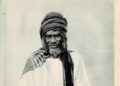
Samori Touré (1830-1900): Military leader and founder of Wassoulou Empire

January 11, 2026
Samori Touré (1830-1900): Military leader and founder of Wassoulou Empire

François-Edmond Fortier — Ouvrage : Général Gouraud, Au Soudan"", Éditions Pierre Tisné, 1939

Share on FacebookShare on Twitter

Samori Touré, who lived from 1830 to 1900, is considered one of the greatest military and political leaders in 19th-century West African history. He was the architect of the Wassoulou Empire and a brilliant administrator who unified vast territories under a single banner. He is renowned for his long and fierce resistance against French colonial expansion, a struggle that lasted nearly two decades, earning him the nickname “Black Napoleon” ​​for his tactical genius and ability to challenge a superpower with relatively limited local resources.

Samori Touré was born in the village of Manyambaladugu (in what is now southeastern Guinea) to a Malinke family. His family was involved in trade, a vital sector in West Africa that connected the tropical forests with the savannah regions. Samori grew up as a roving trader (“dula”), which gave him a deep understanding of geography, supply routes, and the ability to negotiate with various ethnic groups.

In 1853, his mother, Masara Touré, was kidnapped during a raid by the Cissé clan. To save her, Samori offered himself to serve in the Cissé army in exchange for her release. During this time, he demonstrated exceptional military skills, learning martial arts, military organization, and horsemanship. After fulfilling his promise and freeing his mother, Samori decided to break away and form his own armed group, taking advantage of the political fragmentation in the region.

By 1878, Samori Touré had declared himself a “fama” (sword bearer or military leader) and began uniting the scattered tribal chiefs of the Milo River Valley. Samori also relied on the use of trade ties and Islam as tools for unification. In 1884, he adopted the title “Almamy” (meaning imam or religious and political leader), lending his state legitimacy and uniting his followers under a shared religious and political identity.

The Wassoulou Empire reached its zenith in the 1880s, encompassing parts of present-day Guinea, Mali, Sierra Leone, and Ivory Coast. Administratively, the empire was divided into provinces governed by military and civilian officials, with a legal system based on Islamic law and a sophisticated tax system that supported the army and administration.

Samori Touré realized early on that courage alone was insufficient to counter modern European weaponry, so he implemented a series of reforms. He established a standing army known as the Sofa, divided into infantry and cavalry. These warriors were professional soldiers who received continuous training and were subject to a merit-based promotion system.

Samori was one of the few during his time who possessed sophisticated workshops for manufacturing and repairing weapons. He employed hundreds of skilled blacksmiths who could replicate and manufacture spare parts for French Chassepot rifles and British rifles. He also established a trading network with the British colonies in Sierra Leone to acquire the latest rifles and ammunition in exchange for gold and cattle.

When the conflict with the French began, Samori employed the scorched earth tactic with remarkable skill. He would evacuate villages of their inhabitants and burn crops and wells in front of advancing French forces, depriving them of local supplies and forcing them to lengthen their supply lines, which made French operations costly and slow.

Direct clashes between Samori Touré and the French began in 1882. France sought to link its colonies in Senegal with French Sudan (present-day Mali), and Samori represented the greatest obstacle to this goal.

The relationship fluctuated between war and diplomacy. In 1886 and 1887, he signed treaties with the French (such as the Treaty of Bissandougou) to demarcate the border, buying time to reorganize his forces and acquire more weapons. However, both sides understood that a final confrontation was inevitable.

In 1891, France launched a full-scale offensive aimed at the heart of the empire. Despite the French superiority in artillery, Samori fought remarkable defensive battles. Realizing that the capital, Bissandougou, was about to fall, he relocated his entire empire (army, administration, and population) hundreds of kilometers eastward toward northern Ivory Coast and western Ghana, where he established his “Second Empire.”

Read also

Ghana delays South Africa meetings over anti-migrant violence

Guinea-Bissau to hold referendum on expanding presidential power

Nigeria to investigate tech firms over news content use

Samori Touré’s empire was not without internal challenges, as his imposition of Islam and use of force to unify the tribes sometimes provoked internal rebellions. However, he is credited with successfully eliminating the slave trade within his borders in favor of promoting agriculture and legitimate trade. He also focused on developing roads and infrastructure to facilitate the movement of caravans.

Samori used religion as a tool for social and political integration, encouraging the construction of Quranic schools and mosques, which helped create a class of educated people and administrative officials.

Despite his legendary resilience, Samori Touré’s power began to wane in the late 1890s. His scorched-earth policy caused famines that affected his soldiers and the inhabitants of the regions he traversed, and ammunition began to run out as French and British blockades of trade routes intensified.

On September 29, 1898, a French force led by Captain Henri Gouraud surprised Samori Touré’s camp at Guélémou (in present-day Ivory Coast) and captured him. He was exiled to Ndjole Island in Gabon, where he died on June 2, 1900, from pneumonia.

Samori Touré remains a pivotal figure in the collective memory of West Africa. He is considered the great-grandfather of Ahmed Sékou Touré (the first president of independent Guinea), and he is regarded as a symbol of national resistance against colonialism. He demonstrated that the African continent possessed centralized states with sophisticated administrative and military organizations prior to full-scale colonial intervention. Similarly, his tactics of strategic movement and withdrawal are studied as a model for organized guerrilla warfare.
Tags: Samori TouréWassoulou Empire

Related Posts

Senegal’s President Faye says ruling party, led by PM Sonko, risks ‘collapse’
Featured

Senegal’s Faye plans to form his own political party

July 7, 2026
Cape Verde’s World Cup team returns home to a hero’s welcome
Sport

Cape Verde’s World Cup team returns home to a hero’s welcome

July 6, 2026
Production starts at Senegal’s first offshore oil project
Energy

Senegal’s Sangomar oil project has produced about 18 million barrels so far this year, document says

July 6, 2026
Nigeria says two nationals killed in anti-migrant violence in South Africa
Migration

Nigeria says two nationals killed in anti-migrant violence in South Africa

July 5, 2026
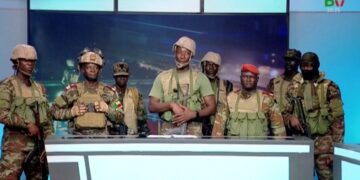
Insurgents stage coordinated attacks on army positions across Mali
Featured

Insurgents stage coordinated attacks on army positions across Mali

July 5, 2026
Senegal’s top opposition leader Sonko vows to help win March 24 election
Featured

Senegal at a Political Crossroads: The Faye–Sonko Rivalry and the Future of Democratic Governance

July 3, 2026

Search Qiraat Africa

No Result
View All Result

Follow on Twitter

Follow @africanqiraat

Trending

Kumbi Saleh, the capital of the ancient Ghana Empire

Kumbi Saleh, the capital of the ancient Ghana Empire

October 13, 2025
Meja Mwangi: The Literary Genius with a Mighty pen

Meja Mwangi: The Literary Genius with a Mighty pen

May 24, 2025
Mbunda people of Angola and Zambia

Mbunda people of Angola and Zambia

January 18, 2026
Tuareg: The Blue People of the Sahara

Tuareg: The Blue People of the Sahara

May 23, 2025
Zaghawa people of northeastern Chad and western Sudan

Zaghawa people of northeastern Chad and western Sudan

March 3, 2026
New date set for return of Patrice Lumumba’s tooth

Patrice Lumumba (1925-1961), Congolese politician and independence leader

March 4, 2025

Facebook

Sections

  • About Us
  • Privacy Policy
  • Opinion
  • Infographics
  • News
  • Analysis
  • Figures
  • Culture & Literature
  • Follow Ups
  • Historical Readings
  • Interview
  • Studies


© Copyright Qiraat Africa. Developed by Bunnaj Media .

No Result
View All Result
  • News
  • Analysis & Report
  • Studies
  • Opinion
  • Interview
  • Culture & Literature
  • Figures
  • Historical Readings
  • Regions

© 2021 Copyright Qiraat Africa.