





Qiraat Africa
عربي  |  Fr
Advertisement
  • News
    • All
    • Climate Change
    • Economy
    • Education
    • Energy
    • Health
    • Migration
    • Mining
    • Politics
    • Security
    • Society
    • Sport
    Gabon opposition leader jailed for political reasons, his lawyers say

    Gabon opposition leader jailed for political reasons, his lawyers say

    Senegalese leader Bassirou Diomaye Faye denies rift with PM Ousmane Sonko

    Senegal’s President Faye launches new party, cementing ruling camp split

    Africa facing $10-$20 billion economic hit from ‘super’ El Niño, AfDB climate chief warns

    Africa facing $10-$20 billion economic hit from ‘super’ El Niño, AfDB climate chief warns

    Germany vows support for Nigeria on security, seeks expanded economic ties

    Germany vows support for Nigeria on security, seeks expanded economic ties

    Understanding Trump’s Christian Genocide Claim and Military Threat: What It Means for Nigeria-U.S. Relations

    Trump praises Nigeria’s efforts against violence towards Christians

    Mali, Burkina Faso and Niger announce exit from International Criminal Court

    Ghanaian nationals ask ICC to probe xenophobic violence in South Africa

    Africa’s Venture Capital Landscape confronts challenges

    African banks bet on debt guarantees to lure private capital to infrastructure projects

    Is Ethiopia’s Tigray barreling towards another war?

    Ethiopia opposition accuses government of pushing Tigray towards new war

    Nigerian President says ECOWAS Standby Force should be operationalise now

    ECOWAS reaffirms plans to launch single currency in 2027

  • Analysis
    • All
    • Climate Change
    • Digital & Tech
    • Economy
    • Energy & Power
    • Health
    • Politics
    • Security
    • Society
    What Happens After Dandora? Kenya’s Green Transition Faces Its Hardest Test

    What Happens After Dandora? Kenya’s Green Transition Faces Its Hardest Test

    African entrepreneurs work in challenging environments, and others may benefit from the skills they have developed

    African entrepreneurs work in challenging environments, and others may benefit from the skills they have developed

    Ethiopia’s 2026 General Election: Progress, Challenges, and Implications

    Ethiopia’s 2026 General Election: Progress, Challenges, and Implications

    Israeli recognition of Somaliland is a ‘calculated distraction,’ Somali diplomat says

    Sixty-Six Years On, the Promise of Somali Independence Remains Unfulfilled.

    Senegal’s top opposition leader Sonko vows to help win March 24 election

    Senegal at a Political Crossroads: The Faye–Sonko Rivalry and the Future of Democratic Governance

    Ulysses in isiZulu: Why an African translation of the classic Irish novel is important in today’s world

    Ulysses in isiZulu: Why an African translation of the classic Irish novel is important in today’s world

    The promise and risks of Kenya’s ambitious new strategy to close refugee camps

    The promise and risks of Kenya’s ambitious new strategy to close refugee camps

    Al Qaeda-linked militants curb their brutality in seized Malian territory

    Al Qaeda-linked militants curb their brutality in seized Malian territory

    Five Years After the Coup in Mali: Are Stability and Growth Within Reach?

    The Political Economy of Insecurity in Mali: Armed Groups, Resources, and State Fragility

  • Studies
    Angola’s lengthy war shaped the way farmers utilised fire—why it matters

    Angola’s lengthy war shaped the way farmers utilised fire—why it matters

    Schooling is the most severely affected by conflict when children are the target – Study

    Schooling is the most severely affected by conflict when children are the target – Study

    Pensions for Botswana’s elderly are expanding, but care services are lacking—study follows 20 years

    Pensions for Botswana’s elderly are expanding, but care services are lacking—study follows 20 years

    60 new cosmic structures have been discovered by South Africa’s MeerKAT telescope, which is mapping previously unseen gaps between galaxies

    60 new cosmic structures have been discovered by South Africa’s MeerKAT telescope, which is mapping previously unseen gaps between galaxies

    Benin government says armed forces foil coup attempt

    Coup contagion? A rash of African power grabs suggests copycats are taking note of others’ success

    One in three South Africans have never heard of AI: what this means for policy

    One in three South Africans have never heard of AI: what this means for policy

    Social Media as a Catalyst for the Spread of Dangerous Wealth Ritual Myths

    Social Media as a Catalyst for the Spread of Dangerous Wealth Ritual Myths

    Overcoming Education Barriers for Young Mothers in Sub-Saharan Africa

    Overcoming Education Barriers for Young Mothers in Sub-Saharan Africa

    Youth Empowerment Through Vocational Training in Rural Sub-Saharan Africa

    Youth Empowerment Through Vocational Training in Rural Sub-Saharan Africa

  • Infographics
  • Figures
    Al-Hajj Salim Suwari (fl. c. 13th–15th century): West African Soninke Islamic scholar

    Al-Hajj Salim Suwari (fl. c. 13th–15th century): West African Soninke Islamic scholar

    Strive Masiyiwa: Zimbabwean businessman and philanthropist

    Strive Masiyiwa: Zimbabwean businessman and philanthropist

    Diébédo Francis Kéré: Burkinabé-German architect

    Diébédo Francis Kéré: Burkinabé-German architect

    Herbert Wigwe (1966-2024): Nigerian banker and businessman

    Herbert Wigwe (1966-2024): Nigerian banker and businessman

    Senegal president names new finance, energy ministers in reshuffle

    Macky Sall: Former President of Senegal

    Marcus Garvey (1887-1940): Activist, Black nationalist, and Pan-Africanist

    Marcus Garvey (1887-1940): Activist, Black nationalist, and Pan-Africanist

    John B. Russwurm (1799–1851): Jamaican-born American abolitionist, publisher, and colonial governor

    John B. Russwurm (1799–1851): Jamaican-born American abolitionist, publisher, and colonial governor

    Winnie Mandela (1936-2018): South African politician and anti-apartheid activist

    Winnie Mandela (1936-2018): South African politician and anti-apartheid activist

    Abdias do Nascimento (1914-2011): Prominent African Brazilian scholar, artist, and politician

    Abdias do Nascimento (1914-2011): Prominent African Brazilian scholar, artist, and politician

  • History
    Aldabra Atoll, Seychelles

    Aldabra Atoll, Seychelles

    Le Morne Cultural Landscape, Mauritius

    Le Morne Cultural Landscape, Mauritius

    Mount Nimba Strict Nature Reserve, Guinea and Côte d’Ivoire

    Mount Nimba Strict Nature Reserve, Guinea and Côte d’Ivoire

    Sangha Trinational, north-western Congo Basin

    Sangha Trinational, north-western Congo Basin

    Kasubi Tombs, Kampala, Uganda

    Kasubi Tombs, Kampala, Uganda

    Dja Faunal Reserve, Cameroon

    Dja Faunal Reserve, Cameroon

    Laas Geel, Somalia

    Laas Geel, Somalia

    Lakes Of Ounianga, Chad

    Lakes Of Ounianga, Chad

    Nok Caves, Togo

    Nok Caves, Togo

  • Others
    • Culture / Literature
    • Interview
    • Opinion
  • Countries
    • Country profiles
    • Regions
      • Central Africa
      • East Africa
      • Southern Africa
      • West Africa
No Result
View All Result
  • News
    • All
    • Climate Change
    • Economy
    • Education
    • Energy
    • Health
    • Migration
    • Mining
    • Politics
    • Security
    • Society
    • Sport
    Gabon opposition leader jailed for political reasons, his lawyers say

    Gabon opposition leader jailed for political reasons, his lawyers say

    Senegalese leader Bassirou Diomaye Faye denies rift with PM Ousmane Sonko

    Senegal’s President Faye launches new party, cementing ruling camp split

    Africa facing $10-$20 billion economic hit from ‘super’ El Niño, AfDB climate chief warns

    Africa facing $10-$20 billion economic hit from ‘super’ El Niño, AfDB climate chief warns

    Germany vows support for Nigeria on security, seeks expanded economic ties

    Germany vows support for Nigeria on security, seeks expanded economic ties

    Understanding Trump’s Christian Genocide Claim and Military Threat: What It Means for Nigeria-U.S. Relations

    Trump praises Nigeria’s efforts against violence towards Christians

    Mali, Burkina Faso and Niger announce exit from International Criminal Court

    Ghanaian nationals ask ICC to probe xenophobic violence in South Africa

    Africa’s Venture Capital Landscape confronts challenges

    African banks bet on debt guarantees to lure private capital to infrastructure projects

    Is Ethiopia’s Tigray barreling towards another war?

    Ethiopia opposition accuses government of pushing Tigray towards new war

    Nigerian President says ECOWAS Standby Force should be operationalise now

    ECOWAS reaffirms plans to launch single currency in 2027

  • Analysis
    • All
    • Climate Change
    • Digital & Tech
    • Economy
    • Energy & Power
    • Health
    • Politics
    • Security
    • Society
    What Happens After Dandora? Kenya’s Green Transition Faces Its Hardest Test

    What Happens After Dandora? Kenya’s Green Transition Faces Its Hardest Test

    African entrepreneurs work in challenging environments, and others may benefit from the skills they have developed

    African entrepreneurs work in challenging environments, and others may benefit from the skills they have developed

    Ethiopia’s 2026 General Election: Progress, Challenges, and Implications

    Ethiopia’s 2026 General Election: Progress, Challenges, and Implications

    Israeli recognition of Somaliland is a ‘calculated distraction,’ Somali diplomat says

    Sixty-Six Years On, the Promise of Somali Independence Remains Unfulfilled.

    Senegal’s top opposition leader Sonko vows to help win March 24 election

    Senegal at a Political Crossroads: The Faye–Sonko Rivalry and the Future of Democratic Governance

    Ulysses in isiZulu: Why an African translation of the classic Irish novel is important in today’s world

    Ulysses in isiZulu: Why an African translation of the classic Irish novel is important in today’s world

    The promise and risks of Kenya’s ambitious new strategy to close refugee camps

    The promise and risks of Kenya’s ambitious new strategy to close refugee camps

    Al Qaeda-linked militants curb their brutality in seized Malian territory

    Al Qaeda-linked militants curb their brutality in seized Malian territory

    Five Years After the Coup in Mali: Are Stability and Growth Within Reach?

    The Political Economy of Insecurity in Mali: Armed Groups, Resources, and State Fragility

  • Studies
    Angola’s lengthy war shaped the way farmers utilised fire—why it matters

    Angola’s lengthy war shaped the way farmers utilised fire—why it matters

    Schooling is the most severely affected by conflict when children are the target – Study

    Schooling is the most severely affected by conflict when children are the target – Study

    Pensions for Botswana’s elderly are expanding, but care services are lacking—study follows 20 years

    Pensions for Botswana’s elderly are expanding, but care services are lacking—study follows 20 years

    60 new cosmic structures have been discovered by South Africa’s MeerKAT telescope, which is mapping previously unseen gaps between galaxies

    60 new cosmic structures have been discovered by South Africa’s MeerKAT telescope, which is mapping previously unseen gaps between galaxies

    Benin government says armed forces foil coup attempt

    Coup contagion? A rash of African power grabs suggests copycats are taking note of others’ success

    One in three South Africans have never heard of AI: what this means for policy

    One in three South Africans have never heard of AI: what this means for policy

    Social Media as a Catalyst for the Spread of Dangerous Wealth Ritual Myths

    Social Media as a Catalyst for the Spread of Dangerous Wealth Ritual Myths

    Overcoming Education Barriers for Young Mothers in Sub-Saharan Africa

    Overcoming Education Barriers for Young Mothers in Sub-Saharan Africa

    Youth Empowerment Through Vocational Training in Rural Sub-Saharan Africa

    Youth Empowerment Through Vocational Training in Rural Sub-Saharan Africa

  • Infographics
  • Figures
    Al-Hajj Salim Suwari (fl. c. 13th–15th century): West African Soninke Islamic scholar

    Al-Hajj Salim Suwari (fl. c. 13th–15th century): West African Soninke Islamic scholar

    Strive Masiyiwa: Zimbabwean businessman and philanthropist

    Strive Masiyiwa: Zimbabwean businessman and philanthropist

    Diébédo Francis Kéré: Burkinabé-German architect

    Diébédo Francis Kéré: Burkinabé-German architect

    Herbert Wigwe (1966-2024): Nigerian banker and businessman

    Herbert Wigwe (1966-2024): Nigerian banker and businessman

    Senegal president names new finance, energy ministers in reshuffle

    Macky Sall: Former President of Senegal

    Marcus Garvey (1887-1940): Activist, Black nationalist, and Pan-Africanist

    Marcus Garvey (1887-1940): Activist, Black nationalist, and Pan-Africanist

    John B. Russwurm (1799–1851): Jamaican-born American abolitionist, publisher, and colonial governor

    John B. Russwurm (1799–1851): Jamaican-born American abolitionist, publisher, and colonial governor

    Winnie Mandela (1936-2018): South African politician and anti-apartheid activist

    Winnie Mandela (1936-2018): South African politician and anti-apartheid activist

    Abdias do Nascimento (1914-2011): Prominent African Brazilian scholar, artist, and politician

    Abdias do Nascimento (1914-2011): Prominent African Brazilian scholar, artist, and politician

  • History
    Aldabra Atoll, Seychelles

    Aldabra Atoll, Seychelles

    Le Morne Cultural Landscape, Mauritius

    Le Morne Cultural Landscape, Mauritius

    Mount Nimba Strict Nature Reserve, Guinea and Côte d’Ivoire

    Mount Nimba Strict Nature Reserve, Guinea and Côte d’Ivoire

    Sangha Trinational, north-western Congo Basin

    Sangha Trinational, north-western Congo Basin

    Kasubi Tombs, Kampala, Uganda

    Kasubi Tombs, Kampala, Uganda

    Dja Faunal Reserve, Cameroon

    Dja Faunal Reserve, Cameroon

    Laas Geel, Somalia

    Laas Geel, Somalia

    Lakes Of Ounianga, Chad

    Lakes Of Ounianga, Chad

    Nok Caves, Togo

    Nok Caves, Togo

  • Others
    • Culture / Literature
    • Interview
    • Opinion
  • Countries
    • Country profiles
    • Regions
      • Central Africa
      • East Africa
      • Southern Africa
      • West Africa
No Result
View All Result
Qiraat Africa
عربي  |  Fr
No Result
View All Result
Home Regions East Africa

The promise and risks of Kenya’s ambitious new strategy to close refugee camps

June 15, 2026
The promise and risks of Kenya’s ambitious new strategy to close refugee camps

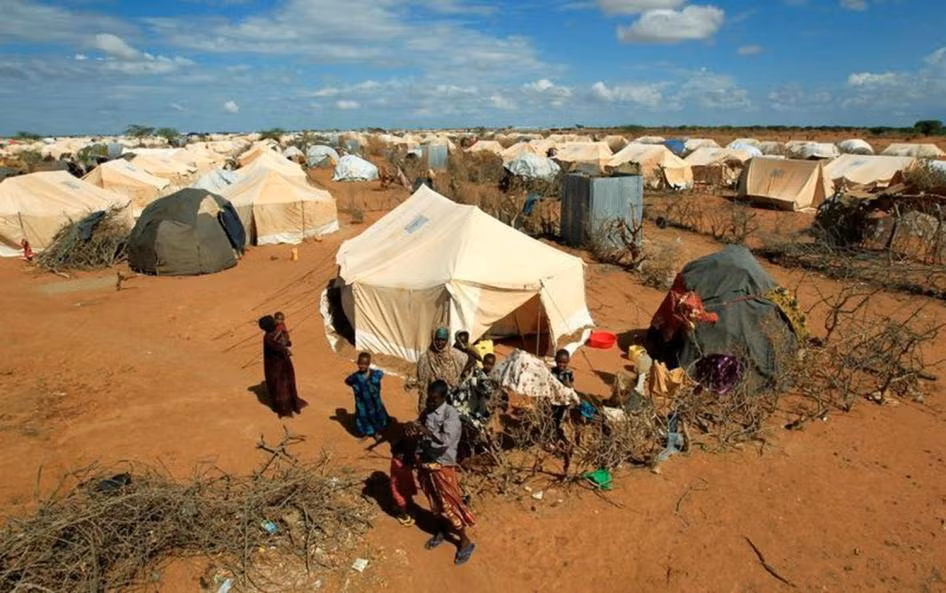
Refugees stand outside their tent at the Ifo Extension refugee camp in Dadaab, near the Kenya-Somalia border in Garissa County, Kenya, October 19, 2011. © 2016 Thomas Mukoya/Reuters

Share on FacebookShare on Twitter

By Edwin Mutyenyoka, & Franzisca Zanker*


Kenya hosts nearly a million refugees, mainly from South Sudan and Somalia. Many of them have been living in refugee camps for decades.

Now, the country is attempting a major shift in refugee policy. The Kenyan government and the United Nations Refugee Agency (UNHCR) developed the Shirika Plan, launching it in March 2025. The policy aims to move refugees away from long-term encampment and integrate them in society.

Drawing on their research on refugee governance and migration in Kenya, Edwin Mutyenyoka and Franzisca Zanker explain the opportunities and challenges the plan presents for refugees and host communities.

What is the Shirika Plan?

The Shirika Plan seeks to shift refugee management away from a camp-based system largely overseen by the UN towards a government-led model centred on inclusion into the local economy. The plan is a by-product of Kenya’s Refugee Act of 2021, which seeks to include and protect refugees better.

The plan builds on the success of two pilot models: the Kalobeyei Integrated Socio-Economic Development Plan and the Garissa Integrated Socio-Economic Plan. They showed that refugee inclusion can strengthen both refugee and host economies.

The Shirika Plan will convert camps into county-administered municipalities. There will be investment in roads, water systems, healthcare and education in places that host refugees. Developments are designed to serve refugees and host communities.

The plan is closely aligned with the UN’s refugee frameworks. These encourage governments to move beyond emergency assistance and towards allowing refugees to work, use public services and contribute to local economies.

The plan’s six pillars include sustainable economic development and climate action.

Implementation is expected to take place in three phases and requires an estimated US$943 million.

The first phase (2025-2028) is the transition period. It lays the foundations: putting regulatory and policy frameworks in place and turning camps into municipalities. There’s an emphasis on building local capacity too.

The second phase (2029-2032) is the stabilisation period. It will evaluate the transition, and strengthen institutional capacity and financial management. This phase will also build on peaceful co-existence between refugees and host communities.

The final phase (2033-2036) – the resilience period – aims to fortify financial structures, diversify revenue and build the resilience of communities. This is to reduce dependence on external support.

Why does Kenya need such a plan?

Kenya has become a major destination for both forced and economic migrants in the region. This is due, in part, to the country’s relative political and economic stability. A higher Human Development Index, vibrant secondary economy and a largely welcoming host society have created a good environment for refugees.

Kenya was home to 954,851 refugees and asylum seekers in 2025. This makes it the fifth biggest host in Africa and 13th largest in the world.

Kakuma and Dadaab refugee camps in the northern region are home to over 800,000 refugees and asylum seekers between them. They are two of the biggest shelters for forced migrants in the world.

Most of the refugees in these camps – mostly from Sudan and Somalia – have lived there for up to 30 years.

In addition, surveys by organisations such as the Mixed Migration Centre and IOM Kenya estimate that between 100,000 and 200,000 refugees – mostly not registered – live in cities like Nairobi and Mombasa.

Kenya has gone through significant challenges, however, between the Refugee Act of 2021 and the launch of the Shirika Plan in 2025. A severe economic crisis ignited fierce protests and put mounting pressure on public services. In addition, humanitarian aid cuts, both globally and in Kenya, have been swift and severe.

Rather than relying on repeated emergency appeals, the Shirika Plan aims to attract development financing, while reducing tensions between refugees and host communities through shared access to services and economic opportunities.

This reflects a broader shift towards linking emergency assistance with longer-term economic and social inclusion.

The plan also offers a chance to address protracted displacement by making camps obsolete, while enhancing local development in remote areas.

What happens next?

The next challenge is implementation. The first years of the Shirika Plan are vital to show it can actually work.

In the first phase, planned initiatives centre on expanding livelihood opportunities, strengthening local services and improving coordination between humanitarian and development actors. Financing will be critical for success.

Kenya has secured substantial international support for refugee-hosting and economic integration. This includes a Sh155 billion (US$2 billion) loan from the World Bank in 2024 that requires Kenya to integrate 400,000 refugees into the economy by 2027.

For Kenya, the plan is a complete change of policy direction, away from a focus on security concerns and threats to close refugee camps. Closure threats happened most recently in 2021 but were quashed by the high court in 2024.

The emphasis is now on inclusion, local development and burden-sharing.

Success will depend not only on funding, but on the government’s ability to deliver tangible benefits for both refugees and host communities.

Read also

Gabon opposition leader jailed for political reasons, his lawyers say

Senegal’s President Faye launches new party, cementing ruling camp split

Africa facing $10-$20 billion economic hit from ‘super’ El Niño, AfDB climate chief warns

What are the risks?

First, the Shirika Plan relies on a system of differentiated assistance. This means support is tailored to refugees’ levels of need rather than provided equally to everyone. However, misconceptions of preferential treatment risk fuelling tensions between different refugee groups.

Second, moving vulnerable refugees out of camps could create new challenges. Many have spent years with limited access to education, jobs and public services. Competing in open labour markets could be particularly challenging for refugees who have long lived under UNHCR-operated enclosures.

Third, although more than 75 public engagement forums have been held across Kenya, some refugee and host-community representatives report feeling excluded from the design of the plan and broader decision-making processes. Concerns have also been raised about public awareness, accountability and oversight mechanisms. This is a worry as public support is vital to the plan.

Fourth, funding shortfalls are a risk to the plan. Supporting programmes aimed at building capacity during the transition period require consistent financial investments.

Where does this leave the plan?

The alternative – continuing to confine nearly a million people to underfunded camps – carries far greater risks than the challenges outlined above.

As the wheels of the Shirika Plan start turning, there is a need to invest in the municipalities hosting refugees.

A gradual reduction in UNHCR’s direct role should also create greater space for refugee-led organisations, whose local knowledge and community ties are useful to identify needs and support integration efforts.

ـــــــــــــــــــــــــــــــــــ

  • * Senior Researcher, Arnold Bergstraesser Institute
  • * Senior researcher, Arnold Bergstraesser Institute
Source: The Conversation
Tags: KenyaShirika PlanSomaliaSouth Sudan

Related Posts

Germany vows support for Nigeria on security, seeks expanded economic ties
Featured

Germany vows support for Nigeria on security, seeks expanded economic ties

July 23, 2026
Understanding Trump’s Christian Genocide Claim and Military Threat: What It Means for Nigeria-U.S. Relations
Featured

Trump praises Nigeria’s efforts against violence towards Christians

July 23, 2026
Mali, Burkina Faso and Niger announce exit from International Criminal Court
Featured

Ghanaian nationals ask ICC to probe xenophobic violence in South Africa

July 23, 2026
Africa’s Venture Capital Landscape confronts challenges
African Union

African banks bet on debt guarantees to lure private capital to infrastructure projects

July 23, 2026
Is Ethiopia’s Tigray barreling towards another war?
East Africa

Ethiopia opposition accuses government of pushing Tigray towards new war

July 22, 2026
Nigerian President says ECOWAS Standby Force should be operationalise now
Economy

ECOWAS reaffirms plans to launch single currency in 2027

July 22, 2026

Search Qiraat Africa

No Result
View All Result

Follow on Twitter

Follow @africanqiraat

Trending

Bakiga / Abakiga of northern Rwanda and southern Uganda

Bakiga / Abakiga of northern Rwanda and southern Uganda

July 15, 2026
Sobhuza II (1899-1982): Former Ngwenyama of Eswatini who led independence transition

Sobhuza II (1899-1982): Former Ngwenyama of Eswatini who led independence transition

March 5, 2026
Rashaida of the coastal plain of the Red Sea

Rashaida of the coastal plain of the Red Sea

July 10, 2026
Zaghawa people of northeastern Chad and western Sudan

Zaghawa people of northeastern Chad and western Sudan

March 3, 2026
Samori Touré (1830-1900): Military leader and founder of Wassoulou Empire

Samori Touré (1830-1900): Military leader and founder of Wassoulou Empire

January 11, 2026
Herbert Wigwe (1966-2024): Nigerian banker and businessman

Herbert Wigwe (1966-2024): Nigerian banker and businessman

July 7, 2026

Facebook

Sections

  • About Us
  • Privacy Policy
  • Opinion
  • Infographics
  • News
  • Analysis
  • Figures
  • Culture & Literature
  • Follow Ups
  • Historical Readings
  • Interview
  • Studies


© Copyright Qiraat Africa. Developed by Bunnaj Media .

No Result
View All Result
  • News
  • Analysis & Report
  • Studies
  • Opinion
  • Interview
  • Culture & Literature
  • Figures
  • Historical Readings
  • Regions

© 2021 Copyright Qiraat Africa.