


Qiraat Africa
عربي  |  Fr
Advertisement
  • News
    • All
    • Climate Change
    • Economy
    • Education
    • Energy
    • Health
    • Migration
    • Mining
    • Politics
    • Security
    • Society
    • Sport
    Tanzania’s president dismisses foreign, information ministers

    US to give Tanzania $1.3 billion under five-year health pact

    Kenyan activists launch new court case against luxury lodges in Maasai Mara reserve

    Kenyan activists launch new court case against luxury lodges in Maasai Mara reserve

    Ethiopia says Ghebreyesus, WHO chief has links to rebellious Tigrayan forces

    Trial for Bundibugyo Ebola treatment starts in DRC, WHO says

    Ukraine says Niger’s move to cut relations is ‘regrettable’

    Niger arrests at least 16 for same-sex sexual acts, judicial source says

    South African labour unions urge workers to shun anti-migrant protests

    Over 900 arrested during South African anti-migrant protests

    Burkina Faso assembly votes to send troops to Niger

    Burkina Faso: what will change after the diplomatic rupture with France?

    Zimbabwe: Mnangagwa faces internal revolt over his legitimacy

    Zimbabwean parliament approves extending presidential term by two years

    AU grants $10.4m for Mpox emergency response

    Africa CDC: Uganda health ministry confirms isolated Marburg case

    South Africa says over 900 arrested during nationwide anti-migrant protests

    South Africa says over 900 arrested during nationwide anti-migrant protests

  • Analysis
    • All
    • Climate Change
    • Digital & Tech
    • Economy
    • Energy & Power
    • Health
    • Politics
    • Security
    • Society
    Ulysses in isiZulu: Why an African translation of the classic Irish novel is important in today’s world

    Ulysses in isiZulu: Why an African translation of the classic Irish novel is important in today’s world

    The promise and risks of Kenya’s ambitious new strategy to close refugee camps

    The promise and risks of Kenya’s ambitious new strategy to close refugee camps

    Al Qaeda-linked militants curb their brutality in seized Malian territory

    Al Qaeda-linked militants curb their brutality in seized Malian territory

    Five Years After the Coup in Mali: Are Stability and Growth Within Reach?

    The Political Economy of Insecurity in Mali: Armed Groups, Resources, and State Fragility

    Ghana to evacuate 300 citizens from South Africa after xenophobic attacks

    Xenophobic Violence and Human Security in South Africa: Causes and Consequences

    Inside an African lab that helped crack the hantavirus outbreak

    Inside an African lab that helped crack the hantavirus outbreak

    Nigeria’s Agricultural sector: Problems and challenges

    Agriculture in Africa: science and research cannot have an impact without investments and good policies

    Mali’s junta creates a new ministerial-level post to oversee the mining sector

    African Mineral Resources: The Controversial Link to US Health Deals

    Ghana curbs offshore investments to protect cedi, boost stability

    Ghana’s mining law attempts to eradicate speculation, but leaves communities in limbo: insights from a lithium case study

  • Studies
    Angola’s lengthy war shaped the way farmers utilised fire—why it matters

    Angola’s lengthy war shaped the way farmers utilised fire—why it matters

    Schooling is the most severely affected by conflict when children are the target – Study

    Schooling is the most severely affected by conflict when children are the target – Study

    Pensions for Botswana’s elderly are expanding, but care services are lacking—study follows 20 years

    Pensions for Botswana’s elderly are expanding, but care services are lacking—study follows 20 years

    60 new cosmic structures have been discovered by South Africa’s MeerKAT telescope, which is mapping previously unseen gaps between galaxies

    60 new cosmic structures have been discovered by South Africa’s MeerKAT telescope, which is mapping previously unseen gaps between galaxies

    Benin government says armed forces foil coup attempt

    Coup contagion? A rash of African power grabs suggests copycats are taking note of others’ success

    One in three South Africans have never heard of AI: what this means for policy

    One in three South Africans have never heard of AI: what this means for policy

    Social Media as a Catalyst for the Spread of Dangerous Wealth Ritual Myths

    Social Media as a Catalyst for the Spread of Dangerous Wealth Ritual Myths

    Overcoming Education Barriers for Young Mothers in Sub-Saharan Africa

    Overcoming Education Barriers for Young Mothers in Sub-Saharan Africa

    Youth Empowerment Through Vocational Training in Rural Sub-Saharan Africa

    Youth Empowerment Through Vocational Training in Rural Sub-Saharan Africa

  • Infographics
  • Figures
    Marcus Garvey (1887-1940): Activist, Black nationalist, and Pan-Africanist

    Marcus Garvey (1887-1940): Activist, Black nationalist, and Pan-Africanist

    John B. Russwurm (1799–1851): Jamaican-born American abolitionist, publisher, and colonial governor

    John B. Russwurm (1799–1851): Jamaican-born American abolitionist, publisher, and colonial governor

    Edward Wilmot Blyden (1832-1912): Educator and former Secretary of State of Liberia

    Edward Wilmot Blyden (1832-1912): Educator and former Secretary of State of Liberia

    Eduardo Mondlane (1920-1969): Mozambican Revolutionary and Anthropologist

    Eduardo Mondlane (1920-1969): Mozambican Revolutionary and Anthropologist

    William Tubman (1895-1971): Liberian politician and longest-serving president in the country’s history

    William Tubman (1895-1971): Liberian politician and longest-serving president in the country’s history

    Abebe Bikila (1932-1973): Ethiopian marathoner and first black African to win an Olympic medal

    Abebe Bikila (1932-1973): Ethiopian marathoner and first black African to win an Olympic medal

    W. E. B. Du Bois (1868-1963): Sociologist, historian, and Pan-Africanist civil rights activist

    W. E. B. Du Bois (1868-1963): Sociologist, historian, and Pan-Africanist civil rights activist

    Frantz Fanon (1925-1961): Psychiatrist and political philosopher

    Frantz Fanon (1925-1961): Psychiatrist and political philosopher

    Percy Lavon Julian (1899-1975): African American researcher and chemist

    Percy Lavon Julian (1899-1975): African American researcher and chemist

  • History
    Laas Geel, Somalia

    Laas Geel, Somalia

    Lakes Of Ounianga, Chad

    Lakes Of Ounianga, Chad

    Nok Caves, Togo

    Nok Caves, Togo

    The Land of Punt (modern Somalia, Eritrea, Ethiopia, or eastern Sudan)

    The Land of Punt (modern Somalia, Eritrea, Ethiopia, or eastern Sudan)

    Avenue of the Baobabs, Madagascar

    Avenue of the Baobabs, Madagascar

    Lopé-Okanda (Gabon)

    Lopé-Okanda (Gabon)

    The Sudd wetland

    The Sudd wetland

    Khami Ruins (Zimbabwe), the capital of the Torwa state

    Khami Ruins (Zimbabwe), the capital of the Torwa state

    Royal Palace, Porto-Novo, Republic of Benin

    Royal Palace, Porto-Novo, Republic of Benin

  • Others
    • Culture / Literature
    • Interview
    • Opinion
  • Countries
    • Country profiles
    • Regions
      • Central Africa
      • East Africa
      • Southern Africa
      • West Africa
No Result
View All Result
  • News
    • All
    • Climate Change
    • Economy
    • Education
    • Energy
    • Health
    • Migration
    • Mining
    • Politics
    • Security
    • Society
    • Sport
    Tanzania’s president dismisses foreign, information ministers

    US to give Tanzania $1.3 billion under five-year health pact

    Kenyan activists launch new court case against luxury lodges in Maasai Mara reserve

    Kenyan activists launch new court case against luxury lodges in Maasai Mara reserve

    Ethiopia says Ghebreyesus, WHO chief has links to rebellious Tigrayan forces

    Trial for Bundibugyo Ebola treatment starts in DRC, WHO says

    Ukraine says Niger’s move to cut relations is ‘regrettable’

    Niger arrests at least 16 for same-sex sexual acts, judicial source says

    South African labour unions urge workers to shun anti-migrant protests

    Over 900 arrested during South African anti-migrant protests

    Burkina Faso assembly votes to send troops to Niger

    Burkina Faso: what will change after the diplomatic rupture with France?

    Zimbabwe: Mnangagwa faces internal revolt over his legitimacy

    Zimbabwean parliament approves extending presidential term by two years

    AU grants $10.4m for Mpox emergency response

    Africa CDC: Uganda health ministry confirms isolated Marburg case

    South Africa says over 900 arrested during nationwide anti-migrant protests

    South Africa says over 900 arrested during nationwide anti-migrant protests

  • Analysis
    • All
    • Climate Change
    • Digital & Tech
    • Economy
    • Energy & Power
    • Health
    • Politics
    • Security
    • Society
    Ulysses in isiZulu: Why an African translation of the classic Irish novel is important in today’s world

    Ulysses in isiZulu: Why an African translation of the classic Irish novel is important in today’s world

    The promise and risks of Kenya’s ambitious new strategy to close refugee camps

    The promise and risks of Kenya’s ambitious new strategy to close refugee camps

    Al Qaeda-linked militants curb their brutality in seized Malian territory

    Al Qaeda-linked militants curb their brutality in seized Malian territory

    Five Years After the Coup in Mali: Are Stability and Growth Within Reach?

    The Political Economy of Insecurity in Mali: Armed Groups, Resources, and State Fragility

    Ghana to evacuate 300 citizens from South Africa after xenophobic attacks

    Xenophobic Violence and Human Security in South Africa: Causes and Consequences

    Inside an African lab that helped crack the hantavirus outbreak

    Inside an African lab that helped crack the hantavirus outbreak

    Nigeria’s Agricultural sector: Problems and challenges

    Agriculture in Africa: science and research cannot have an impact without investments and good policies

    Mali’s junta creates a new ministerial-level post to oversee the mining sector

    African Mineral Resources: The Controversial Link to US Health Deals

    Ghana curbs offshore investments to protect cedi, boost stability

    Ghana’s mining law attempts to eradicate speculation, but leaves communities in limbo: insights from a lithium case study

  • Studies
    Angola’s lengthy war shaped the way farmers utilised fire—why it matters

    Angola’s lengthy war shaped the way farmers utilised fire—why it matters

    Schooling is the most severely affected by conflict when children are the target – Study

    Schooling is the most severely affected by conflict when children are the target – Study

    Pensions for Botswana’s elderly are expanding, but care services are lacking—study follows 20 years

    Pensions for Botswana’s elderly are expanding, but care services are lacking—study follows 20 years

    60 new cosmic structures have been discovered by South Africa’s MeerKAT telescope, which is mapping previously unseen gaps between galaxies

    60 new cosmic structures have been discovered by South Africa’s MeerKAT telescope, which is mapping previously unseen gaps between galaxies

    Benin government says armed forces foil coup attempt

    Coup contagion? A rash of African power grabs suggests copycats are taking note of others’ success

    One in three South Africans have never heard of AI: what this means for policy

    One in three South Africans have never heard of AI: what this means for policy

    Social Media as a Catalyst for the Spread of Dangerous Wealth Ritual Myths

    Social Media as a Catalyst for the Spread of Dangerous Wealth Ritual Myths

    Overcoming Education Barriers for Young Mothers in Sub-Saharan Africa

    Overcoming Education Barriers for Young Mothers in Sub-Saharan Africa

    Youth Empowerment Through Vocational Training in Rural Sub-Saharan Africa

    Youth Empowerment Through Vocational Training in Rural Sub-Saharan Africa

  • Infographics
  • Figures
    Marcus Garvey (1887-1940): Activist, Black nationalist, and Pan-Africanist

    Marcus Garvey (1887-1940): Activist, Black nationalist, and Pan-Africanist

    John B. Russwurm (1799–1851): Jamaican-born American abolitionist, publisher, and colonial governor

    John B. Russwurm (1799–1851): Jamaican-born American abolitionist, publisher, and colonial governor

    Edward Wilmot Blyden (1832-1912): Educator and former Secretary of State of Liberia

    Edward Wilmot Blyden (1832-1912): Educator and former Secretary of State of Liberia

    Eduardo Mondlane (1920-1969): Mozambican Revolutionary and Anthropologist

    Eduardo Mondlane (1920-1969): Mozambican Revolutionary and Anthropologist

    William Tubman (1895-1971): Liberian politician and longest-serving president in the country’s history

    William Tubman (1895-1971): Liberian politician and longest-serving president in the country’s history

    Abebe Bikila (1932-1973): Ethiopian marathoner and first black African to win an Olympic medal

    Abebe Bikila (1932-1973): Ethiopian marathoner and first black African to win an Olympic medal

    W. E. B. Du Bois (1868-1963): Sociologist, historian, and Pan-Africanist civil rights activist

    W. E. B. Du Bois (1868-1963): Sociologist, historian, and Pan-Africanist civil rights activist

    Frantz Fanon (1925-1961): Psychiatrist and political philosopher

    Frantz Fanon (1925-1961): Psychiatrist and political philosopher

    Percy Lavon Julian (1899-1975): African American researcher and chemist

    Percy Lavon Julian (1899-1975): African American researcher and chemist

  • History
    Laas Geel, Somalia

    Laas Geel, Somalia

    Lakes Of Ounianga, Chad

    Lakes Of Ounianga, Chad

    Nok Caves, Togo

    Nok Caves, Togo

    The Land of Punt (modern Somalia, Eritrea, Ethiopia, or eastern Sudan)

    The Land of Punt (modern Somalia, Eritrea, Ethiopia, or eastern Sudan)

    Avenue of the Baobabs, Madagascar

    Avenue of the Baobabs, Madagascar

    Lopé-Okanda (Gabon)

    Lopé-Okanda (Gabon)

    The Sudd wetland

    The Sudd wetland

    Khami Ruins (Zimbabwe), the capital of the Torwa state

    Khami Ruins (Zimbabwe), the capital of the Torwa state

    Royal Palace, Porto-Novo, Republic of Benin

    Royal Palace, Porto-Novo, Republic of Benin

  • Others
    • Culture / Literature
    • Interview
    • Opinion
  • Countries
    • Country profiles
    • Regions
      • Central Africa
      • East Africa
      • Southern Africa
      • West Africa
No Result
View All Result
Qiraat Africa
عربي  |  Fr
No Result
View All Result
Home Featured

Al Qaeda-linked militants curb their brutality in seized Malian territory

June 14, 2026
Al Qaeda-linked militants curb their brutality in seized Malian territory

Copyright: REUTERS

Share on FacebookShare on Twitter

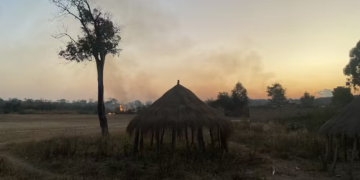
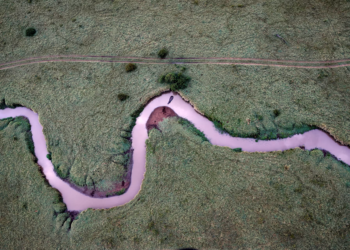
The meetings have become routine. Every few months, terrorists in Mali affiliated with al Qaeda summon the men of Poutchi to a mud-brick mosque to collect tax on their crops and cattle, and later distribute food, medicine and animals to the poor.

Five years ago, the same militants threatened to slit the throat of anyone in Poutchi – including the imam – who questioned their interpretation of Islam, recalls Amadou, a herder who lives in the village by the Niger River.

“Now, they don’t talk like that,” Amadou said, describing how the militants focused more on spreading their religious message without threats or violence. “The dynamic has really changed.”

The terrorists are from Jama’at Nusrat al-Islam wal Muslimin (JNIM), a group that pledged allegiance to al Qaeda when it was founded in 2017 and has spent the last decade imposing itself through fear and force across the Sahel region of West Africa, banning music, smoking and wedding celebrations as it goes.

Initially confined to desert and mountain hideouts, JNIM has gained in strength since the Malian army officers who seized power in 2020 kicked out some 15,000 French and U.N. soldiers and turned to Russian mercenaries to help keep the insurgents in check.

JNIM demonstrated its newfound power with audacious attacks across Mali in April, hitting the airport in the capital Bamako, killing the defence minister and seizing a string of army bases in the north in coordination with Tuareg-led separatists.

Mali’s government describes both groups as terrorists responsible for violence and instability in the country. Moscow has pledged to continue fighting insurgents in Mali.

Yet the terrorist group now sits at the heart of an expanding belt of militants aligned with al Qaeda and Islamic State stretching 3,000 km (1,900 miles) across West Africa. U.N. Secretary-General Antonio Guterres warned in November that the groups were linking up and presented a growing global threat.

Away from the high-profile military successes, however, a shift is taking place in areas where JNIM’s authority is established, residents said.

Its rhetoric has softened. Militants are assuming administrative roles, resolving festering land disputes between herders and farmers, allowing aid groups to come and go and letting some government employees return to JNIM villages to spend holidays with relatives, according to seven people living under JNIM rule in central Mali who spoke to Reuters.

“The stronger they have become, the less brutal they have to be,” said Corinne Dufka, a Sahel expert who has studied the growth of terrorists in Mali for over a decade.

Dufka said JNIM was succeeding to govern in its strongholds, but that residents’ acquiescence was also a survival strategy. “There is a combination of coercion, fear and persuasion,” she said. “For many villagers, including those who have lived, married, and grown up under the group, they have just accepted that this is the new reality.”

For fear of reprisals, the residents spoke to Reuters on condition of anonymity, or that only their first names be used.

Neither Mali’s government nor the military’s spokesperson responded to requests for comment for this story.

GOVERNMENT REJECTS DIALOGUE

The shift illustrates the evolution of the Islamist militant movement in Mali over the last 15 years.

Terrorist groups first seized swathes of Mali in 2012 after allying with Tuareg separatists. The mix of local and foreign militants imposed a harsh interpretation of Islamic law, with public executions, floggings and the destruction of centuries-old mausoleums in the city of Timbuktu.

JNIM, formed from four of those groups, is increasingly seeking to show it can govern areas it seizes peacefully and thereby earn political legitimacy, according to Sahel experts and Tuareg-led separatists working with JNIM.

Bilal Ag Cherif, a veteran of the separatist movement that has maintained an on-off alliance with the Islamist insurgents and teamed up with JNIM in April, said he had noticed “positive changes” within the group, such as an openness to local interpretations of Islam and calls for a more “inclusive” Mali.

“They were open to discussing peace and stability in this region, to discuss important factors for us about their view of the future, to talk with everyone, to have peace,” Cherif, leader of the separatists now called the Azawad Liberation Front (FLA), told Reuters by phone from northern Mali.

He also said the FLA was encouraging JNIM fighters to cut ties with al Qaeda and focus on local issues.

“JNIM is dealing with this point positively, and we consider that very, very important,” he said, adding that it was hard to see a solution to the conflict in northern Mali without JNIM’s involvement.

JNIM has said its immediate goals are to force Russian troops out of Mali and oust the army officers who seized power after coups in 2020 and 2021.

Read also

Ulysses in isiZulu: Why an African translation of the classic Irish novel is important in today’s world

US to give Tanzania $1.3 billion under five-year health pact

Kenyan activists launch new court case against luxury lodges in Maasai Mara reserve

Following the April attacks, JNIM shifted its messaging, publishing a rare French-language statement calling on Malians to join them in ousting the government and building a new Mali founded on Islamic law. JNIM increasingly uses videos with a Malian fighter speaking Bambara, a language mostly used in southern Mali, far from the terrorist heartlands.

JNIM doesn’t hold major cities and does not, for now, appear intent on seizing the capital, unlike the Islamist rebels once aligned with al Qaeda who took power in Syria in 2024.

Another video filmed by fighters and released on social media after the April attacks shows JNIM fighters processing captured Malian troops for release in Tessit. In the aftermath of previous victories, Islamist militants have executed captured soldiers.

Analysts say JNIM wants a role in talks about Mali’s political future – something the military government rejects.

“The government does not intend to engage in dialogue with the lawless armed terrorist groups who bear responsibility for the tragic events that our people have been experiencing for years,” Foreign Minister Abdoulaye Diop said in May, referring to JNIM and FLA.

Russia’s Ministry of Defence did not respond to a request for comment. Reuters was unable to reach JNIM for comment.

‘WE ARE NOT KILLED’

The group has been accused of massacres and remains capable of grisly violence.

In January, JNIM fighters killed 12 people in an attack on a fuel convoy – some of whom had their throats slit – and areas that resist face collective punishment. The insurgents attacked two villages in central Mali in May, killing about 50 people.

Nevertheless, the residents living under JNIM rule who spoke to Reuters described a form of governance that is often more predictable, less corrupt and less violent than Mali’s military and allied forces.

“Since JNIM has controlled the area, we are safe. Even though their rule is difficult to respect, we have gotten used to it,” said Aminata, from Birga-Peul village in the Mopti region, which JNIM took over in 2017. “We are not killed.”

“They aren’t violent like the foreigners who were there at the beginning,” she said, referring to terrorists who had come from outside Mali. She said the movement was now much more embedded in the community. “They are tolerant and turn a blind eye to many things, like football and Android phones.”

Where JNIM has not taken control, it sometimes enforces blockades. In the village of Diafarabe, also in the Mopti region, one resident said 13 children and 40 adults, including the elderly, had died from a lack of food and medicine after JNIM imposed a blockade a year ago.

“People can’t even go 500 metres from the village … so there’s no more fish, no more meat, no more firewood,” the person said.

Reuters was unable to independently confirm the figures, nor reach JNIM for comment.

‘IT’S A GOOD RELATIONSHIP’

The restrictions on freedoms imposed by Islamist militants in Mali, such as banning wedding celebrations, are at odds with West Africa’s long history of Islam, where Islamic teaching was traditionally blended with local customs.

However, reformist movements have gained influence in recent decades, often by funding health and education in poor communities. Experts say this – coupled with the abuse of civilians by government troops, allied militias and Russian forces – has created opportunities for terrorists to exploit.

Hambarke, 57, who lives in a village in central Mali controlled by JNIM for seven years, recalled how they barred men from shaving and women from engaging in trade.

He said punishments were initially severe, including public whippings, but now the “radical rhetoric” had eased, with sermons focused on calls for unity and social cohesion and JNIM giving warnings before meting out punishments.

Mali’s military has been accused by the U.N. and human rights groups of executing civilians suspected of collaboration with JNIM and other insurgents.

Malian soldiers and their Russian partners have killed three to four times more civilians than terrorists have over the last two years, according to data from Armed Conflict Location & Event Data (ACLED), a conflict monitoring group.

Mali’s government has denied accusations its forces have targeted civilians, saying they had killed terrorists.

Six of the residents who spoke to Reuters reported abuse of civilians by the army or allied militias, with most saying this had driven young men in their villages to join JNIM.

“People have more faith in them, and it’s a good relationship,” said Amadou, the herder in Poutchi.
Source: Reuters
Tags: Antonio GuterresAzawad Liberation Front (FLA)Jama’at Nusrat al-Islam wal-Muslimin (JNIM)Mali

Related Posts

Ethiopia says Ghebreyesus, WHO chief has links to rebellious Tigrayan forces
East Africa

Trial for Bundibugyo Ebola treatment starts in DRC, WHO says

July 2, 2026
Ukraine says Niger’s move to cut relations is ‘regrettable’
Featured

Niger arrests at least 16 for same-sex sexual acts, judicial source says

July 2, 2026
South African labour unions urge workers to shun anti-migrant protests
Featured

Over 900 arrested during South African anti-migrant protests

July 2, 2026
Burkina Faso assembly votes to send troops to Niger
Politics

Burkina Faso: what will change after the diplomatic rupture with France?

July 1, 2026
Zimbabwe: Mnangagwa faces internal revolt over his legitimacy
Featured

Zimbabwean parliament approves extending presidential term by two years

July 1, 2026
AU grants $10.4m for Mpox emergency response
East Africa

Africa CDC: Uganda health ministry confirms isolated Marburg case

July 1, 2026

Search Qiraat Africa

No Result
View All Result

Follow on Twitter

Follow @africanqiraat

Trending

Kumbi Saleh, the capital of the ancient Ghana Empire

Kumbi Saleh, the capital of the ancient Ghana Empire

October 13, 2025
Meja Mwangi: The Literary Genius with a Mighty pen

Meja Mwangi: The Literary Genius with a Mighty pen

May 24, 2025
Tuareg: The Blue People of the Sahara

Tuareg: The Blue People of the Sahara

May 23, 2025
Abdon Atangana: Cameroonian scientist and professor of applied mathematics

Abdon Atangana: Cameroonian scientist and professor of applied mathematics

July 28, 2025
Ex-Credit Suisse chief executive Tidjane Thiam eyeing Ivory Coast 2025 presidential contest

Tidjane Thiam, Ivorian businessman and politician

October 10, 2025
Côte d’Ivoire (Ivory Coast)

Côte d’Ivoire (Ivory Coast)

January 30, 2025

Facebook

Sections

  • About Us
  • Privacy Policy
  • Opinion
  • Infographics
  • News
  • Analysis
  • Figures
  • Culture & Literature
  • Follow Ups
  • Historical Readings
  • Interview
  • Studies


© Copyright Qiraat Africa. Developed by Bunnaj Media .

No Result
View All Result
  • News
  • Analysis & Report
  • Studies
  • Opinion
  • Interview
  • Culture & Literature
  • Figures
  • Historical Readings
  • Regions

© 2021 Copyright Qiraat Africa.