















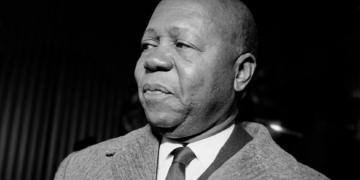



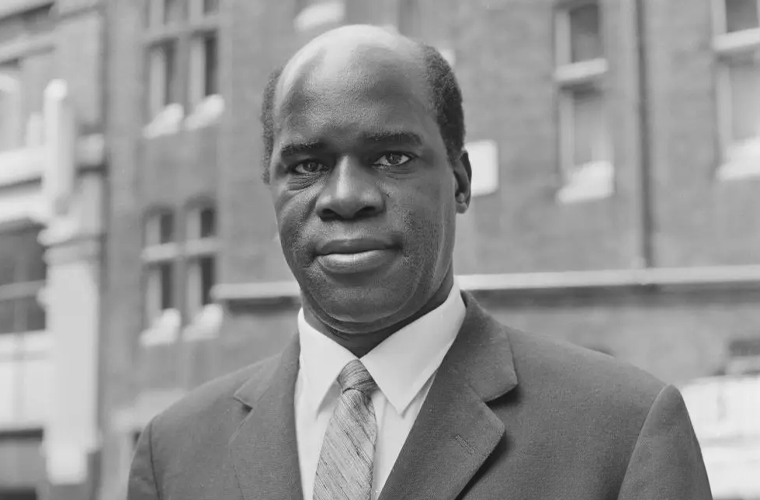
Eduardo Chivambo Mondlane was born on June 20, 1920, in the Manjacaze town of Gaza Province in southern Mozambique, then under Portuguese colonial rule. He grew up in a traditional rural environment, the fourth of six children of a Tsonga tribal chief. His education began in local missionary schools run by the Swiss Presbyterian Church, where his academic excellence allowed him to move to the capital, Lourenço Marques (now Maputo), for secondary school. This was a rare and severely restricted opportunity for indigenous people under colonial laws that classified Africans as “natives” and barred them from access to higher education.
In 1948, Mondlane secured a Presbyterian scholarship to study social sciences at the University of the Witwatersrand in Johannesburg, South Africa. However, his stay there was short-lived. He was expelled from the country in 1949 following the National Party’s rise to power and the official implementation of apartheid, which resulted in the revocation of his residency permit as a Black foreign student. This expulsion forced him to return to Mozambique, where he was briefly detained and interrogated by the Portuguese political police (PIDE) about his student political activities.
Realising that continuing his education in Africa had become too risky, Mondlane went to Portugal in 1950 and enrolled at the University of Lisbon. There, he met a select group of African students who would later lead liberation movements in the Portuguese colonies, such as Amílcar Cabral and Agostinho Neto. Due to close surveillance by the Portuguese intelligence services, Mondlane decided to leave Europe and travel to the United States after receiving a full scholarship from the Institute of International Education.
He attended Oberlin College in Ohio, where he earned a bachelor’s degree in anthropology and sociology in 1953. He then pursued graduate studies at Northwestern University in Evanston, Illinois, where he received his master’s and doctoral degrees in sociology and anthropology by 1960. His academic research focused on African social structures and the effects of cultural conflict resulting from colonial penetration.
This academic excellence opened doors for him at the United Nations, where he served as a research officer in the Secretariat of the Trusteeship Council for Non-Self-Governing Territories from 1957 to 1961. This international position provided him with extensive experience in the mechanisms of international politics and an understanding of the dynamics of liberation movements in other African colonies before he moved in 1961 to teach anthropology at Syracuse University in New York.
The year 1961 marked a turning point in Mondlane’s professional and personal life. He undertook an official visit to Mozambique under the auspices of the United Nations, during which he witnessed firsthand the deteriorating economic and social conditions and the rising tide of popular discontent against the Portuguese administration. These observations led him to resign from his UN post and leave his stable academic career in the United States, heading to newly independent Tanzania under the leadership of Julius Nyerere, which had become a hub for Mozambican opposition political forces.
In June 1962, Mondlane successfully united three independent political organisations operating in exile: the African National Union of Mozambique (MANU), the National Democratic Union of Mozambique (UDENAMO), and the African Union for an Independent Mozambique (UNAMI). This merger resulted in the formation of the Front for the Liberation of Mozambique, commonly known as FRELIMO. During FRELIMO’s first congress, held in Dar es Salaam in September of that year, Mondlane was elected president of the movement thanks to his strong academic background, diplomatic skills, and ability to formulate political programmes that transcended the ethnic and tribal divisions that had hindered unified national action.
He began laying the foundations for FRELIMO’s rigorous organisational structure, drawing on his anthropological knowledge to understand the demographic and social makeup of the Mozambican people. After diplomatic efforts to persuade the regime of Portuguese Prime Minister António de Oliveira Salazar to enter into negotiations for self-determination failed, FRELIMO decided to resort to direct military action. On September 25, 1964, FRELIMO officially declared the start of its armed struggle against colonialism through coordinated attacks targeting Portuguese military positions in the north of the country.
Mondlane adopted a strategy of protracted guerrilla warfare, rejecting the unrealistic notion of a swift military victory given the significant disparity in weaponry and training favouring the Portuguese army, which was supported by NATO. His strategy comprised two main pillars: persuading peasants in remote areas of the revolution’s goals and organising them to ensure logistical support and safe haven for the fighters; and establishing schools, health centres, and local administrative offices in the “liberated areas” under the Front’s control to demonstrate the movement’s ability to manage the population’s affairs and provide a developmental alternative to the colonial system.
Mondlane distinguished himself by combining two complementary qualities: strategic thinking and practical action. He employed anthropological research tools to decipher the complexities of tribalism within Mozambican society, offering a new concept of national identity that transcended narrow affiliations. He believed that Portuguese colonialism deliberately used a “divide and rule” policy to fuel ethnic conflicts between the north and south, and that confronting this challenge required forging a unified national culture forged in the crucible of the shared liberation struggle.
Ideologically, Mondlane adopted a pragmatic, social-democratic approach, distancing himself from blindly aligning with either of the Cold War blocs. Despite FRELIMO receiving military and financial support from the Soviet Union and the People’s Republic of China, Mondlane maintained close diplomatic relations with Western countries, particularly Scandinavian nations, as well as liberal organisations and churches in the United States, to secure financial and humanitarian support for educational and medical projects in the liberated areas. He formulated his comprehensive vision of the Portuguese colonial structure and the future of Mozambique in his only book, “The Struggle for Mozambique”, published in 1969 shortly before his death.
Managing FRELIMO was no easy task. Throughout his leadership, Mondlanie faced major internal challenges that threatened the movement’s unity and cohesion. The leadership was divided between a faction advocating for concentrated attacks in urban centres to achieve a swift victory and the faction, led by Mondlani, which insisted on a protracted rural war of attrition. Sharp disagreements arose between the radical wing, which adhered to strict Marxism-Leninism, and the more moderate, nationalist wing, represented by Mondlane, which sought to maintain a policy of non-alignment and political pluralism. Accusations arose from some leaders in the northern provinces (such as Cabo Delgado) that the leadership of the Front was monopolised by educated elites from the south. This led to a wave of defections and internal assassinations within the movement in the late 1960s.
These crises intensified during the Front’s second congress, held in 1968 in the liberated Mozambican territory of Niassa province. Although Mondlane succeeded in being re-elected president and consolidating his military strategy, underlying tensions continued to threaten the organisation’s stability.
On February 3, 1969, Eduardo Mondlane was assassinated in Dar es Salaam, Tanzania, by a bomb hidden inside a book sent to his regional office. The assassination sparked widespread controversy and complex investigations into who was responsible. Suspicion fell primarily on the Portuguese political police (PIDE) as part of their strategy to eliminate leaders of African liberation movements to weaken the morale of the fighters and dismantle the movements from within. Although subsequent analyses did not rule out the possibility of coordination or exploitation of deep-seated conflicts and rival factions within FRELIMO itself to facilitate the operation.
Mondlane’s death left a significant leadership vacuum in the Mozambican liberation movement. A temporary tripartite council assumed leadership of the FRELIMO before Samora Machel took over. Machel led the movement toward adopting a clear Marxist-Leninist line and continuing the struggle until the collapse of the Portuguese regime following the Carnation Revolution in 1974 and Mozambique’s formal independence in 1975.