




Qiraat Africa
عربي  |  Fr
Advertisement
  • News
    • All
    • Climate Change
    • Economy
    • Education
    • Energy
    • Health
    • Migration
    • Mining
    • Politics
    • Security
    • Society
    • Sport
    In Democratic Republic of Congo, Ebola At Its Brim

    Second Ebola treatment centre opens in North Kivu

    Tanzania’s president dismisses foreign, information ministers

    Tanzania on edge ahead of planned protests

    Cape Verde’s World Cup team returns home to a hero’s welcome

    Cape Verde’s World Cup team returns home to a hero’s welcome

    Production starts at Senegal’s first offshore oil project

    Senegal’s Sangomar oil project has produced about 18 million barrels so far this year, document says

    Nigeria says two nationals killed in anti-migrant violence in South Africa

    Nigeria says two nationals killed in anti-migrant violence in South Africa

    What the AU’s new mission means for Somalia?

    Somalia peacekeeping mission at risk as US blocks UN support, sources say

    Insurgents stage coordinated attacks on army positions across Mali

    Insurgents stage coordinated attacks on army positions across Mali

    Tanzania’s president dismisses foreign, information ministers

    US to give Tanzania $1.3 billion under five-year health pact

    Kenyan activists launch new court case against luxury lodges in Maasai Mara reserve

    Kenyan activists launch new court case against luxury lodges in Maasai Mara reserve

  • Analysis
    • All
    • Climate Change
    • Digital & Tech
    • Economy
    • Energy & Power
    • Health
    • Politics
    • Security
    • Society
    Senegal’s top opposition leader Sonko vows to help win March 24 election

    Senegal at a Political Crossroads: The Faye–Sonko Rivalry and the Future of Democratic Governance

    Ulysses in isiZulu: Why an African translation of the classic Irish novel is important in today’s world

    Ulysses in isiZulu: Why an African translation of the classic Irish novel is important in today’s world

    The promise and risks of Kenya’s ambitious new strategy to close refugee camps

    The promise and risks of Kenya’s ambitious new strategy to close refugee camps

    Al Qaeda-linked militants curb their brutality in seized Malian territory

    Al Qaeda-linked militants curb their brutality in seized Malian territory

    Five Years After the Coup in Mali: Are Stability and Growth Within Reach?

    The Political Economy of Insecurity in Mali: Armed Groups, Resources, and State Fragility

    Ghana to evacuate 300 citizens from South Africa after xenophobic attacks

    Xenophobic Violence and Human Security in South Africa: Causes and Consequences

    Inside an African lab that helped crack the hantavirus outbreak

    Inside an African lab that helped crack the hantavirus outbreak

    Nigeria’s Agricultural sector: Problems and challenges

    Agriculture in Africa: science and research cannot have an impact without investments and good policies

    Mali’s junta creates a new ministerial-level post to oversee the mining sector

    African Mineral Resources: The Controversial Link to US Health Deals

  • Studies
    Angola’s lengthy war shaped the way farmers utilised fire—why it matters

    Angola’s lengthy war shaped the way farmers utilised fire—why it matters

    Schooling is the most severely affected by conflict when children are the target – Study

    Schooling is the most severely affected by conflict when children are the target – Study

    Pensions for Botswana’s elderly are expanding, but care services are lacking—study follows 20 years

    Pensions for Botswana’s elderly are expanding, but care services are lacking—study follows 20 years

    60 new cosmic structures have been discovered by South Africa’s MeerKAT telescope, which is mapping previously unseen gaps between galaxies

    60 new cosmic structures have been discovered by South Africa’s MeerKAT telescope, which is mapping previously unseen gaps between galaxies

    Benin government says armed forces foil coup attempt

    Coup contagion? A rash of African power grabs suggests copycats are taking note of others’ success

    One in three South Africans have never heard of AI: what this means for policy

    One in three South Africans have never heard of AI: what this means for policy

    Social Media as a Catalyst for the Spread of Dangerous Wealth Ritual Myths

    Social Media as a Catalyst for the Spread of Dangerous Wealth Ritual Myths

    Overcoming Education Barriers for Young Mothers in Sub-Saharan Africa

    Overcoming Education Barriers for Young Mothers in Sub-Saharan Africa

    Youth Empowerment Through Vocational Training in Rural Sub-Saharan Africa

    Youth Empowerment Through Vocational Training in Rural Sub-Saharan Africa

  • Infographics
  • Figures
    Marcus Garvey (1887-1940): Activist, Black nationalist, and Pan-Africanist

    Marcus Garvey (1887-1940): Activist, Black nationalist, and Pan-Africanist

    John B. Russwurm (1799–1851): Jamaican-born American abolitionist, publisher, and colonial governor

    John B. Russwurm (1799–1851): Jamaican-born American abolitionist, publisher, and colonial governor

    Winnie Mandela (1936-2018): South African politician and anti-apartheid activist

    Winnie Mandela (1936-2018): South African politician and anti-apartheid activist

    Abdias do Nascimento (1914-2011): Prominent African Brazilian scholar, artist, and politician

    Abdias do Nascimento (1914-2011): Prominent African Brazilian scholar, artist, and politician

    Edward Wilmot Blyden (1832-1912): Educator and former Secretary of State of Liberia

    Edward Wilmot Blyden (1832-1912): Educator and former Secretary of State of Liberia

    Eduardo Mondlane (1920-1969): Mozambican Revolutionary and Anthropologist

    Eduardo Mondlane (1920-1969): Mozambican Revolutionary and Anthropologist

    William Tubman (1895-1971): Liberian politician and longest-serving president in the country’s history

    William Tubman (1895-1971): Liberian politician and longest-serving president in the country’s history

    Abebe Bikila (1932-1973): Ethiopian marathoner and first black African to win an Olympic medal

    Abebe Bikila (1932-1973): Ethiopian marathoner and first black African to win an Olympic medal

    W. E. B. Du Bois (1868-1963): Sociologist, historian, and Pan-Africanist civil rights activist

    W. E. B. Du Bois (1868-1963): Sociologist, historian, and Pan-Africanist civil rights activist

  • History
    Laas Geel, Somalia

    Laas Geel, Somalia

    Lakes Of Ounianga, Chad

    Lakes Of Ounianga, Chad

    Nok Caves, Togo

    Nok Caves, Togo

    The Land of Punt (modern Somalia, Eritrea, Ethiopia, or eastern Sudan)

    The Land of Punt (modern Somalia, Eritrea, Ethiopia, or eastern Sudan)

    Avenue of the Baobabs, Madagascar

    Avenue of the Baobabs, Madagascar

    Lopé-Okanda (Gabon)

    Lopé-Okanda (Gabon)

    The Sudd wetland

    The Sudd wetland

    Khami Ruins (Zimbabwe), the capital of the Torwa state

    Khami Ruins (Zimbabwe), the capital of the Torwa state

    Royal Palace, Porto-Novo, Republic of Benin

    Royal Palace, Porto-Novo, Republic of Benin

  • Others
    • Culture / Literature
    • Interview
    • Opinion
  • Countries
    • Country profiles
    • Regions
      • Central Africa
      • East Africa
      • Southern Africa
      • West Africa
No Result
View All Result
  • News
    • All
    • Climate Change
    • Economy
    • Education
    • Energy
    • Health
    • Migration
    • Mining
    • Politics
    • Security
    • Society
    • Sport
    In Democratic Republic of Congo, Ebola At Its Brim

    Second Ebola treatment centre opens in North Kivu

    Tanzania’s president dismisses foreign, information ministers

    Tanzania on edge ahead of planned protests

    Cape Verde’s World Cup team returns home to a hero’s welcome

    Cape Verde’s World Cup team returns home to a hero’s welcome

    Production starts at Senegal’s first offshore oil project

    Senegal’s Sangomar oil project has produced about 18 million barrels so far this year, document says

    Nigeria says two nationals killed in anti-migrant violence in South Africa

    Nigeria says two nationals killed in anti-migrant violence in South Africa

    What the AU’s new mission means for Somalia?

    Somalia peacekeeping mission at risk as US blocks UN support, sources say

    Insurgents stage coordinated attacks on army positions across Mali

    Insurgents stage coordinated attacks on army positions across Mali

    Tanzania’s president dismisses foreign, information ministers

    US to give Tanzania $1.3 billion under five-year health pact

    Kenyan activists launch new court case against luxury lodges in Maasai Mara reserve

    Kenyan activists launch new court case against luxury lodges in Maasai Mara reserve

  • Analysis
    • All
    • Climate Change
    • Digital & Tech
    • Economy
    • Energy & Power
    • Health
    • Politics
    • Security
    • Society
    Senegal’s top opposition leader Sonko vows to help win March 24 election

    Senegal at a Political Crossroads: The Faye–Sonko Rivalry and the Future of Democratic Governance

    Ulysses in isiZulu: Why an African translation of the classic Irish novel is important in today’s world

    Ulysses in isiZulu: Why an African translation of the classic Irish novel is important in today’s world

    The promise and risks of Kenya’s ambitious new strategy to close refugee camps

    The promise and risks of Kenya’s ambitious new strategy to close refugee camps

    Al Qaeda-linked militants curb their brutality in seized Malian territory

    Al Qaeda-linked militants curb their brutality in seized Malian territory

    Five Years After the Coup in Mali: Are Stability and Growth Within Reach?

    The Political Economy of Insecurity in Mali: Armed Groups, Resources, and State Fragility

    Ghana to evacuate 300 citizens from South Africa after xenophobic attacks

    Xenophobic Violence and Human Security in South Africa: Causes and Consequences

    Inside an African lab that helped crack the hantavirus outbreak

    Inside an African lab that helped crack the hantavirus outbreak

    Nigeria’s Agricultural sector: Problems and challenges

    Agriculture in Africa: science and research cannot have an impact without investments and good policies

    Mali’s junta creates a new ministerial-level post to oversee the mining sector

    African Mineral Resources: The Controversial Link to US Health Deals

  • Studies
    Angola’s lengthy war shaped the way farmers utilised fire—why it matters

    Angola’s lengthy war shaped the way farmers utilised fire—why it matters

    Schooling is the most severely affected by conflict when children are the target – Study

    Schooling is the most severely affected by conflict when children are the target – Study

    Pensions for Botswana’s elderly are expanding, but care services are lacking—study follows 20 years

    Pensions for Botswana’s elderly are expanding, but care services are lacking—study follows 20 years

    60 new cosmic structures have been discovered by South Africa’s MeerKAT telescope, which is mapping previously unseen gaps between galaxies

    60 new cosmic structures have been discovered by South Africa’s MeerKAT telescope, which is mapping previously unseen gaps between galaxies

    Benin government says armed forces foil coup attempt

    Coup contagion? A rash of African power grabs suggests copycats are taking note of others’ success

    One in three South Africans have never heard of AI: what this means for policy

    One in three South Africans have never heard of AI: what this means for policy

    Social Media as a Catalyst for the Spread of Dangerous Wealth Ritual Myths

    Social Media as a Catalyst for the Spread of Dangerous Wealth Ritual Myths

    Overcoming Education Barriers for Young Mothers in Sub-Saharan Africa

    Overcoming Education Barriers for Young Mothers in Sub-Saharan Africa

    Youth Empowerment Through Vocational Training in Rural Sub-Saharan Africa

    Youth Empowerment Through Vocational Training in Rural Sub-Saharan Africa

  • Infographics
  • Figures
    Marcus Garvey (1887-1940): Activist, Black nationalist, and Pan-Africanist

    Marcus Garvey (1887-1940): Activist, Black nationalist, and Pan-Africanist

    John B. Russwurm (1799–1851): Jamaican-born American abolitionist, publisher, and colonial governor

    John B. Russwurm (1799–1851): Jamaican-born American abolitionist, publisher, and colonial governor

    Winnie Mandela (1936-2018): South African politician and anti-apartheid activist

    Winnie Mandela (1936-2018): South African politician and anti-apartheid activist

    Abdias do Nascimento (1914-2011): Prominent African Brazilian scholar, artist, and politician

    Abdias do Nascimento (1914-2011): Prominent African Brazilian scholar, artist, and politician

    Edward Wilmot Blyden (1832-1912): Educator and former Secretary of State of Liberia

    Edward Wilmot Blyden (1832-1912): Educator and former Secretary of State of Liberia

    Eduardo Mondlane (1920-1969): Mozambican Revolutionary and Anthropologist

    Eduardo Mondlane (1920-1969): Mozambican Revolutionary and Anthropologist

    William Tubman (1895-1971): Liberian politician and longest-serving president in the country’s history

    William Tubman (1895-1971): Liberian politician and longest-serving president in the country’s history

    Abebe Bikila (1932-1973): Ethiopian marathoner and first black African to win an Olympic medal

    Abebe Bikila (1932-1973): Ethiopian marathoner and first black African to win an Olympic medal

    W. E. B. Du Bois (1868-1963): Sociologist, historian, and Pan-Africanist civil rights activist

    W. E. B. Du Bois (1868-1963): Sociologist, historian, and Pan-Africanist civil rights activist

  • History
    Laas Geel, Somalia

    Laas Geel, Somalia

    Lakes Of Ounianga, Chad

    Lakes Of Ounianga, Chad

    Nok Caves, Togo

    Nok Caves, Togo

    The Land of Punt (modern Somalia, Eritrea, Ethiopia, or eastern Sudan)

    The Land of Punt (modern Somalia, Eritrea, Ethiopia, or eastern Sudan)

    Avenue of the Baobabs, Madagascar

    Avenue of the Baobabs, Madagascar

    Lopé-Okanda (Gabon)

    Lopé-Okanda (Gabon)

    The Sudd wetland

    The Sudd wetland

    Khami Ruins (Zimbabwe), the capital of the Torwa state

    Khami Ruins (Zimbabwe), the capital of the Torwa state

    Royal Palace, Porto-Novo, Republic of Benin

    Royal Palace, Porto-Novo, Republic of Benin

  • Others
    • Culture / Literature
    • Interview
    • Opinion
  • Countries
    • Country profiles
    • Regions
      • Central Africa
      • East Africa
      • Southern Africa
      • West Africa
No Result
View All Result
Qiraat Africa
عربي  |  Fr
No Result
View All Result
Home Historical Readings

Koutammakou, the Land of the Batammariba, Togo

September 8, 2025
Koutammakou, the Land of the Batammariba, Togo

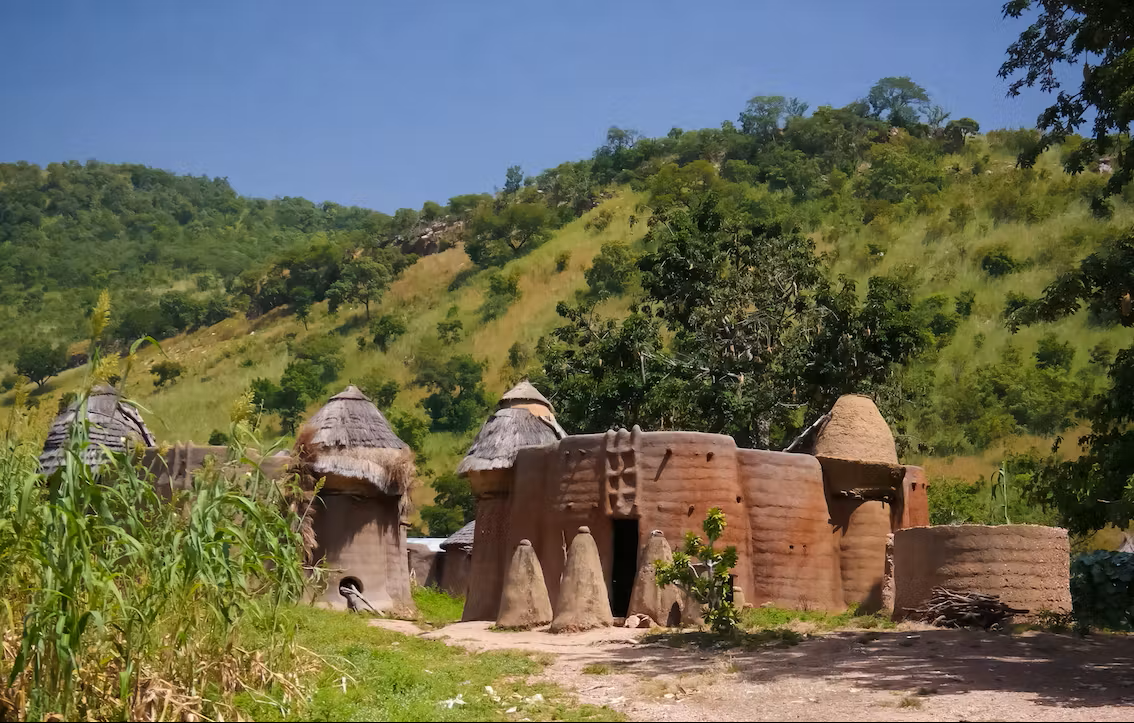
Traditional village of Tamberma in Koutammakou, the Land of the Batammariba people, in the Kara region of Togo.

Share on FacebookShare on Twitter

Koutammakou, located in northeastern Togo and extending into the Benin border, is a living cultural landscape inscribed on UNESCO’s World Heritage List in 2004. This land is home to the Batammariba people, also known as Otammari, Tamberma, or Somba. The region has gained global significance not only for its landscape, which spans nearly 50,000 hectares, but also for the unique architecture developed by its inhabitants and the profound relationship they have with their natural environment, a relationship that embraces spiritual and social integration.

The name “Batammariba” itself carries profound significance, meaning “those who shape the earth” in Ditammari (the language of the Otammari people), reflecting the essence of their identity as a people who have shaped their environment and who have been shaped by it.

The landscape of Koutammakou is characterized by a savannah interspersed with rocky hills and fertile valleys. The Batammariba people settled in this region during the 17th and 18th centuries, having migrated from the north and northwest regions, fleeing conflict, domination by central powers, and the slave trade. This history of seeking isolation and security shaped their settlement patterns and the development of their defensive architecture. The Batammariba did not view the land as private property but rather as a living entity shared with spiritual forces and ancestors.

According to their beliefs, they are not the owners of the land but rather its custodians. Their ancestors made alliances with the “powers of the underworld” that allowed them to settle and build in exchange for respecting specific rules regarding agriculture and the treatment of sacred sites.

The most distinctive element of the Koutammakou landscape are the mud-brick tower houses known as takienta (also known as the Tata Sombas). These buildings are the physical embodiment of the Batamariba’s worldview, social structure, and spiritual beliefs. Each takinta is an independent unit, designed to meet all the needs of the extended family, serving as a fortress, storehouse, and temple.

The building typically has two floors. The ground floor, often dark and cool, houses livestock at night, providing protection and warming the upper floor with their body heat. This floor also contains the kitchen and ritual spaces. The upper floor, accessed via a carved wooden staircase, is for living and sleeping. It also houses cylindrical granaries, ingeniously constructed to ensure ventilation and protect crops from rodents and moisture. The flat roof of the house is used for drying grain and daily activities and provides a view of the surrounding area for monitoring any potential dangers.

The takienta are built entirely from local, natural materials: mud mixed with straw and soil to form the thick walls, and wood to support the roofs and interior structures. The construction technique itself is a social process passed down through generations, demonstrating a deep understanding of the properties of available materials and their adaptation to the climate.

Symbolism is inherent in every part of the house. The takienta is seen as a reflection of the human body, with the entrance representing the mouth and the granaries serving as the storage areas for the prepared grain. It also embodies the gender divisions in society, with parts of the house associated with men and women. In front of the main entrance, there is typically a cluster of conical mud shrines and stakes.

Read also

Cape Verde’s World Cup team returns home to a hero’s welcome

Senegal’s Sangomar oil project has produced about 18 million barrels so far this year, document says

Nigeria says two nationals killed in anti-migrant violence in South Africa

Batamaripa society is organized around clans and family ties. Although there is no strong central political authority, the shared language, “Ditmari,” and shared beliefs and rituals form a strong bond that unites them. Their belief system is essentially animist, based on the veneration of natural forces and ancestral spirits who act as intermediaries between the living world, the spirit world, and the higher deities.

According to their creation myths, the Batamaripa descend from a “Mother Serpent” who inhabits the underworld and granted life and knowledge to their first ancestors. This connection to the underworld explains the importance of the land in their rituals; the land is not merely a source of sustenance but a gateway to the spirit world.

Rituals are an integral part of the life cycle of the individual and the community. When a child is born, a small mound of earth is created for them next to the family shrines. This mound grows and increases in size with each important transition in the individual’s life, such as initiation rites, becoming a physical representation of their life journey. Upon death, an upturned pot is placed on top of the mound to mark the end of their journey.

Initiation rites, such as the “decontiri” for girls, are among the most important social events. During these rites, knowledge, traditions, and social values ​​are passed on to the next generation and are considered the formal recognition of their coming of age and their assumption of full responsibilities as members of the community. Funeral rites are also complex and last for several days. Their purpose is to ensure the soul of the deceased passes peacefully into the world of the ancestors, where they will continue to play a role in protecting their family.

The Batammariba live in a symbiotic relationship with their environment. The cultural landscape of Koutammakou is not simply a collection of villages and buildings; it is the product of a continuous interaction between humans and nature. Their lands include agricultural fields, sacred forests, springs, and rocks that serve as ritual sites. They have developed agricultural techniques adapted to their environment, such as the construction of terraces on hillsides and networks of low walls to retain water and reduce soil erosion. Crops such as millet, sorghum, and peanuts are grown, forming the basis of their diet.

The forests surrounding the villages are a source of wood and medicinal plants and are considered sacred and inhabited by spirits, and logging and hunting are prohibited except according to strict rules. This respect for nature ensures the sustainability of resources and maintains the ecological balance on which their survival depends.

Like other traditional communities, Koutammakou and the Batammariba people face significant challenges in the modern era. The impact of globalization, economic changes, and the introduction of modern building materials such as cement and metal sheets threaten the viability of traditional building techniques. The migration of young people to cities in search of employment opportunities is eroding the knowledge base necessary to preserve and maintain takinta, which requires collective labor and specialized skills.

In addition, climate change is placing pressure on traditional agricultural practices. The site’s inscription on the UNESCO World Heritage List has drawn attention to the importance of preserving this unique heritage, but it also brings challenges related to tourism management and ensuring that the local community benefits without compromising the integrity of their culture and way of life.

Efforts are being made, in collaboration with international and local organizations, to document traditional knowledge and encourage its transmission to younger generations. These initiatives include workshops teaching mud building techniques and incorporating intangible cultural heritage into educational curricula.

Tags: BeninKoutammakouLand of the BatammaribaTakientaTata SombasTogo

Related Posts

Insurgents stage coordinated attacks on army positions across Mali
Featured

Insurgents stage coordinated attacks on army positions across Mali

July 5, 2026
Senegal’s top opposition leader Sonko vows to help win March 24 election
Featured

Senegal at a Political Crossroads: The Faye–Sonko Rivalry and the Future of Democratic Governance

July 3, 2026
Ukraine says Niger’s move to cut relations is ‘regrettable’
Featured

Niger arrests at least 16 for same-sex sexual acts, judicial source says

July 2, 2026
Burkina Faso assembly votes to send troops to Niger
Politics

Burkina Faso: what will change after the diplomatic rupture with France?

July 1, 2026
Ousmane Sonko, Senegal’s embattled opposition leader, has been hospitalized.
Featured

Senegal to hold national referendum after controversial constitutional change

June 30, 2026
Ghana agrees to accept West Africans deported from US, president says
Featured

Rights groups sue Ghana over US third-country deportations

June 30, 2026

Search Qiraat Africa

No Result
View All Result

Follow on Twitter

Follow @africanqiraat

Trending

Kumbi Saleh, the capital of the ancient Ghana Empire

Kumbi Saleh, the capital of the ancient Ghana Empire

October 13, 2025
Meja Mwangi: The Literary Genius with a Mighty pen

Meja Mwangi: The Literary Genius with a Mighty pen

May 24, 2025
Mbunda people of Angola and Zambia

Mbunda people of Angola and Zambia

January 18, 2026
Tuareg: The Blue People of the Sahara

Tuareg: The Blue People of the Sahara

May 23, 2025
New date set for return of Patrice Lumumba’s tooth

Patrice Lumumba (1925-1961), Congolese politician and independence leader

March 4, 2025
Zaghawa people of northeastern Chad and western Sudan

Zaghawa people of northeastern Chad and western Sudan

March 3, 2026

Facebook

Sections

  • About Us
  • Privacy Policy
  • Opinion
  • Infographics
  • News
  • Analysis
  • Figures
  • Culture & Literature
  • Follow Ups
  • Historical Readings
  • Interview
  • Studies


© Copyright Qiraat Africa. Developed by Bunnaj Media .

No Result
View All Result
  • News
  • Analysis & Report
  • Studies
  • Opinion
  • Interview
  • Culture & Literature
  • Figures
  • Historical Readings
  • Regions

© 2021 Copyright Qiraat Africa.