







Qiraat Africa
عربي  |  Fr
Advertisement
  • News
    • All
    • Climate Change
    • Economy
    • Education
    • Energy
    • Health
    • Migration
    • Mining
    • Politics
    • Security
    • Society
    • Sport
    Ethiopia’s central bank joins African payments system PAPSS

    Ethiopia’s central bank joins African payments system PAPSS

    South Africa grants long-term leases to oil majors at key Durban fuel hub

    South Africa to stop subsidizing imported vehicle kits, pushing automakers to build locally

    Here’s why inflation has dropped internationally but is still rising in Nigeria

    Nigeria’s inflation rate eases slightly in September, data shows

    Kenya raises fuel prices as Middle East conflict lifts import costs

    Kenya raises fuel prices as Middle East conflict lifts import costs

    Angola to maintain crude output at 1.1 million bpd into 2024

    Angola aims for faster oil and gas concessions as part of new regulatory revamp

    The arrest of Ansaru terror leaders marks a strategic change for Nigeria: What could happen next?

    Terrorists kill 10 soldiers in attack on northeast Nigeria army base

    Why is Senegal’s billions in hidden debt an IMF concern

    Senegal bondholders pick financial adviser for debt talks, sources say

    Abu Dhabi’s IRH seeks more mining assets in Zambia

    Abu Dhabi’s IRH seeks more mining assets in Zambia

    Guinea-Bissau says it has not approved hepatitis B vaccine trial in newborns

    Guinea-Bissau says it has not approved hepatitis B vaccine trial in newborns

  • Analysis
    • All
    • Climate Change
    • Digital & Tech
    • Economy
    • Energy & Power
    • Health
    • Politics
    • Security
    • Society
    The global panel on inequality needs African evidence: here’s how it could work

    The global panel on inequality needs African evidence: here’s how it could work

    Why Africa needs a new credit agency

    Why Africa needs a new credit agency

    Japan signs deal with Namibia to explore for rare earth minerals

    Africa’s mineral strength is wasted if countries don’t work together – new report

    Ethiopia: at least 40 army allies killed in drone strike

    Ethiopia’s peace deal is unravelling – what went wrong with the Tigray agreement

    DRC on a mission to financing the world’s largest hydropower dam

    DR Congo: The INGA Dam Paradox

    Cameroon uncovers more than 200 illegal gold mines, mostly foreign-owned

    Mineral Beneficiation: A Pipedream of Prosperity in an Unequal Financial Architecture

    Zambia signs $1.1 Billion deal to build major oil refinery in Copperbelt

    Is Zambia’s Economy Rebounding Under President Hakainde Hichilema?

    Nigeria considers crude supply reforms to aid Dangote, other refiners

    Refinery rivalry: billion‑dollar oil projects expose East Africa’s long‑running regional tensions

    Zambia’s chaotic but decisive election: government demonstrates strength, democracy shows weakness

    Zambia’s chaotic but decisive election: government demonstrates strength, democracy shows weakness

  • Studies
    China could drive Africa’s renewable energy revolution, report says

    A study shows wind and solar projects in Kenya and South Africa don’t always benefit the communities that host them

    Angola’s lengthy war shaped the way farmers utilised fire—why it matters

    Angola’s lengthy war shaped the way farmers utilised fire—why it matters

    Schooling is the most severely affected by conflict when children are the target – Study

    Schooling is the most severely affected by conflict when children are the target – Study

    Pensions for Botswana’s elderly are expanding, but care services are lacking—study follows 20 years

    Pensions for Botswana’s elderly are expanding, but care services are lacking—study follows 20 years

    60 new cosmic structures have been discovered by South Africa’s MeerKAT telescope, which is mapping previously unseen gaps between galaxies

    60 new cosmic structures have been discovered by South Africa’s MeerKAT telescope, which is mapping previously unseen gaps between galaxies

    Benin government says armed forces foil coup attempt

    Coup contagion? A rash of African power grabs suggests copycats are taking note of others’ success

    One in three South Africans have never heard of AI: what this means for policy

    One in three South Africans have never heard of AI: what this means for policy

    Social Media as a Catalyst for the Spread of Dangerous Wealth Ritual Myths

    Social Media as a Catalyst for the Spread of Dangerous Wealth Ritual Myths

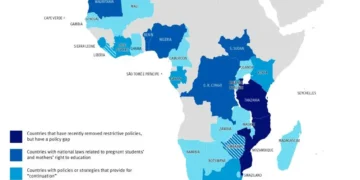
    Overcoming Education Barriers for Young Mothers in Sub-Saharan Africa

    Overcoming Education Barriers for Young Mothers in Sub-Saharan Africa

  • Infographics
  • Figures
    Namibia: Anger over Dubai COP28 trip by president Geingob’s children

    Hage Geingob (1941–2024): Former President of Namibia

    Cape Verde president says governments must discuss colonial reparations

    José Maria Neves: President of Cape Verde

    Jorge Bom Jesus: Linguist and former Prime Minister of São Tomé and Príncipe

    Jorge Bom Jesus: Linguist and former Prime Minister of São Tomé and Príncipe

    Joseph Leabua Jonathan (1914-1987): Former Prime Minister of Lesotho

    Joseph Leabua Jonathan (1914-1987): Former Prime Minister of Lesotho

    Gambia’s president Barrow faces backlash over ‘death wish’ on archrival

    Adama Barrow: President of the Republic of The Gambia

    Rwandan President Paul Kagame announces he will run for a fourth term

    Paul Kagame: Former military officer and president of Rwanda

    Zumbi dos Palmares (1655-1695): Afro-Brazilian leader of the great Palmares Quilombo

    Zumbi dos Palmares (1655-1695): Afro-Brazilian leader of the great Palmares Quilombo

    Léon M’ba (1902-1967): First president of independent Gabon

    Léon M’ba (1902-1967): First president of independent Gabon

    Namibia to vote in toughest election yet for ruling party

    Netumbo Nandi-Ndaitwah: President of Namibia

  • History
    Manovo-Gounda St. Floris National Park, Central African Republic

    Manovo-Gounda St. Floris National Park, Central African Republic

    Lake Malawi (Lake Nyasa) National Park, Malawi

    Lake Malawi (Lake Nyasa) National Park, Malawi

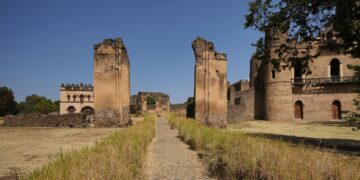
    Fasil Ghebbi, Gondar Region, Ethiopia

    Fasil Ghebbi, Gondar Region, Ethiopia

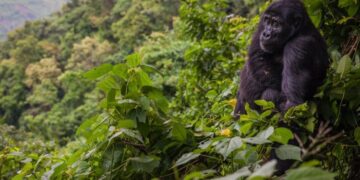
    Bwindi Impenetrable National Park, Uganda

    Bwindi Impenetrable National Park, Uganda

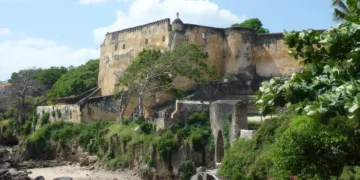
    Fort Jesus, Mombasa, Kenya

    Fort Jesus, Mombasa, Kenya

    Comoé National Park, Côte d’Ivoire (Ivory Coast)

    Comoé National Park, Côte d’Ivoire (Ivory Coast)

    Bassari and Bedik Cultural Landscapes, Senegal

    Bassari and Bedik Cultural Landscapes, Senegal

    Lower Valley of the Omo, Ethiopia

    Lower Valley of the Omo, Ethiopia

    Sudano-Sahelian style mosques, northern Côte d’Ivoire

    Sudano-Sahelian style mosques, northern Côte d’Ivoire

  • Others
    • Culture / Literature
    • Interview
    • Opinion
  • Countries
    • Country profiles
    • Regions
      • Central Africa
      • East Africa
      • Southern Africa
      • West Africa
No Result
View All Result
  • News
    • All
    • Climate Change
    • Economy
    • Education
    • Energy
    • Health
    • Migration
    • Mining
    • Politics
    • Security
    • Society
    • Sport
    Ethiopia’s central bank joins African payments system PAPSS

    Ethiopia’s central bank joins African payments system PAPSS

    South Africa grants long-term leases to oil majors at key Durban fuel hub

    South Africa to stop subsidizing imported vehicle kits, pushing automakers to build locally

    Here’s why inflation has dropped internationally but is still rising in Nigeria

    Nigeria’s inflation rate eases slightly in September, data shows

    Kenya raises fuel prices as Middle East conflict lifts import costs

    Kenya raises fuel prices as Middle East conflict lifts import costs

    Angola to maintain crude output at 1.1 million bpd into 2024

    Angola aims for faster oil and gas concessions as part of new regulatory revamp

    The arrest of Ansaru terror leaders marks a strategic change for Nigeria: What could happen next?

    Terrorists kill 10 soldiers in attack on northeast Nigeria army base

    Why is Senegal’s billions in hidden debt an IMF concern

    Senegal bondholders pick financial adviser for debt talks, sources say

    Abu Dhabi’s IRH seeks more mining assets in Zambia

    Abu Dhabi’s IRH seeks more mining assets in Zambia

    Guinea-Bissau says it has not approved hepatitis B vaccine trial in newborns

    Guinea-Bissau says it has not approved hepatitis B vaccine trial in newborns

  • Analysis
    • All
    • Climate Change
    • Digital & Tech
    • Economy
    • Energy & Power
    • Health
    • Politics
    • Security
    • Society
    The global panel on inequality needs African evidence: here’s how it could work

    The global panel on inequality needs African evidence: here’s how it could work

    Why Africa needs a new credit agency

    Why Africa needs a new credit agency

    Japan signs deal with Namibia to explore for rare earth minerals

    Africa’s mineral strength is wasted if countries don’t work together – new report

    Ethiopia: at least 40 army allies killed in drone strike

    Ethiopia’s peace deal is unravelling – what went wrong with the Tigray agreement

    DRC on a mission to financing the world’s largest hydropower dam

    DR Congo: The INGA Dam Paradox

    Cameroon uncovers more than 200 illegal gold mines, mostly foreign-owned

    Mineral Beneficiation: A Pipedream of Prosperity in an Unequal Financial Architecture

    Zambia signs $1.1 Billion deal to build major oil refinery in Copperbelt

    Is Zambia’s Economy Rebounding Under President Hakainde Hichilema?

    Nigeria considers crude supply reforms to aid Dangote, other refiners

    Refinery rivalry: billion‑dollar oil projects expose East Africa’s long‑running regional tensions

    Zambia’s chaotic but decisive election: government demonstrates strength, democracy shows weakness

    Zambia’s chaotic but decisive election: government demonstrates strength, democracy shows weakness

  • Studies
    China could drive Africa’s renewable energy revolution, report says

    A study shows wind and solar projects in Kenya and South Africa don’t always benefit the communities that host them

    Angola’s lengthy war shaped the way farmers utilised fire—why it matters

    Angola’s lengthy war shaped the way farmers utilised fire—why it matters

    Schooling is the most severely affected by conflict when children are the target – Study

    Schooling is the most severely affected by conflict when children are the target – Study

    Pensions for Botswana’s elderly are expanding, but care services are lacking—study follows 20 years

    Pensions for Botswana’s elderly are expanding, but care services are lacking—study follows 20 years

    60 new cosmic structures have been discovered by South Africa’s MeerKAT telescope, which is mapping previously unseen gaps between galaxies

    60 new cosmic structures have been discovered by South Africa’s MeerKAT telescope, which is mapping previously unseen gaps between galaxies

    Benin government says armed forces foil coup attempt

    Coup contagion? A rash of African power grabs suggests copycats are taking note of others’ success

    One in three South Africans have never heard of AI: what this means for policy

    One in three South Africans have never heard of AI: what this means for policy

    Social Media as a Catalyst for the Spread of Dangerous Wealth Ritual Myths

    Social Media as a Catalyst for the Spread of Dangerous Wealth Ritual Myths

    Overcoming Education Barriers for Young Mothers in Sub-Saharan Africa

    Overcoming Education Barriers for Young Mothers in Sub-Saharan Africa

  • Infographics
  • Figures
    Namibia: Anger over Dubai COP28 trip by president Geingob’s children

    Hage Geingob (1941–2024): Former President of Namibia

    Cape Verde president says governments must discuss colonial reparations

    José Maria Neves: President of Cape Verde

    Jorge Bom Jesus: Linguist and former Prime Minister of São Tomé and Príncipe

    Jorge Bom Jesus: Linguist and former Prime Minister of São Tomé and Príncipe

    Joseph Leabua Jonathan (1914-1987): Former Prime Minister of Lesotho

    Joseph Leabua Jonathan (1914-1987): Former Prime Minister of Lesotho

    Gambia’s president Barrow faces backlash over ‘death wish’ on archrival

    Adama Barrow: President of the Republic of The Gambia

    Rwandan President Paul Kagame announces he will run for a fourth term

    Paul Kagame: Former military officer and president of Rwanda

    Zumbi dos Palmares (1655-1695): Afro-Brazilian leader of the great Palmares Quilombo

    Zumbi dos Palmares (1655-1695): Afro-Brazilian leader of the great Palmares Quilombo

    Léon M’ba (1902-1967): First president of independent Gabon

    Léon M’ba (1902-1967): First president of independent Gabon

    Namibia to vote in toughest election yet for ruling party

    Netumbo Nandi-Ndaitwah: President of Namibia

  • History
    Manovo-Gounda St. Floris National Park, Central African Republic

    Manovo-Gounda St. Floris National Park, Central African Republic

    Lake Malawi (Lake Nyasa) National Park, Malawi

    Lake Malawi (Lake Nyasa) National Park, Malawi

    Fasil Ghebbi, Gondar Region, Ethiopia

    Fasil Ghebbi, Gondar Region, Ethiopia

    Bwindi Impenetrable National Park, Uganda

    Bwindi Impenetrable National Park, Uganda

    Fort Jesus, Mombasa, Kenya

    Fort Jesus, Mombasa, Kenya

    Comoé National Park, Côte d’Ivoire (Ivory Coast)

    Comoé National Park, Côte d’Ivoire (Ivory Coast)

    Bassari and Bedik Cultural Landscapes, Senegal

    Bassari and Bedik Cultural Landscapes, Senegal

    Lower Valley of the Omo, Ethiopia

    Lower Valley of the Omo, Ethiopia

    Sudano-Sahelian style mosques, northern Côte d’Ivoire

    Sudano-Sahelian style mosques, northern Côte d’Ivoire

  • Others
    • Culture / Literature
    • Interview
    • Opinion
  • Countries
    • Country profiles
    • Regions
      • Central Africa
      • East Africa
      • Southern Africa
      • West Africa
No Result
View All Result
Qiraat Africa
عربي  |  Fr
No Result
View All Result
Home Figures

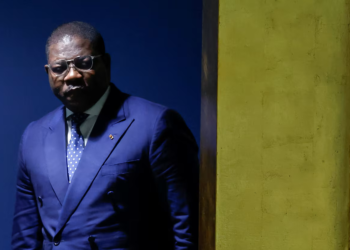
Al-Hajj Salim Suwari (fl. c. 13th–15th century): West African Soninke Islamic scholar

July 17, 2026
Al-Hajj Salim Suwari (fl. c. 13th–15th century): West African Soninke Islamic scholar

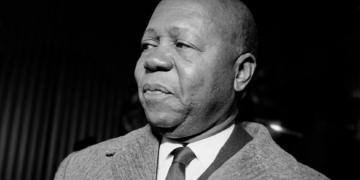
A potrait of a Soninke man. Copyright: soninkara.org

Share on FacebookShare on Twitter

Al-Hajj Salim al-Suwari, a Muslim scholar and jurist from the Soninke ethnic group, is considered one of the most important intellectual and religious figures in the history of sub-Saharan West Africa. Despite the scarcity of written and contemporary historical sources about his life, which makes determining his precise timeframe a matter of historical research and analysis, placing him between the 13th and 15th centuries CE, his jurisprudential and social impact has remained prominent and enduring across the centuries.

He is credited with founding a jurisprudential and philosophical approach known in historical literature as the Suwarian Tradition, a theoretical and practical framework that governs relations and peaceful coexistence between Muslim and non-Muslim communities in multi-religious and multi-ethnic societies.

Salim Suwari grew up among the Soninke, the primary ethnic group that founded the historical Ghana Empire (Wagadou, often spelt Wagadu) and played a leading role in spreading Islam and trade via caravan routes. The Soninke people were connected to the Dyula (or Juula / Dioula) trading networks, which linked production centres in the Niger River basin and tropical forests with northern markets. During that era, Muslim communities lived as commercial and scholarly minorities within kingdoms dominated by local polytheistic religions.

This dual reality created a pressing need for legal standards that would define the boundaries of interaction and adaptation with non-Muslim rulers and societies without direct confrontation or complete assimilation that would dilute Islamic identity.

Read also

Nigeria’s inflation rate eases slightly in September, data shows

Terrorists kill 10 soldiers in attack on northeast Nigeria army base

Senegal bondholders pick financial adviser for debt talks, sources say

Oral accounts and later legal texts indicate that Sawari travelled to Mecca to perform the Hajj pilgrimage several times and studied in the Middle East and centres of learning in North Africa. These travels allowed him access to advanced Maliki legal sources and interaction with the intellectual diversity of the Islamic world before he returned to the Bambukhu (also spelt Bambuhu or Bambouk) located in eastern present-day Mali, between the upper Senegal and Falémé rivers, where he established a renowned autonomous clerical city-state and founded the Jakhanke Islamic scholarly tradition for teaching and disseminating his educational system.

The Suwari tradition is based on a legal interpretation rooted in the Maliki school of thought, but adapted to the realities of West Africa through the formulation of four main pillars that intersect in the areas of politics, education, and religious relations:

  1. State Independence and Political Neutrality: The Suwari approach holds that disbelief or non-adherence to Islam is not an automatic justification for waging war or engaging in civil disobedience against non-Muslim rulers, as long as those rulers allow Muslims the freedom to practise their rituals and trade safely. Based on this premise, Muslims are obligated to maintain political loyalty to existing regimes and avoid revolutions, refraining from holding political or military positions that might embroil them in conflicts incompatible with Sharia law.
  2. Prohibition of “Missionary Jihad”: The Suwari reject the principle of using force or weapons to spread the Islamic faith. This position is based on the legal interpretation that human faith and political or religious conversion are contingent upon divine will and its timing and that the Muslim’s duty is limited to conveying the message and setting a good example. This view led to the prohibition of waging “jihad wars” to force societies to convert to Islam, thus granting Muslim traders broad freedom of movement and travel across various African kingdoms.
  3. Social Coexistence and Practical Tolerance: The Suwari school of thought permitted Muslims to maintain social and economic relations with non-Muslims, including trade, financial transactions, and good neighbourliness. It considered this peaceful coexistence the most effective means of introducing Islam, as it allowed non-Muslim societies to observe Muslim ethics and practices firsthand, paving the way for their voluntary conversion.
  4. Protecting Islamic Identity Through Education: The Suwari school of thought imposed strict adherence to religious and devotional practices within the Muslim community. It relied on establishing a structured network of Quranic schools (kuttabs) and religious institutions to train scholars and merchants and to ensure the protection of Muslim community members from cultural assimilation or the adoption of syncretic practices (mixing Islamic rituals with local customs).

Soninke and Dyula traders played a vital role in disseminating Suwari thought. As trade routes expanded southward and westward toward Ivory Coast, modern-day Ghana, Burkina Faso, Mali, Senegal, and Guinea, these traders brought with them scholars and jurists committed to the Suwari tradition.

The Jakhanke networks—a community of scholars descended, both ancestrally and intellectually, from the Suwari tradition—established independent and stable centres of learning in villages and regions such as Touba (a town and subprefecture in the Gaoual Prefecture in the Boké Region of northwestern Guinea). These villages were characterised by their neutrality and complete dedication to agriculture, trade, and Islamic jurisprudence, with their inhabitants refusing to bear arms or intervene in conflicts between neighbouring kingdoms.

This model contributed to the gradual spread of Islam deep into West Africa for centuries without bloodshed or armed clashes. The Suwari centres became havens for students and traders, both resident and transient.

Suwari thought has been subject to debate and revision throughout African history. With the advent of the 18th and 19th centuries, West Africa witnessed structural transformations manifested in the emergence of a religious revivalist movement led by scholars such as Usman dan Fodio in Nigeria, Oumarûl Foutiyou Tall in Senegal, and Modibbo Adama in Cameroon and Nigeria.

Terrorist leaders today (and other hardline conservatives) criticise the Suwari tradition, deeming it an unjustified pacifism toward oppressive regimes or an appeasement of rulers who mixed Islam with pagan practices. Critics argued that the Suwari approach led to Muslim complacency and the postponement of the full implementation of Sharia.

In contrast, contemporary historians and scholars argue that the Suwari approach reflects jurisprudential realism and a high degree of strategic adaptability. It provided the legal and philosophical framework that preserved Muslim minority communities, ensuring their survival and expansion in non-Islamic environments without being eradicated by local powers.

Tags: Al-Hajj Salim SuwariBambukhuDiakha-BambukhuDyulaJakhankeSoninkeSuwari tradition

Related Posts

Guinea-Bissau says it has not approved hepatitis B vaccine trial in newborns
Featured

Guinea-Bissau says it has not approved hepatitis B vaccine trial in newborns

October 14, 2026
Guinea-Bissau to delay elections following last year’s coup
Featured

Guinea-Bissau to delay elections following last year’s coup

October 11, 2026
Ghana’s cocoa regulator secures $288 million for farmer purchases
Economy

Ghana’s cocoa regulator secures $288 million for farmer purchases

October 8, 2026
The global panel on inequality needs African evidence: here’s how it could work
Central Africa

The global panel on inequality needs African evidence: here’s how it could work

October 7, 2026
Mali: Tuareg rebels inflict losses on Government and marcenary forces
Featured

Mali separatists announce withdrawal from strategic northern town

October 6, 2026
Why is Senegal’s billions in hidden debt an IMF concern
Economy

Senegal aims for deal with official creditors, bondholders by December, sources say

October 6, 2026

Search Qiraat Africa

No Result
View All Result

Follow on Twitter

Follow @africanqiraat

Trending

Samori Touré (1830-1900): Military leader and founder of Wassoulou Empire

Samori Touré (1830-1900): Military leader and founder of Wassoulou Empire

January 11, 2026
Africa’s 10 Strongest Currencies in June 2026

Africa’s 10 Strongest Currencies in June 2026

July 8, 2026
Kumbi Saleh, the capital of the ancient Ghana Empire

Kumbi Saleh, the capital of the ancient Ghana Empire

October 13, 2025
Tunka Manin (c. 1010–1078), the last ruler of the Ghana Empire

Tunka Manin (c. 1010–1078), the last ruler of the Ghana Empire

December 12, 2025
The Sudd wetland

The Sudd wetland

February 13, 2026
The Great Mosque of Djenne, Mali

The Great Mosque of Djenne, Mali

March 25, 2025

Facebook

Sections

  • About Us
  • Privacy Policy
  • Opinion
  • Infographics
  • News
  • Analysis
  • Figures
  • Culture & Literature
  • Follow Ups
  • Historical Readings
  • Interview
  • Studies


© Copyright Qiraat Africa. Developed by Bunnaj Media .

No Result
View All Result
  • News
  • Analysis & Report
  • Studies
  • Opinion
  • Interview
  • Culture & Literature
  • Figures
  • Historical Readings
  • Regions

© 2021 Copyright Qiraat Africa.