











The political experience of former Senegalese President Macky Sall and his term in office, spanning from 2012 to 2024, marked a pivotal era where structural economic transformations and massive infrastructure projects intersected with political struggles and genuine tests of the resilience of Senegal’s democratic model.
Macky Sall was born on December 11, 1961, in Fatick and grew up in a middle-class background. He received his undergraduate education at Cheikh Anta Diop University in Dakar, specialising in geological engineering, before pursuing advanced studies at the French Petroleum Institute (IFP) in Paris. This scientific background later shaped his approach to governance, characterised by a focus on structural planning and technical solutions.
Sall began his political career by joining the Senegalese Democratic Party (PDS), led by Abdoulaye Wade. His gradual political ascent allowed him to rise rapidly within the power structure following Wade’s presidential victory in 2000. He took over the management of the national oil company, Petrosen, and was later appointed minister of mines, energy, and hydraulics. He served as minister of the interior and local authorities, overseeing elections and maintaining security.
From 2004 to 2007, he served as prime minister. He led the government as a cabinet minister and steadily implemented the ruling party’s programme. He assumed the speakership of the National Assembly (2007–2008) before sharp disagreements erupted between him and his political camp.
Tensions between Sall and President Abdoulaye Wade escalated after the National Assembly summoned the president’s son, Karim Wade, to question him about the management of the Islamic Conference’s funds. This confrontation led to Sall’s resignation from all his positions and his removal from his party duties, prompting him to launch his own independent political project.
In 2008, Macky Sall founded the Alliance for the Republic (APR) party and embarked on an extensive campaign tour that included Senegal’s regions and the diaspora. He capitalised on public discontent with Abdoulaye Wade’s attempt to amend the constitution to run for a third term, forming a broad coalition called Benno Bokk Yakaar (BBY).
In the 2012 presidential election, the first round saw a heated contest between Abdoulaye Wade and Macky Sall. In the second round, the opposition united behind Sall, and he won 65.8% of the vote. He entered the presidential palace in April 2012, pledging to reform institutions, reduce the cost of living, and shorten the presidential term from seven to five years to ensure the peaceful transfer of power.
During his first two terms, President Sall’s administration focused on transforming Senegal into a regional economic hub through the implementation of the “Emerging Senegal Plan” (Plan Sénégal Émergent – PSE), a framework for long-term development policies.
The country witnessed a surge in infrastructure projects, including the creation of “Diamniadio New City”, a smart city to alleviate demographic and urban pressure on the capital, Dakar. It also saw the launch of the Regional Express Train (TER) to connect Dakar with neighbouring cities and the implementation of the Bus Rapid Transit (BRT) project. The government also saw the completion and opening of the Blaise Diagne International Airport, the new international airport to strengthen the country’s position as a regional air hub, and the construction of the Farafini Bridge over the Gambia River to boost cross-border trade.
The Sall era coincided with the discovery of vast quantities of offshore oil and gas in Senegal’s Sangomar and the shared Senegal-Mauritania Greater Tortue Ahmeyim (GTA). His administration established a new legislative framework for managing hydrocarbon revenues through the Local Content Act and the creation of a sovereign wealth fund for future generations, amidst heated political debates regarding the transparency of contracts signed with foreign companies.
Internationally, under Macky Sall, Senegal regained a prominent diplomatic presence. He managed complex regional issues within the framework of the Economic Community of West African States (ECOWAS), notably the military and diplomatic intervention to resolve the political crisis in The Gambia in 2017 and consolidate the results of its democratic elections.
“Africa cannot remain merely a subject in international relations; it must be an equal partner in global governance.” — From Macky Sall’s address to the United Nations General Assembly (2022)
During his chairmanship of the African Union (2022–2023), Sall spearheaded intensive diplomatic efforts. He successfully campaigned for the African Union to secure a permanent seat in the G20. He led an African delegation to Moscow and Kyiv to negotiate grain and fertiliser supply chains following the outbreak of the Russian-Ukrainian War. He called on the international community to finance a just energy transition for developing countries.
Despite economic and diplomatic successes, the final years of Sall’s rule were marked by unprecedented political turmoil that threatened social stability and tarnished the country’s democratic image.
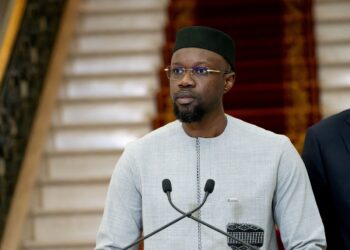
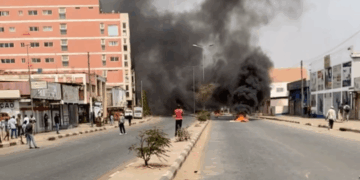
The period from 2021 to 2023 witnessed widespread unrest, characterised by bloody clashes between security forces and opposition supporters, particularly those of Ousmane Sonko. The crisis stemmed from legal cases targeting opposition figures, which human rights groups considered attempts to manipulate the electoral landscape and eliminate prominent rivals. The authorities, however, insisted on the complete independence of the judiciary and the necessity of upholding the rule of law.
For a long time, Sall remained ambiguous about the possibility of running for a third term, citing the 2016 constitutional amendment that reduced term limits. This ambiguity fuelled widespread public discontent until he officially announced in July 2023 that he would not seek another term.
However, the crisis reached its peak in February 2024 when Sall announced the postponement of the presidential elections just weeks before their scheduled date, citing disagreements between Parliament and the Constitutional Council regarding the eligibility of some candidates. This move plunged the country into a temporary constitutional vacuum and sparked widespread condemnation both domestically and internationally.
The Senegalese Constitutional Council overturned the postponement decree, affirming the illegality of altering election dates outside the constitutional framework. Macky Sall complied with the ruling and ordered the elections to be held in March 2024. He also issued a general amnesty law, releasing political prisoners, most notably Ousmane Sonko and Bassirou Diomé Faye.
The elections resulted in a first-round victory for opposition candidate Bassirou Diomé Faye. On April 2, 2024, Macky Sall peacefully transferred power to his successor in a ceremonial and ceremonial manner, reaffirming Senegal’s long-standing democratic traditions as countries in the region that has not experienced a military coup. Evaluation and Assessment: Concluding the Phase
Historical readings of Macky Sall’s rule fall into two analytical categories. The developmental perspective sees Sall as a modernising president who brought about a qualitative leap in infrastructure, raised economic growth rates, and enabled Senegal to join the ranks of oil and gas-producing nations, in addition to strengthening Dakar’s influence in international forums.
However, human rights and democratic perspectives argue that his era witnessed a decline in civil liberties, an increase in politically motivated prosecutions, and an erosion of public trust in official institutions as a result of decisions preceding the presidential transition.