





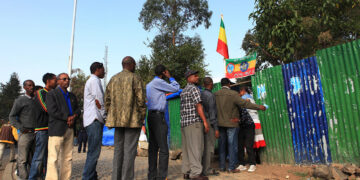













Zambians voted on Thursday in a national election that will test whether President Hakainde Hichilema’s economic gains since a pandemic-era debt crisis are enough to win him a second term.
Analysts say Hichilema is favoured to win due to the advantages of incumbency and a fractured opposition, although first-time presidential candidate Brian Mundubile has drawn large crowds in some areas.
Hichilema took office in 2021 and steered Zambia through a debt restructuring and recovery after it defaulted on its sovereign debt in 2020.
The southern African country is the continent’s second-largest copper producer after Democratic Republic of Congo and is of strategic interest for its critical minerals, with China already a major investor in the sector and the United States seeking to expand its access.
Earlier this year negotiations over U.S. health funding of up to $2 billion stalled after Zambia said Washington wanted to tie the money to mining deals.
COST OF LIVING MAJOR ISSUES FOR VOTERS
The country of 22 million people is voting in presidential, parliamentary and local government elections simultaneously. Polls will close at 6 p.m. (1600 GMT), with results expected on Monday.
“I voted for HH because he cares about us,” said James Phiri, a 29-year-old student at the University of Zambia, using a common nickname for the president.
“Things are better after he re-introduced meal allowances,” said Phiri. Hichilema fulfilled a campaign promise by restoring allowances for university students which were cancelled by the previous administration.
Many Zambians say they are struggling with the cost of living, which analysts see as Hichilema’s main weakness in the poll, despite economic indicators having improved.
The International Monetary Fund projects Zambia’s economy as growing 4.3% this year from 3.8% last year, foreign investment has picked up, and inflation is at its lowest level in years.
But whether those gains have reached ordinary Zambians is a point of contention.
“I have just come from firing someone. We are tired of stories about economic progress,” said Samuel Chitendwe, a 47-year-old welder and father of four who said he voted for Mundubile.
SOME CONCERNS OVER FAIRNESS OF VOTE
The lead-up to the vote has been marred by some allegations of political repression, although the government denies this.
Zambia is rated as “partly free” by U.S. non-profit group Freedom House, which says that although there are regular multi-party elections, opposition parties face “onerous legal and practical obstacles to fair competition”.
A presidential candidate must receive more than 50% of votes cast in order to win in the first round, or face a run-off between the top two contenders.
If the presidential vote goes to a second round the run-off must be held within 37 days of the first poll.