


























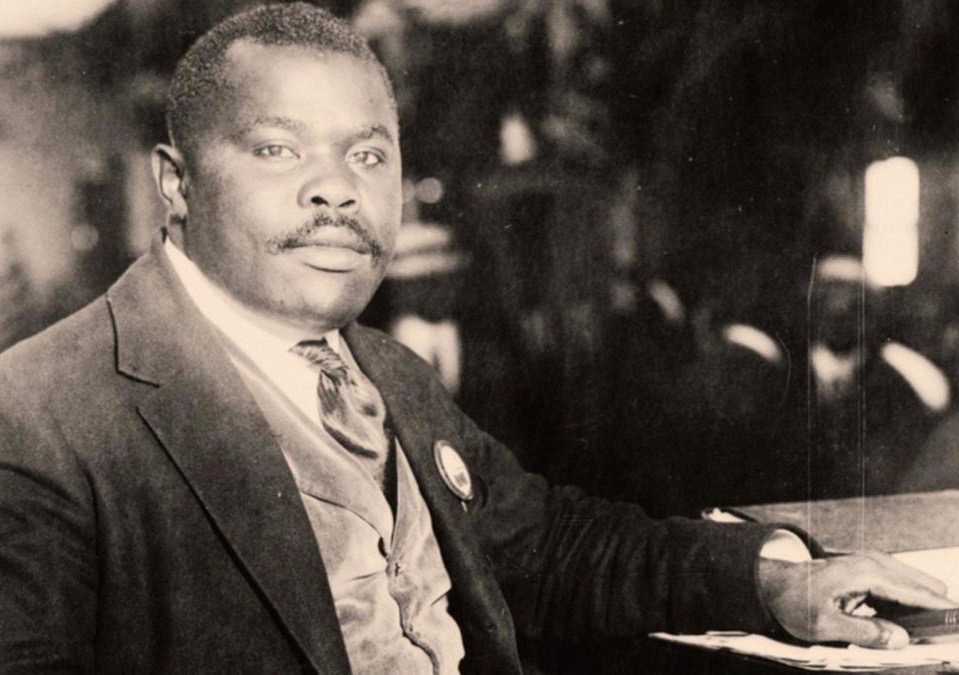
The early decades of the 20th century witnessed the rise of numerous political and social movements seeking to reshape the global order and define the collective identities of oppressed peoples. Within the context of the struggle of people of African descent against colonialism and apartheid, the name of Marcus Garvey stands out as one of the most influential and controversial figures.
As a political activist, a founder of Black nationalism, and a pioneer of Pan-Africanism, Garvey built the largest mass movement in the history of people of African descent. However, his career was not without contradictions and legal and political crises, leading to diverse interpretations of his legacy. Some see him as a spiritual inspiration for liberation movements, while others consider him a radical figure whose ideas were characterised by isolationism and unrealistic ideals.
Marcus Mosiah Garvey Jr was born on August 17, 1887, in the St Ann’s Bay area of Jamaica, which was then a British colony. He grew up in humble circumstances; his father was a mason and stonemason, while his mother worked as a domestic servant and farmer. Financial hardship forced him to leave school at the age of fourteen, and he learned the printing trade in Kingston, the capital city. This profession provided him with a daily income and exposed him to journalism and labour unions. He became involved in the workers’ strikes of 1907, which led to his being blacklisted by his employers.
Between 1910 and 1914, Garvey travelled through Central America, including Costa Rica and Panama, where he worked as a journalist and observer of the working conditions of Jamaican migrant workers on banana plantations and irrigation canal projects. This experience shocked him, revealing the levels of discrimination and exploitation faced by Black workers far from their homeland. He then moved to London, where he briefly studied at Birkbeck College and worked as an assistant at the African Times and Orient Review, edited by the Egyptian-Sudanese nationalist activist Dusé Mohamed Ali.
In this London environment, Garvey was exposed to ideas of African solidarity and political sovereignty and was influenced by the writings of the American thinker Booker T. Washington, particularly his autobiography, “Up from Slavery”, which emphasised the importance of economic self-reliance and vocational education as a path to the advancement of Black people.
Garvey returned to Jamaica in 1914, and in July of that year, along with his colleague and later first wife, Amy Ashwood Garvey, he founded the Universal Negro Improvement Association and African Communities League (UNIA-ACL). The association adopted a central motto that encapsulated its philosophy: “One God, One Goal, One Destiny.” Initially, the organisation sought to improve the lives of Black people in Jamaica by establishing vocational colleges modelled after the Tuskegee Institute, founded by Booker Washington in Alabama. But Jamaica’s racial elite and ruling classes met Garvey’s ideas with scepticism and rejection, given his focus on a purely “Negro” identity and the revitalisation of the Black race, which was seen as a threat to the social order based on class and racial hierarchy on the island.
Garvey moved to the United States in 1916 and settled in Harlem, New York City, which was then experiencing a major cultural and social renaissance for Black people. He found fertile ground for his ideas in America, especially with the rise of racial violence against African Americans returning from World War I, the spread of segregation (Jim Crow laws) in the South, and systemic discrimination in the North. Garvey established a branch of the organisation in New York in 1917 and began delivering impassioned speeches in the streets and public halls, utilising his exceptional oratorical skills. In 1918, he launched the newspaper *Negro World*, which distributed thousands of copies worldwide in English, Spanish, and French, becoming the primary platform for disseminating his ideology.
Garvey’s philosophy, later known as “Garveyism”, was characterised by its focus on three main pillars: racial pride, economic self-reliance, and political secession. Garvey believed that the social and political integration of Black people into white societies was impossible and that pursuing equality through laws and the constitution in countries like the United States was a waste of time. Instead, he advocated for the creation of entirely independent economic and political entities run by Black people themselves.
To this end, in 1920, he founded the “Negro Factories Corporation” in New York City, which operated a chain of stores, restaurants, laundromats, garment factories, and publishing houses, with the goal of creating jobs and achieving self-sufficiency for the Black community.
Garvey’s organisational efforts culminated in the convening of the First International Convention of the Negro Peoples of the World in August 1920 at Madison Square Garden in New York City, attended by thousands of delegates from around the world. During this conference, the “Declaration of the Rights of Negro Peoples of the World” was adopted, and Garvey was elected to the honorary position of “Provisional President of Africa. ” The movement also adopted a tricolour flag: red (symbolising the blood shed for freedom), black (symbolising racial pride), and green (symbolising the promising riches of the African continent), a flag that later became a global symbol of African liberation movements and Black nationalism.
The most controversial aspect of Garvey’s project was the “Return to Africa” movement, which focused on establishing a strong, independent state in Africa that would serve as a political and spiritual protector and refuge for all members of the African diaspora, similar to the role major powers play for their citizens abroad. To achieve this commercial and political goal, Garvey founded the Black Star Line in 1919. The company was entirely funded by selling shares to members of the organisation, primarily from the Black working class, with the aim of facilitating trade between African communities in the Americas and the hoped-for refuge on the African continent, specifically in Liberia. The organisation negotiated with the Liberian government to purchase land for settling the migrants.
Despite its considerable public success, the shipping company faced severe administrative and financial crises. Garvey and his advisors lacked the technical and commercial expertise to manage ships, and the organisation was exploited by white shipbrokers who sold the organisation dilapidated vessels at inflated prices. Frequent mechanical failures, mounting debt, and financial mismanagement led to the commercial collapse of the enterprise, attracting the attention of U.S. federal authorities.
Under J. Edgar Hoover (later director of the FBI), the U.S. government placed Garvey under close surveillance as a potential security threat. In 1922, Garvey and three associates were charged with mail fraud for using the mail to sell shares in the company despite knowing its dire financial situation and that its ship, the Orion, was not legally fully owned by the organisation at the time.
The 1923 trial resulted in Garvey’s conviction alone, and he was sentenced to five years in prison. Throughout the trial, Garvey maintained his innocence, claiming the case was politically and racially motivated to destroy his movement. He spent nearly two years in Atlanta federal prison before President Calvin Coolidge commuted his sentence in 1927 under pressure from petitions and public protests. He was immediately deported from the United States as a convicted alien.
The crises Garvey faced extended to bitter conflicts with contemporary Black intellectual and political leaders in the United States. His most prominent adversary was the sociologist and philosopher W.E.B. Du Bois, a co-founder of the NAACP. Du Bois and the intellectual elite around him considered Garvey’s ideas utopian and unrealistic, contributing to the weakening of the struggle for civil rights and full citizenship in America. In one of his articles, Du Bois described Garvey as “the most dangerous enemy of the Negro race in America”. In turn, Garvey attacked Du Bois, portraying him as representing a white bourgeois elite that sought the approval of whites and was detached from the concerns of the Black working class.
Garvey’s political isolation deepened when, in 1922, he met Edward Young Clarke, a prominent leader of the white supremacist Ku Klux Klan (KKK) in Atlanta. Garvey justified this meeting by claiming a shared interest between his movement and the racist group: both rejected racial integration and supported complete segregation between whites and Blacks. Garvey asserted that the KKK openly expressed the true position of white America without political hypocrisy. This stance sparked widespread shock and outrage among Black activists, who viewed Garvey’s move as an alliance with a terrorist group that perpetrated murder and intimidation against their communities.
After being deported to Jamaica in 1927, Garvey attempted to rebuild his political movement. In 1929, he founded the People’s Political Party, the first modern political party in Jamaica, which focused on the rights of the Black majority and the working class, advocating for land reform and the establishment of a national education and cultural system. Although he was elected to the Kingston City Council, strict colonial laws and restrictions on voting rights based on property ownership and income prevented the party from achieving a decisive parliamentary victory.
With dwindling financial resources and the dispersal of UNIA branches in his absence, Garvey decided to move to London in 1935. He spent his final years in the British capital, far removed from the centre of events and the public attention in New York. He continued to write, publish “The Black Man” magazine, and give lectures, but his political influence had waned considerably.
In January 1940, Garvey suffered his first stroke, which left him partially paralysed. In June of the same year, he died in London at the age of 52.
Due to the circumstances of World War II, his body was initially buried in a church crypt in London before being transferred to Jamaica in 1964, where he was officially declared the country’s first national hero and a special mausoleum was erected in his honour in Kingston’s National Heroes Park.