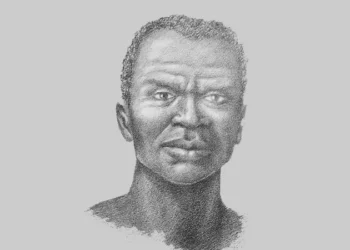






























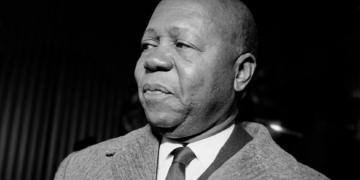










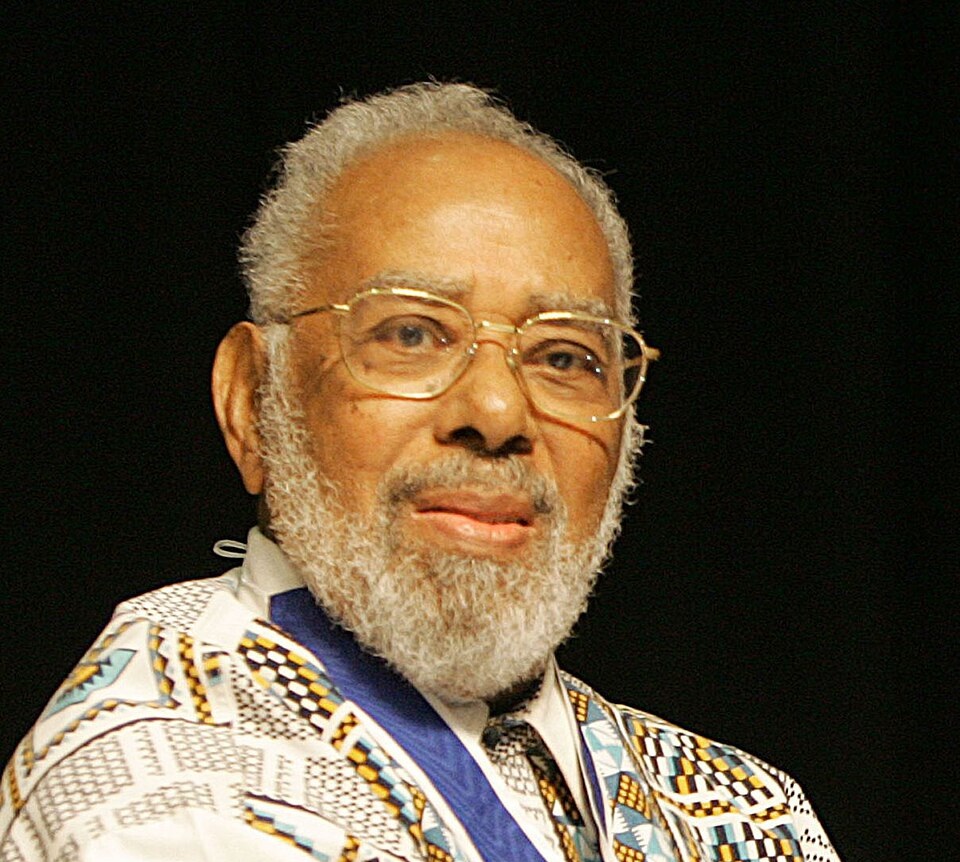
Among the most influential figures in shaping the debate and deconstructing the concept of “racial democracy” in Brazil throughout the twentieth century stands out the name of Abdias do Nascimento. Do Nascimento’s activities were multifaceted; he was an academic, visual artist, playwright, and prominent politician. His career was characterised by an attempt to bridge the gap between intellectual work and political practice, placing the experience of Afro-Brazilians at the forefront of national and international consciousness.
Abdias do Nascimento was born on March 14, 1914, in Franca, São Paulo, Brazil, to a working-class family. He grew up in an environment where he encountered early manifestations of social and economic discrimination linked to his racial background, which shaped his initial awareness. He later moved to the then-capital, Rio de Janeiro, where he pursued his studies in economics at the University of Rio de Janeiro, graduating in the 1930s.
During this period, do Nascimento became involved with the Brazilian Black Front (Frente Negra Brasileira), the first collective political organisation for Black people in modern Brazil. This experience deepened his understanding of the mechanisms of structural marginalisation. Initially influenced by nationalist currents, he quickly developed a critical perspective focused on the cultural and historical specificity of the African population in Latin America.
In the 1940s, do Nascimento observed the absence of Black actors from mainstream Brazilian theatre or their confinement to minor and stereotypical roles that reinforced their inferiority. In response to this reality, in 1944 he founded the Black Experimental Theatre (Teatro Experimental do Negro – TEN) in Rio de Janeiro.
This project was a social and educational institution. The theatre’s activities included providing reading and writing lessons to participants from working-class and marginalised groups to enable them to read and understand theatrical texts. Training Black actors in professional theatrical performance to demonstrate their ability to portray complex and sophisticated roles. Producing plays that address issues of racism, the historical memory of slavery, and African cultural heritage, such as “Sortilégio” (Mistério Negro), written by Do Nascimento himself.
Black experimental theatre succeeded in bringing hidden talents to the forefront and forcing the Brazilian cultural elite to reconsider prevailing aesthetic and artistic standards, thus breaking through the structure of official culture, which had long ignored the African component.
Do Nascimento lived during a period when the Brazilian state and academic institutions promoted the theory of “racial democracy” (Democracia Racial), a thesis formulated by sociologist Gilberto Freire. This theory posits that Brazil represents a unique model of peaceful coexistence and integration between races without systemic discrimination. Do Nascimento devoted a significant portion of his academic and intellectual work to refuting this theory.
In his writings, most notably his renowned book “The Genocide of Black Brazilians: Process of a Masked Racism” (O Genocídio do Negro Brasileiro: Processo de um Racismo Mascarado), he argued that racial democracy was merely an ideological mask concealing ongoing economic and social marginalisation. He used the term “genocide” not only in its purely physical sense but also in its cultural and social sense, encompassing the erasure of African identity, the denial of its contributions, and the coercion of Black populations toward conformity with the values of social whitening (Branqueamento).
During his exile from Brazil following the 1964 military coup, do Nascimento brought this debate to the international stage. He served as a visiting professor at prominent American and African universities, including the University of Buffalo and the University of Ife in Nigeria. This stage allowed him to come into contact with the civil rights movements in the United States and the Pan-Africanism movement, which was reflected in his discourse, which became more connected to global issues of anti-colonialism and anti-racism.
During his years in exile, he began to focus intensely on painting and sculpture. His paintings were characterised by the use of strong colours and visual symbols drawn directly from African mythology, specifically Yoruba culture and the Brazilian Candomblé tradition.
He employed symbols such as orishas (spirits or deities in Yoruba beliefs) and traditional geometric shapes in his artwork, a political act aimed at reclaiming suppressed visual and historical memory and offering an artistic alternative that resisted cultural alienation. His paintings were exhibited in numerous international galleries in the United States, Brazil, and Africa, and critics viewed them as an extension of his liberationist intellectual project.
Following the passage of the general amnesty law in Brazil in 1979, do Nascimento returned to his homeland and became directly involved in institutional political work. He helped found the Workers’ Democracy Party (PDT) under the leadership of Leonel Brizola.
His historical significance was reflected in his election to the Brazilian Parliament at various times. Elected to the Chamber of Deputies (1983-1987), he was the first Black congressman to focus his entire legislative agenda on defending the rights of Afro-Brazilian communities. He introduced groundbreaking bills criminalising racial discrimination and adopting affirmative action policies.
In Senate (1991-1992, then 1996-1999), from this platform, he continued to advocate for the inclusion of African history in the official school curriculum and for securing land ownership for rural communities descended from historically enslaved people (Quilombos).
He also served as minister of defence and awareness for Black citizenship in the Rio de Janeiro state government, which allowed him to implement some developmental ideas at the local level and to integrate racial issues into national policy rather than simply addressing popular demands.
To ensure the continuity of intellectual and educational work, do Nascimento founded the Institute for Afro-Brazilian Research and Studies (IPEAFRO) in 1981. The institute focused on producing documented scientific and historical knowledge about Africa and the diaspora and on organising workshops for teachers to prepare them for implementing new laws on multiracial education. The institute also collected and preserved a vast archive related to Black movements in Brazil, becoming an essential resource for researchers and historians.
Abdias do Nascimento died on May 24, 2011, in Rio de Janeiro at the age of 97. Interpretations of his legacy vary. While his supporters and rights movements see him as a founding symbol of modern Black consciousness in Brazil, his critics, especially the conservative currents, accused him of importing American racial concepts incompatible with the complex nature of Brazilian society and of contributing to social division in a nation built on racial integration.
Nevertheless, his fundamental contribution remains in the academic and political communities, which focused on acknowledging the existence of a structural problem related to race in Brazil. His ideas, considered radical and marginal in the mid-20th century, have been transformed into official policies implemented by the Brazilian state in the 21st century, such as racial quotas in universities and government jobs, and the mandatory teaching of African history—transformations that testify to the profound impact this thinker and politician had on the structure of the state and society.