





















Aldabra Atoll is located in the far southwest of the Republic of Seychelles in the Indian Ocean, about 1,150 kilometres southwest of Mahé, the capital island, and approximately 420 kilometres northeast of Madagascar. It is one of the most remote island groups in the world and one of the largest raised coral atolls by land area.
This area is of particular interest to ecology and zoogeography due to its extreme isolation from direct human influence, which has allowed natural evolutionary processes to continue for millions of years without significant external intervention.
In 1982, the United Nations Educational, Scientific and Cultural Organization (UNESCO) inscribed Aldabra on the World Heritage List for its exceptional value as a living natural laboratory.
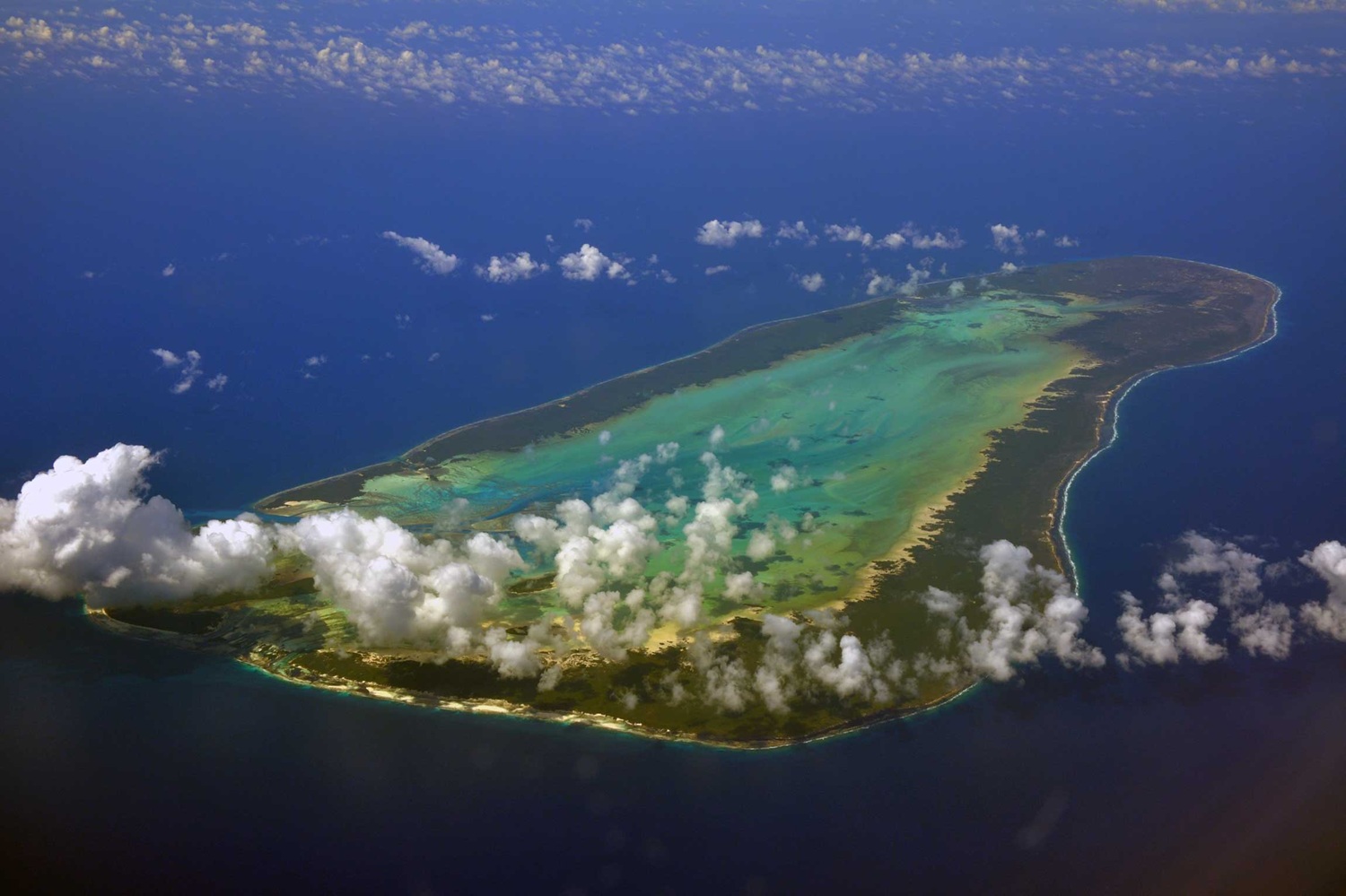
Aldabra consists of a raised coral ring surrounding a vast, shallow lagoon. The island’s geological formation extends over an extinct volcano submerged deep in the Indian Ocean, where coral reefs have grown over successive geological eras. As sea levels changed during the Pleistocene epoch, these reefs were uplifted and calcified, resulting in the uplifted coral limestone that forms the present-day landmass.
The landmass of Aldabra covers approximately 155 square kilometres, while the total area of the system, including the lagoon and reefs, exceeds 350 square kilometres. The island comprises four main islands separated by narrow channels subject to strong tidal forces.
- Grande Terre, also known as the South Island, is the largest of the four islands and forms a long arc around the southern and western parts of the lagoon.
- Malabar Island: Also known as the Middle Island, it lies in the northern part of the ring.
- Picard Island: Also known as the North Island, it houses the main research station and permanent scientific research facility.
- Polimnie Island: A small island located between Picard and Malabar Islands. The limestone surface of Aldabra is characterised by champignon karst, a series of sharp, jagged rock formations sculpted by chemical and mechanical erosion from rainwater and waves. These jagged rocks make pedestrian movement extremely difficult and limit human activity on the island.
Aldabra experiences a relatively dry tropical climate compared to the northern granite islands of the Seychelles. The climate is influenced by the Indian Ocean monsoon system, with the year divided into two main seasons:
- Northwesterly Wave Season (December–April): This is the warm, rainy season, with most of the annual rainfall and temperatures ranging from 27°C to 32°C.
- Southeasterly Wave Season (May–November): This is the relatively dry and cooler season, with lower rainfall and stronger trade winds.
Aldabra receives an average annual rainfall of approximately 1100 mm, a rate that fluctuates according to the El Nio climate pattern. It lacks permanent freshwater sources such as rivers or lakes, relying instead on rainwater collected in rock sinkholes or on physiological adaptations to the scarcity of water.
Hydrologically, the inland lagoon is connected to the open ocean via four main channels. Rapid water exchange during tidal cycles generates extremely strong currents, reaching speeds of several knots, which regularly replenish the lagoon’s water and supply it with nutrients.
Aldabra is home to unique ecosystems that have evolved under conditions of isolation and water scarcity, encompassing both adapted plants and endemic animals. It is the last natural habitat of the Aldabra giant tortoise (Aldabrachelys gigantea), one of the largest land tortoise species in the world. The island’s population is estimated at over 100,000, far exceeding the total number of giant tortoises remaining in the Galapagos Islands.
These tortoises act as the island’s ecological architects, influencing vegetation formation and seed dispersal. Continuous grazing has led to the development of what are known as “coral grasslands,” low-growing plant communities capable of withstanding constant pressure.
Aldabra is also a major bird sanctuary in the Indian Ocean, most notably the following:
- Aldabra plover (Dryolimnas cuvieri aldabranus): the only remaining flightless bird species in the entire Indian Ocean region, following the extinction of the dodo and other birds. Its survival is explained by the absence of natural land predators on the island.
- Frigatebirds: Aldabra is home to one of the world’s largest breeding colonies of Greater Frigatebirds (Fregata minor) and Lesser Frigatebirds (Fregata ariel), which nest in the mangroves surrounding the lagoon.
- Other species: These include Aldabra thrushes, blue pigeons, and waterfowl such as red-footed boobies.
Aldabra’s vegetation encompasses four main types:
- Mangrove forests: These extend along the edges of the inland lagoon, covering vast areas and comprising four main types, including red and black mangroves.
- Coral karst vegetation: Dwarf shrubs and hardy grasses that grow in rock crevices and tolerate salinity and drought.
- Grazing areas: Forage areas dominated by short grasses that cling to the soil to accommodate turtle grazing.
- Shore shrubs: These grow on coastal sand dunes and help stabilise the soil.
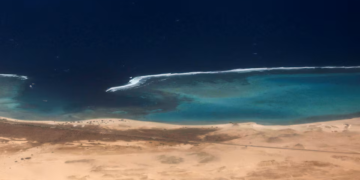
Aldabra boasts an excellent marine environment thanks to the absence of industrial activity and direct human pollution. The island is surrounded by a ribbon-like coral reef that extends into the deep ocean.
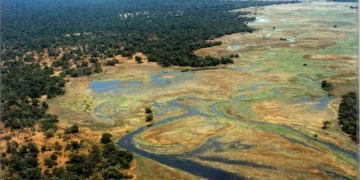
The lagoon features a diverse ecosystem encompassing mangroves, sandy seabeds, and seagrass beds. This environment provides high levels of oxygen and nutrients, making it a natural nursery for sharks (such as the blacktip reef shark), manta rays, and numerous commercially important tropical fish.
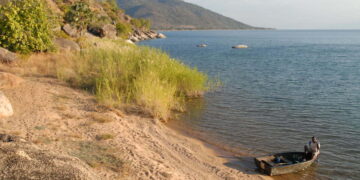
Aldabra’s sandy beaches are also vital for the breeding of sea turtles, particularly the green turtle (Chelonia mydas) and the hawksbill turtle (Eretmochelys imbricata), with thousands of turtles laying their eggs annually on the island’s shores.
Despite its continental protection and geographical isolation, Aldabra faces global and local environmental challenges that affect its natural balance. Sea-level rise is the greatest existential threat to Aldabra, as the island’s landmass is only a few metres above sea level. The inundation of low-lying areas reduces the grazing land available to giant tortoises and leads to the loss of nesting sites for birds and sea turtles. Additionally, marine heat waves cause coral bleaching, weakening the island’s natural barrier.
Huge quantities of floating plastic waste in the Indian Ocean wash up on Aldabra’s shores, carried by winds and ocean currents. This waste poses a direct threat to wildlife, as it is ingested by turtles and seabirds or becomes entangled in their bodies.
In the past, Aldabra has been introduced to several alien species, including goats, cats, rats, and invasive plants. Goats have historically damaged parts of the vegetation and competed with turtles for food before a successful national eradication programme was implemented. Rats and invasive plants also pose a persistent threat to birds and the native plant life.
Aldabra is managed by the Seychelles Islands Foundation (SIF), a public body responsible for environmental planning and overseeing field research.
The SIF enforces a strict conservation policy that includes tourists being only permitted on the island in very limited numbers and with special permits. Overnight stays are prohibited for non-researchers. Picard Island houses a dedicated research station for long-term studies on climate, turtles, and biodiversity.
Commercial fishing, mining, and logging are prohibited within the island’s marine and terrestrial protected area. Aldabra serves as a model ecological baseline for scientists, allowing them to study the behaviour of natural systems that are resilient to environmental changes without interference from human urban or agricultural activity.