
Qiraat Africa
عربي  |  Fr
Advertisement
  • News
    • All
    • Climate Change
    • Economy
    • Education
    • Energy
    • Health
    • Migration
    • Mining
    • Politics
    • Security
    • Society
    • Sport
    Second Tanzanian opposition figure faces death penalty after treason charges

    Second Tanzanian opposition figure faces death penalty after treason charges

    Madagascar coup: Who is the Colonel behind the power grab?

    Madagascar pauses corruption cases relating to ex-president, officials

    Guinea

    Guinea’s ex-Constitutional Court president sentenced to seven years in jail

    Kenya seals $160 million conservation finance deal

    Kenya seals $160 million conservation finance deal

    China, Djibouti say all countries should enjoy freedom of navigation in Red Sea

    China, Djibouti say all countries should enjoy freedom of navigation in Red Sea

    Nigeria reports Ebola case as outbreak reaches West Africa

    Nigeria reports Ebola case as outbreak reaches West Africa

    Nigeria’s Dangote aims to end Africa’s fertiliser imports

    Nigeria’s Dangote buys 25% stake in Kenya’s oil pipeline network

    South African minister and MPs cleared of corruption

    South Africa unveils two months of fuel price relief in mid-year budget

    In Democratic Republic of Congo, Ebola At Its Brim

    Nigeria reports first Ebola case in a decade in woman who arrived from Uganda

  • Analysis
    • All
    • Climate Change
    • Digital & Tech
    • Economy
    • Energy & Power
    • Health
    • Politics
    • Security
    • Society
    Abiy Ahmed Tested: How the Tigray Alliance Is Reshaping Ethiopia’s Security—And What Comes Next

    Abiy Ahmed Tested: How the Tigray Alliance Is Reshaping Ethiopia’s Security—And What Comes Next

    UN report says Africa’s share of global trade stands at 3 percent

    AfCFTA: The Trade Rules Poised to Weave Africa’s Fragmented Textile Markets into One

    Four killed, hundreds arrested in Angola fuel hike protests

    Angola’s fuel subsidies spending projected to hit $4 billion in 2026, official says

    Kenya boosts Ebola preparedness after registering first case

    Kenya confirms four new Ebola cases, bringing total number to seven

    The global panel on inequality needs African evidence: here’s how it could work

    The global panel on inequality needs African evidence: here’s how it could work

    Why Africa needs a new credit agency

    Why Africa needs a new credit agency

    Japan signs deal with Namibia to explore for rare earth minerals

    Africa’s mineral strength is wasted if countries don’t work together – new report

    Ethiopia: at least 40 army allies killed in drone strike

    Ethiopia’s peace deal is unravelling – what went wrong with the Tigray agreement

    DRC on a mission to financing the world’s largest hydropower dam

    DR Congo: The INGA Dam Paradox

  • Studies
    China could drive Africa’s renewable energy revolution, report says

    A study shows wind and solar projects in Kenya and South Africa don’t always benefit the communities that host them

    Angola’s lengthy war shaped the way farmers utilised fire—why it matters

    Angola’s lengthy war shaped the way farmers utilised fire—why it matters

    Schooling is the most severely affected by conflict when children are the target – Study

    Schooling is the most severely affected by conflict when children are the target – Study

    Pensions for Botswana’s elderly are expanding, but care services are lacking—study follows 20 years

    Pensions for Botswana’s elderly are expanding, but care services are lacking—study follows 20 years

    60 new cosmic structures have been discovered by South Africa’s MeerKAT telescope, which is mapping previously unseen gaps between galaxies

    60 new cosmic structures have been discovered by South Africa’s MeerKAT telescope, which is mapping previously unseen gaps between galaxies

    Benin government says armed forces foil coup attempt

    Coup contagion? A rash of African power grabs suggests copycats are taking note of others’ success

    One in three South Africans have never heard of AI: what this means for policy

    One in three South Africans have never heard of AI: what this means for policy

    Social Media as a Catalyst for the Spread of Dangerous Wealth Ritual Myths

    Social Media as a Catalyst for the Spread of Dangerous Wealth Ritual Myths

    Overcoming Education Barriers for Young Mothers in Sub-Saharan Africa

    Overcoming Education Barriers for Young Mothers in Sub-Saharan Africa

  • Infographics
  • Figures
    Namibia: Anger over Dubai COP28 trip by president Geingob’s children

    Hage Geingob (1941–2024): Former President of Namibia

    Cape Verde president says governments must discuss colonial reparations

    José Maria Neves: President of Cape Verde

    Jorge Bom Jesus: Linguist and former Prime Minister of São Tomé and Príncipe

    Jorge Bom Jesus: Linguist and former Prime Minister of São Tomé and Príncipe

    Joseph Leabua Jonathan (1914-1987): Former Prime Minister of Lesotho

    Joseph Leabua Jonathan (1914-1987): Former Prime Minister of Lesotho

    Gambia’s president Barrow faces backlash over ‘death wish’ on archrival

    Adama Barrow: President of the Republic of The Gambia

    Rwandan President Paul Kagame announces he will run for a fourth term

    Paul Kagame: Former military officer and president of Rwanda

    Zumbi dos Palmares (1655-1695): Afro-Brazilian leader of the great Palmares Quilombo

    Zumbi dos Palmares (1655-1695): Afro-Brazilian leader of the great Palmares Quilombo

    Léon M’ba (1902-1967): First president of independent Gabon

    Léon M’ba (1902-1967): First president of independent Gabon

    Namibia to vote in toughest election yet for ruling party

    Netumbo Nandi-Ndaitwah: President of Namibia

  • History
    Manovo-Gounda St. Floris National Park, Central African Republic

    Manovo-Gounda St. Floris National Park, Central African Republic

    Lake Malawi (Lake Nyasa) National Park, Malawi

    Lake Malawi (Lake Nyasa) National Park, Malawi

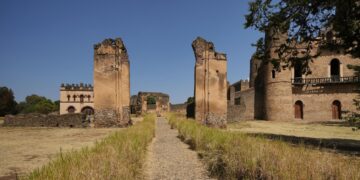
    Fasil Ghebbi, Gondar Region, Ethiopia

    Fasil Ghebbi, Gondar Region, Ethiopia

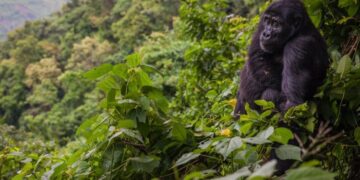
    Bwindi Impenetrable National Park, Uganda

    Bwindi Impenetrable National Park, Uganda

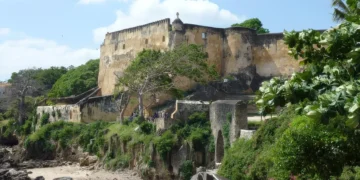
    Fort Jesus, Mombasa, Kenya

    Fort Jesus, Mombasa, Kenya

    Comoé National Park, Côte d’Ivoire (Ivory Coast)

    Comoé National Park, Côte d’Ivoire (Ivory Coast)

    Bassari and Bedik Cultural Landscapes, Senegal

    Bassari and Bedik Cultural Landscapes, Senegal

    Lower Valley of the Omo, Ethiopia

    Lower Valley of the Omo, Ethiopia

    Sudano-Sahelian style mosques, northern Côte d’Ivoire

    Sudano-Sahelian style mosques, northern Côte d’Ivoire

  • Others
    • Culture / Literature
    • Interview
    • Opinion
  • Countries
    • Country profiles
    • Regions
      • Central Africa
      • East Africa
      • Southern Africa
      • West Africa
No Result
View All Result
Qiraat Africa
عربي  |  Fr
No Result
View All Result
Home Regions Central Africa

Paul Biya: President of Cameroon

August 7, 2026
Cameroon President Paul Biya marks 41 years in power

Paul Biya, Cameroonian president. Source: @BaretaNews / X

Share on FacebookShare on Twitter

Paul Biya is at the centre of the Republic of Cameroon’s unique model of governance in contemporary African politics as the country’s second president since gaining independence from French and British colonial rule. Biya embodies a political phenomenon spanning decades, characterised by a blend of relative institutional stability on the one hand and widespread debate regarding dictatorship and the nature of governance and the peaceful transfer of power on the other.

Paul Barthélemy Biya’a Bi Mvondo was born on February 13, 1933, in the village of Mvomeka’a in southern Cameroon. He grew up in a modest rural environment under French colonial administration and received his early education in Catholic schools and a minor seminary. He demonstrated academic excellence that enabled him to move to France to pursue higher education.

Biya studied at the Paris Institute of Political Studies (Sciences Po) and the National School of Administration (ENA), earning degrees in public law and international relations. This rigorous French academic training provided him with a profound understanding of public administration mechanisms, constitutional legislation, and bureaucratic organisational methods—expertise he later utilised upon returning to his country shortly before independence.

After returning to Cameroon in 1962, Paul Biya entered the civil service under the administration of the first president, Ahmadou Ahidjo. Biya rose through the administrative ranks thanks to his discipline and bureaucratic competence; he served as director of the minister of education’s cabinet and then as director of the presidential office, eventually being appointed secretary-general of the presidency—with the rank of minister—in 1968.

In 1975, President Ahidjo created the post of prime minister and appointed Biya to the role. For seven years, Biya managed day-to-day government affairs quietly and without provoking public conflict, earning the regime’s trust. In 1979, a constitutional amendment was introduced designating the prime minister as the direct constitutional successor to the president in the event of resignation or a vacancy in the office.

A historic turning point occurred on November 4, 1982, when Ahidjo announced his surprise resignation for health reasons; Paul Biya subsequently assumed the presidency and was sworn into office on November 6, 1982.

Biya’s tenure began with promises of renewal, transparency, and political democracy, yet these aspirations soon clashed with political reality. Ahidjo retained the leadership of the ruling party (the Cameroon National Union), leading to a simmering power struggle between the new and former presidents over the locus of political decision-making.

The crisis escalated in 1983 with the discovery of a coup attempt allegedly backed by Ahidjo loyalists, prompting Ahidjo to go into exile and resign from the party. In April 1984, the capital, Yaoundé, witnessed a bloody attempt to seize power carried out by the Presidential Guard. Armed forces loyal to Biya succeeded in thwarting the attempt; this event marked a pivotal moment during which Biya reorganised the party, the government, and the security apparatus to consolidate his rule.

In 1985, Biya dissolved the old party and founded the Cameroon People’s Democratic Movement (RDPC), transforming it into the regime’s primary political instrument.

Amid the wave of democratisation that swept across Africa in the early 1990s, Cameroon faced mounting popular and economic pressure to end its one-party system. Biya responded by enacting a law permitting political pluralism in 1990, thereby paving the way for the formation of opposition parties and an independent press.

The first multiparty presidential election was held in October 1992. Biya narrowly defeated his main rival, John Fru Ndi, amidst allegations of fraud and widespread protests. The election demonstrated his ability to leverage regional and ethnic dynamics—as well as the state apparatus—to maintain his presidency.

Biya’s strategy during this period relied on co-opting segments of the opposition into the government and weakening other opposition blocs by stoking internal divisions among their leaders; this approach effectively neutralised political rivals and secured stable parliamentary majorities.

In 2008, Cameroon’s political landscape underwent a significant constitutional amendment that abolished the limits on consecutive presidential terms—restrictions originally imposed by the 1996 constitution. While the amendment sparked massive public protests driven by economic grievances and opposition to the removal of term limits, the authorities maintained firm control and suppressed the demonstrations.

This amendment enabled Biya to run for and win successive presidential elections in 2011, 2018, and 2025, extending his tenure to an eighth term that stretches into the late 2020s. Biya’s governing philosophy has been characterised by a model of “quiet diplomacy” and a withdrawal from the daily political scene; he is known for spending extended periods abroad—particularly in Europe—relying on a small executive team and senior bureaucrats to manage state affairs. This approach has drawn persistent criticism from the opposition regarding its effectiveness in handling major crises.

Read also

DR Congo: $700m in Ebola aid unaccounted for as outbreak spreads

Gabon says debt audit findings still under review by IMF, may be revised

Congo’s Ebola infections surpass 9,000, government report shows

The final decades of Paul Biya’s rule have been marked by two security crises that undermined Cameroon’s regional stability. First is the Anglophone Crisis, which began in 2016 with professional grievances raised by lawyers and teachers in the Northwest and Southwest regions, protesting against marginalisation and the encroachment of the Francophone judicial and educational systems. A harsh government response caused demands to escalate from calls for reform to calls for secession, leading to the formation of armed groups that declared the state of “Ambazonia”. The dispute evolved into a protracted armed conflict resulting in thousands of casualties and the displacement of hundreds of thousands, posing the most complex challenge to the country’s territorial integrity.

The second crisis is the Boko Haram threat, as since 2014, the state has faced repeated attacks and incursions in northern Cameroon by Boko Haram and the “Islamic State West Africa Province” (ISWAP). The government responded by deploying elite military units—such as the Rapid Intervention Battalion (BIR)—and cooperating with the Multinational Joint Task Force in the Lake Chad Basin to curb attacks, despite the high humanitarian and economic costs involved.

Paul Biya has maintained a foreign policy approach rooted in balance and traditional alliances. France has remained Cameroon’s primary political and economic partner, in accordance with long-standing cooperation agreements. At the same time, the regime worked to diversify its relations by partnering with China, which became a key financier and executor of major infrastructure projects such as ports, hospitals, and hydroelectric schemes.

Biya also maintained a calm approach toward regional neighbours, successfully resolving the Bakassi Peninsula border dispute with Nigeria peacefully through international legal channels and by implementing the rulings of the International Court of Justice.

Political analysis regarding Paul Biya’s tenure generally falls into two main schools of thought. Supporters of the regime view Biya as a statesman who succeeded in shielding Cameroon from the violent civil wars that plagued various neighbouring countries in Central and West Africa. They highlight his ability to preserve national unity in a country comprising over 200 ethnic and linguistic groups, alongside his delivery of infrastructure projects and maintenance of institutional stability.

However, his critics and the opposition argue that his era has been marked by economic stagnation, high youth unemployment, and declining public service quality, as well as the restriction of civic space and the entrenchment of one-man rule. They also fault him for failing to find a lasting political solution to the Anglophone crisis and for neglecting to establish a clear, responsible mechanism for the transfer of power and constitutional succession.
Tags: CameroonPaul Biya

Related Posts

Trump ally and Blackwater founder sent men, drones to help Congo’s army secure strategic town
Central Africa

Erik Prince’s forces suffer battlefield loss in Congo, former UFC fighter among wounded, sources say

October 11, 2026
The global panel on inequality needs African evidence: here’s how it could work
Central Africa

The global panel on inequality needs African evidence: here’s how it could work

October 7, 2026
African Union delegation meets Congo rebels, calls for continued peace efforts
African Union

African Union delegation meets Congo rebels, calls for continued peace efforts

October 7, 2026
Japan signs deal with Namibia to explore for rare earth minerals
Central Africa

Africa’s mineral strength is wasted if countries don’t work together – new report

September 29, 2026
Chinese mining giant cooperating with Congo probe after radiation detected in cobalt load
Central Africa

DR Congo to audit major miners annually from 2027 as part of local content drive, regulator says

September 29, 2026
As schools re-open, Congo drops remote learning plan in Ebola red zone
Central Africa

WHO says Congo Ebola outbreak spreads to two new health zones

September 27, 2026

Search Qiraat Africa

No Result
View All Result

Follow on Twitter

Follow @africanqiraat

Trending

Kumbi Saleh, the capital of the ancient Ghana Empire

Kumbi Saleh, the capital of the ancient Ghana Empire

October 13, 2025
Tunka Manin (c. 1010–1078), the last ruler of the Ghana Empire

Tunka Manin (c. 1010–1078), the last ruler of the Ghana Empire

December 12, 2025
Africa’s 10 Strongest Currencies in June 2026

Africa’s 10 Strongest Currencies in June 2026

July 8, 2026
Samori Touré (1830-1900): Military leader and founder of Wassoulou Empire

Samori Touré (1830-1900): Military leader and founder of Wassoulou Empire

January 11, 2026
Zaghawa people of northeastern Chad and western Sudan

Zaghawa people of northeastern Chad and western Sudan

March 3, 2026
Mansa Musa of Mali Empire

Mansa Musa of Mali Empire

April 14, 2025

Facebook

Sections

  • About Us
  • Privacy Policy
  • Opinion
  • Infographics
  • News
  • Analysis
  • Figures
  • Culture & Literature
  • Follow Ups
  • Historical Readings
  • Interview
  • Studies


© Copyright Qiraat Africa. Developed by Bunnaj Media .

No Result
View All Result
  • News
  • Analysis & Report
  • Studies
  • Opinion
  • Interview
  • Culture & Literature
  • Figures
  • Historical Readings
  • Regions

© 2021 Copyright Qiraat Africa.