




























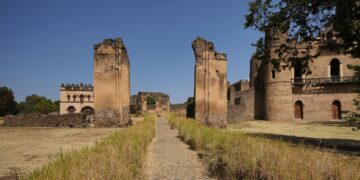

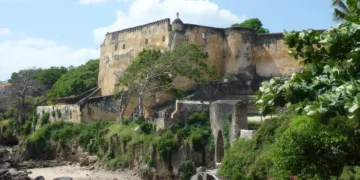


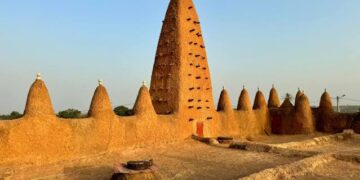

The Fasil Ghebbi fortress complex in the city of Gondar, Ethiopia, stands as one of the most significant architectural and historical sites in the Horn of Africa. It represents a transitional phase in the political and architectural history of the Ethiopian Empire during the early modern era—a period spanning from the 17th century to the late 18th century, known in historical scholarship as the “Gondarine Period”.
The Fasil Ghebbi complex was established in the 1630s by Emperor Fasilides, who reigned from 1632 to 1667. Prior to the establishment of Gondar as a permanent capital, the Ethiopian imperial court was characterised by constant mobility, with monarchs moving between various temporary camps and seasonal residences. Gondar was selected for several strategic and geographical reasons: situated at an altitude exceeding 2,000 metres above sea level, it boasts a temperate climate and fertile land and lies along ancient trade routes connecting the Ethiopian Highlands with the Nile Valley and the Red Sea.
The decision to establish a fixed capital put an end to the political and logistical instability associated with mobile encampments, ushering in an era of administrative stability that enabled the construction of permanent stone structures and the consolidation of imperial centralised authority.
The Fasil Ghebbi complex covers an area of approximately 70,000 square metres; it is enclosed by a massive stone wall—hundreds of metres in length—featuring twelve main gates. The complex is distinguished by a unique architectural blend that reflects the diverse cultural and architectural influences introduced to the region during that era.
Several architectural elements are evident in the complex’s design. Local Ethiopian influences were represented by ancient Aksumite traditions and the construction of churches—whether rock-hewn or built using stone and mortar. Portuguese and Japanese (Iberian) influences were also present, resulting from political and religious contacts with Jesuit missions and European experts who arrived in the country during the 16th and early 17th centuries. There were also Indo-Islamic influences, emerging from the recruitment of builders and artisans from India (specifically Gujarat) and neighbouring regions; these are manifested in the forms of arches, towers, and pointed domes. This fusion resulted in a distinctive architectural style often referred to as the “Gondarine style”, in which the buildings combine military fortifications with palatial elegance.
The inner enclosure of “Fasil Ghebbi” houses several palaces, mosques, churches, libraries, and bathhouses, constructed successively by a series of emperors:
- Emperor Fasilides’ Palace: Considered the core and oldest building in the complex. It comprises three stories topped by a corner watchtower and is distinguished by crenellated parapets and rounded stone arches, reflecting a design that serves both defensive and residential purposes.
- Palace of Emperor Yohannes I: Also known as Yohannes’s Library, it is distinguished by its simple design compared to the Palace of Fasilides and was used for administrative purposes and document storage.
- Palace of Emperor Iyasu I: Historically referred to as the “Great Palace”, it was considered one of the most magnificent structures in the complex in terms of ornamentation and scale; however, it has suffered significant damage over the centuries due to earthquakes and wars.
- Palace of Empress Mentewab: Located in the northern part of the city (outside the main wall and within a separate, parallel complex), it showcases late Ethiopian artistic touches, characterised by the use of pink stone and delicate decorative carvings.
- Banquet and Music Hall of Emperor Bakaffa: A rectangular building designated for the monarch’s official receptions and public events.
Located approximately two kilometres from the main complex is “Fasilides’ Bath”, a two-storey stone structure situated in the centre of a large, rectangular water basin. The site is enclosed by walls and massive trees that have become intertwined with the masonry.
Although originally built as a summer retreat or a royal ceremonial centre, the bath has become closely associated with the Ethiopian festival of Epiphany (“Timkat”). Each year during this religious occasion, the basin is filled with water, and thousands of Ethiopian Orthodox Church followers gather to renew their religious vows and bathe in the blessed waters, making the site a vibrant hub of intangible cultural and religious heritage.
The political significance of “Fasil Ghebbi” began to wane in the mid-18th century as the Ethiopian Empire entered an era of fragmentation and regional civil wars known as the “Era of the Princes” (“Zemene Mesafint”); during this period, central authority weakened, and the seat of power effectively shifted to regional warlords.
The complex suffered successive damage over the following eras: parts of the complex were looted and destroyed during 19th-century internal conflicts, particularly during raids by Sudanese Mahdist forces in the 1880s; Italian occupying forces established an administrative and military headquarters (1936–1941) within the complex and carried out architectural modifications that were incompatible with the buildings’ original historical style. The area was subjected to aerial bombardment during the battles between British and Italian forces, resulting in the destruction of parts of the palaces, particularly the Palace of Iyasu I.
In 1979, UNESCO inscribed the “Fasil Ghebbi” complex and its surroundings on the World Heritage List, based on cultural criteria recognising the site as a unique testament to Ethiopian civilisation in the early modern period and the distinctive influence of the Gondarine architectural style.
Site management currently faces ongoing challenges regarding the maintenance of traditional stone-and-mortar walls and the mitigation of climate change and humidity impacts. Additionally, there are challenges in managing increasing tourist traffic and controlling the urban expansion of the modern city surrounding the complex. The Ethiopian Authority for Research and Conservation of Cultural Heritage, in collaboration with international organisations, oversees phased restoration projects to ensure the structural integrity of the buildings for future generations.