




































The Lower Valley of the Omo is located in southwestern Ethiopia, near Lake Turkana and the borders with Kenya and South Sudan. This site is one of the most significant areas globally for scientific interest and anthropological study; it was inscribed on the UNESCO World Heritage List in 1980 due to its exceptional importance for understanding human evolution and the geological history of early hominids.
The region derives its academic significance from prehistoric fossil discoveries. Sedimentary layers accumulated over millions of years in the Omo River and its delta have preserved an unbroken geological record, enabling scientists to study environmental and climatic shifts and their impact on biological evolution.
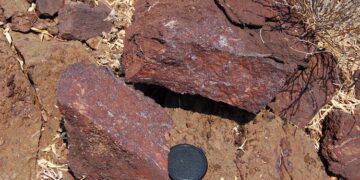
The valley has yielded skeletal fragments of human ancestors (hominids) belonging to various genera, such as “Australopithecus”, confirming the presence of early hominids in the region more than two million years ago. “Omo 1” and “Omo 2” Remains: The “Omo” fossils—discovered by an archaeological team led by Richard Leakey in the 1960s—constitute a cornerstone in the history of the human lineage. Advanced geological dating of the volcanic ash surrounding these fossils indicates an age of approximately 195,000 to 230,000 years, making them, for many years, the oldest confirmed skeletal evidence of “Homo sapiens”.
According to UNESCO:
“The Lower Valley of the Omo is located in south-western Ethiopia. It extends over an area of 165 km2. The age old sedimentary deposits in the Lower Omo Valley are now world renowned for the discovery of many hominid fossils, that have been of fundamental importance in the study of human evolution.
“The Lower Omo Valley includes the Konso and Fejej paleontological research locations with sedimentary deposit going back to the plio-pleistocene period. These have produced numerous hominid and animal fossils, including fragments of Australopithecus. The deposits of human vertebrae fauna, and paleo-environmental evolution, shed light on the earliest stages of the origins and development of Homo sapiens of Africa. The discoveries of ancient stone tools in an encampment also offers evidence of the oldest known technical activities of prehistoric beings, thus making the property one of the most significant for mankind.
Since 1966, scientific research has proved that the site significantly contributes to prominent archaeological, geological, paleo-anthropological and paleo-environmental studies.
Criterion (iii): Evidence from the Lower Omo Valley pre-historic and paleo-anthropological site have provided a unique insight into the oldest known technical activities by pre-historic beings.
Criterion (iv): Discoveries from the Lower Omo Valley represent exceptional developments in the domain of cultural activities in the pre-historic time.”
Excavations have yielded thousands of stone tools made from obsidian and quartzite. Dating back to the Lower Palaeolithic era, these artefacts provide physical evidence of the technological and cognitive evolution of early human groups regarding the use of tools for hunting and butchering.
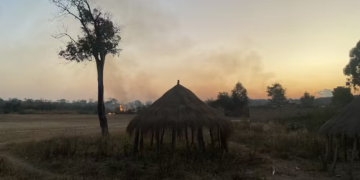
Beyond its archaeological significance, the Lower Omo Valley is home to numerous ethnic groups and traditional tribes that have settled in the river basin and adapted to its harsh environmental conditions over centuries. The region is inhabited by communities of diverse linguistic and ethnic origins, most notably the Mursi, Hamer, Karo, Dassanech, and Nyangatom tribes. Most of these tribes rely on a composite economic model that combines pastoralism with flood-retreat agriculture—specifically the cultivation of sorghum and maize on fertile riverbanks after the waters recede.
Each tribe is distinguished by its own material culture and body ornamentation; examples include the famous clay lip plates worn by Mursi women, the Hamer tribe’s hairstyles styled with red clay and cowrie shells, and the Karo tribe’s body decoration using plant-based and earthen pigments. Additionally, there are social rites of passage, such as the “Bull Jumping” ceremony, which marks the transition to manhood among the Hamer people. Recent decades have witnessed radical transformations affecting the ecological balance and local populations of the Lower Omo Valley, driven by economic and infrastructure projects implemented by the Ethiopian government.
“Recently the protection of the property has become a concern as there have emerged development activities around the area. There is therefore an urgent need to put in place structured management and to define the boundaries.” – UNESCO
The construction of the Gibe III Dam, a massive hydroelectric dam on the Omo River that regulated water flow and curtailed natural seasonal flooding. Scientific and human rights reports indicate that this led to reduced water levels and altered sediment patterns, negatively impacting the traditional agriculture upon which local tribes had relied for centuries.
Vast areas surrounding the river basin were allocated for state- and privately-owned sugarcane and cotton plantations. This expansion necessitated the appropriation of land previously used for traditional grazing, thereby restricting the geographical range of pastoralist movements and intensifying inter-ethnic friction over limited resources.
The introduction of modern roads and the expansion of anthropological tourism have brought about subtle changes in tribal social structures; certain daily practices and rituals have shifted from their original cultural contexts to become profit-driven activities geared toward photography and tourist entertainment.
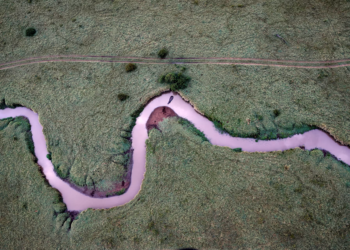
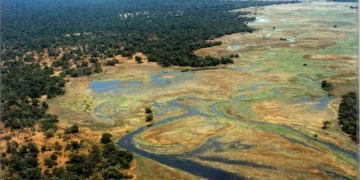
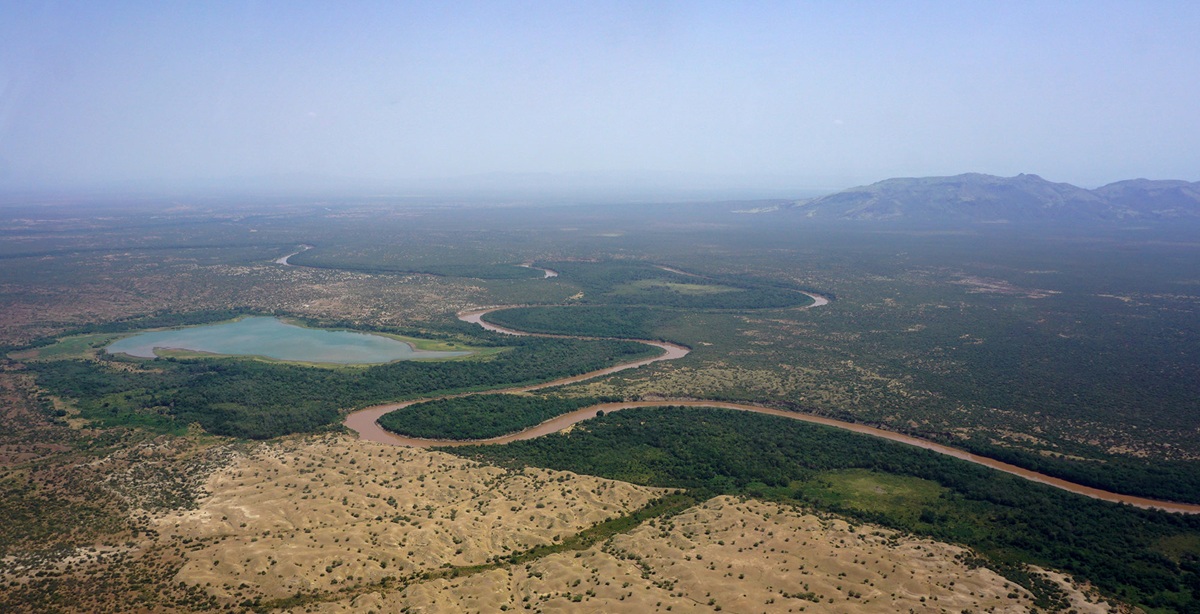
The region is characterised by a generally hot and dry climate, with terrain ranging from open savanna plains and volcanic hills to scrubland. The Omo River serves as the sole, pivotal lifeline for the region. It originates in the northern Ethiopian Highlands and flows southward for over 760 kilometres before emptying into the landlocked Lake Turkana, enriching the region with fertile sediment amidst a semi-arid environment.