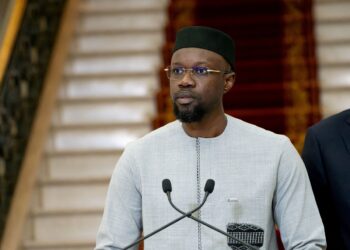
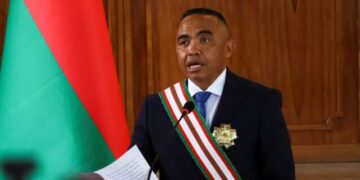













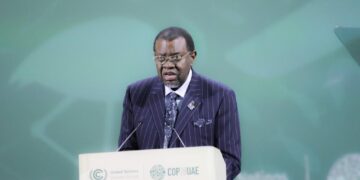







Jorge Lopes Bom Jesus exemplifies the type of academic who transitions from the realms of linguistic research and education to executive leadership in African nations. Known by the acronym “JBJ”, he served as the 17th Prime Minister of the Democratic Republic of São Tomé and Príncipe from December 2018 to November 2022. His career was defined by a blend of specialised academic expertise in linguistics and active partisan politics within the Movement for the Liberation of São Tomé and Príncipe/Social Democratic Party (MLSTP-PSD).
Jorge Bom Jesus was born on July 26, 1962, in the Água Grande district of São Tomé and Príncipe. He pursued early academic studies in literature and linguistics, travelling to Europe to earn bachelor’s and master’s degrees in French and Portuguese literature from the University of Toulouse in France, with a specific focus on Portuguese-language African literature.
He furthered his pedagogical training by studying the teaching methodologies for French and Portuguese at the University of Porto in Portugal. Regarding his advanced academic qualifications, he obtained a doctorate in public administration from the University of São Tomé and Príncipe.
His linguistic and educational expertise shaped his professional trajectory; he worked as a teacher and oversaw the administration of his country’s teacher training institute. He also held various administrative and advisory positions within the education and cultural sectors, including Director General of Education and Training, Head of the Department of Educational Planning and Innovation, Director of the National Library, and Secretary-General of the National Commission for UNESCO.
Bom Jesus became active in party politics as a member of the Political Bureau of the MLSTP-PSD starting in 2006. During this period, he held ministerial portfolios aligned with his area of expertise in successive governments. He served as Minister of Education and Culture from 2008 to 2010 in the government of Rafael Branco. He was appointed Minister of Education, Culture, and Science from 2012 to 2014 in the government of Gabriel Costa.
Within the party, he was elected vice president in 2011 and subsequently assumed the presidency in 2018.
According to blackpast.org:
“His inaugural address to the country was given in the local Creole patois rather than standard Portuguese which his predecessors had spoken.
Considering his educational background, it is not surprising that he advocates for education. He has also committed to fighting corruption in the country.”
Under his leadership, the party contested the legislative elections in October 2018; although it finished second to the Independent Democratic Action (ADI) party—which held the relative majority—Bom Jesus succeeded in forging an alliance with a coalition of smaller parties (MDFM-PCD-UDD). This alliance enabled the formation of a parliamentary majority, leading President Evaristo Carvalho to task him with forming the government on November 30, 2018; he officially assumed office on December 3, 2018.
Bom Jesus set a precedent in his country’s political history by delivering his inaugural address as Head of Government in the local Creole language (*Forro*) alongside the official Portuguese—a move that reflected his linguistic background and his commitment to local linguistic identity.
His government’s agenda focused on several key areas. He pledged to combat financial and administrative corruption and to reform the state’s administrative apparatus. His policies prioritised supporting the education sector, rebuilding school infrastructure, and improving vocational training curricula. The government worked to manage successive financial crises and sought to attract foreign investment to the tourism and fisheries sectors.
During his tenure, his government faced the challenges inherent to a small, isolated economy, as well as the economic fallout from the COVID-19 pandemic and financial pressures resulting from external debt. The government remained in office until the subsequent legislative elections in September 2022, in which the bloc supporting him lost its majority to the ADI party; this led to the end of his term and the transfer of power to his successor, Patrice Trovoada, in November 2022.
Quotes from Jorge Bom Jesus
We have decided to declare a state of calamity for the next 15 days (after big flooding in major areas of the country). We have activated a contingency fund to meet the expenses and to be able to support in some cases some families.
– Jorge Bom Jesus (2021) cited in: “Sao Tome: Government appeals for international help after major flooding” in Macau Business, 30 December 2021.
“Right now São Tomé and Príncipe needs financing as much as air to breathe. Given China’s economic potential and our friendship, we will ask China for all the help possible.”
“This candidacy aims to multiply instead of adding and to build bridges of understanding… the presidency must promote peace, reconciliation, and the strengthening of democracy as premises for development.”
“Politics in the country is reducing itself to a spirit of mercantilism, where candidates are expected to be funded by various parties.”
“We have decided to declare a state of calamity… We have activated a contingency fund to meet the expenses and to be able to support families.”
“Seja louvado…” (Praised be…)—his signature linguistic greeting used to unite and honor the Santomean people at the start of interviews and official speeches.
“Saio com este sentimento genuíno de dever cumprido… deixo um país melhor [que há quatro anos].”(I leave with this genuine feeling of duty fulfilled… I leave a better country than four years ago.) – Upon stepping down as Prime Minister in November 2022.
“We have decided to declare a state of calamity… We have activated a contingency fund to meet the expenses and to be able to support families.” – Announcing emergency relief during severe national weather crises.