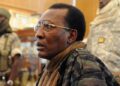
























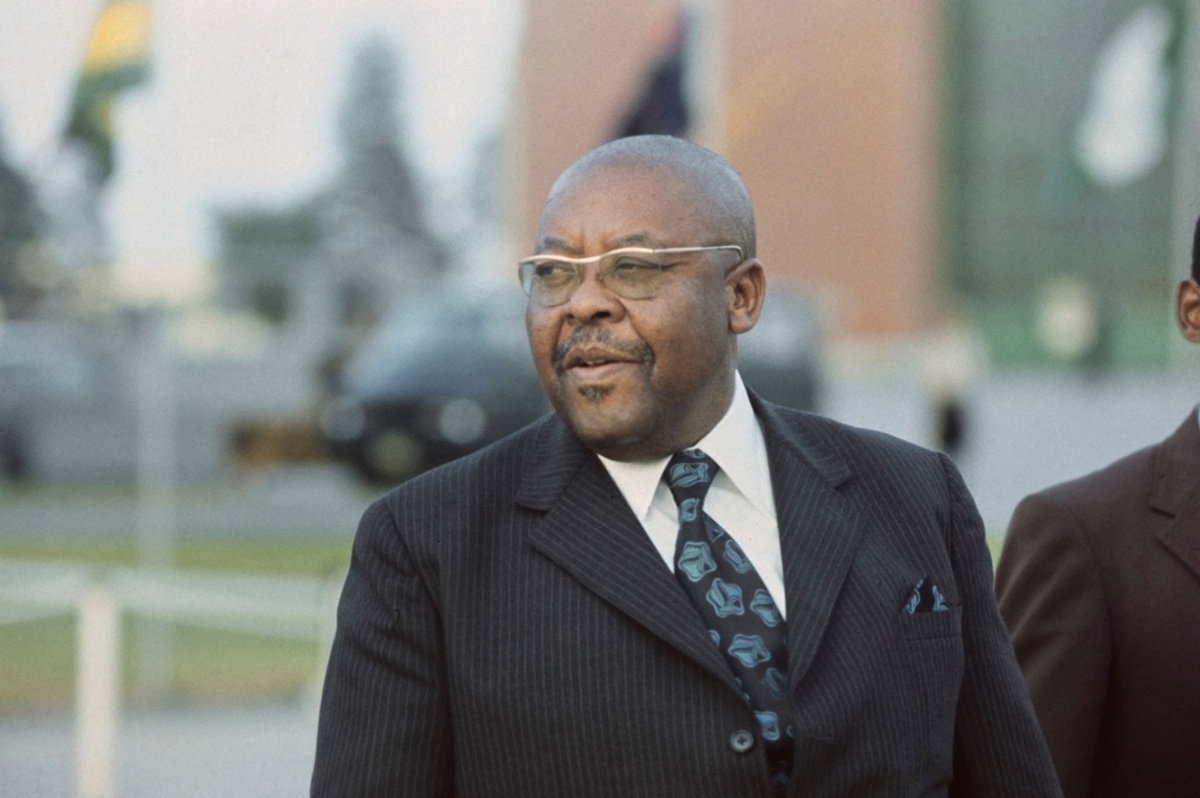
The experience of Joseph Leabua Jonathan—the first Prime Minister of the Kingdom of Lesotho—stands out as an exceptional case study of how local political leadership engaged with daunting geopolitical challenges. His four-decade career was marked by radical shifts in political alliances and orientations: he evolved from a conservative leader close to South Africa’s apartheid government into an outspoken opponent of its policies and from a democratically elected leader into an authoritarian ruler who suspended the constitution.
Joseph Leabua Jonathan was born on October 30, 1914, in Hlotse, Lesotho, at a time when the country was under British protection as “Basutoland”. Although he was a descendant of King Moshoeshoe I—the founder of the Basotho nation—he belonged to a cadet branch of the royal family that is considered not to hold the right to rule. He received his primary education at a Protestant mission school—a formative period that shaped his early consciousness—before converting to Catholicism later in life; this conversion would subsequently influence the nature of his political support base.
Jonathan moved to the Republic of South Africa to work as a labour supervisor in the gold mines of Brakpan. This experience provided him with a firsthand understanding of the conditions faced by migrant workers and the deep, economic interdependence between his country and South Africa. In 1937, he returned to Lesotho to join the local administration, serving as a clerk and advisor in tribal courts and as an assistant to senior administrators. This combination of a traditional background and an understanding of modern administrative mechanisms enabled him to emerge as a rising figure in the local political landscape.
The 1950s saw a surge in nationalist demands for independence from Britain. Jonathan participated in delegations that travelled to London to negotiate constitutional reforms and self-government. In 1959, he founded the Basutoland National Party (BNP), adopting a political platform characterised by conservatism and pragmatism. To build its grassroots base, the party relied on support from the Catholic Church and conservative local chiefs, while also advocating for coexistence and regional peace with the government in Pretoria.
The party achieved modest results in the 1960 general elections. However, the pre-independence elections of April 1965 marked a decisive turning point; the BNP secured a narrow majority, winning 31 out of 60 parliamentary seats. Although Jonathan personally lost his bid for a parliamentary seat in that election, he later succeeded in entering parliament through a by-election in a safe constituency, assuming the role of Prime Minister in July 1965.
Following the declaration of formal independence and the country’s renaming to “Lesotho” on October 4, 1966, Jonathan became the first prime minister of the independent kingdom. His first government faced numerous obstacles regarding the definition of executive authority and the kingdom’s constitutional arrangements. He became embroiled in a political conflict with King Moshoeshoe II over the nature of royal powers; the king sought to retain broad executive authority, whereas Jonathan insisted on establishing a constitutional governance model that vested actual administrative control in the prime minister. This dispute led to the king being briefly placed under house arrest and subsequently exiled to the Netherlands before he eventually regained his position as a symbol of the kingdom.
The political crisis reached a breaking point following the first post-independence parliamentary elections in January 1970. Preliminary vote counts indicated that the opposition Basutoland Congress Party (BCP), led by Ntsu Mokhehle, was in the lead. Faced with the prospect of losing power, Jonathan decided to annul the elections, declare a state of emergency, and suspend the constitution. He justified these measures by accusing the opposition of resorting to intimidation and being influenced by foreign ideologies. This move transformed Lesotho’s system of government into an absolute autocracy backed by security forces, sparking unrest and repressive policies against the opposition that resulted in casualties and the flight of numerous political leaders.
Given Lesotho’s status as an enclave entirely surrounded by the Republic of South Africa, Jonathan initially pursued a policy of appeasement and economic cooperation to safeguard migrant labour jobs and maintain vital trade links. During this phase, he received support and aid from Pretoria, which viewed him as a moderate ally capable of ensuring the stability of its southern border.
However, with the onset of the 1970s and mounting international and domestic pressure against the apartheid regime, Jonathan fundamentally altered his foreign policy strategy. He publicly denounced apartheid policies and provided logistical and political support to the African National Congress (ANC). He permitted refugees and anti-apartheid activists to operate within Lesotho and strengthened diplomatic ties with Eastern Bloc nations, including the Soviet Union, China, and North Korea.
The South African government responded to this shift through various means, including backing the Lesotho Liberation Army (LLA)—the armed wing of the opposition—to pressure Jonathan’s regime, as well as launching military raids into Maseru to target ANC members. This conflict took a heavy toll on Lesotho’s economy and exacerbated internal polarisation. The conflict with South Africa reached a critical juncture in early 1986. Pretoria imposed a comprehensive economic blockade on Lesotho’s borders starting January 1, 1986, halting the flow of essential supplies, fuel, and food. This economic stranglehold placed immense pressure on the country’s military and security establishment.
On January 20, 1986, the armed forces, led by Major General Justin Lekhanya, succeeded in ousting Jonathan’s government in a bloodless military coup. The military seized power, dissolved parliament, and restricted political activity—moves initially attributed to the goal of ending the economic blockade, which South Africa lifted immediately after the army took control.
Following his ousting, Joseph Leabua Jonathan was placed under house arrest. He refrained from any public political activity during the ensuing months. Later, his health deteriorated, necessitating his transfer to a hospital in Pretoria, South Africa, for treatment; he passed away there on April 5, 1987, at the age of 72, due to stomach cancer.