





Qiraat Africa
عربي  |  Fr
Advertisement
  • News
    • All
    • Climate Change
    • Economy
    • Education
    • Energy
    • Health
    • Migration
    • Mining
    • Politics
    • Security
    • Society
    • Sport
    Congo, M23 sign framework for peace in Qatar, more steps needed

    Ceasefire monitors deploy in eastern Congo under Qatari peace deal

    Kenya probes potential toxin after 15 elephants die in Amboseli ecosystem

    Kenya arrests four in probe into 18 elephant deaths in Amboseli

    Zambia says it arrested opposition figures on night of elections

    Zambia closes courts on last day to file election challenge

    Tanzanian opposition leader appears in court for treason trial

    Tanzania: Tundu Lissu denounces ‘political case’ as treason trial starts

    DR Congo ex-president Kabila lambasts justice system after vote to lift his immunity

    DRC: Ex-president Kabila challenges US sanctions in court

    Nigeria: Kano State records 5,000 Human Trafficking returnees in 3 years

    Nigeria: Kano State records 5,000 Human Trafficking returnees in 3 years

    Former Zambian minister killed in post-election security raid

    Former Zambian minister killed in post-election security raid

    Central African Republic artisanal gold mine collapses, killing more than 100

    Central African Republic artisanal gold mine collapses, killing more than 100

    Rebels in Congo see Ebola as chance to show governing credentials

    Congo’s M23 rebels introduce new movement restrictions over Ebola concerns

  • Analysis
    • All
    • Climate Change
    • Digital & Tech
    • Economy
    • Energy & Power
    • Health
    • Politics
    • Security
    • Society
    Nigeria considers crude supply reforms to aid Dangote, other refiners

    Refinery rivalry: billion‑dollar oil projects expose East Africa’s long‑running regional tensions

    Zambia’s chaotic but decisive election: government demonstrates strength, democracy shows weakness

    Zambia’s chaotic but decisive election: government demonstrates strength, democracy shows weakness

    African Finance Corp says Gabon political situation a ‘good coup’

    Why African countries must rethink how they grow their economies

    DR Congo says it will receive third-country deportees under new deal with US

    Beyond the Outbreak: How Ebola Reshaped East & Central Africa’s Economies

    What Happens After Dandora? Kenya’s Green Transition Faces Its Hardest Test

    What Happens After Dandora? Kenya’s Green Transition Faces Its Hardest Test

    African entrepreneurs work in challenging environments, and others may benefit from the skills they have developed

    African entrepreneurs work in challenging environments, and others may benefit from the skills they have developed

    Ethiopia’s 2026 General Election: Progress, Challenges, and Implications

    Ethiopia’s 2026 General Election: Progress, Challenges, and Implications

    Israeli recognition of Somaliland is a ‘calculated distraction,’ Somali diplomat says

    Sixty-Six Years On, the Promise of Somali Independence Remains Unfulfilled.

    Senegal’s top opposition leader Sonko vows to help win March 24 election

    Senegal at a Political Crossroads: The Faye–Sonko Rivalry and the Future of Democratic Governance

  • Studies
    China could drive Africa’s renewable energy revolution, report says

    A study shows wind and solar projects in Kenya and South Africa don’t always benefit the communities that host them

    Angola’s lengthy war shaped the way farmers utilised fire—why it matters

    Angola’s lengthy war shaped the way farmers utilised fire—why it matters

    Schooling is the most severely affected by conflict when children are the target – Study

    Schooling is the most severely affected by conflict when children are the target – Study

    Pensions for Botswana’s elderly are expanding, but care services are lacking—study follows 20 years

    Pensions for Botswana’s elderly are expanding, but care services are lacking—study follows 20 years

    60 new cosmic structures have been discovered by South Africa’s MeerKAT telescope, which is mapping previously unseen gaps between galaxies

    60 new cosmic structures have been discovered by South Africa’s MeerKAT telescope, which is mapping previously unseen gaps between galaxies

    Benin government says armed forces foil coup attempt

    Coup contagion? A rash of African power grabs suggests copycats are taking note of others’ success

    One in three South Africans have never heard of AI: what this means for policy

    One in three South Africans have never heard of AI: what this means for policy

    Social Media as a Catalyst for the Spread of Dangerous Wealth Ritual Myths

    Social Media as a Catalyst for the Spread of Dangerous Wealth Ritual Myths

    Overcoming Education Barriers for Young Mothers in Sub-Saharan Africa

    Overcoming Education Barriers for Young Mothers in Sub-Saharan Africa

  • Infographics
  • Figures
    Zumbi dos Palmares (1655-1695): Afro-Brazilian leader of the great Palmares Quilombo

    Zumbi dos Palmares (1655-1695): Afro-Brazilian leader of the great Palmares Quilombo

    Léon M’ba (1902-1967): First president of independent Gabon

    Léon M’ba (1902-1967): First president of independent Gabon

    Namibia to vote in toughest election yet for ruling party

    Netumbo Nandi-Ndaitwah: President of Namibia

    Ahmadu Bello (1910-1966): Nigerian statesman

    Ahmadu Bello (1910-1966): Nigerian statesman

    Cameroon President Paul Biya marks 41 years in power

    Paul Biya: President of Cameroon

    Al-Hajj Salim Suwari (fl. c. 13th–15th century): West African Soninke Islamic scholar

    Al-Hajj Salim Suwari (fl. c. 13th–15th century): West African Soninke Islamic scholar

    Strive Masiyiwa: Zimbabwean businessman and philanthropist

    Strive Masiyiwa: Zimbabwean businessman and philanthropist

    Diébédo Francis Kéré: Burkinabé-German architect

    Diébédo Francis Kéré: Burkinabé-German architect

    Herbert Wigwe (1966-2024): Nigerian banker and businessman

    Herbert Wigwe (1966-2024): Nigerian banker and businessman

  • History
    Lower Valley of the Omo, Ethiopia

    Lower Valley of the Omo, Ethiopia

    Sudano-Sahelian style mosques, northern Côte d’Ivoire

    Taï National Park, Côte d’Ivoire

    Taï National Park, Côte d’Ivoire

    Medinas, the Historic Sultanates of the Comoros

    Medinas, the Historic Sultanates of the Comoros

    Aldabra Atoll, Seychelles

    Aldabra Atoll, Seychelles

    Le Morne Cultural Landscape, Mauritius

    Le Morne Cultural Landscape, Mauritius

    Mount Nimba Strict Nature Reserve, Guinea and Côte d’Ivoire

    Mount Nimba Strict Nature Reserve, Guinea and Côte d’Ivoire

    Sangha Trinational, north-western Congo Basin

    Sangha Trinational, north-western Congo Basin

    Kasubi Tombs, Kampala, Uganda

    Kasubi Tombs, Kampala, Uganda

  • Others
    • Culture / Literature
    • Interview
    • Opinion
  • Countries
    • Country profiles
    • Regions
      • Central Africa
      • East Africa
      • Southern Africa
      • West Africa
No Result
View All Result
  • News
    • All
    • Climate Change
    • Economy
    • Education
    • Energy
    • Health
    • Migration
    • Mining
    • Politics
    • Security
    • Society
    • Sport
    Congo, M23 sign framework for peace in Qatar, more steps needed

    Ceasefire monitors deploy in eastern Congo under Qatari peace deal

    Kenya probes potential toxin after 15 elephants die in Amboseli ecosystem

    Kenya arrests four in probe into 18 elephant deaths in Amboseli

    Zambia says it arrested opposition figures on night of elections

    Zambia closes courts on last day to file election challenge

    Tanzanian opposition leader appears in court for treason trial

    Tanzania: Tundu Lissu denounces ‘political case’ as treason trial starts

    DR Congo ex-president Kabila lambasts justice system after vote to lift his immunity

    DRC: Ex-president Kabila challenges US sanctions in court

    Nigeria: Kano State records 5,000 Human Trafficking returnees in 3 years

    Nigeria: Kano State records 5,000 Human Trafficking returnees in 3 years

    Former Zambian minister killed in post-election security raid

    Former Zambian minister killed in post-election security raid

    Central African Republic artisanal gold mine collapses, killing more than 100

    Central African Republic artisanal gold mine collapses, killing more than 100

    Rebels in Congo see Ebola as chance to show governing credentials

    Congo’s M23 rebels introduce new movement restrictions over Ebola concerns

  • Analysis
    • All
    • Climate Change
    • Digital & Tech
    • Economy
    • Energy & Power
    • Health
    • Politics
    • Security
    • Society
    Nigeria considers crude supply reforms to aid Dangote, other refiners

    Refinery rivalry: billion‑dollar oil projects expose East Africa’s long‑running regional tensions

    Zambia’s chaotic but decisive election: government demonstrates strength, democracy shows weakness

    Zambia’s chaotic but decisive election: government demonstrates strength, democracy shows weakness

    African Finance Corp says Gabon political situation a ‘good coup’

    Why African countries must rethink how they grow their economies

    DR Congo says it will receive third-country deportees under new deal with US

    Beyond the Outbreak: How Ebola Reshaped East & Central Africa’s Economies

    What Happens After Dandora? Kenya’s Green Transition Faces Its Hardest Test

    What Happens After Dandora? Kenya’s Green Transition Faces Its Hardest Test

    African entrepreneurs work in challenging environments, and others may benefit from the skills they have developed

    African entrepreneurs work in challenging environments, and others may benefit from the skills they have developed

    Ethiopia’s 2026 General Election: Progress, Challenges, and Implications

    Ethiopia’s 2026 General Election: Progress, Challenges, and Implications

    Israeli recognition of Somaliland is a ‘calculated distraction,’ Somali diplomat says

    Sixty-Six Years On, the Promise of Somali Independence Remains Unfulfilled.

    Senegal’s top opposition leader Sonko vows to help win March 24 election

    Senegal at a Political Crossroads: The Faye–Sonko Rivalry and the Future of Democratic Governance

  • Studies
    China could drive Africa’s renewable energy revolution, report says

    A study shows wind and solar projects in Kenya and South Africa don’t always benefit the communities that host them

    Angola’s lengthy war shaped the way farmers utilised fire—why it matters

    Angola’s lengthy war shaped the way farmers utilised fire—why it matters

    Schooling is the most severely affected by conflict when children are the target – Study

    Schooling is the most severely affected by conflict when children are the target – Study

    Pensions for Botswana’s elderly are expanding, but care services are lacking—study follows 20 years

    Pensions for Botswana’s elderly are expanding, but care services are lacking—study follows 20 years

    60 new cosmic structures have been discovered by South Africa’s MeerKAT telescope, which is mapping previously unseen gaps between galaxies

    60 new cosmic structures have been discovered by South Africa’s MeerKAT telescope, which is mapping previously unseen gaps between galaxies

    Benin government says armed forces foil coup attempt

    Coup contagion? A rash of African power grabs suggests copycats are taking note of others’ success

    One in three South Africans have never heard of AI: what this means for policy

    One in three South Africans have never heard of AI: what this means for policy

    Social Media as a Catalyst for the Spread of Dangerous Wealth Ritual Myths

    Social Media as a Catalyst for the Spread of Dangerous Wealth Ritual Myths

    Overcoming Education Barriers for Young Mothers in Sub-Saharan Africa

    Overcoming Education Barriers for Young Mothers in Sub-Saharan Africa

  • Infographics
  • Figures
    Zumbi dos Palmares (1655-1695): Afro-Brazilian leader of the great Palmares Quilombo

    Zumbi dos Palmares (1655-1695): Afro-Brazilian leader of the great Palmares Quilombo

    Léon M’ba (1902-1967): First president of independent Gabon

    Léon M’ba (1902-1967): First president of independent Gabon

    Namibia to vote in toughest election yet for ruling party

    Netumbo Nandi-Ndaitwah: President of Namibia

    Ahmadu Bello (1910-1966): Nigerian statesman

    Ahmadu Bello (1910-1966): Nigerian statesman

    Cameroon President Paul Biya marks 41 years in power

    Paul Biya: President of Cameroon

    Al-Hajj Salim Suwari (fl. c. 13th–15th century): West African Soninke Islamic scholar

    Al-Hajj Salim Suwari (fl. c. 13th–15th century): West African Soninke Islamic scholar

    Strive Masiyiwa: Zimbabwean businessman and philanthropist

    Strive Masiyiwa: Zimbabwean businessman and philanthropist

    Diébédo Francis Kéré: Burkinabé-German architect

    Diébédo Francis Kéré: Burkinabé-German architect

    Herbert Wigwe (1966-2024): Nigerian banker and businessman

    Herbert Wigwe (1966-2024): Nigerian banker and businessman

  • History
    Lower Valley of the Omo, Ethiopia

    Lower Valley of the Omo, Ethiopia

    Sudano-Sahelian style mosques, northern Côte d’Ivoire

    Taï National Park, Côte d’Ivoire

    Taï National Park, Côte d’Ivoire

    Medinas, the Historic Sultanates of the Comoros

    Medinas, the Historic Sultanates of the Comoros

    Aldabra Atoll, Seychelles

    Aldabra Atoll, Seychelles

    Le Morne Cultural Landscape, Mauritius

    Le Morne Cultural Landscape, Mauritius

    Mount Nimba Strict Nature Reserve, Guinea and Côte d’Ivoire

    Mount Nimba Strict Nature Reserve, Guinea and Côte d’Ivoire

    Sangha Trinational, north-western Congo Basin

    Sangha Trinational, north-western Congo Basin

    Kasubi Tombs, Kampala, Uganda

    Kasubi Tombs, Kampala, Uganda

  • Others
    • Culture / Literature
    • Interview
    • Opinion
  • Countries
    • Country profiles
    • Regions
      • Central Africa
      • East Africa
      • Southern Africa
      • West Africa
No Result
View All Result
Qiraat Africa
عربي  |  Fr
No Result
View All Result
Home Regions Central Africa

Paul Biya: President of Cameroon

August 7, 2026
Cameroon President Paul Biya marks 41 years in power

Paul Biya, Cameroonian president. Source: @BaretaNews / X

Share on FacebookShare on Twitter

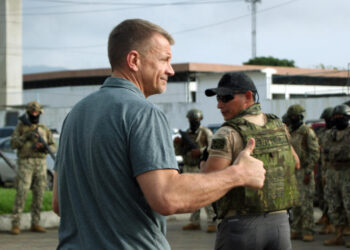
Paul Biya is at the centre of the Republic of Cameroon’s unique model of governance in contemporary African politics as the country’s second president since gaining independence from French and British colonial rule. Biya embodies a political phenomenon spanning decades, characterised by a blend of relative institutional stability on the one hand and widespread debate regarding dictatorship and the nature of governance and the peaceful transfer of power on the other.

Paul Barthélemy Biya’a Bi Mvondo was born on February 13, 1933, in the village of Mvomeka’a in southern Cameroon. He grew up in a modest rural environment under French colonial administration and received his early education in Catholic schools and a minor seminary. He demonstrated academic excellence that enabled him to move to France to pursue higher education.

Biya studied at the Paris Institute of Political Studies (Sciences Po) and the National School of Administration (ENA), earning degrees in public law and international relations. This rigorous French academic training provided him with a profound understanding of public administration mechanisms, constitutional legislation, and bureaucratic organisational methods—expertise he later utilised upon returning to his country shortly before independence.

After returning to Cameroon in 1962, Paul Biya entered the civil service under the administration of the first president, Ahmadou Ahidjo. Biya rose through the administrative ranks thanks to his discipline and bureaucratic competence; he served as director of the minister of education’s cabinet and then as director of the presidential office, eventually being appointed secretary-general of the presidency—with the rank of minister—in 1968.

In 1975, President Ahidjo created the post of prime minister and appointed Biya to the role. For seven years, Biya managed day-to-day government affairs quietly and without provoking public conflict, earning the regime’s trust. In 1979, a constitutional amendment was introduced designating the prime minister as the direct constitutional successor to the president in the event of resignation or a vacancy in the office.

A historic turning point occurred on November 4, 1982, when Ahidjo announced his surprise resignation for health reasons; Paul Biya subsequently assumed the presidency and was sworn into office on November 6, 1982.

Biya’s tenure began with promises of renewal, transparency, and political democracy, yet these aspirations soon clashed with political reality. Ahidjo retained the leadership of the ruling party (the Cameroon National Union), leading to a simmering power struggle between the new and former presidents over the locus of political decision-making.

The crisis escalated in 1983 with the discovery of a coup attempt allegedly backed by Ahidjo loyalists, prompting Ahidjo to go into exile and resign from the party. In April 1984, the capital, Yaoundé, witnessed a bloody attempt to seize power carried out by the Presidential Guard. Armed forces loyal to Biya succeeded in thwarting the attempt; this event marked a pivotal moment during which Biya reorganised the party, the government, and the security apparatus to consolidate his rule.

In 1985, Biya dissolved the old party and founded the Cameroon People’s Democratic Movement (RDPC), transforming it into the regime’s primary political instrument.

Amid the wave of democratisation that swept across Africa in the early 1990s, Cameroon faced mounting popular and economic pressure to end its one-party system. Biya responded by enacting a law permitting political pluralism in 1990, thereby paving the way for the formation of opposition parties and an independent press.

The first multiparty presidential election was held in October 1992. Biya narrowly defeated his main rival, John Fru Ndi, amidst allegations of fraud and widespread protests. The election demonstrated his ability to leverage regional and ethnic dynamics—as well as the state apparatus—to maintain his presidency.

Biya’s strategy during this period relied on co-opting segments of the opposition into the government and weakening other opposition blocs by stoking internal divisions among their leaders; this approach effectively neutralised political rivals and secured stable parliamentary majorities.

In 2008, Cameroon’s political landscape underwent a significant constitutional amendment that abolished the limits on consecutive presidential terms—restrictions originally imposed by the 1996 constitution. While the amendment sparked massive public protests driven by economic grievances and opposition to the removal of term limits, the authorities maintained firm control and suppressed the demonstrations.

This amendment enabled Biya to run for and win successive presidential elections in 2011, 2018, and 2025, extending his tenure to an eighth term that stretches into the late 2020s. Biya’s governing philosophy has been characterised by a model of “quiet diplomacy” and a withdrawal from the daily political scene; he is known for spending extended periods abroad—particularly in Europe—relying on a small executive team and senior bureaucrats to manage state affairs. This approach has drawn persistent criticism from the opposition regarding its effectiveness in handling major crises.

The final decades of Paul Biya’s rule have been marked by two security crises that undermined Cameroon’s regional stability. First is the Anglophone Crisis, which began in 2016 with professional grievances raised by lawyers and teachers in the Northwest and Southwest regions, protesting against marginalisation and the encroachment of the Francophone judicial and educational systems. A harsh government response caused demands to escalate from calls for reform to calls for secession, leading to the formation of armed groups that declared the state of “Ambazonia”. The dispute evolved into a protracted armed conflict resulting in thousands of casualties and the displacement of hundreds of thousands, posing the most complex challenge to the country’s territorial integrity.

The second crisis is the Boko Haram threat, as since 2014, the state has faced repeated attacks and incursions in northern Cameroon by Boko Haram and the “Islamic State West Africa Province” (ISWAP). The government responded by deploying elite military units—such as the Rapid Intervention Battalion (BIR)—and cooperating with the Multinational Joint Task Force in the Lake Chad Basin to curb attacks, despite the high humanitarian and economic costs involved.

Read also

Central African Republic artisanal gold mine collapses, killing more than 100

Congo’s M23 rebels introduce new movement restrictions over Ebola concerns

Zumbi dos Palmares (1655-1695): Afro-Brazilian leader of the great Palmares Quilombo

Paul Biya has maintained a foreign policy approach rooted in balance and traditional alliances. France has remained Cameroon’s primary political and economic partner, in accordance with long-standing cooperation agreements. At the same time, the regime worked to diversify its relations by partnering with China, which became a key financier and executor of major infrastructure projects such as ports, hospitals, and hydroelectric schemes.

Biya also maintained a calm approach toward regional neighbours, successfully resolving the Bakassi Peninsula border dispute with Nigeria peacefully through international legal channels and by implementing the rulings of the International Court of Justice.

Political analysis regarding Paul Biya’s tenure generally falls into two main schools of thought. Supporters of the regime view Biya as a statesman who succeeded in shielding Cameroon from the violent civil wars that plagued various neighbouring countries in Central and West Africa. They highlight his ability to preserve national unity in a country comprising over 200 ethnic and linguistic groups, alongside his delivery of infrastructure projects and maintenance of institutional stability.

However, his critics and the opposition argue that his era has been marked by economic stagnation, high youth unemployment, and declining public service quality, as well as the restriction of civic space and the entrenchment of one-man rule. They also fault him for failing to find a lasting political solution to the Anglophone crisis and for neglecting to establish a clear, responsible mechanism for the transfer of power and constitutional succession.
Tags: CameroonPaul Biya

Related Posts

South Sudan steps up Ebola preparedness along porous DRC border
Central Africa

South Sudan steps up Ebola preparedness along porous DRC border

August 18, 2026
DR Congo and Uganda report 263 confirmed Ebola cases with 43 deaths, Africa CDC says
Central Africa

Unpaid health workers strike as Congo’s Ebola contact tracing falls behind

August 17, 2026
Chadian leader General Mahamat Deby pardons 110 people held over October protests
Central Africa

Chad’s president pardons main rival and opposition leader in jail

August 16, 2026
Léon M’ba (1902-1967): First president of independent Gabon
Central Africa

Léon M’ba (1902-1967): First president of independent Gabon

August 16, 2026
US to end participation of Gabon, Niger, Uganda and Central African Republic in trade program
Central Africa

US Senate votes to extend AGOA trade programme for 32 African nations

August 12, 2026
Namibia to vote in toughest election yet for ruling party
Figures

Netumbo Nandi-Ndaitwah: President of Namibia

August 12, 2026

Search Qiraat Africa

No Result
View All Result

Follow on Twitter

Follow @africanqiraat

Trending

Africa’s 10 Strongest Currencies in June 2026

Africa’s 10 Strongest Currencies in June 2026

July 8, 2026
Walter Sisulu (1912 – 2003): South African activist

Walter Sisulu (1912 – 2003): South African activist

December 5, 2025
Kumbi Saleh, the capital of the ancient Ghana Empire

Kumbi Saleh, the capital of the ancient Ghana Empire

October 13, 2025
Is Ethiopia’s Tigray barreling towards another war?

Ethiopia: Authorities in Tigray accuse Addis Ababa of drone strike near Mekelle

August 18, 2026
Zaghawa people of northeastern Chad and western Sudan

Zaghawa people of northeastern Chad and western Sudan

March 3, 2026
Changamire Dombo I (1684–1695): Leader who expelled Portuguese invaders

Changamire Dombo I (1684–1695): Leader who expelled Portuguese invaders

March 6, 2026

Facebook

Sections

  • About Us
  • Privacy Policy
  • Opinion
  • Infographics
  • News
  • Analysis
  • Figures
  • Culture & Literature
  • Follow Ups
  • Historical Readings
  • Interview
  • Studies


© Copyright Qiraat Africa. Developed by Bunnaj Media .

No Result
View All Result
  • News
  • Analysis & Report
  • Studies
  • Opinion
  • Interview
  • Culture & Literature
  • Figures
  • Historical Readings
  • Regions

© 2021 Copyright Qiraat Africa.