



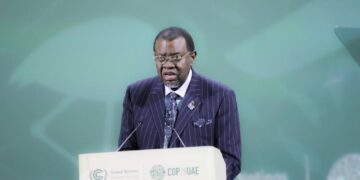


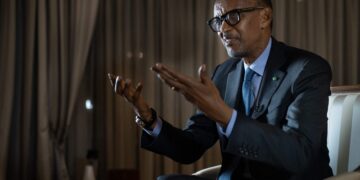



Paul Kagame, the president of Rwanda and a former military commander, is one of the most controversial political figures in modern African history.
Paul Kagame was born in October 1957 to a Tutsi family in Tambwe, Ruanda-Urundi, a village located in what is now the Southern Province of Rwanda. Following ethnic tensions and the outbreak of violence in 1959, his family was forced to flee to neighbouring Uganda, where he spent his childhood and youth in refugee camps. This experience as a refugee played a direct role in shaping his political and military consciousness.
In the 1980s, Kagame joined the Ugandan National Resistance Army (NRA) led by Yoweri Museveni and participated in the guerrilla war that brought Museveni to power in 1986. Kagame held leadership positions within Ugandan military intelligence during this time, gaining extensive field and strategic experience.
In the early 1990s, he underwent military training in the United States but quickly returned to the region following the death of Fred Rwigyema, the commander of the Rwandan Patriotic Front (RPF)—a group formed by Tutsi exiles. Kagame assumed command of the RPF and organised its forces to wage a guerrilla war against the government of Rwandan President Juvénal Habyarimana. In April 1994, Rwanda underwent a catastrophic upheaval following the downing of President Habyarimana’s plane; a genocide perpetrated by Hutu extremists erupted, resulting in the deaths of approximately 800,000 Tutsis and moderate Hutus over the course of nearly one hundred days.
Kagame led the Rwandan Patriotic Front (RPF) forces in an advance on the capital, Kigali. In July 1994, a military offensive succeeded in halting the genocide and securing control of the country. Subsequently, the RPF formed a government of national unity in which Kagame served as vice president and minister of defence, effectively assuming the reins of power and directing security and military policies.
In 2000, President Pasteur Bizimungu—an ethnic Hutu—resigned following political disputes, and Paul Kagame formally assumed the presidency after being elected by parliament and the government.
Rwanda later held its first direct presidential election in 2003 under a new constitution that prohibited ethnic incitement; Kagame won by a record margin. He went on to win successive presidential elections in 2010, 2017, and 2024, securing more than 98% of the vote on most occasions. Supporters attribute these landslide victories to the popularity of his development achievements, whereas critics ascribe them to his tight grip on the political landscape and the stifling of any genuine opposition. In 2015, a constitutional amendment—backed by the public in a referendum—allowed Kagame to run for additional presidential terms, thereby enabling him to remain in power until 2034.
Under Kagame’s leadership, Rwanda has achieved a remarkable economic and social transformation, earning it the moniker “the Singapore of Africa”. The development strategy known as “Vision 2020″—and its subsequent iterations—was anchored in the following pillars: the country achieved annual GDP growth rates exceeding 7% for consecutive years and invested heavily in telecommunications, technology, and sustainable energy. The government enforced a strict, uncompromising policy against financial and administrative corruption, propelling Rwanda to the top of African rankings for integrity and ease of doing business, according to international institutions.
Rwanda expanded universal health coverage to the majority of the population and invested in education, poverty reduction, and the lowering of maternal and child mortality rates. The country achieved leading global rankings for women’s representation in parliament and government institutions, with women holding over 60% of seats in the Chamber of Deputies. It also adopted firm environmental policies, including a ban on plastic bags and the implementation of a monthly community service day dedicated to the environment (“Umuganda”).
Kagame pursued a social policy centred on abolishing official ethnic identities (Tutsi and Hutu) and replacing them with an inclusive national identity known as “Rwandanness”. “Community courts”—known as “Gacaca”—were established to address genocide-related cases and try millions of accused individuals, with the aim of expediting justice, fostering reconciliation, and achieving transitional justice.
Despite the apparent success of this policy in preventing a resurgence of devastating violence, some analysts warn that suppressing open discussion on ethnic issues may cause tensions to simmer beneath the surface without being fully resolved.
Human rights, press freedom, and political practices form the primary basis for criticisms levelled against the Kagame regime by international organisations such as Human Rights Watch and Amnesty International: Political opponents have faced severe restrictions, with documented instances of imprisonment, exile, or the banning of parties attempting to challenge the ruling party. Several opposition figures and former regime military officials have died or been assassinated under mysterious circumstances outside Rwanda; accusations of involvement by Kigali authorities have been consistently denied by the government.
Authorities impose what has been described as strict censorship on local media, leading to a decline in independent journalism and confining public discourse to the boundaries of the official agenda. Kagame has played a pivotal role in shaping the geopolitical dynamics of the Middle East-Africa region and the Great Lakes area; his foreign policy is characterised by assertiveness and effectiveness: Rwandan forces fought two wars on the territory of their western neighbour (1996–1997 and 1998–2003) to pursue Hutu militias that had fled following the genocide. UN reports accuse Rwanda of backing armed rebel groups there—such as the M23 movement—to exploit mineral wealth; Kigali denies this, asserting that its motives are purely security-driven and aimed at protecting its borders.
Rwanda has become a major contributor to UN and African Union peacekeeping forces in various conflict zones, such as the Central African Republic and Mozambique, thereby bolstering its standing as a reliable security ally for international and regional powers. Kagame has successfully cultivated strong ties with Western powers—leveraging the international guilt stemming from the failure to protect Rwanda in 1994—despite periodic tensions regarding the country’s human rights record.
Paul Kagame exemplifies a model of “authoritarian developmental” leadership, in which the state sacrifices certain civil and political liberties to achieve stability, security, and rapid economic development. Observers’ views regarding his presidency and career are divided into two distinct schools of thought: He is viewed by his supporters as an exceptional leader who, through unwavering determination and a clear vision, steered a devastated, bankrupt nation out of the depths of ethnic cleansing. He transformed it into an exemplary African model—widely acclaimed for cleanliness, discipline, the fight against corruption, and economic growth.
However, his critics viewed him as an authoritarian ruler who exploited Rwanda’s historical tragedy to consolidate his grip on power, marginalise dissent, and construct a governance system centred almost entirely on his own person—thereby raising questions about the long-term sustainability of this stability in his absence.