













Qiraat Africa
عربي  |  Fr
Advertisement
  • News
    • All
    • Climate Change
    • Economy
    • Education
    • Energy
    • Health
    • Migration
    • Mining
    • Politics
    • Security
    • Society
    • Sport
    Kenyan cult leader to face murder charges in starvation deaths

    Kenya cult deaths: Court set to rule in preacher’s murder trial

    Zimbabwe president denies poll fraud as opposition rejects his re-election

    Zimbabwe’s ZANU-PF picks Mnangagwa as leader after 2028

    Senegal has sovereign right to decide how to tackle debt, IMF says

    Gabon says debt audit findings still under review by IMF, may be revised

    Report says Mali forces, Russian backers kill scores of civilians in drone strikes

    Report says Mali forces, Russian backers kill scores of civilians in drone strikes

    South African president reinstates suspended police chief

    South African president reinstates suspended police chief

    Ethiopia’s central bank joins African payments system PAPSS

    Ethiopia’s central bank joins African payments system PAPSS

    South Africa grants long-term leases to oil majors at key Durban fuel hub

    South Africa to stop subsidizing imported vehicle kits, pushing automakers to build locally

    Here’s why inflation has dropped internationally but is still rising in Nigeria

    Nigeria’s inflation rate eases slightly in September, data shows

    Kenya raises fuel prices as Middle East conflict lifts import costs

    Kenya raises fuel prices as Middle East conflict lifts import costs

  • Analysis
    • All
    • Climate Change
    • Digital & Tech
    • Economy
    • Energy & Power
    • Health
    • Politics
    • Security
    • Society
    Abiy Ahmed Tested: How the Tigray Alliance Is Reshaping Ethiopia’s Security—And What Comes Next

    Abiy Ahmed Tested: How the Tigray Alliance Is Reshaping Ethiopia’s Security—And What Comes Next

    UN report says Africa’s share of global trade stands at 3 percent

    AfCFTA: The Trade Rules Poised to Weave Africa’s Fragmented Textile Markets into One

    Four killed, hundreds arrested in Angola fuel hike protests

    Angola’s fuel subsidies spending projected to hit $4 billion in 2026, official says

    Kenya boosts Ebola preparedness after registering first case

    Kenya confirms four new Ebola cases, bringing total number to seven

    The global panel on inequality needs African evidence: here’s how it could work

    The global panel on inequality needs African evidence: here’s how it could work

    Why Africa needs a new credit agency

    Why Africa needs a new credit agency

    Japan signs deal with Namibia to explore for rare earth minerals

    Africa’s mineral strength is wasted if countries don’t work together – new report

    Ethiopia: at least 40 army allies killed in drone strike

    Ethiopia’s peace deal is unravelling – what went wrong with the Tigray agreement

    DRC on a mission to financing the world’s largest hydropower dam

    DR Congo: The INGA Dam Paradox

  • Studies
    China could drive Africa’s renewable energy revolution, report says

    A study shows wind and solar projects in Kenya and South Africa don’t always benefit the communities that host them

    Angola’s lengthy war shaped the way farmers utilised fire—why it matters

    Angola’s lengthy war shaped the way farmers utilised fire—why it matters

    Schooling is the most severely affected by conflict when children are the target – Study

    Schooling is the most severely affected by conflict when children are the target – Study

    Pensions for Botswana’s elderly are expanding, but care services are lacking—study follows 20 years

    Pensions for Botswana’s elderly are expanding, but care services are lacking—study follows 20 years

    60 new cosmic structures have been discovered by South Africa’s MeerKAT telescope, which is mapping previously unseen gaps between galaxies

    60 new cosmic structures have been discovered by South Africa’s MeerKAT telescope, which is mapping previously unseen gaps between galaxies

    Benin government says armed forces foil coup attempt

    Coup contagion? A rash of African power grabs suggests copycats are taking note of others’ success

    One in three South Africans have never heard of AI: what this means for policy

    One in three South Africans have never heard of AI: what this means for policy

    Social Media as a Catalyst for the Spread of Dangerous Wealth Ritual Myths

    Social Media as a Catalyst for the Spread of Dangerous Wealth Ritual Myths

    Overcoming Education Barriers for Young Mothers in Sub-Saharan Africa

    Overcoming Education Barriers for Young Mothers in Sub-Saharan Africa

  • Infographics
  • Figures
    Namibia: Anger over Dubai COP28 trip by president Geingob’s children

    Hage Geingob (1941–2024): Former President of Namibia

    Cape Verde president says governments must discuss colonial reparations

    José Maria Neves: President of Cape Verde

    Jorge Bom Jesus: Linguist and former Prime Minister of São Tomé and Príncipe

    Jorge Bom Jesus: Linguist and former Prime Minister of São Tomé and Príncipe

    Joseph Leabua Jonathan (1914-1987): Former Prime Minister of Lesotho

    Joseph Leabua Jonathan (1914-1987): Former Prime Minister of Lesotho

    Gambia’s president Barrow faces backlash over ‘death wish’ on archrival

    Adama Barrow: President of the Republic of The Gambia

    Rwandan President Paul Kagame announces he will run for a fourth term

    Paul Kagame: Former military officer and president of Rwanda

    Zumbi dos Palmares (1655-1695): Afro-Brazilian leader of the great Palmares Quilombo

    Zumbi dos Palmares (1655-1695): Afro-Brazilian leader of the great Palmares Quilombo

    Léon M’ba (1902-1967): First president of independent Gabon

    Léon M’ba (1902-1967): First president of independent Gabon

    Namibia to vote in toughest election yet for ruling party

    Netumbo Nandi-Ndaitwah: President of Namibia

  • History
    Manovo-Gounda St. Floris National Park, Central African Republic

    Manovo-Gounda St. Floris National Park, Central African Republic

    Lake Malawi (Lake Nyasa) National Park, Malawi

    Lake Malawi (Lake Nyasa) National Park, Malawi

    Fasil Ghebbi, Gondar Region, Ethiopia

    Fasil Ghebbi, Gondar Region, Ethiopia

    Bwindi Impenetrable National Park, Uganda

    Bwindi Impenetrable National Park, Uganda

    Fort Jesus, Mombasa, Kenya

    Fort Jesus, Mombasa, Kenya

    Comoé National Park, Côte d’Ivoire (Ivory Coast)

    Comoé National Park, Côte d’Ivoire (Ivory Coast)

    Bassari and Bedik Cultural Landscapes, Senegal

    Bassari and Bedik Cultural Landscapes, Senegal

    Lower Valley of the Omo, Ethiopia

    Lower Valley of the Omo, Ethiopia

    Sudano-Sahelian style mosques, northern Côte d’Ivoire

    Sudano-Sahelian style mosques, northern Côte d’Ivoire

  • Others
    • Culture / Literature
    • Interview
    • Opinion
  • Countries
    • Country profiles
    • Regions
      • Central Africa
      • East Africa
      • Southern Africa
      • West Africa
No Result
View All Result
Qiraat Africa
عربي  |  Fr
No Result
View All Result
Home Regions East Africa

Abiy Ahmed Tested: How the Tigray Alliance Is Reshaping Ethiopia’s Security—And What Comes Next

Oyebamiji Usman Adesoji by Oyebamiji Usman Adesoji
October 19, 2026
Abiy Ahmed Tested: How the Tigray Alliance Is Reshaping Ethiopia’s Security—And What Comes Next

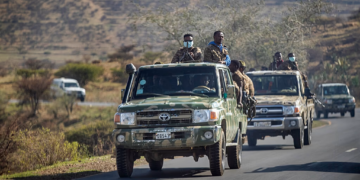
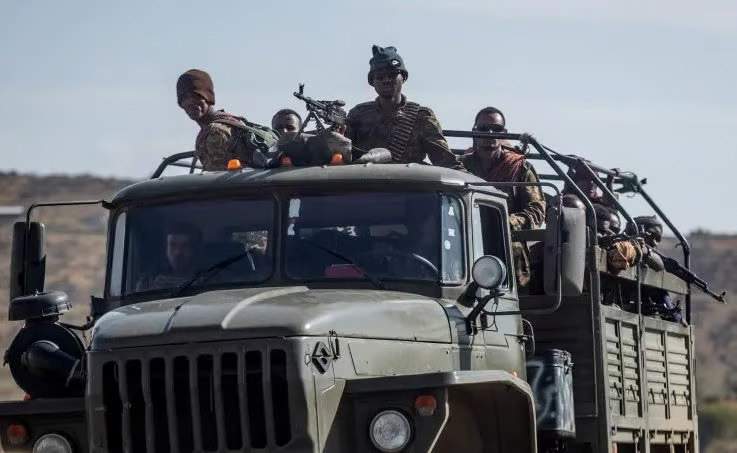
Ethiopian government soldiers near Agula, north of Mekelle in the Tigray region of Ethiopia, in May 2021 © Ben Curtis/AP/SIPA

Share on FacebookShare on Twitter

Ethiopia is once again facing a key national-security issue in its northern regions. The escalation that started in September 2026 is predominantly weighty for the reason that it is no longer just a clash between Prime Minister Abiy Ahmed’s federal government and the Tigray People’s Liberation Front (TPLF).

The rise of the Ethiopian Peoples’ Forces Alliance for Survival, which brings together seven armed movements from diverse parts of the nation state, has changed the security equation. The alliance consists of the TPLF and Amhara Fano forces, in addition to armed groups linked with Oromia, Afar, and Benishangul-Gumuz. Its stated objective is to get rid of Abiy’s government, though its members have different political and territorial interests. This makes the current catastrophe qualitatively dissimilar to the 2020–2022 Tigray war.

The recent military escalation shadowed months of worsening relationships amongst Addis Ababa and Tigray. Though the African Union (AU) cautioned on 23 September that Tigrayan forces had held airports in Mekelle, Axum and Shire and that fighting had increased in South Tigray and Afar.

The AU designated the 2022 Pretoria Cessation of Hostilities Agreement as the foundation of sustainable peace in Ethiopia and advised immediate de-escalation. The new violence consequently denotes not only a battlefield conflict but also a direct test of whether the political agreement that ended the previous war can endure unsettled territorial, security, and political disagreements.

From the 2020 War to the Pretoria Agreement

The background of the current crisis lies in Ethiopia’s political change after Abiy Ahmed became prime minister in 2018. His rise deteriorated the political domination of the TPLF, which had been central to Ethiopia’s ruling coalition since the takeover from the Derg regime in 1991. The relationship between Addis Ababa and Tigray worsened abruptly over rival political visions, elections, and the reformation of the ruling Ethiopian Peoples’ Revolutionary Democratic Front. In November 2020, hostilities started after the federal government accused Tigrayan forces of attacking a federal military base, while Tigray’s authorities contended that the federal government had dishonoured constitutional and political arrangements.

The outcomes of the war turn out to be one of Africa’s most damaging conflicts of the early 2020s. Ethiopian federal forces fought together with Eritrean troops and, at numerous stages, Amhara forces against the Tigray Defence Forces. The fight spread into Amhara and Afar, created a large displacement, and created allegations of grave violations against civilians. The United Nations and the African Union recurrently called for humanitarian access and an end to conflicts. By 2022, frontline intervention and diplomatic burden formed a channel for talks. The AU-led peace development in Pretoria established the Permanent Cessation of Hostilities Agreement on 2 November 2022.

The Pretoria treaty formed significant security gains. The AU later reported the handover of heavy and medium arms, restoration of critical amenities, reopening of schools and economic activity, formation of an interim regional government and progress toward demilitarisation, demobilisation and reintegration. So far, the settlement was partial. Enquiries regarding unclear territories, the homecoming of displaced residents, political authority, and the final position of Tigray’s armed forces are still problematic. While Human Rights Watch warned in September 2026 that unresolved territorial disputes, displacement, and disarmament were continuing to weaken the arrangement.

The New Tigray Coalition

The significant transformation in 2026 is the advent of a bigger anti-government military alliance. The Ethiopian Peoples’ Forces Alliance for Survival brings together groups that before fought on opposite sides of the Tigray conflict. The presence of TPLF and Amhara Fano is mostly striking since Fano forces fought together with federal and Eritrean armies against Tigrayan forces throughout the previous war. Their renewed arrangement proves how opposition to the federal government is provisionally superseding some of Ethiopia’s previous frontline divisions.

The coalition, however, has substantial organisational weaknesses. For instance, its members are geographically spread and do not unavoidably partake in the same vision of Ethiopia’s future. Their differences over land, federalism, ethnicity, regional independence and political control could develop more weighty if the alliance moves from military coordination to dialogues over a post-Abiy political order. International Crisis Group and other specialists have earlier emphasised the struggle of managing Ethiopia’s overlapping regional wars; the current coalition consequently signifies a security convergence rather than essentially a clear political programme.

On the part of Abiy, nevertheless, the alliance forms a stern tactical problem because it possibly unlocks quite a lot of security fronts at the same time. A conservative regime fight against Tigray turns out to be much more rigid if federal forces must concurrently monitor Amhara insurgence, Oromia-based armed groups and crises in other parts of the country. Ethiopia’s military thus faces the definitive problem of strategic overstretch because concentrating armies in the north may generate exposures to another place, while scattering forces could decrease its capability to hold the Tigrayan attacks.

The Eritrea Factor

The regional understanding is also significant. Ethiopia-Eritrea diplomatic relations have declined historically from the cooperation that followed Abiy’s 2018 reconciliation with President Isaias Afwerki. Eritrea fought together with Ethiopian federal militaries all through the Tigray conflict and viewed the TPLF as a key security risk. The new Tigray rebellion hence brings the likelihood of another Eritrean-Ethiopian conflict, mainly because Ethiopia’s drives regarding Red Sea access remain a sensitive issue for Asmara. Ethiopian administrators have accused Eritrea of backing armed groups inside the new coalition, despite the fact that Eritrea has recurrently denied such claims.

The regional jeopardies spread past Eritrea. Rebellion around Afar takes strategic consequence since the region links northern Ethiopia with Djibouti and the Red Sea corridor. Ethiopia depends heavily on Djibouti for maritime trade, even though Afar borders both Eritrea and Djibouti. A protracted war could consequently threaten transportation routes, humanitarian corridors, and commercial connectivity. Similarly, Sudan’s ongoing war generates one more source of instability on Ethiopia’s western frontier, growing the likelihood that conflict undercurrents in the Horn could turn out to be interconnected.

Read also

AfCFTA: The Trade Rules Poised to Weave Africa’s Fragmented Textile Markets into One

Kenya cult deaths: Court set to rule in preacher’s murder trial

Zimbabwe’s ZANU-PF picks Mnangagwa as leader after 2028

Humanitarian and Economic Significances

The humanitarian costs could be severe, as northern Ethiopia has not fully recovered from the preceding confrontation. UNHCR data for May 2026 documented more than 1.9 million internally displaced persons in Ethiopia, with Tigray accounting for roughly 761,000 internally displaced persons. Similar data disclosed large displacement in Amhara and Afar; this denotes that the regions are now visible to new fighting previously containing huge inhabitants affected by war. A renewed attack could consequently cause secondary displacement before communities have recovered from the previous conflict.

Economic burdens add an extra layer to the security challenge. War interrupts agricultural production, transport, trade, telecommunications, and investment even though there is growing government spending on military actions. Ethiopia is similarly making an effort to bring back investor confidence and follow economic transformations after years of serious macroeconomic pressure. A lengthy northern war could muddle these aims by increasing fiscal demands and fading assurance on political stability. The economic dimension is then not distinct from national security. As protracted insecurity can support unemployment, displacement, and local grievances, which in turn make available circumstances for further mobilisation.

Abiy’s Security Policy Under Pressure

The emergency signifies a key test of Abiy Ahmed’s security approach. Since the Tigray war, the federal administration has heavily depended on the Ethiopian National Defence Force, regional security structures, political negotiations, and military pressure to hold armed struggles. The new Tigray conflict shows that military victory in one theatre has not certainly resolute Ethiopia’s profound political-security problem. The state endures to face armed mobilisation connected to unanswered questions about federalism, regional autonomy, territorial control, and political representation.

The reported usage of drones is also noteworthy. ACLED data shows that federal drone attacks against Tigrayan targets occurred during the lower-intensity phase prior to the September escalation. Drone warfare can give the regime tactical advantages by spreading surveillance and strike abilities, but it does not resolve the political roots of rebellion. Certainly, where military pressure does not go together with negotiations and political accommodation, strategic victories can exist with the new mobilisation. Ethiopia’s understanding since 2020 demonstrates the bounds of treating a multidimensional political war primarily as a security challenge.

The AU and Global Diplomacy

With the latest developments about the East African nation, the African Union now faces a hard reliability test. The AU Pretoria process proved that African-led diplomacy could assist in ending a major war; nevertheless, the new hostility reveals the limits of a treaty whose political requirements persisted partly unexecuted. It has now called for a cheque and reiterated its pledge to the Pretoria framework. On the other hand, IGAD and the United Nations have equally called for the end of hostilities and negotiation. The test is to adapt these diplomatic pleas into an apparatus capable of taking the parties back to dialogues before the military status quo turns out to be irreversible.

International players as well face contending priorities. For instance, the United States and European Union have solid interests in fuelling another humanitarian disaster and extensive regional destabilisation. Furthermore, Ethiopia’s status in the Horn of Africa, its role in African international relations, and its closeness to the Red Sea make instability mostly important. Similarly, external actors have restricted influence if Ethiopia’s major political players settle for military advantage that proposes more than negotiated concessions. The utmost operational diplomatic approach is consequently to be expected to include continued pressure for execution of standing arrangements rather than the rapid formation of a completely new peace agenda.

What Comes Next: Three Scenarios

The first scenario is controlled conflict followed by new talks. Further down this path, neither the federal administration nor the Tigray-led coalition reaches a significant military resolution. Global and regional pressure intensifies, humanitarian alarms grow and the parties return to discussions. The Pretoria Agreement may perhaps then turn out to be the basis for a reviewed political settlement in the aspect of disarmament, disputed lands, displaced populaces and regional political leadership. This would necessitate considerable concessions from both Addis Ababa and Tigrayan representatives.

The second scenario is a long multi-front war. If the coalition gets ahead in organising operations across Tigray, Amhara, Oromia and other regions, Ethiopia might go into a period of fragmented conflict. The federal government would hold extensive military capabilities, but the geographic spread of rebellion could grow the budgets of sustaining state security. Such circumstances would correspondingly create chances for criminal networks, communal militias, and external players to take advantage of local instability.

The third scenario can be termed as regionalisation of the war. This would arise if Eritrea turns out to be directly involved, if aggression extended near major border areas, or if Sudan’s war turns into something gradually linked to Ethiopian security dynamics. Such an expansion would change an Ethiopian internal war into a broader Horn of Africa security disaster. However, the costs possibly will consist of further refugee movements, interruption of trade routes, and amplified global military and diplomatic participation.

Conclusion

The consequence of the Tigray crisis in 2026 relies not just on the reoccurrence of hostility but also on the alteration of Ethiopia’s security structure. The advent of a coalition connecting Tigrayan militaries with former rivals reveals that Ethiopia’s political divisions are being reorganised on a broader clash with federal authority. For Abiy Ahmed, the fundamental test is no longer simply conquering the TPLF; it is averting numerous regional wars from converging into a national security issue.

The conclusive variable will eventually be political rather than only military. Ethiopia’s understanding after 2020 establishes that frontline advances cannot by themselves resolve disputes entrenched in identity, federalism, territory, and political leadership. Thus, if the contemporary escalation is controlled, the conflict might become a prospect to reinforce and expand the Pretoria framework. Also, if diplomacy becomes unsuccessful and the alliance merges its military fronts, Ethiopia possibly faces one more lengthy conflict with costs spreading well outside Tigray. Finally, the subsequent stage will then determine if Ethiopia moves in the direction of a new national political settlement or goes in another series of fragmented conflicts in the Horn of Africa.
Source: Qiraat Africa
Tags: Addis AbabaAfrican Union (AU)EthiopiaEthiopian Peoples' Forces Alliance for SurvivalIsaias AfwerkiTigrayTigray CoalitionTigray People’s Liberation Front (TPLF)
Oyebamiji Usman Adesoji

Oyebamiji Usman Adesoji

Writer and researcher on business, entrepreneurship and geopolitical affairs.

Related Posts

Senegal has sovereign right to decide how to tackle debt, IMF says
Central Africa

Gabon says debt audit findings still under review by IMF, may be revised

October 19, 2026
Report says Mali forces, Russian backers kill scores of civilians in drone strikes
Featured

Report says Mali forces, Russian backers kill scores of civilians in drone strikes

October 19, 2026
South African president reinstates suspended police chief
Featured

South African president reinstates suspended police chief

October 18, 2026
Ethiopia’s central bank joins African payments system PAPSS
East Africa

Ethiopia’s central bank joins African payments system PAPSS

October 15, 2026
South Africa grants long-term leases to oil majors at key Durban fuel hub
Economy

South Africa to stop subsidizing imported vehicle kits, pushing automakers to build locally

October 15, 2026
Here’s why inflation has dropped internationally but is still rising in Nigeria
Economy

Nigeria’s inflation rate eases slightly in September, data shows

October 15, 2026

Search Qiraat Africa

No Result
View All Result

Follow on Twitter

Follow @africanqiraat

Trending

Samori Touré (1830-1900): Military leader and founder of Wassoulou Empire

Samori Touré (1830-1900): Military leader and founder of Wassoulou Empire

January 11, 2026
Africa’s 10 Strongest Currencies in June 2026

Africa’s 10 Strongest Currencies in June 2026

July 8, 2026
Kumbi Saleh, the capital of the ancient Ghana Empire

Kumbi Saleh, the capital of the ancient Ghana Empire

October 13, 2025
Tunka Manin (c. 1010–1078), the last ruler of the Ghana Empire

Tunka Manin (c. 1010–1078), the last ruler of the Ghana Empire

December 12, 2025
Zaghawa people of northeastern Chad and western Sudan

Zaghawa people of northeastern Chad and western Sudan

March 3, 2026
The Great Mosque of Djenne, Mali

The Great Mosque of Djenne, Mali

March 25, 2025

Facebook

Sections

  • About Us
  • Privacy Policy
  • Opinion
  • Infographics
  • News
  • Analysis
  • Figures
  • Culture & Literature
  • Follow Ups
  • Historical Readings
  • Interview
  • Studies


© Copyright Qiraat Africa. Developed by Bunnaj Media .

No Result
View All Result
  • News
  • Analysis & Report
  • Studies
  • Opinion
  • Interview
  • Culture & Literature
  • Figures
  • Historical Readings
  • Regions

© 2021 Copyright Qiraat Africa.