













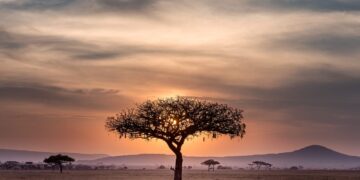










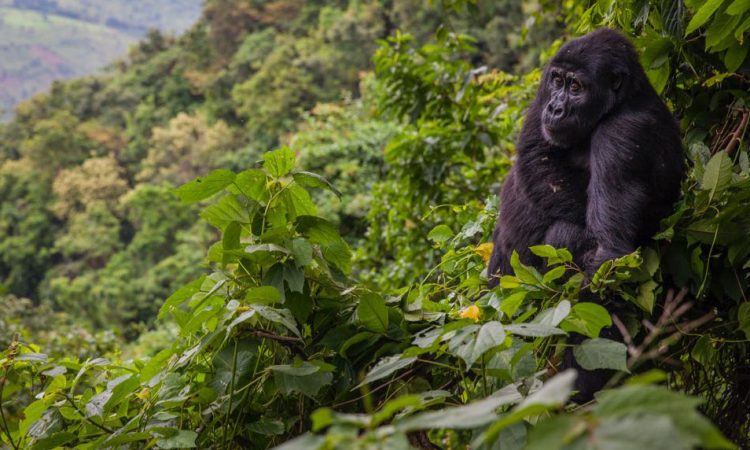
Bwindi Impenetrable National Park is situated in the southwestern highlands of Uganda, along the edge of the Albertine Rift—part of the Great Rift Valley system—and borders the Democratic Republic of the Congo. The park represents one of the few tropical rainforest environments that survived the last Ice Age (approximately 25,000 years ago); this continuity has fostered the evolution of one of the African continent’s most complex and diverse ecosystems.
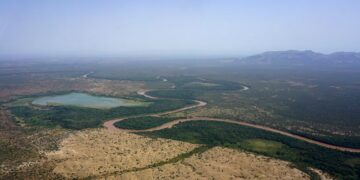
Bwindi is characterised by steep, rugged terrain. Spanning approximately 321 square kilometres, the area comprises mountains, plateaus, and deep valleys with dramatic elevation changes, ranging from 1,160 metres above sea level in the far north to 2,607 metres at the summit of Rubanda in the southeast.
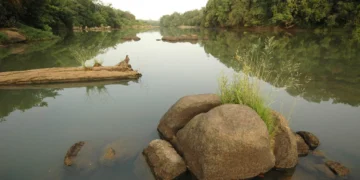
This stark vertical variation creates a distinct climatic and ecological gradient, blending lowland and highland tropical ecosystems—a rare fusion in tropical rainforests. The landscape is blanketed by dense forest with interlocking tree canopies and a thick undergrowth of climbers, epiphytes, ground herbs, and ferns, forming a nearly impenetrable barrier that hinders direct movement through the forest. A network of streams and waterfalls permeates this environment, feeding into the region’s major river basins. The park is classified as a unique haven for flora and fauna; it hosts over 220 tree species from diverse botanical families—representing more than half of all tree species recorded in Uganda—alongside over 100 fern species and hundreds of varieties of flowering plants.
In terms of wildlife, the park is home to approximately 120 mammal species. Beyond the mountain gorilla, the forest supports various primates—including chimpanzees, blue monkeys, golden monkeys, and colobus monkeys—making Bwindi the only location in Africa where mountain gorillas and chimpanzees share the same natural habitat.
The forest also harbours populations of forest elephants, wild pigs, and small antelopes such as duikers, as well as thriving communities of hyenas and small felids. Regarding other wildlife, Bwindi is home to over 350 bird species—including 23 species endemic to the Albertine Rift—along with more than 200 butterfly species and dozens of amphibian and reptile species.
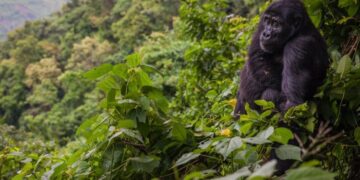
Bwindi Park is renowned for harbouring nearly half of the world’s remaining population of mountain gorillas (“Gorilla beringei beringei”), a subspecies subject to strict protection standards under International Union for Conservation of Nature (IUCN) classifications. Bwindi gorillas differ from their counterparts in the neighbouring Virunga Mountains in certain morphological and behavioural characteristics—such as a greater tendency to feed on fruit and spend more time in trees—due to the forest’s high tree density compared to the open vegetation of the volcanic regions.
This species subsists on an entirely plant-based diet comprising leaves, shoots, and plant stems. Within the park, the groups inhabit territories that sometimes overlap; they are subject to periodic monitoring and statistical studies involving field censuses, DNA sample collection, and the analysis of traces to determine precise population sizes and track health status, as well as birth and mortality rates.
Throughout modern history, the area has been subject to a progressive series of legal protection measures. In 1931, British colonial authorities designated parts of the forest as two Crown reserves for game and wildlife, aiming to curb logging and unregulated hunting. The two reserves were merged and expanded in 1961 to form the Bwindi Game Reserve.
In 1991, the Ugandan government issued a decree upgrading the area to a national natural asset, establishing “Bwindi Impenetrable National Park”, and placing its management under the Uganda Wildlife Authority. UNESCO inscribed the park in 1994 on the World Heritage List, recognising its exceptional biodiversity and its role as a habitat for endangered species.
Despite this legal and international protection, Bwindi National Park faces ongoing challenges stemming from its geographical location and surrounding demographic conditions. The park is surrounded by a densely populated area that relies primarily on subsistence agriculture. This proximity has resulted in a lack of adequate buffer zones separating the forest from farmland, leading to direct conflict between local communities and wildlife; elephants and gorillas, for instance, sometimes venture out and destroy nearby crops.
Although direct targeting of gorillas has declined, poaching using wire snares intended for antelopes and pigs poses a recurring indirect threat, often resulting in injuries or limb amputations among the primates. Additionally, destructive logging and unsafe honey-gathering practices persist, creating risks of forest fires. The close genetic relationship between humans and gorillas presents a severe biological threat; respiratory and bacterial pathogens can be transmitted from visitors or local communities to gorillas—which lack the necessary antibodies to combat them—potentially triggering fatal epidemics within the populations.
Historically, the forest was the ancestral home of the Batwa people, a hunter-gatherer community that relied entirely on Bwindi’s resources for centuries. Following the area’s redesignation as a national park in 1991, the Batwa were evicted from the forest to protect biodiversity, without receiving adequate compensation or suitable housing and agricultural alternatives at the time.
This eviction led to profound socio-economic shifts for the Batwa, transforming them from an independent community reliant on a subsistence-based economy into a marginalised group living on the park’s periphery, lacking land ownership and access to basic services. Despite modern efforts to integrate local communities into ecotourism initiatives and reinvest a portion of park visitation revenues into community projects, structural issues regarding land ownership and social equity remain subjects of scrutiny and debate among human rights and anthropological groups.
Ecotourism serves as the primary economic driver and funding mechanism for park management; specifically, gorilla trekking is the largest source of revenue for the Uganda Wildlife Authority. Tourism activities are subject to strict regulations designed to minimise environmental impact.
The number of daily permits is capped; only a limited number of people are permitted to visit each habituated gorilla family for a maximum of one hour per day. Visitors are required to maintain a safe distance of at least seven metres and must wear face masks when near the animals to prevent disease transmission.
National regulations mandate that a percentage of entrance permit fees be allocated to fund local development projects in surrounding villages—such as the construction of schools and health centres and road improvements—thereby creating an economic incentive for local residents to participate in forest conservation and curb encroachment activities.
Bwindi Impenetrable National Park remains a complex example of an African ecosystem that balances exceptional biodiversity with on-the-ground management and social challenges, shaped by the imperatives of environmental conservation and the development needs of the local population.