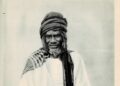

































Sokhna Magat Diop (c. 1917–2003) was a prominent figure in the history of Islamic religious movements in West Africa, specifically within the Mouride order in Senegal. In an environment where leadership roles—such as the headship of Sufi lodges—were overwhelmingly dominated by men, Sokhna Magat Diop represented a significant structural exception. She led a branch of the Mouride order for many decades, from 1943 until her passing in March 2003.
The Mouride order emerged in Senegal in the late nineteenth century, founded by Cheikh Ahmadou Bamba Mbacké. The order is characterised by its profound emphasis on labour, spiritual cultivation, and agricultural production, as well as the establishment of “holy cities”, such as Touba.
In Senegal, Sufi orders have played a pivotal role in preserving Islamic identity and resisting French colonial policies, relying on extensive networks of “murids” (disciples) and followers. Within this framework, women’s participation was not limited to marginal roles. Those belonging to the families of the founders or the “sheikhs” held a distinguished status—often referred to by the title “Sokhna”—a term denoting deep respect and reverence, applied to esteemed women within a household, as well as to female teachers and “sheikhs”. However, assuming actual leadership—which entails making decisions, appointing “imams”, and overseeing spiritual and social guidance—represented an advanced level of authority, one rarely attained by a woman in such an explicit, institutionalised, and established manner as was the case with Sokhna Magatte Diop.
Sokhna Magatte Diop assumed her leadership position in 1943, a period marked by major social and political transformations in Senegal, both leading up to and following the country’s independence. Her leadership spanned nearly six decades—a critical era that witnessed Senegal’s transition from French colonial rule to an independent republic, accompanied by the challenges of modernising the state and shifting traditional economic and social patterns.
She managed her religious community with an efficiency that earned her the respect of the broader Mouride circles. Her leadership was far more than a mere formality; she exercised substantive authority, which included guiding Murids and students by overseeing the memorisation of the Holy Quran, the teaching of fundamental religious sciences, and the literature of the “tariqa” (Sufi order) for both male and female adherents.
Her role also included making administrative and spiritual decisions, such as appointing “imams” and supervisors for various mosques and sites under her purview—a role that required a high degree of spiritual and social mandate. Also, hosting delegations, resolving internal disputes through wisdom and consultation, and ensuring the continuity of the institution and its role in fostering social solidarity and education.
This sustained, on-the-ground presence over the decades has established the institution as an indispensable spiritual authority. Indeed, many religious and political leaders have consistently sought to engage with it and solicit its counsel—most notably during major events such as the “Magal” in Touba, an occasion when followers renew their pledges and traditions.
The experience of Sokhna Magat Diop has garnered the attention of researchers in the fields of religious anthropology and African studies. In 1990, French scholars Christian Coulon and Odile Reveyrand published a significant book titled “L’Islam au féminin: Sokhna Magat Diop, cheikh de la confrérie mouride”, in which they documented the nature of her community work and her position as a “sheikha” (female spiritual leader) within the Mouride brotherhood.
These studies shed light on the complexities of female authority within African Islam. The Mouride model demonstrates a remarkable flexibility in integrating local elements with Sufi structures; this has enabled certain qualified women to successfully establish an independent religious legitimacy—rooted in scholarly charisma, noble lineage, and social acceptance—without coming into conflict with prevailing patriarchal traditions. Instead, they have effectively repurposed these traditions to serve the religious community.
According to Mame Fatou Séne:
“In Senegal, Mame Diarra Bousso, the mother of Cheikh Ahmadou Bamba, founder of the Mouride Brotherhood, is the only woman for whom an annual Ziar/magal is dedicated (Guèye, 2002, p. 205). This pilgrimage brings Mouride disciples, especially women, to Porokhane from all over Senegal and beyond to pay homage and pray at her mausoleum. Sokhna Magat Diop, a Mouride “Caliph”, Adja Khar Mané and Oumy Soukho, both sheikhs of the Khadr Brotherhood, or Adama Seck, a Senagalese Qur’anic television commentator, are all more contemporary female examples (Coulon, Reveyrand, 1993). “This situation is testament to the vitality and importance of the role of women in religious brotherhoods, even if women cannot rise to the levels of Imam or Brotherhood Caliph. However, it is clear that these elites, recruited from the Sokhna level (women and daughters of dignitaries), play a much more social than religious role. However the teaching of girls (Mariama Niass and Magat Diop), as well as boys, or talibés (jebbëlu) who pledge allegiance their brotherhood, following the example of Magat Diop and Sokhna Maï Mbacké, are isolated but very significant cases,” historian, Penda Mbow, points out (2001, p. 5).
These women are therefore exceptions to the quasi-male monopoly on religious authority, and society’s low expectations of female education. Indeed, this is one of Senegalese society’s greatest contradictions: judging its women on their pious behaviour whilst depriving them of the tools to become aware of the basis of such piety. The scholarly elite thus remains masculine, whilst women find themselves guardians of a more popular Islam.”
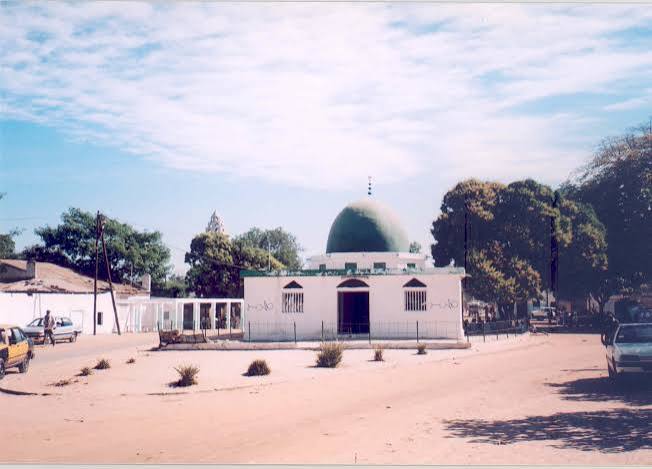
Sokhna Magat Diop passed away on March 18, 2003, leaving behind a profound legacy in Senegal—particularly in the city of Touba and within the Mouride community. Her passing marked the end of a significant historical era for pioneering female leaders who managed to firmly etch their names into the annals of modern African Islamic movements.