
















Education in Africa has been affected by the interface of armed conflict, forced displacement, climate change, economic instability, and political insecurity. In states affected by insurgencies, civil wars, and recurrent natural disasters, schools are not just institutions for academic instruction, but they are essential pillars of social protection, community stability, economic development, and national reconstruction. When education systems fail, the costs spread beyond lost classroom time to consist of increasing inequality, declining human capital, increased vulnerability to exploitation, and the erosion of public confidence in government.
The dimension of the challenge is significant because the United Nations Children’s Fund (UNICEF) has assessed that 234 million school-aged children are living in crisis-affected conditions worldwide, and this is a need for urgent educational funding at the end of 2024. In 2024 climate-related risks will interrupt education for not less than 242 million children globally. Even though these are universal statistics, African nations account for a large percentage of the war, displacement, and climate-related disasters that are creating educational disruption.
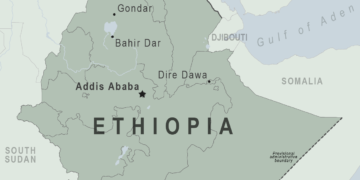
In contrast to this context, the African Union (AU) has sought to reinforce continental collaboration through its education policy agenda. A noteworthy piece of new progress was on 18 September 2026 at AU headquarters in Addis Ababa when the official inauguration of the Continental Education Strategy for Africa (CESA) Education in Emergencies and Resilience Cluster took place. The initiative is envisioned to support countries in Africa to protect learners, endure educational continuity, and reconstruct systems affected by emergencies.
The initiative mirrors a significant change in African policy thinking, where education must not be handled as a secondary concern that can be delayed pending a humanitarian disaster ends. Relatively, it had better be fused into conflict prevention, disaster preparedness, peacebuilding and long-term growth. Nevertheless, its success will be subject to whether continental promises can be interpreted into sufficiently funded national programmes, safer educational environments and quantifiable developments in access and learning outcomes.
History and the True Scale of Africa’s Education Emergencies
A decade ago, the AU’s vision for education was laid out in CESA 16-25, expanding on global targets enshrined in the United Nations’ Strategic Development Goal 4 (SDG 4). A review of CESA 16-25 suggests that it had a positive impact, with lessons learned on how to increase this impact further. Education remains a priority today, as noted in the second action plan for Agenda 2063. This strategy incorporates findings from the CESA 16-25 review to provide a new framework for action for 2026-35.
The emergency dimension has become increasingly important because Africa’s education challenges cannot be explained solely by insufficient classrooms, teachers or learning materials. In several countries, the ability of children to attend school depends on whether their communities are secure, whether families have been displaced, whether roads remain accessible during floods and whether teachers can safely travel to work.
Launched in September 2026, AU’s Education in Emergencies and Resilience Cluster offers a continental coordination apparatus under CESA 2026–2035. Its partners consist of the United Nations High Commissioner for Refugees (UNHCR), Save the Children International, United Nations Educational, Scientific and Cultural Organization (UNESCO), United Nations Children’s Fund (UNICEF) and other development and humanitarian bodies.
The AU has noted that the Cluster’s preliminary work programme for 2026–2028 seeks to reinforce coordination, enable knowledge-sharing, and support the incorporation of emergency readiness into national schooling policies and budgets. Also, its four working priorities are safety, continuity of education, knowledge recovery and inclusion, and financing and accountability.
This institutional advancement is imperative for areas such as African geopolitics because the continental agenda can assist states in exchanging knowledge, organising responses to cross-border displacement, and creating mutual values for protecting educational establishments. However, the AU seems to not directly manage a lot of national school systems. Its impact consequently hangs on member-state collaboration, regional organisations and the readiness of governments to finance and implement decided obligations.
Meanwhile, the increasing number of schools affected by violence and the continuous exclusion of children from formal schooling is the reason for a harmonised continental response. UNICEF and the Norwegian Refugee Council in September 2025 stated that approximately 15,000 schools all over West and Central Africa had been forced to shut down due to violence and conflict. The figure had mounted from less than 8,000 in 2019, distressing a projected three million children in 2025. The Democratic Republic of the Congo (DRC) and Nigeria documented mostly sharp surges in school closures.
There are three interconnected problems revealed by these figures. The first point is that some countries face continuing educational exclusion already before an emergency happens. Likewise, violence and displacement can draw back years of progress practically instantaneously. The third base point is that climate threats all the time interrupt school calendars, damage infrastructure, and put extra pressure on existing limited public spending. The AU’s initiative therefore has to address both direct humanitarian needs and the basic weaknesses that make state education systems exposed to emergencies.
Conflict, Displacement and the Protection of Schools
Education is closely linked to the security of human lives. Meanwhile, educational centres such as schools offer children organised practices, access to caring adults, and prospects to grow their skills. In the time of crisis, they may also help as platforms for nutrition, psychosocial support, and protection from abuse.
Yet, schools can also turn out to be targets of attacks or takeover by armed actors or become inaccessible when people run away from crises. While teachers might be threatened, abducted, or displaced, parents may pull out their children due to safety concerns. Furthermore, such interruption can be specifically harmful to girls, children with disabilities, and pupils from underprivileged homes.
The AU’s Safe Schools framework and the international Safe Schools Declaration create significant reference points aimed at protecting educational institutions in times of armed conflict. Likewise, the CESA 26-35 puts protection together with learning continuity and recovery, acknowledging that education cannot still be resilient while deprived of a minimum level of physical security.
However, protection entails more than political statements. Governments are of duty to create credible early-warning systems, formulate emergency response plans, advance coordination amongst education and security agencies, and also investigate attacks. Also, security measures are essential to be planned cautiously in order for schools to continue to be civilian learning settings rather than becoming visible to further risks.
As for the AU, this creates a diplomatic and institutional challenge, such as encouragement for member countries to make use of communal obligations in applied protection measures with respect to national duties and the safety of affected people.
Climate change and the need for disaster-resilient education
One of the dimensions of the education emergency in Africa is conflict. While education can also be interrupted in communities not directly affected by armed violence due to floods, droughts, cyclones, extreme temperatures, and public health emergencies.
In order to validate this interface, we can use the experience of South Sudan. For instance, during the first half of 2024, conflict in several states, including Western Equatoria, prompted school closures, displacement, and destruction of learning materials. Similarly, extreme temperatures impelled a national school closure from 18 March to 2 April 2024. Furthermore, the East African country was later challenged by severe flood-related disruptions in 2025.
Examples of such situations help us to know why resilient education systems essentially need climate-sensitive planning. While school buildings must be planned or developed to survive local risks, the government must create emergency preparations for provisional educational spaces, alternative calendars, and the immediate replacement of damaged materials.
Similarly, disaster readiness is essential to be integrated into the school management. For instance, tutors and pupils can be equipped in emergency procedures, whereas local government can map flood-prone schools, find safe evacuation paths, and create communication channels with the public.
Experts are of the belief that digital learning might assist in preserving continuity, but for it to be a universal solution, some inadequacies, such as electricity shortages, poor internet coverage, the cost of devices and limited digital literacy, can exclude some pupils who are most impacted by crises. In the same way, low-technology alternatives, which include print learning packs, radio lessons, and offline digital content, are consequently important.
Additionally, the AU initiative has a chance to inspire countries on the continent of Africa to accept an all-inclusive model of educational resilience that puts together safe infrastructure, climate adaptation, early warning, and flexible teaching approaches.
What are the opportunities presented by the AU initiative?
The CESA 26-35 proposes numerous opportunities in order to strengthen Africa’s communal capacity for the protection of education. It can assist in the area of advancing continental coordination by connecting governments, regional bodies, humanitarian agencies, and civil society. Thus, this will help to reduce fragmentation amid emergency relief and longer-term educational development. However, the cluster’s value will be contingent on complementing already current national and regional structures rather than creating extra layers of bureaucracy.
Besides, the AU initiative can support teacher growth and protection because they are crucial at the time of emergencies, although they may face displacement, unpaid salaries, trauma, and poor working conditions. Also, the cluster stresses more about teacher welfare, professional development, and psychosocial support, which will provide an opportunity to reinforce the workforce that keeps education going in emergencies.
Similarly, it can create inclusive learning as refugees, internally displaced children, returnees, girls, and children with disabilities always come across further constraints in the area of enrolment and retention. For that reason, by combining their needs into state education plans, budgets, and information systems, they can assist in averting emergency displacement from becoming permanent educational exclusion.
The Cluster can, in addition, create space for innovation, for the fact that offline digital learning, community-based classes, augmented education programmes, and mobile academic records can aid learners in order to continue their class whenever regular education is disrupted. Nonetheless, such methods must be modified to local conditions and maintained by competent teachers.
Lastly, the framework can bolster the relationship in the midst of education and peacebuilding. An inclusive school can produce possibilities for social interaction across the community, while equal access to schooling may decrease complaints related to exclusion. These results are not knee-jerk because such pedagogical programmes must avoid discrimination and ensure that curricula and classroom exercises do not support existing divisions.
What are the structural challenges and implementation priorities?
Globally, education is a fundamental human right and crucial for communities and societies to promote peace and sustainable development. In addition, a wealth of data demonstrates the benefits from education. In Africa and globally, human development outcomes, including earnings but also a range of other outcomes related to health and social protection, are driven in large part by education, accounting for about two-thirds of the changing wealth of nations, a much larger share than natural or produced capital.
Improving educational outcomes is not easy anywhere, but it is especially hard in Africa. The challenges are massive given low levels of enrolment and completion and insufficient learning when children and youth are in school. Initial conditions, including the limited qualifications of teachers, their (often) low levels of pay, and their high level of stress, are not conducive to great teaching. The fact that many parents are illiterate and may not be able to support their children’s learning at home is also an issue. Climate shocks and conflicts also contribute to poor educational outcomes.
In spite of calls for higher investments in education, education financing is falling behind, with unfavourable medium-term prospects due to high debt burdens. There is a strong relationship between a country’s level of economic development and its investment in education. While low-income countries spend an average of US$60 per capita on education, the investment is US$250 in lower-middle-income countries, US$900 in upper-middle-income countries, and around US$8,000 in high-income countries. In many African countries, an additional issue is that budget execution rates are low.
As a result, there is broad consensus today that public funding for education should increase in Africa, and so should official development assistance (ODA) and other potential funding even if these resources represent only a small fraction of what governments allocate to education systems. Unfortunately, in Africa public funding for education has decreased in proportional terms rather than increased in recent years, with ODA also not faring well.
Also, compounding these constraints is another major limitation because such a large share of the population is in the age of schooling (whether for basic, TVET, or higher education), and because the cost of providing education is often higher as a share of GDP than it is in other countries, countries have difficulties in financing their education systems adequately. This is especially the case today given high levels of debt.
In essence, a lack of investment in education commensurate with population growth and the need to improve quality has resulted in significant gaps in provision for children, young people, and adults. However, one piece of good news is that the CESA 16-25 review suggests that a new CESA 26-35 could help since CESA 16-25 was thought to be useful by many stakeholders, including ministries.
Finally, the strategy recognises the need for synergies and complementarity with other strategies and documents of the AU. This includes the AU’s new strategies for technical and vocational education and training (TVET) and for science, technology, and innovation, not to mention other relevant strategies.
Conclusion
The AU’s Education in Emergencies and Resilience Cluster (CESA 26-35) signifies an important institutional solution to Africa’s touching educational, humanitarian, and security problems. Its introduction in September 2026 puts education protection, continuity, recovery, inclusion and financing in a communal continental agenda. Similarly, it offers an avenue for linking national education systems with humanitarian action, climate adaptation, and peacebuilding.
While the effects of the fourth industrial revolution on education systems, as well as the roles to be played by digitalisation and AI, are only starting to be understood. Investing in education is one of the best investments states can make, but to steer a tanker through challenging waters, strategic vision implementation is key. Two points will require special attention.
The first one is that the guidance given in this policy will need to be modified over time and across space considering the diversity of member states the AU serves and their changing needs. Furthermore, execution will take place in a context in which many African (and non-African) countries face high levels of debt and constrained budgets. In addition, assessing both needs and the cost- effectiveness of alternative interventions to meet these needs based on national and local contexts will be essential to maximise the benefits from investments in education.
But for Africa’s education systems to be transformed, Member States and stakeholders will need to do more and better with limited resources. This will require prioritisation. In the end, this strategy will be useful to the extent that its guidance helps inform domestic policy in member states, including through education sector planning and compact development. Correspondingly, for CESA 26-35 to fulfil this role, resource mobilisation and adequate implementation will be essential.
To conclude, education must be treated as an important element of human security and national resilience but not as a service to be reinstated only after an emergency is over. The long-term consequence of the AU initiative will eventually be measured by its capability to ensure that conflict, displacement, and climate disasters do not permanently deny African children their right to learn.