













By Adam Abdurraheem*
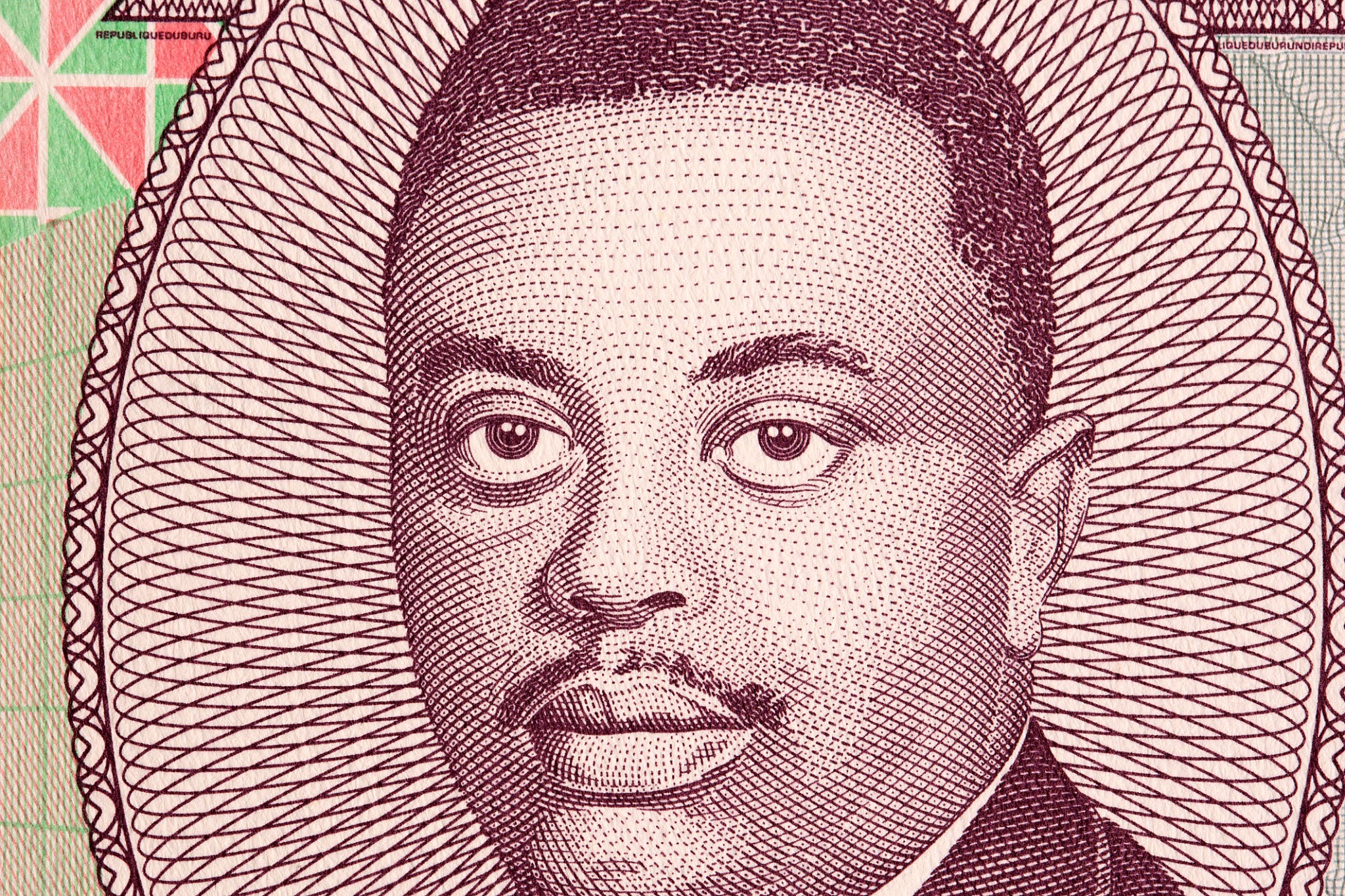
Louis Rwagasore was born on January 10, 1932, in Gitega—the historical and symbolic heart of the Kingdom of Burundi—as the eldest son of King Mwambutsa IV and his first wife, Thérèse Kanyonga. This lineage placed him, from childhood, within the sphere of traditional authority at a time when Burundi—along with Rwanda, as part of the territory of Ruanda-Urundi—was under Belgian trusteeship, mandated first by the League of Nations and subsequently by the United Nations following the Second World War.
He received his primary and secondary education at mission schools in the region before travelling to Belgium for his university studies at the University of Antwerp, where he focused on economic and social sciences, as well as foreign affairs.
Rwagasore’s time in Europe exposed him to the political and liberation movements that were gaining momentum during the 1950s. It also led him to recognise the stark disparity between European rhetoric regarding modernisation and trusteeship and the lived reality of the people in the Great Lakes region. Despite his status as a potential heir to the throne, he chose to return to his homeland, bringing with him a vision that sought to reconcile the historical legitimacy of the Burundian monarchy with the requirements for building a modern nation-state—one capable of transcending social divisions and overcoming foreign tutelage.
Cooperative Economy and Founding of UPRONA
Upon his return to Burundi in the mid-1950s, Rwagasore focused on field-based economic and social work before becoming directly involved in party politics. He established agricultural and consumer cooperatives, aiming to foster local self-sufficiency and reduce dependence on foreign merchants and economic networks linked to the colonial administration. This initiative demonstrated a pragmatic approach—linking political independence to the direct economic empowerment of farmers and ordinary citizens—which earned him a popular following that extended well beyond the traditional and administrative elites.
In 1958, Rwagasore co-founded the “Union for National Progress” (Union pour le Progrès national, UPRONA), quickly emerging as its most prominent figure and de facto leader. The party adopted a nationalist platform, demanding full and rapid independence from Belgian trusteeship and seeking to build an inclusive Burundian identity rooted in shared citizenship, rather than ethnic or class-based polarisation. This unifying vision placed him and his party in direct conflict with the Belgian administration, which favoured a gradual transition under its own supervision and supported political factions more amenable to colonial interests—such as the Christian Democratic Party (PDC), which enjoyed the backing of the local authorities.
Clash with Colonial Administration and 1961 Legislative Elections
As the 1950s drew to a close and the 1960s began, political conflict in Burundi intensified, centring on the timing of independence and the structure of the future government. Rwagasore rejected the Belgian authorities’ attempts to delay independence or to condition it upon constitutional and administrative arrangements that would allow for the continuation of European influence; he also criticised policies that he viewed as fuelling social tension. During a period of heightened unrest, the colonial administration placed Rwagasore under house arrest—a move that only served to rally his supporters around him and imbue his party with an increasingly militant, symbolic significance.
When legislative elections were held under international supervision on September 18, 1961, the UPRONA party, led by Rwagasore, achieved a landslide victory, securing approximately 80 percent of the vote and winning 58 out of the 64 seats in the National Assembly. This victory reflected broad-based support for his platform—which called for immediate independence and national unity—and paved the way for him to become prime minister and form a new government in preparation for independence. However, this electoral triumph did not unfold without friction; it represented a radical shift in the internal and external balance of power on the eve of independence.
Assassination in Bujumbura and Political Aftermath
Less than a month after his electoral victory and his assumption of the office of prime minister, Louis Rwagasore was assassinated on October 13, 1961. He was dining at the “Tanganyika” restaurant in the capital, Bujumbura (then Usumbura), accompanied by several associates, when a gunman opened fire, killing him instantly at the age of twenty-nine. Subsequent investigations and trials pointed to the direct involvement of a network linked to political rivals from the Christian Democratic Party; several individuals were convicted, and the perpetrator was sentenced to death in 1962.
Rwagasore’s assassination sent a profound shock through the Burundian political landscape, creating a severe leadership vacuum at a critical transitional moment—just before the formal declaration of independence on July 1, 1962. While Rwagasore had sought to establish an inclusive party capable of containing political rivalry within a unified national framework, his premature death weakened the mechanisms of balance and consensus. This led to an escalation of power struggles within the state, the monarchy, and the ruling party in the years following independence.
The life of Rwagasore reveals that he was a transitional figure—one who bridged the gap between a traditional royal background and a nationalist political project aimed at ending colonial tutelage. Rather than resting on the privileges of his royal lineage, he sought to transform the symbolism of royalty into a catalyst for broader national unity, relying on collaborative efforts and party organisation that transcended social divisions. This trajectory highlights the structural tension faced by independence movements in the Great Lakes region, where the calculations of colonial powers intersected with the aspirations of national elites and internal partisan rivalries.
On a personal level, Rwagasore’s story remains a brief yet intense life, which ended before he could see the fruits of his political project fully realised in an independent and stable state. His sudden passing at a young age became a touchstone in Burundian national memory; he is invoked as a symbol of national independence and unity, while historical scholarship continues to examine the complexities of the era in which he lived, as well as the subsequent political and institutional challenges that have shaped modern Burundian history.
ـــــــــــــــــــــــــــــــــــــ
* Nigerian writer with interests in history, culture and African affairs.
References
- DW (2018). Louis Rwagasore, the unifying prince. https://www.dw.com/en/louis-rwagasore-the-unifying-prince/a-42225030
- Chrétien, J.-P. (2003). The Great Lakes of Africa: Two thousand years of history (S. Straus, Trans.). Zone Books.
- Eggers, E. K. (2006). Historical dictionary of Burundi (3rd ed.). Scarecrow Press.
- Lemarchand, R. (1970). Rwanda and Burundi. Praeger Publishers, https://archive.org/details/rwandaburundi0000lema/page/n5/mode/2up
- Nimenya, S. (2014). Prince Louis Rwagasore (1932-1961). BlackPast, https://blackpast.org/global-african-history/prince-louis-rwagasore-1932-1961/
Poppe, G. (2015). The murder of Burundi’s prime minister, Louis Rwagasore. Afrika Focus, 28(2), 156-164. - Deslaurier, C. (2012, September 30). Rwagasore, Louis. Oxford African American Studies Center. Retrieved 21 Nov. 2026, from https://oxfordaasc.com/view/10.1093/acref/9780195301731.001.0001/acref-9780195301731-e-49856.