





Qiraat Africa
عربي  |  Fr
Advertisement
  • News
    • All
    • Climate Change
    • Economy
    • Education
    • Energy
    • Health
    • Migration
    • Mining
    • Politics
    • Security
    • Society
    • Sport
    Around 700,000 displaced by volatile conflict in southern Ethiopia

    Around 700,000 displaced by volatile conflict in southern Ethiopia

    Uganda discharges last Ebola patient, starts countdown to be virus-free

    Scientists are learning more about the rare Ebola virus in Congo outbreak

    South African minister and MPs cleared of corruption

    South Africa’s first female deputy president and UN official dies

    Somalia launches Centennial Vision 2060 roadmap for ‘peace, prospertity and progress’

    Somalia orders UAE ambassador to leave, citing ‘invasion’

    Nigeria’s president Tinubu says economy is recovering, calls for end to protests against hardship

    Nigeria’s Tinubu asks parliament to decriminalise attempted suicide

    South Africans vote as anger over failing services threatens ANC

    South Africa’s ANC and partners near coalition deal to sideline poll-topping DA in Johannesburg

    Mozambique: Opposition leader Mondlane announces break in election protests

    Mozambique’s main opposition leader goes on trial over post-election unrest

    Eritrea wary of ‘war-mongering’ Ethiopia

    Ethiopia and Eritrea amass forces along border, heightening war fears, sources say

    Nigeria’s state-owned NNPC records $4.2 billion after-tax profit in 2025

    Nigeria’s central bank, NNPC sign deal to support forex inflows, energy funding

  • Analysis
    • All
    • Climate Change
    • Digital & Tech
    • Economy
    • Energy & Power
    • Health
    • Politics
    • Security
    • Society
    Free trade across Africa? Why policy must catch up with small-scale cross-border traders

    Free trade across Africa? Why policy must catch up with small-scale cross-border traders

    Hormuz block affected Africa in four places: what the continent must do to avoid future shocks

    Hormuz block affected Africa in four places: what the continent must do to avoid future shocks

    What is standing in the way of science’s ability to eradicate malaria? 3 areas where action can have an influence

    What is standing in the way of science’s ability to eradicate malaria? 3 areas where action can have an influence

    African Union summit clouded by Saudi-UAE rivalry in Horn of Africa

    Opportunities and Challenges of the AU’s Education in Emergencies Initiative

    Abiy Ahmed Tested: How the Tigray Alliance Is Reshaping Ethiopia’s Security—And What Comes Next

    Abiy Ahmed Tested: How the Tigray Alliance Is Reshaping Ethiopia’s Security—And What Comes Next

    UN report says Africa’s share of global trade stands at 3 percent

    AfCFTA: The Trade Rules Poised to Weave Africa’s Fragmented Textile Markets into One

    The global panel on inequality needs African evidence: here’s how it could work

    The global panel on inequality needs African evidence: here’s how it could work

    Why Africa needs a new credit agency

    Why Africa needs a new credit agency

    Japan signs deal with Namibia to explore for rare earth minerals

    Africa’s mineral strength is wasted if countries don’t work together – new report

  • Studies
    China could drive Africa’s renewable energy revolution, report says

    A study shows wind and solar projects in Kenya and South Africa don’t always benefit the communities that host them

    Angola’s lengthy war shaped the way farmers utilised fire—why it matters

    Angola’s lengthy war shaped the way farmers utilised fire—why it matters

    Schooling is the most severely affected by conflict when children are the target – Study

    Schooling is the most severely affected by conflict when children are the target – Study

    Pensions for Botswana’s elderly are expanding, but care services are lacking—study follows 20 years

    Pensions for Botswana’s elderly are expanding, but care services are lacking—study follows 20 years

    60 new cosmic structures have been discovered by South Africa’s MeerKAT telescope, which is mapping previously unseen gaps between galaxies

    60 new cosmic structures have been discovered by South Africa’s MeerKAT telescope, which is mapping previously unseen gaps between galaxies

    Benin government says armed forces foil coup attempt

    Coup contagion? A rash of African power grabs suggests copycats are taking note of others’ success

    One in three South Africans have never heard of AI: what this means for policy

    One in three South Africans have never heard of AI: what this means for policy

    Social Media as a Catalyst for the Spread of Dangerous Wealth Ritual Myths

    Social Media as a Catalyst for the Spread of Dangerous Wealth Ritual Myths

    Overcoming Education Barriers for Young Mothers in Sub-Saharan Africa

    Overcoming Education Barriers for Young Mothers in Sub-Saharan Africa

  • Infographics
  • Figures
    Sedick Isaacs (1940-2012): From a Robben Island prison cell to pioneering medical informatics

    Sedick Isaacs (1940-2012): From a Robben Island prison cell to pioneering medical informatics

    Prince Louis Rwagasore (1932-1961) and the Dream of Independence in Burundi

    Prince Louis Rwagasore (1932-1961) and the Dream of Independence in Burundi

    Josina Muthemba Machel (1945–1971): Reshaping of Women’s Role in the Mozambican Revolution

    Josina Muthemba Machel (1945–1971): Reshaping of Women’s Role in the Mozambican Revolution

    Yaa Asantewaa (1840-1921): Defending the Golden Stool and Asante Sovereignty in the Face of Colonialism

    Yaa Asantewaa (1840-1921): Defending the Golden Stool and Asante Sovereignty in the Face of Colonialism

    Usman Dan Fodio (1754-1817): Teacher, philosopher, and revolutionary reformer

    Usman Dan Fodio (1754-1817): Teacher, philosopher, and revolutionary reformer

    Sokhna Magat Diop (1917–2003): Senegalese cleric

    Sokhna Magat Diop (1917–2003): Senegalese cleric

    Ahmad Baba al-Timbukti (1556-1627): Writer and scholar

    Ahmad Baba al-Timbukti (1556-1627): Writer and scholar

    Namibia: Anger over Dubai COP28 trip by president Geingob’s children

    Hage Geingob (1941–2024): Former President of Namibia

    Cape Verde president says governments must discuss colonial reparations

    José Maria Neves: President of Cape Verde

  • History
    Mozambican Civil War (1977-1992): Societal Shock and the Path to Peace

    Mozambican Civil War (1977-1992): Societal Shock and the Path to Peace

    Second Ivorian Civil War (2010-2011): How struggle over legitimacy and identity lead to brink of abyss

    Second Ivorian Civil War (2010-2011): How struggle over legitimacy and identity lead to brink of abyss

    Malê Rebellion in Brazil (1835): Memory of Resistance and Identity

    Malê Rebellion in Brazil (1835): Memory of Resistance and Identity

    The Anglo-Zanzibar War (1896): A story of the shortest war in history

    The Anglo-Zanzibar War (1896): A story of the shortest war in history

    Kwanza Corridor-Cultural Landscape, Angola

    Kwanza Corridor-Cultural Landscape, Angola

    Gasumo, the southernmost source of the Nile, Burundi

    Gasumo, the southernmost source of the Nile, Burundi

    Loango ancient slavery harbour, the Republic of the Congo

    Loango ancient slavery harbour, the Republic of the Congo

    Archaeological site of Tchitundu-Hulu, Angola

    Archaeological site of Tchitundu-Hulu, Angola

    Manovo-Gounda St. Floris National Park, Central African Republic

    Manovo-Gounda St. Floris National Park, Central African Republic

  • Others
    • Culture / Literature
    • Interview
    • Opinion
  • Countries
    • Country profiles
    • Regions
      • Central Africa
      • East Africa
      • Southern Africa
      • West Africa
No Result
View All Result
Qiraat Africa
عربي  |  Fr
No Result
View All Result
Home Regions East Africa

Mozambican Civil War (1977-1992): Societal Shock and the Path to Peace

November 19, 2026
Mozambican Civil War (1977-1992): Societal Shock and the Path to Peace
Share on FacebookShare on Twitter

By Ahmadulbadawy Abdul Raheem


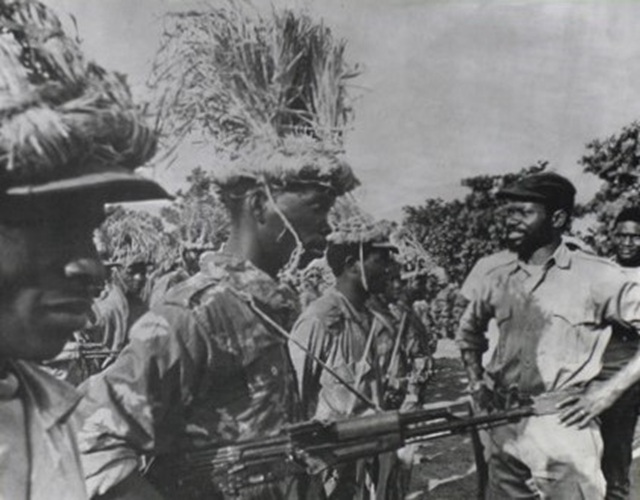
The Mozambican Civil War was a 15-year battle between the governing Front for the Liberation of Mozambique (FRELIMO) regime and the guerrilla movement RENAMO (Mozambican National Resistance). Mozambique’s lengthy military fight against Portuguese domination, which resulted in formal independence on June 25, 1975, was cut short just two years later by this catastrophic civil war that lasted from May 1977 to October 1992.

This war served as a theatre where the contradictions of post-colonial state-building, regional hegemonic rivalries in Southern Africa, and the polarisations of the international Cold War intersected. Millions of Mozambicans endured a harrowing human experience that reshaped their relationship with the land, power, identity, and collective memory.

The Regional and Internal Roots of the Conflict’s Outbreak

The seeds of armed conflict were sown within a highly volatile regional context. The FRELIMO government, led by President Samora Machel, adopted a one-party socialist model and provided direct support—as well as safe haven—to liberation movements in the region, most notably the Zimbabwe African National Union (ZANU), which was fighting against the white minority regime in neighbouring Rhodesia.

In response, the Rhodesian intelligence services—in the mid-1970s—took the initiative to establish and arm the RENAMO movement, led by André Matsangaissa, a former FRELIMO officer who had defected. The objective was to destabilise Mozambique and disrupt the supply lines of Zimbabwean insurgents. Following the collapse of white minority rule in Rhodesia and the independence of Zimbabwe in 1980, the sponsorship, logistical support, and military guidance of RENAMO shifted to the apartheid government in South Africa. The latter viewed an independent Mozambique as a threat to its regional policies and as a potential safe haven for the African National Congress (ANC).

After independence, the FRELIMO government sought to rapidly modernise society and the state through rigid, centralised policies. These included the creation of “communal villages” (“aldeias comunais”), the nationalisation of land and services, the perceived marginalisation of traditional leaders—known as “régulos”—and the suppression of traditional religious practices and church institutions. This fuelled widespread discontent among segments of the peasantry in the central and northern regions who felt that the new state was uprooting them from their ancestral lands and social structures without providing a stable economic alternative—a grievance that RENAMO exploited to recruit fighters and establish rural strongholds opposed to Maputo.

The Dynamics of Violence and the Civilian Experience in the Line of Fire

RENAMO—led by Afonso Dhlakama following the death of André Matsangaissa in 1979—adopted a systematic strategy to destroy state infrastructure, including schools, clinics, roads, bridges, and railway lines, with the objective of paralysing the government’s administrative capacity and undermining its legitimacy in rural areas. The movement engaged extensively in forced abductions, the recruitment of children and civilians, and the perpetration of massacres against villagers to enforce obedience and prevent cooperation with government forces.

Conversely, the actions of government forces and FRELIMO-affiliated militias were also marked by grave human rights violations. Mandatory conscription was enforced for periods exceeding legal limits, and the population was coerced into relocating to “communal villages” under military control. Additionally, “re-education” camps were established in remote areas; international observers documented the deteriorating living conditions within these sites, which effectively became centres for arbitrary detention, where many perished due to disease and mistreatment. Caught between the hammer of insurgency and the anvil of the state, ordinary citizens found it impossible to remain neutral. Survival demanded constant adaptation to shifting territorial control, all while successive waves of drought and famine compounded the lethality of the conflict.

This fifteen-year struggle resulted in a demographic and social catastrophe. Historical and international estimates suggest that nearly one million people perished—victims of direct combat, famine, and war-related disease—out of a total population that, at the time, numbered around thirteen to fifteen million.

The war forced approximately 5.7 million people to become internally displaced, while nearly 1.7 million Mozambicans sought refuge in neighbouring countries—including Malawi, Zimbabwe, Tanzania, and South Africa. The warring parties left behind hundreds of thousands of landmines, scattered indiscriminately across fields and roads; these continued to claim civilian lives and obstruct the restoration of agriculture and normal life for decades after the guns had fallen silent.

Read also

Around 700,000 displaced by volatile conflict in southern Ethiopia

Scientists are learning more about the rare Ebola virus in Congo outbreak

Somalia orders UAE ambassador to leave, citing ‘invasion’

Regional and International Shifts and the Path to the Rome Agreement

By the end of the 1980s, the war had reached a costly military stalemate. RENAMO controlled approximately a quarter of Mozambican territory—primarily in the central regions—yet lacked the capacity to decisively win the conflict or seize major cities. Meanwhile, the FRELIMO government, despite receiving military support from Zimbabwe, Tanzania, Malawi, and the Soviet Union, proved unable to eradicate the insurgency across the vast countryside.

Simultaneously, radical shifts in the international and regional landscape undermined the foundations for continuing the war. The collapse of the Soviet Union and the end of the Cold War led to a decline in external support for the Maputo government, while the apartheid regime in South Africa began to crumble in the early 1990s, drying up the sources of funding and weaponry upon which RENAMO had relied.

These external pressures coincided with a profound political and economic reassessment within the FRELIMO leadership—a process that gained momentum following the death of President Samora Machel in a 1986 plane crash and the subsequent accession of Joaquim Chissano to the presidency. The government gradually moved away from a centrally planned economy toward market-orientated reforms. This transformation culminated in the adoption of a new constitution in November 1990, which abolished the one-party system and established a framework for multiparty politics, periodic elections, and freedom of expression and association. This constitutional move removed one of the primary political justifications cited by RENAMO and paved the way for direct negotiations, which began in July 1990. Talks were facilitated by the Catholic Community of Sant’Egidio in Rome, with support from the Italian government, the United Nations, and regional leaders.

After more than two years of arduous negotiations concerning a ceasefire, the integration of armed forces, and electoral guarantees, President Joaquim Chissano and RENAMO leader Afonso Dhlakama signed the “General Peace Agreement for Mozambique” on October 4, 1992. The ceasefire officially took effect on the 15th of the same month. To ensure the implementation of the agreement’s terms and prevent a relapse into violence, the UN Security Council established the United Nations Operation in Mozambique (ONUMOZ) and deployed thousands of international troops and observers to oversee the assembly and disarmament of combatants, the formation of a unified national army, and the creation of an environment conducive to holding the country’s first multiparty elections in October 1994.

The Legacy of War and Post-Conflict Reconciliation Challenges

The October 1994 elections served as a critical test for the fragility of peace in Mozambique. Millions of citizens participated—a high turnout that reflected society’s deep yearning for stability. The elections resulted in a victory for Joaquim Chissano and the FRELIMO party, while RENAMO transitioned from an armed insurgency into the primary opposition party in parliament, despite its initial reservations regarding the conduct of the electoral process. The experience in Mozambique during the mid-1990s has been regarded as a rare example of successful UN-led peace mediation—especially when contrasted with the collapse of peace agreements and the resurgence of war in neighbouring Angola during the same period.

Demining efforts—spearheaded by international organisations in collaboration with local teams beginning in 1993—gradually cleared the country, leading to Mozambique’s official declaration as landmine-free in September 2015.

It is worth mentioning that the parliament opted to grant an unconditional, blanket amnesty for crimes committed between 1976 and 1992, which precluded the prosecution of any military or political leaders from either side for atrocities committed against civilians. In the absence of formal criminal justice, rural communities turned to traditional reconciliation and purification rituals to reintegrate former combatants and child soldiers into their villages, seeking to restore shattered trust through local cultural mechanisms.

With developmental disparities persisting between the south and other regions—compounded by the re-emergence of limited armed tensions between RENAMO and the government in the 2010s (prior to a new peace agreement in 2019)—the war of 1977–1992 remains a vivid lesson: building sustainable peace requires addressing the root causes of socio-economic marginalisation, just as much as it requires silencing the guns.

ــــــــــــــــــــــــــــــــــــ

References

  • Both, L. (2015). Mozambique (Renamo) 1977–1992 (WARID Case Study). Peace Research Institute Frankfurt (PRIF). https://www.prif.org/fileadmin/Daten/Publikationen/Prif_Working_Papers/Anh%C3%A4nge/Mozambique__Renamo__1977-1992.pdf

  • Edis, R. (1995). Mozambique’s successful peace process: An insider’s view. Cambridge Review of International Affairs, 9(2), 5–21. https://doi.org/10.1080/09557579508400113

  • EKAYA. (2026, October 8). History of Mozambique: Timeline, colony & independence. https://beyondekaya.com/travel-tips/history

  • Momodu, S. (2018, July 4). The Mozambican Civil War (1977-1992). BlackPast.org. https://blackpast.org/global-african-history/the-mozambican-civil-war-1977-1992/

  • Peace Accords Matrix. (n.d.). General Peace Agreement for Mozambique. Kroc Institute for International Peace Studies, University of Notre Dame. https://peaceaccords.nd.edu/accord/general-peace-agreement-for-mozambique

  • U.S. Department of Defense. (2021, June 29). Study sequence no. 40: Mozambique 1979-1992. https://media.defense.gov/2023/Aug/04/2003275077/-1/-1/0/SOIC-MOZAMBIQUE_CASE_STUDY–1979-1992.PDF

Tags: Mozambican Civil War (1977-1992)

Related Posts

Mozambique: Opposition leader Mondlane announces break in election protests
East Africa

Mozambique’s main opposition leader goes on trial over post-election unrest

November 18, 2026
Eritrea wary of ‘war-mongering’ Ethiopia
East Africa

Ethiopia and Eritrea amass forces along border, heightening war fears, sources say

November 18, 2026
Free trade across Africa? Why policy must catch up with small-scale cross-border traders
African Union

Free trade across Africa? Why policy must catch up with small-scale cross-border traders

November 17, 2026
Hormuz block affected Africa in four places: what the continent must do to avoid future shocks
Central Africa

Hormuz block affected Africa in four places: what the continent must do to avoid future shocks

November 17, 2026
Rwanda
East Africa

Five EU countries starting talks with Rwanda on deportation hub, Austria says

November 16, 2026
AU grants $10.4m for Mpox emergency response
Central Africa

Africa CDC says Ebola outbreak still out of control six months since it was declared

November 16, 2026

Search Qiraat Africa

No Result
View All Result

Follow on Twitter

Follow @africanqiraat

Trending

Africa’s 10 Strongest Currencies in June 2026

Africa’s 10 Strongest Currencies in June 2026

July 8, 2026
Kumbi Saleh, the capital of the ancient Ghana Empire

Kumbi Saleh, the capital of the ancient Ghana Empire

October 13, 2025
DR Congo’s President Tshisekedi calls for sanctions against Rwanda

DR Congo president orders probe into copper and cobalt export revenues, document shows

April 28, 2026
Zaghawa people of northeastern Chad and western Sudan

Zaghawa people of northeastern Chad and western Sudan

March 3, 2026
The Bamiléké of western Cameroon

The Bamiléké of western Cameroon

September 18, 2024
The Kabye People of West Africa

The Kabye People of West Africa

May 24, 2025

Facebook

Sections

  • About Us
  • Privacy Policy
  • Opinion
  • Infographics
  • News
  • Analysis
  • Figures
  • Culture & Literature
  • Follow Ups
  • Historical Readings
  • Interview
  • Studies


© Copyright Qiraat Africa. Developed by Bunnaj Media .

No Result
View All Result
  • News
  • Analysis & Report
  • Studies
  • Opinion
  • Interview
  • Culture & Literature
  • Figures
  • Historical Readings
  • Regions

© 2021 Copyright Qiraat Africa.