




















By Ahmadulbadawy Abdul Raheem
In late January 1835, the city of Salvador—the capital of the Brazilian province of Bahia—was shaken by brief yet highly significant armed clashes. These were led by enslaved and manumitted Africans who were Muslims, known locally as “Malês”—a term historians often trace back to the Yoruba word “Imale”, which denotes a Muslim.
This uprising represented an intense convergence of Atlantic geography and religious memory, the Arabic language and social organisation, and controlled, wage-earning labour alongside the aspiration for both individual and collective liberation.
Socioeconomic Roots of Slavery in Bahia
To understand the Malê revolt, one must deconstruct the complex structure of slavery in Bahia during the first half of the nineteenth century. Enslaved people were not confined solely to the sugarcane plantations of the “Recôncavo” region; many also worked in the streets of Salvador, engaged in various trades, domestic service, and commercial activities. The “wage-earning slave” (“escravos de ganho”) system allowed for a degree of daily mobility and interaction within the public sphere, in exchange for the enslaved person handing over a fixed portion of their earnings to their owner. This created a daily paradox: while this margin of freedom enabled the formation of communication networks and working relationships among the enslaved and the manumitted, their lives remained precariously tethered to the harshness of the law, police surveillance, and the imperial order.
The influx of waves of captives and enslaved people from West Africa—notably from the Yoruba regions (known in Bahia as “Nagô”), as well as the Hausa and Nupe peoples—helped fuel a tense urban society, one characterised by a blend of prior combat experience, diverse ethnic affiliations, and a shared yearning for liberation.
At the heart of this landscape emerged leaders and figures who embodied the varied roles within this enslaved community. One such individual was Luís Sanim, a tobacco roller who managed a mutual-aid fund; members would contribute a portion of their earnings to this fund to cover the costs of religious attire, compensate masters for the Fridays when Muslim enslaved people refrained from working, and assist in the purchase of manumission papers. Also prominent was Elesbão do Corma—known as “Dandará”—a freedman of Hausa origin who owned a tobacco shop that served as a meeting place for the Malê people and a connecting point with enslaved individuals on surrounding plantations.
Other key figures included Pacífico Licutan, who was held in prison just before the uprising—his liberation becoming an urgent objective for the rebels—as well as Ahuna and Manoel Calafate, both of whom played vital roles in coordination and mobilisation. These individual biographies demonstrate that the rebellion took shape within a coherent socioeconomic network, woven by its participants using the very tools of their daily survival.
Islam and Literacy as Instruments of Cultural Resistance
The Islamic faith and its associated cultural practices formed the backbone of the Malê identity in Salvador. In a colonial society where illiteracy was widespread—even among certain segments of the free population and landowners—a significant number of enslaved and freed Muslims possessed the ability to read and write using the Arabic script.
Secret religious study circles, led by teachers known as “alufás”—a term of Yoruba origin denoting a scholar or religious instructor—served a dual purpose: they preserved the theological and linguistic heritage of the believers within a hostile environment, while simultaneously fostering an ethical and collective consciousness that linked obedience to God with an internal rejection of enslavement. Documents and manuscripts written in Arabic—along with the amulets or talismans carried by some of the insurgents—served as tangible evidence of the role that religious texts and symbols played in the lives of these Africans. This discovery astonished the judicial and police authorities, who confiscated the documents following the uprising but found themselves unable to decipher them without translation.
This religious unity was shaped by the complexities of the Brazilian reality. The Malê (Muslim Africans) had to constantly navigate the diverse landscape of the Black and mixed-race population in Bahia—a group that included both African-born individuals and “Creoles” (those born in Brazil), as well as people who practiced other spiritual traditions, such as Candomblé.
The Timing of the Uprising and the Course of Confrontation in the Streets of Salvador
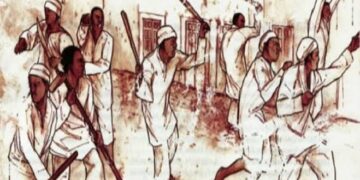
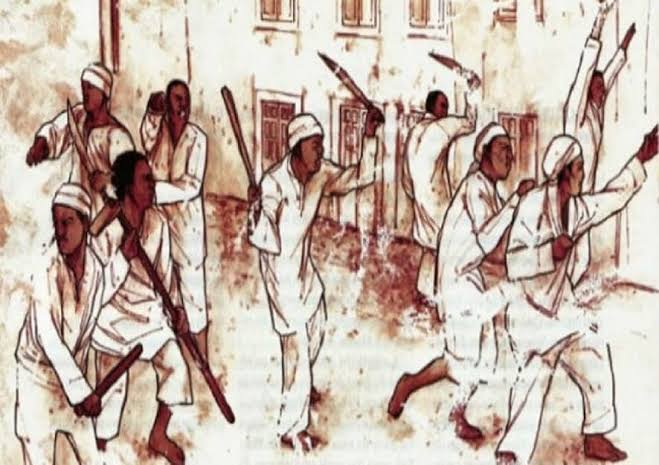
The planners chose a highly precise moment in late January 1835—a time that coincided with the month of Ramadan, as well as major Catholic religious celebrations at the Church of Bonfim and the Feast of Our Lady of Guidance. This led to a large-scale movement of both the general population and the authorities toward Bonfim, resulting in a relative easing of security focus in the heart of Salvador. The uprising was intended to break out on the morning of Sunday, January 25th; however, news of the plot reached the authorities—leaked by a woman just hours before the scheduled time—which upended the plans and forced an abrupt, nighttime confrontation on the evening of January 24th. When military and police forces raided the assembly points, the insurgents returned fire. According to historical estimates of the uprising, approximately six hundred fighters surged into the city streets, attempting to liberate their detained comrades, attack military barracks, and strike at centres of authority.
Fierce clashes erupted throughout the alleys and squares of Salvador—including the Palace Square—where the rebels, armed with a limited number of firearms, swords, and daggers, faced off against regular troops, militias, and armed guards mobilised to suppress the insurrection. Despite the intensity of the fighting and the valour of the participants—many of whom wore distinctive white garments and carried amulets inscribed with Arabic—the government forces’ superiority in numbers, weaponry, and control over strategic locations ultimately decided the battle in favour of the authorities by the end of the night and the following morning.
Historical records indicate that approximately seventy or more insurgents were killed during the fighting, while the number of casualties among government forces and civilians was lower. The uprising was brought to a swift military conclusion; however, the elite and the authorities in Bahia remained gripped by panic for many weeks, fearing a resurgence of the rebellion.
Judicial Repression, Deportation, and the Aftermath of 1835
The Brazilian authorities’ confrontation with the “Malês” transitioned into extensive judicial investigations and the imposition of harsh penalties, aimed at uprooting the Islamic and African organisation within the region. Hundreds of suspects were subjected to interrogation and torture; several leaders and accused individuals were sentenced to death, while others received terms of imprisonment, hard labour, or public flogging.
Furthermore, hundreds of Africans—including freed individuals and suspects against whom no conclusive evidence could be found—were forcibly deported to Africa. This forced deportation served a dual political and security purpose: it rid the authorities of elements they perceived as a threat to public order while simultaneously returning individuals to the West African coast who carried with them bitter experiences and an intimate knowledge of the transformations occurring across the Atlantic.
The revolt also led to the tightening of police and social restrictions on enslaved people and Africans in general throughout Bahia, further suppressing the gatherings and cultural or religious practices that were viewed with deep suspicion by the security apparatus.
Nevertheless, the Malê revolt remains a landmark in the history of Black resistance in the Americas, standing out as an organised urban uprising rooted in a cohesive religious, educational, and economic network. Notably, recent historical scholarship—most notably the work of historian João José Reis—has brought renewed attention to this event, framing it as a significant human and political testament that reveals the depth of consciousness and organisational capacity among those whom the system of slavery sought to strip of their humanity.
ـــــــــــــــــــــــــــــــــ
References
-
Encyclopedia.com. (n.d.). Malê Rebellion. https://www.encyclopedia.com/history/encyclopedias-almanacs-transcripts-and-maps/male-rebellion
-
Momodu, S. (2022, March 30). The Malê Rebellion in Brazil (1835). BlackPast.org. https://blackpast.org/global-african-history/the-male-rebellion-in-brazil-1835/
-
NOLAM. (2026, October 9). The Malê Revolt: Brazil’s forgotten Muslim history in Bahia. https://nolam.org/en/blog/the-male-revolt-of-1835-the-forgotten-story-of-brazils-muslim-scholars
-
Reis, J. J. (1993). Slave rebellion in Brazil: The Muslim uprising of 1835 in Bahia (A. Brakel, Trans.). Johns Hopkins University Press.
-
Smithsonian Folklife Festival. (2020, May 18). The Malê Rebellion in Bahia: Brazil’s African Muslim uprising. Smithsonian Institution. https://festival.si.edu/blog/male-rebellion-african-muslim-brazilian-uprising