



























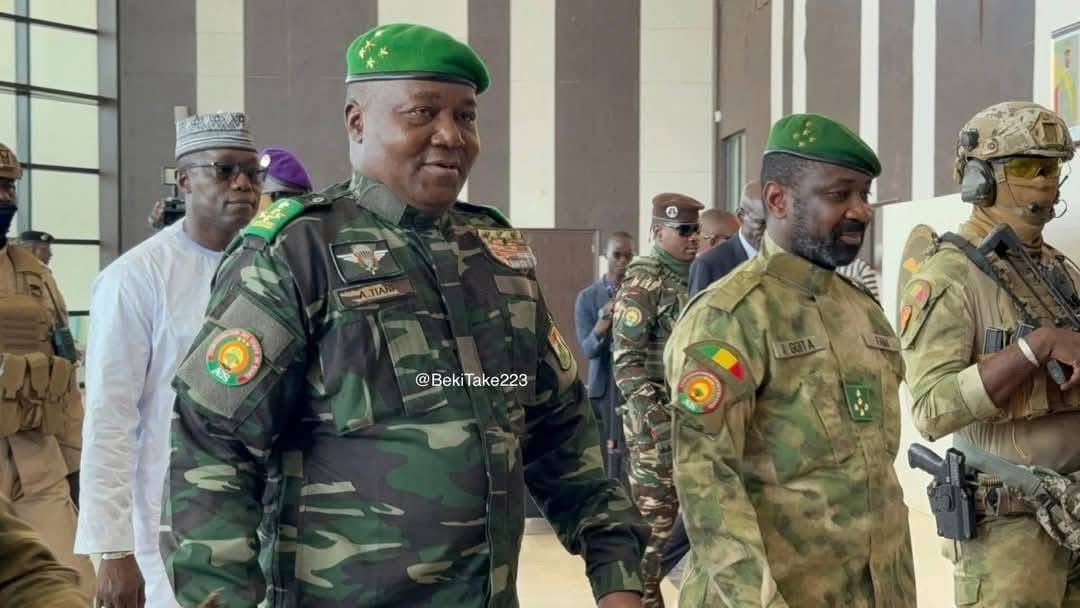
When General Abdourahamane Tiani’s government took power in July 2023, Niger’s foreign policy broke sharply with many of its neighbours. The junta turned away from Niamey’s historically close ties with the West and with ECOWAS, and Niger left the bloc to become a founding member of the Alliance of Sahel States alongside Mali and Burkina Faso.
The rupture was felt most on Niger’s borders, as its relations with Algeria, Benin, and Nigeria soured. Its relations with Libya became entangled in the political division of the country, while its border with Benin stayed closed even long after regional sanctions ended.
However, the geopolitical realities of 2026 have signalled a notable shift. Niger’s foreign policy has pivoted from confrontational, rigid positions toward calculated, interest-based cooperation, with its neighbours having been confronted with shared cross-border security threats, economic woes, and vital energy dependencies.
This analysis examines Niger’s relationship in year 2026 with five of its neighbours: Algeria, Libya, Benin, Nigeria, and Chad. Relations with Mali and Burkina Faso are left aside, since both are already bound to Niger through the Alliance of Sahel States.
Algeria: From Drone Crisis to a Security-and-Energy Partnership
Algeria’s case represents the clearest case of diplomatic reversal for Niger. Relations between the two countries deteriorated sharply in April 2025 after Algeria shot down a drone linked to Mali, a key member of the Alliance of Sahel States (AES). In response, all three AES members withdrew their ambassadors from Algiers, prompting Algeria to respond in kind and triggering a period of deep geopolitical friction.
However, the restoration of relations between the two countries began at the highest level in February 2026, during General Abdourahamane Tiani’s two-day official visit to Algiers, where both sides agreed to maintain high-level diplomacy and revive stalled cooperation frameworks. Crucially, they pledged to convene their joint commission in Niamey before mid-year. That promise was kept swiftly as the second session of the Algeria–Niger High Joint Commission opened in Niamey on 22 March 2026 and was co-chaired by both prime ministers. The meeting concluded with several agreements and memoranda of understanding, establishing a lasting institutional mechanism with plans to hold the third session in Algeria in 2027.
Security cooperation between the two countries advanced at the fastest pace. In late August, Algeria deployed four Sukhoi Su-30 fighter jets to Niger at Niamey’s request, following an attempted mutiny launched by dissident soldiers in Niger, a development which Algerian officials described as an attempt to destabilise Niger’s military government. Earlier in the same month, Algeria donated four helicopters and two Mi-171 helicopters to Niger, including ammunition, spare parts and maintenance equipment. Subsequently, Niger’s Defence Minister, General Salifou Modi, visited Algiers in October to finalise a defence pact whose details weren’t publicised. By 25 October, both chambers of Algeria’s parliament approved sending army units to Niger – a deployment authorised by President Abdelmadjid Tebboune the following day. This move marked Algeria’s first announced foreign military mission since 1973, and President Tebboune clarified that Algeria was not sending soldiers to wage war but rather to protect shared energy and economic interests.
Economic and infrastructure projects have added significant relevance to this restored partnership. A subsidiary of Algeria’s Sonelgaz completed a 40-megawatt power plant in Niamey in June 2026, followed in August by the laying of the foundation stone for oil exploration at the Kafra field in Agadez. Another major initiative is the strategic, long-discussed $13 billion Trans-Saharan gas pipeline, which is designed to transport natural gas from Nigeria through Niger into Algeria for export to European markets. Algeria has committed to financing and constructing Niger’s section of the project according to directives from President Tebboune. Algeria’s state-owned energy firm, Sonatrach, is expected to carry out the construction.
As of the end of October, Niger receives a convoy of 53 tanker trucks carrying about 1.65 million litres of petroleum products from Algeria. Purchased by Niger’s national petroleum company (SONIDEP), the shipment travelled almost 2000 kilometres from the Adra refinery in Algeria down the Trans-Saharan route to the Sonidep depot in Agadez and was accompanied by Algerian military personnel.
The logic driving this alliance is mutual interest. Algeria shares a 951-kilometre desert border with Niger and treats Nigerien stability as vital to its own national security. For Niger, partnering with Algiers offers a highly capable regional ally free from the political conditionality attached to Western military aid.
Libya: A Divided Neighbour, a Two-Track Approach
For Niger, navigating relations with Libya presents a unique diplomatic challenge, as Niamey must engage with two rival powers across its northern border. Following the July 2023 coup, the junta announced on 1 August 2023 that land and air borders with Algeria, Burkina Faso, Mali, Libya, and Chad were reopened. While authorities in Tripoli favoured a return to constitutional order, Niamey gradually drifted toward the eastern-based authorities led by Khalifa Haftar, who control much of southern Libya and the border.
This move toward the east generated sharp diplomatic constraints in early 2026, as the Tripoli-based Government of National Unity (GNU) in the west formally protested Niger’s transfer of two Libyan citizens to Haftar-controlled authorities—marking the most visible strain between Niamey and Tripoli to date.
To prevent a complete rift, Niger moved quickly to smoothen its ties with the west. In June 2026, Prime Minister Ali Lamine Zeine held high-level talks in Tripoli with GNU Prime Minister Abdul Hamid Dbeibah to address shared concerns over border security, organised crime, and irregular migration along the key trans-Saharan routes. The visit resulted in the signing of a memorandum of understanding on military cooperation, reaffirming Tripoli’s relevance to Niger’s security framework.
At the same time, Niger strengthened its relationship with the eastern administration. Saddam Haftar met with Prime Minister Zeine in Benghazi on November 1 to announce a protocol for strategic cooperation. Aimed at countering cross-border terrorism, smuggling, and armed groups, the agreement establishes a formal security link, though details on its practical implementation remain limited.
Ultimately, Niger is pursuing a two-track approach strategy by maintaining working relations with both Tripoli and Benghazi. This is perceived as a necessity for a state whose long northern border is split between competing forces.
Benin: A Reconciliation with Unfinished Business
Benin was the most visible casualty of the post-coup diplomatic rift, making Niger’s recent reconciliation with it one of the important developments in the region. The shared border between Niger and Benin had been closed since 2023, initially due to ECOWAS sanctions. Even after sanctions were lifted, Niamey kept the border shut, accusing Benin of harbouring French bases intended to destabilise Niger – an accusation Cotonou firmly denied. The prolonged closure severely damaged both economies, given landlocked Niger’s dependence on coastal trade routes. Tensions escalated further following a failed coup attempt in Benin in December 2025, resulting in both governments expelling each other’s diplomats in early 2026.
A political transition in Cotonou paved the way for diplomatic breakthroughs. Following the inauguration of President Romuald Wadagni on 24 May 2026, the unexpected attendance of Niger’s Prime Minister Ali Lamine Zeine, who led a high-level delegation that included Interior Minister General Toumba, a key figure in Niger’s 2023 military transition, was widely interpreted as a major gesture of goodwill. Crucially, economic imperatives accelerated this diplomatic momentum as agreements signed between Niamey and China National Petroleum Corporation (CNPC) on 18 May revived the cross-border oil pipeline project, reopening the vital prospect of Nigerien crude exports through Benin’s Sèmè port.
Diplomatic engagement progressed rapidly following the inauguration. President Wadagni visited Niamey on 2 June, where bilateral talks with General Tiani yielded a comprehensive nine-point action plan and established a joint expert committee to outline conditions for reopening the border. Both nations also committed to joint security coordination against border terrorism and banditry. The momentum continued through mid-June, with a joint statement on 16 June confirming that the expert committee had completed its initial review. Follow-up technical negotiations in Cotonou concluded on 21 June with preliminary draft agreements spanning security, trade, and legal cooperation, while final ratification by both governments haven’t been arrived yet.
Nigeria: Pragmatism Despite a Political Rupture
Nigeria is the neighbour with which Niger has the most to lose from a lasting breach. They share a long, densely populated border, overlapping ethnic and commercial networks, and common security threats. Politically, relations remain strained, and the ECOWAS exit is part of the reason. Despite this institutional fallout, practical cooperation has continued out of mutual necessity. In February 2026, Nigeria opened the Kamba and Tsamiya crossings in Kebbi State, which link Nigeria with Niger and Benin.
Furthermore, Nigeria has also helped in ways that go beyond politics by supplying 300 truckloads of petroleum products during Niger’s 2025 fuel shortage and donating patrol vehicles for joint efforts against banditry and cross-border crime. In return, Niger used Nigerian routes when other corridors failed. With the Benin route closed and the Burkina Faso and Togo routes insecure, Niger redirected its maritime trade through Nigerian ports.
The security dimension is where the shift is most visible. Nigeria’s defence minister said Abuja is working to create a new tri-border military sector with Benin and Niger, calling it a work in progress, describing the initiative as an ongoing project where military cooperation successfully transcends political friction. A similar operational logic governs border management; the Nigeria–Niger Joint Commission convened in Zinder in December 2025 to evaluate the ongoing border re-demarcation exercise and approve a 2026 action plan aimed at securing the shared frontier.
This relationship shows pragmatism without political reconciliation. Both governments cooperate where threats and trade demand it and leave the harder questions about ECOWAS and democratic governance unresolved. That arrangement is stable as long as the threat picture stays shared, but it offers little political insurance if relations sour.
Chad: The Exception That Clarifies the Rule
Chad’s diplomatic trajectory stands apart from Niger’s other regional relationships, despite initial similarities in their foreign policy shifts. In 2024, Chad ended its defence cooperation agreement with France to redefine its national sovereignty, a similar step taken by Niger and its AES allies. France formally handed over its final military base in Chad on 30 January 2025. For a brief period, N’Djamena and Niamey appeared to be charting an aligned anti-colonial path.
Chad has since reversed course, as bilateral security cooperation was restored between France and Chad in early 2026, involving military training, equipment procurement, and intelligence sharing. French military personnel reportedly resumed operations in Chad in April, a move Chadian officials characterise as strategic partner diversification rather than a return to external dependence. In October 2026, a declaration of intent was signed aiming to rebuild defence ties on a renewed basis.
For Niamey, this is politically explosive. A government that built its legitimacy on expelling France now sees a neighbour welcoming French forces back. Unsurprisingly, sharp friction followed. Since September, Niger has accused France and several regional partners – including Chad – of involvement in a foiled coup attempt, which Niger countered with assistance from the Africa Corps. Tensions escalated on 27 October when Niger accused Chad of executing a drone strike in northern Niger that killed two civilians, prompting Niamey to summon Chad’s ambassador, demand compensation, and escalate the issue to the UN Security Council.
However, Chad rejected the accusation and denied ordering or supporting any operation against Niger. It also said it has not reached the point of cutting diplomatic ties, with dialogue channels still open. Despite these strains, a path toward de-escalation remains open, marked by a bilateral meeting between both foreign ministers in Moscow on 31 October to discuss easing border tensions.
Major Outlook: What to Expect?
Four core threads will shape the next phase of Niger’s foreign policy and regional standing:
- Security as the organising principle: Every diplomatic reconciliation analysed above rests on shared security threats, whether terrorists, insurgents, armed bandit networks, cross-border smuggling, or rebel movements. As long as these existential threats persist, bilateral cooperation will retain a durable, pragmatic basis. However, the danger is that this same security-centric logic can also drive severe regional confrontations, as the friction with Chad clearly demonstrates.
- Delivery over declarations: Several of the recent diplomatic breakthroughs remain largely on paper. The Algerian military deployment must be operationalised in a manner that respects Niger’s sovereignty while honouring Algeria’s stated limits. Similarly, the Benghazi protocol requires concrete content and a defined implementation timetable. On the coastal front, the border with Benin remains closed on Niger’s side, and the preliminary agreements negotiated in Cotonou still await formal ratification. These commitments must translate into practical actions.
- Managing rival patrons: While Niger currently benefits from engaging partners across competing geopolitical camps, these external actors hold deeply conflicting interests. Niamey’s delicate balancing act between Tripoli and Benghazi will require careful balancing. The same challenge applies to managing its concurrent reliance on Algerian defence commitments, Russia’s Africa Corps, and Chinese-backed energy infrastructure.
- The Chad situation: A sustained escalation between the two nations would place severe strain on a region already overstretched by multiple overlapping security crises. Conversely, achieving a negotiated de-escalation would demonstrate that Niger’s new brand of pragmatism can effectively de-escalate tensions even with its most complex neighbours.
Conclusion
Niger’s 2026 diplomacy is best understood as pragmatism under pressure and not as a change of identity. Faced with insurgent violence, a landlocked economy and the cost of closed borders, Niamey has swapped ideological rigidity for deals that serve its immediate security and economic needs. The result is a set of bilateral arrangements, not a new regional order.
With Algeria, the shift has been dramatic, moving from the diplomatic rupture of 2025 to a defence pact and an Algerian troop deployment. With Libya and Nigeria, it has been practical and gradual; Niger related with both Tripoli and Benghazi and cooperated with Abuja on borders and security despite the political rupture over ECOWAS. With Benin, the reconciliation is real but unfinished, since the border has yet to reopen on Niger’s side. With Chad, relations have moved the other way, as Niamey treats Chad’s renewed military ties with France as a threat.
This pattern shows where Niger’s pragmatism stops. It extends to neighbours that help secure its territory and trade routes, and it hardens against those it suspects of hosting its adversaries. Sovereignty remains the organising principle. What has changed is the method, with cooperation replacing isolation wherever confrontation costs more than it gains.