

















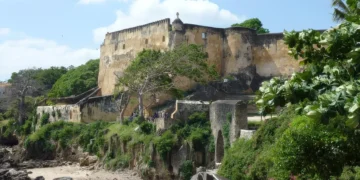
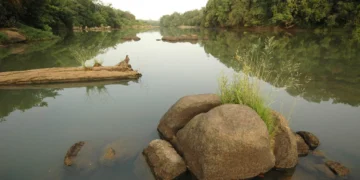


The old slave-trading port of Loango, located on the Atlantic coast of the Republic of the Congo (Congo-Brazzaville), stands as one of the most darkest—historical testaments to the forced displacement of human beings in the modern era. In the centuries following the inception of the triangular trade across three continents, this coastal site became a pivotal hub from which hundreds of thousands, if not millions, of enslaved human beings were dispatched into the unknown—bound for the Americas and the Caribbean.
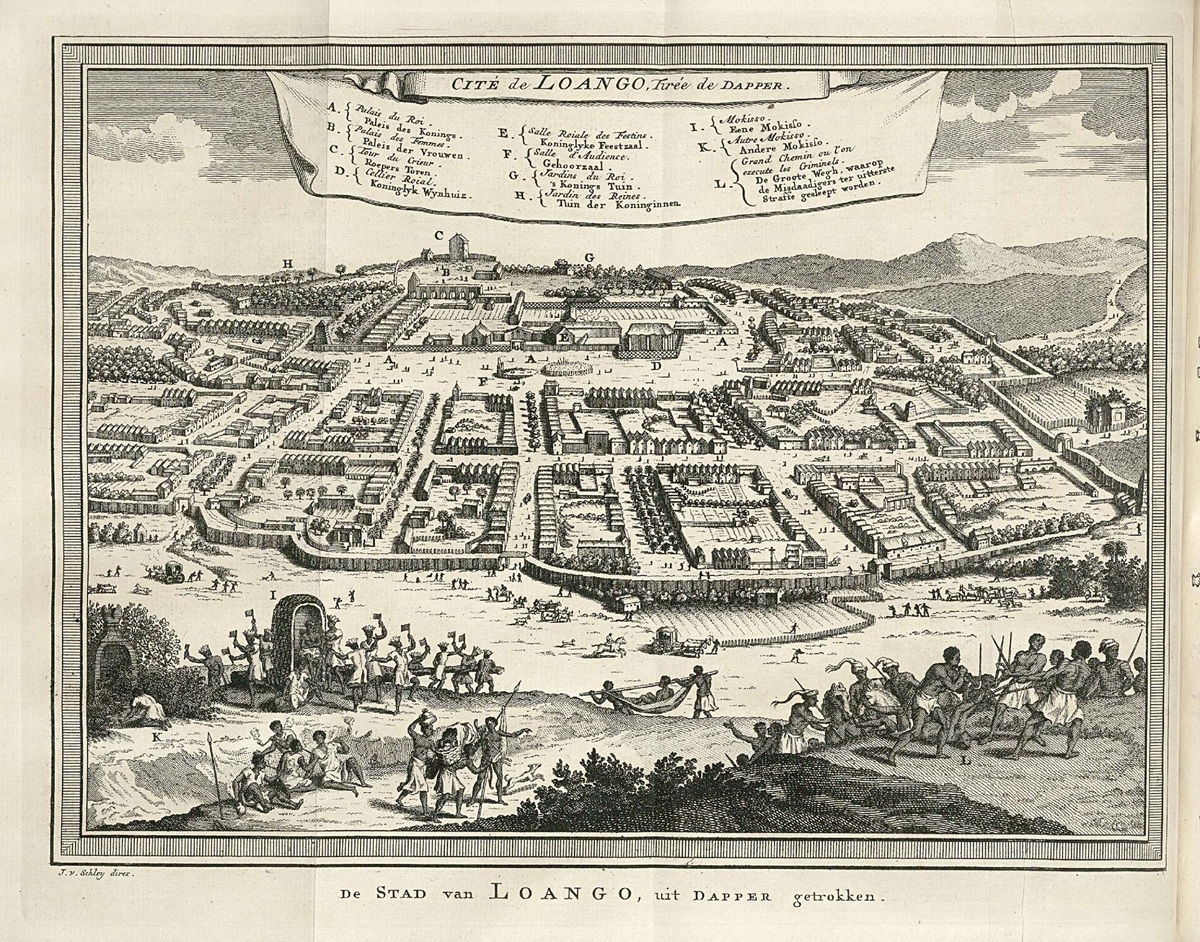
The geography of the port of Loango must be viewed within the broader context of the historical Kingdom of Loango, whose influence extended along the west-central African coast. In the centuries preceding and coinciding with the peak of the Atlantic slave trade, Loango was a powerful, independent political entity that leveraged its prime strategic location to exert economic and commercial control.
Far from being a mere transit point, Loango functioned as a regional power with intricate trade networks reaching deep into the African interior—networks that once dealt in copper, local textiles, and ivory, before human beings were gradually transformed into the primary commodity most sought after by European traders. As European demand for labour on plantations in the New World intensified, the ruling elites of the Kingdom of Loango—much like those of many other coastal African kingdoms at the time—became involved in the slave trade.
The fierce European rivalry among the Portuguese, Dutch, French, and British along the Congolese coast gave rise to active markets where captives and enslaved people were exchanged for European goods, such as firearms, alcohol, and imported textiles. Consequently, the Loango coast emerged as one of the five primary hubs along the African coastline for the export of human beings to the American colonies.
The site of the port of Loango contains spatial details and physical landmarks that still bear witness to the harsh chapters of the tragedy endured by captives before they left African soil forever. Historical research and archaeological surveys indicate that captives—drawn from diverse populations across a vast region encompassing present-day Congo, Angola, Gabon, and Chad—travelled arduous distances on foot to reach the coast.
Upon arriving in the vicinity of the port, the captives were subjected to cruel, systematic rituals designed to break their human will and erase their cultural and spiritual identities. Among the most prominent surviving vestiges at the site is what is known as the “Tree of Oblivion”. According to historical and local accounts, captives were forced to circle this tree a specific number of times—nine times for men and seven for women and children. Those involved in the slave trade believed that this ritual would completely erase the captives’ memories of their homeland and past, ensuring they entered a state of absolute enslavement, devoid of any emotional attachments or the desire to resist or escape. Conversely, there was another tree known as the “Tree of Return”, which symbolised the hope that, upon their death in the Americas, their spirits might find their way back to the land of Loango in Africa.
The landscape surrounding the port also featured a long path lined with ancient mango trees—the final route taken by the shackled captives before reaching the edge of the cliffs that overlook the Atlantic Ocean. Because the waters of Loango Bay were too shallow for large vessels to approach the shore, ships would anchor far out at sea; the captives were then transported in small boats toward the darkness of the unknown, destined for the slave ships that would carry them away.
Quantitative data from Atlantic slave trade databases reveal staggering figures that reflect the scale of the demographic haemorrhage suffered by Central Africa. It is estimated that between the early sixteenth and mid-nineteenth centuries, millions of Africans were forced to cross the Atlantic. Central Africa alone—encompassing the coasts of Loango and Angola, as well as the mouth of the Congo River—accounted for nearly half of all Africans transported; more than two million people are estimated to have passed through various transit points from the territories surrounding Loango alone.
The devastating impact was not limited to immediate human loss but also caused deep, structural destabilisation within local societies. Raids to capture and trade human beings dismantled tribal structures, fuelled persistent civil wars among kingdoms and tribes seeking captives to meet commercial demands, and crippled the region’s productive and economic capacities for decades to come.
Despite the immense historical weight of the old port of Loango—which stands as a living witness and a repository of both national and global memory regarding one of the most heinous crimes against humanity—the site currently suffers from a grim reality defined by marginalisation and a lack of proper maintenance. In 2008 and 2009, the site was officially included on UNESCO’s tentative list for World Heritage status as part of the “Slave Route” project—a development that offered a glimmer of hope for international recognition and the protection of its remaining features.
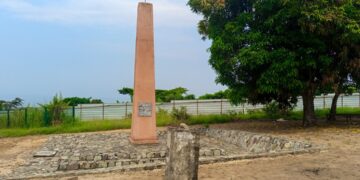
The port’s landmarks have suffered rapid deterioration, driven by both natural and human factors. Persistent coastal erosion is wearing away the shoreline, inching ever closer to the surviving historical remnants. Furthermore, the monument—erected in 1897 by French explorer Pierre Savorgnan de Brazza to mark the departure point for trade caravans—has collapsed due to neglect and a lack of maintenance; its fragments now lie hidden amidst the overgrowth. Today, visitors and researchers arriving at the site point to a clear state of institutional neglect. The historic port—a place that profoundly shaped the fate of millions—has been reduced to a neglected space, its features on the verge of total erasure, unless the relevant authorities take serious action to rescue this piece of human heritage from oblivion.