


Qiraat Africa
عربي  |  Fr
Advertisement
  • News
    • All
    • Climate Change
    • Economy
    • Education
    • Energy
    • Health
    • Migration
    • Mining
    • Politics
    • Security
    • Society
    • Sport
    Germany vows support for Nigeria on security, seeks expanded economic ties

    Germany vows support for Nigeria on security, seeks expanded economic ties

    Understanding Trump’s Christian Genocide Claim and Military Threat: What It Means for Nigeria-U.S. Relations

    Trump praises Nigeria’s efforts against violence towards Christians

    Mali, Burkina Faso and Niger announce exit from International Criminal Court

    Ghanaian nationals ask ICC to probe xenophobic violence in South Africa

    Africa’s Venture Capital Landscape confronts challenges

    African banks bet on debt guarantees to lure private capital to infrastructure projects

    Is Ethiopia’s Tigray barreling towards another war?

    Ethiopia opposition accuses government of pushing Tigray towards new war

    Nigerian President says ECOWAS Standby Force should be operationalise now

    ECOWAS reaffirms plans to launch single currency in 2027

    US to block citizens in Congo from immediate travel home, citing Ebola

    What Bundibugyo Ebola vaccines and treatments are under development

    Cameroon President Paul Biya marks 41 years in power

    Cameroon’s ruling party meets as Biya’s long absence draws criticism

    Guinea-Bissau junta releases opposition leader, vows inclusive government

    West African bloc calls for Guinea-Bissau opposition leader’s release

  • Analysis
    • All
    • Climate Change
    • Digital & Tech
    • Economy
    • Energy & Power
    • Health
    • Politics
    • Security
    • Society
    What Happens After Dandora? Kenya’s Green Transition Faces Its Hardest Test

    What Happens After Dandora? Kenya’s Green Transition Faces Its Hardest Test

    African entrepreneurs work in challenging environments, and others may benefit from the skills they have developed

    African entrepreneurs work in challenging environments, and others may benefit from the skills they have developed

    Ethiopia’s 2026 General Election: Progress, Challenges, and Implications

    Ethiopia’s 2026 General Election: Progress, Challenges, and Implications

    Israeli recognition of Somaliland is a ‘calculated distraction,’ Somali diplomat says

    Sixty-Six Years On, the Promise of Somali Independence Remains Unfulfilled.

    Senegal’s top opposition leader Sonko vows to help win March 24 election

    Senegal at a Political Crossroads: The Faye–Sonko Rivalry and the Future of Democratic Governance

    Ulysses in isiZulu: Why an African translation of the classic Irish novel is important in today’s world

    Ulysses in isiZulu: Why an African translation of the classic Irish novel is important in today’s world

    The promise and risks of Kenya’s ambitious new strategy to close refugee camps

    The promise and risks of Kenya’s ambitious new strategy to close refugee camps

    Al Qaeda-linked militants curb their brutality in seized Malian territory

    Al Qaeda-linked militants curb their brutality in seized Malian territory

    Five Years After the Coup in Mali: Are Stability and Growth Within Reach?

    The Political Economy of Insecurity in Mali: Armed Groups, Resources, and State Fragility

  • Studies
    Angola’s lengthy war shaped the way farmers utilised fire—why it matters

    Angola’s lengthy war shaped the way farmers utilised fire—why it matters

    Schooling is the most severely affected by conflict when children are the target – Study

    Schooling is the most severely affected by conflict when children are the target – Study

    Pensions for Botswana’s elderly are expanding, but care services are lacking—study follows 20 years

    Pensions for Botswana’s elderly are expanding, but care services are lacking—study follows 20 years

    60 new cosmic structures have been discovered by South Africa’s MeerKAT telescope, which is mapping previously unseen gaps between galaxies

    60 new cosmic structures have been discovered by South Africa’s MeerKAT telescope, which is mapping previously unseen gaps between galaxies

    Benin government says armed forces foil coup attempt

    Coup contagion? A rash of African power grabs suggests copycats are taking note of others’ success

    One in three South Africans have never heard of AI: what this means for policy

    One in three South Africans have never heard of AI: what this means for policy

    Social Media as a Catalyst for the Spread of Dangerous Wealth Ritual Myths

    Social Media as a Catalyst for the Spread of Dangerous Wealth Ritual Myths

    Overcoming Education Barriers for Young Mothers in Sub-Saharan Africa

    Overcoming Education Barriers for Young Mothers in Sub-Saharan Africa

    Youth Empowerment Through Vocational Training in Rural Sub-Saharan Africa

    Youth Empowerment Through Vocational Training in Rural Sub-Saharan Africa

  • Infographics
  • Figures
    Al-Hajj Salim Suwari (fl. c. 13th–15th century): West African Soninke Islamic scholar

    Al-Hajj Salim Suwari (fl. c. 13th–15th century): West African Soninke Islamic scholar

    Strive Masiyiwa: Zimbabwean businessman and philanthropist

    Strive Masiyiwa: Zimbabwean businessman and philanthropist

    Diébédo Francis Kéré: Burkinabé-German architect

    Diébédo Francis Kéré: Burkinabé-German architect

    Herbert Wigwe (1966-2024): Nigerian banker and businessman

    Herbert Wigwe (1966-2024): Nigerian banker and businessman

    Senegal president names new finance, energy ministers in reshuffle

    Macky Sall: Former President of Senegal

    Marcus Garvey (1887-1940): Activist, Black nationalist, and Pan-Africanist

    Marcus Garvey (1887-1940): Activist, Black nationalist, and Pan-Africanist

    John B. Russwurm (1799–1851): Jamaican-born American abolitionist, publisher, and colonial governor

    John B. Russwurm (1799–1851): Jamaican-born American abolitionist, publisher, and colonial governor

    Winnie Mandela (1936-2018): South African politician and anti-apartheid activist

    Winnie Mandela (1936-2018): South African politician and anti-apartheid activist

    Abdias do Nascimento (1914-2011): Prominent African Brazilian scholar, artist, and politician

    Abdias do Nascimento (1914-2011): Prominent African Brazilian scholar, artist, and politician

  • History
    Aldabra Atoll, Seychelles

    Aldabra Atoll, Seychelles

    Le Morne Cultural Landscape, Mauritius

    Le Morne Cultural Landscape, Mauritius

    Mount Nimba Strict Nature Reserve, Guinea and Côte d’Ivoire

    Mount Nimba Strict Nature Reserve, Guinea and Côte d’Ivoire

    Sangha Trinational, north-western Congo Basin

    Sangha Trinational, north-western Congo Basin

    Kasubi Tombs, Kampala, Uganda

    Kasubi Tombs, Kampala, Uganda

    Dja Faunal Reserve, Cameroon

    Dja Faunal Reserve, Cameroon

    Laas Geel, Somalia

    Laas Geel, Somalia

    Lakes Of Ounianga, Chad

    Lakes Of Ounianga, Chad

    Nok Caves, Togo

    Nok Caves, Togo

  • Others
    • Culture / Literature
    • Interview
    • Opinion
  • Countries
    • Country profiles
    • Regions
      • Central Africa
      • East Africa
      • Southern Africa
      • West Africa
No Result
View All Result
  • News
    • All
    • Climate Change
    • Economy
    • Education
    • Energy
    • Health
    • Migration
    • Mining
    • Politics
    • Security
    • Society
    • Sport
    Germany vows support for Nigeria on security, seeks expanded economic ties

    Germany vows support for Nigeria on security, seeks expanded economic ties

    Understanding Trump’s Christian Genocide Claim and Military Threat: What It Means for Nigeria-U.S. Relations

    Trump praises Nigeria’s efforts against violence towards Christians

    Mali, Burkina Faso and Niger announce exit from International Criminal Court

    Ghanaian nationals ask ICC to probe xenophobic violence in South Africa

    Africa’s Venture Capital Landscape confronts challenges

    African banks bet on debt guarantees to lure private capital to infrastructure projects

    Is Ethiopia’s Tigray barreling towards another war?

    Ethiopia opposition accuses government of pushing Tigray towards new war

    Nigerian President says ECOWAS Standby Force should be operationalise now

    ECOWAS reaffirms plans to launch single currency in 2027

    US to block citizens in Congo from immediate travel home, citing Ebola

    What Bundibugyo Ebola vaccines and treatments are under development

    Cameroon President Paul Biya marks 41 years in power

    Cameroon’s ruling party meets as Biya’s long absence draws criticism

    Guinea-Bissau junta releases opposition leader, vows inclusive government

    West African bloc calls for Guinea-Bissau opposition leader’s release

  • Analysis
    • All
    • Climate Change
    • Digital & Tech
    • Economy
    • Energy & Power
    • Health
    • Politics
    • Security
    • Society
    What Happens After Dandora? Kenya’s Green Transition Faces Its Hardest Test

    What Happens After Dandora? Kenya’s Green Transition Faces Its Hardest Test

    African entrepreneurs work in challenging environments, and others may benefit from the skills they have developed

    African entrepreneurs work in challenging environments, and others may benefit from the skills they have developed

    Ethiopia’s 2026 General Election: Progress, Challenges, and Implications

    Ethiopia’s 2026 General Election: Progress, Challenges, and Implications

    Israeli recognition of Somaliland is a ‘calculated distraction,’ Somali diplomat says

    Sixty-Six Years On, the Promise of Somali Independence Remains Unfulfilled.

    Senegal’s top opposition leader Sonko vows to help win March 24 election

    Senegal at a Political Crossroads: The Faye–Sonko Rivalry and the Future of Democratic Governance

    Ulysses in isiZulu: Why an African translation of the classic Irish novel is important in today’s world

    Ulysses in isiZulu: Why an African translation of the classic Irish novel is important in today’s world

    The promise and risks of Kenya’s ambitious new strategy to close refugee camps

    The promise and risks of Kenya’s ambitious new strategy to close refugee camps

    Al Qaeda-linked militants curb their brutality in seized Malian territory

    Al Qaeda-linked militants curb their brutality in seized Malian territory

    Five Years After the Coup in Mali: Are Stability and Growth Within Reach?

    The Political Economy of Insecurity in Mali: Armed Groups, Resources, and State Fragility

  • Studies
    Angola’s lengthy war shaped the way farmers utilised fire—why it matters

    Angola’s lengthy war shaped the way farmers utilised fire—why it matters

    Schooling is the most severely affected by conflict when children are the target – Study

    Schooling is the most severely affected by conflict when children are the target – Study

    Pensions for Botswana’s elderly are expanding, but care services are lacking—study follows 20 years

    Pensions for Botswana’s elderly are expanding, but care services are lacking—study follows 20 years

    60 new cosmic structures have been discovered by South Africa’s MeerKAT telescope, which is mapping previously unseen gaps between galaxies

    60 new cosmic structures have been discovered by South Africa’s MeerKAT telescope, which is mapping previously unseen gaps between galaxies

    Benin government says armed forces foil coup attempt

    Coup contagion? A rash of African power grabs suggests copycats are taking note of others’ success

    One in three South Africans have never heard of AI: what this means for policy

    One in three South Africans have never heard of AI: what this means for policy

    Social Media as a Catalyst for the Spread of Dangerous Wealth Ritual Myths

    Social Media as a Catalyst for the Spread of Dangerous Wealth Ritual Myths

    Overcoming Education Barriers for Young Mothers in Sub-Saharan Africa

    Overcoming Education Barriers for Young Mothers in Sub-Saharan Africa

    Youth Empowerment Through Vocational Training in Rural Sub-Saharan Africa

    Youth Empowerment Through Vocational Training in Rural Sub-Saharan Africa

  • Infographics
  • Figures
    Al-Hajj Salim Suwari (fl. c. 13th–15th century): West African Soninke Islamic scholar

    Al-Hajj Salim Suwari (fl. c. 13th–15th century): West African Soninke Islamic scholar

    Strive Masiyiwa: Zimbabwean businessman and philanthropist

    Strive Masiyiwa: Zimbabwean businessman and philanthropist

    Diébédo Francis Kéré: Burkinabé-German architect

    Diébédo Francis Kéré: Burkinabé-German architect

    Herbert Wigwe (1966-2024): Nigerian banker and businessman

    Herbert Wigwe (1966-2024): Nigerian banker and businessman

    Senegal president names new finance, energy ministers in reshuffle

    Macky Sall: Former President of Senegal

    Marcus Garvey (1887-1940): Activist, Black nationalist, and Pan-Africanist

    Marcus Garvey (1887-1940): Activist, Black nationalist, and Pan-Africanist

    John B. Russwurm (1799–1851): Jamaican-born American abolitionist, publisher, and colonial governor

    John B. Russwurm (1799–1851): Jamaican-born American abolitionist, publisher, and colonial governor

    Winnie Mandela (1936-2018): South African politician and anti-apartheid activist

    Winnie Mandela (1936-2018): South African politician and anti-apartheid activist

    Abdias do Nascimento (1914-2011): Prominent African Brazilian scholar, artist, and politician

    Abdias do Nascimento (1914-2011): Prominent African Brazilian scholar, artist, and politician

  • History
    Aldabra Atoll, Seychelles

    Aldabra Atoll, Seychelles

    Le Morne Cultural Landscape, Mauritius

    Le Morne Cultural Landscape, Mauritius

    Mount Nimba Strict Nature Reserve, Guinea and Côte d’Ivoire

    Mount Nimba Strict Nature Reserve, Guinea and Côte d’Ivoire

    Sangha Trinational, north-western Congo Basin

    Sangha Trinational, north-western Congo Basin

    Kasubi Tombs, Kampala, Uganda

    Kasubi Tombs, Kampala, Uganda

    Dja Faunal Reserve, Cameroon

    Dja Faunal Reserve, Cameroon

    Laas Geel, Somalia

    Laas Geel, Somalia

    Lakes Of Ounianga, Chad

    Lakes Of Ounianga, Chad

    Nok Caves, Togo

    Nok Caves, Togo

  • Others
    • Culture / Literature
    • Interview
    • Opinion
  • Countries
    • Country profiles
    • Regions
      • Central Africa
      • East Africa
      • Southern Africa
      • West Africa
No Result
View All Result
Qiraat Africa
عربي  |  Fr
No Result
View All Result
Home Figures

Edward Wilmot Blyden (1832-1912): Educator and former Secretary of State of Liberia

June 6, 2026
Edward Wilmot Blyden (1832-1912): Educator and former Secretary of State of Liberia

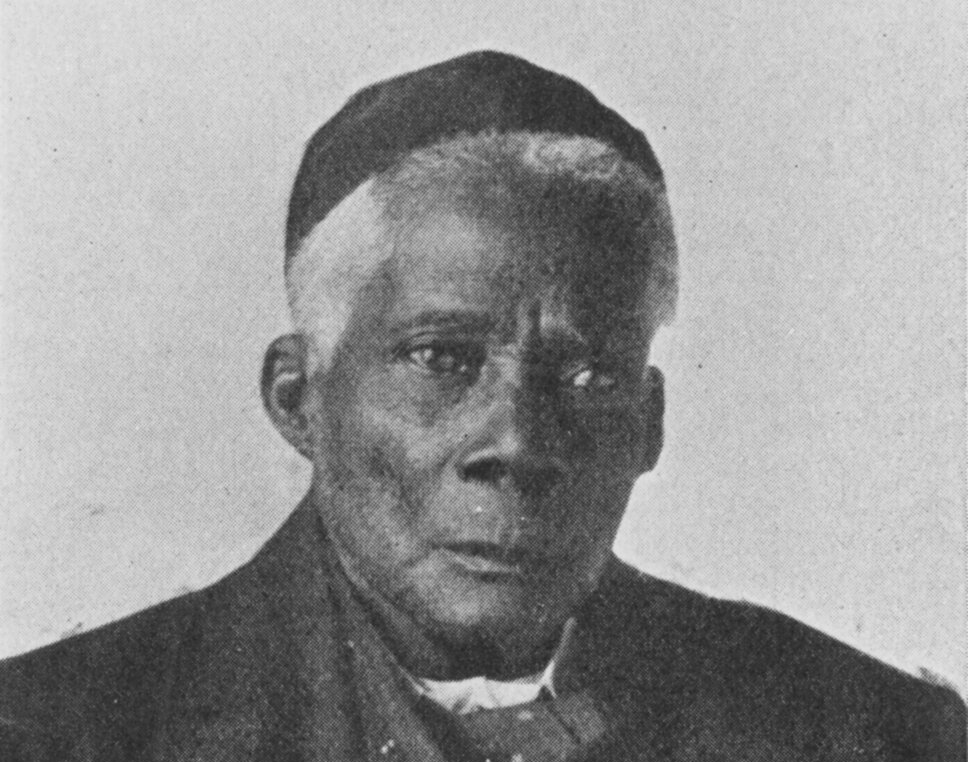
Dr. Edward Wilmot Blyden A former Secretary of State and Diplomatic Envoy of Liberia. Copyright: onemorevoice.org

Share on FacebookShare on Twitter

Edward Wilmot Blyden is considered one of the most important theorists and thinkers who laid the foundations for African nationalism and the Pan-African movement. As an academic, educator, diplomat, and Minister of Foreign Affairs of the Republic of Liberia, he formulated intellectual arguments that sought to restore the cultural dignity of African peoples.

Edward Wilmot Blyden was born on August 3, 1832, on the island of St Thomas, then part of the Danish West Indies (now the U.S. Virgin Islands). Blyden grew up in an urban environment. His parents were free Black residents of St Thomas who claimed ancestral descent from the Igbo people of Nigeria; his father was a tailor and his mother a seamstress. From a young age, Blyden displayed intellectual brilliance and an exceptional talent for languages. He was mentored by the American minister Rev. John P. Knox, who led the Dutch Reformed Church on the island. Knox encouraged the young Blyden to read and deepened his religious and intellectual awareness.

In 1850, Blyden travelled with Knox to the United States to pursue higher education at a seminary. However, this attempt was unsuccessful. Three seminaries refused to admit Blyden due to the prevailing racist laws and customs in America at the time, which denied Black people access to higher education. This coincided with the passage of the Fugitive Slave Act, which increased the security risks for free African Americans. This frustration and systemic discrimination led Blyden to accept an offer from the American Colonisation Society to emigrate to Liberia, a colony established in West Africa to settle free people and free African Americans. He arrived in the capital, Monrovia, in January 1851.

Upon arriving in Liberia, Blyden immersed himself in the country’s nascent education system. He enrolled at Alexander High School in Monrovia, where he studied classical languages ​​such as Latin and Greek, as well as geography and theology. His rapid academic progress led to Blyden becoming the principal of the school in 1858. He was not limited to teaching; he also entered the local press, working for several years as an editor for the Liberia Herald, where he used his pen to disseminate his early ideas on nation-building and society in Africa.

Blyden’s academic career culminated in his appointment in 1862 as Professor of Classical Languages ​​(Greek and Latin) at the newly established Liberia College, the country’s first institution of higher learning. In his academic role, he sought to reform the curriculum, sharply criticising the imitation of Western educational systems that instilled in African students a sense of inferiority toward their own culture and history. He advocated instead for a curriculum that emphasised the study of African history, local languages, and social systems, alongside modern sciences. From 1880 to 1884, he served as president of the college, striving to broaden its appeal to include students from across the African continent, not just the children of American immigrants.

In addition to his educational work, Blyden played a prominent political and diplomatic role in the Liberian government. He served as secretary of state from 1864 to 1865 under President Daniel Bashiel Warner. During this period, he faced formidable challenges in establishing the sovereignty of the nascent state and securing its internationally recognised borders against the surrounding British and French ambitions. His fluency in several languages ​​and extensive knowledge of international politics led to his appointment as Liberia’s ambassador and diplomatic representative to Britain and France at various times in the following decades, where he worked to gain diplomatic recognition and financial support for his country in European capitals.

Despite his political stature, Blyden faced severe internal crises and conflicts in Liberia, fuelled by the class and racial divisions that characterised Liberian society in the 19th century. Society was divided between a “wise” elite of light-skinned immigrants (coloured people) who controlled the economy and politics and dark-skinned immigrants and indigenous people. Blyden sided unequivocally with the dark-skinned immigrants and indigenous people, attacking the light-skinned elite with rigid biological and cultural views on “racial purity”. These positions led to a violent political clash with him, which reached the point of an assassination attempt and an attack on his home in 1871 following the overthrow of President Edward James Roy, forcing him to temporarily flee to neighbouring Sierra Leone.

Read also

Germany vows support for Nigeria on security, seeks expanded economic ties

Trump praises Nigeria’s efforts against violence towards Christians

ECOWAS reaffirms plans to launch single currency in 2027

Blyden’s historical significance rests primarily on his intellectual works, in which he formulated his theories on the “African personality”. His 1887 book, “Christianity, Islam and the Negro Race”, is considered his most important and influential work. In it, he offered a comparative analysis of the impact of the Abrahamic religions on African peoples. He argued that Christianity, as presented by Western missionaries, brought with it notions of white supremacy and weakened and distorted the African character by imposing alien European cultural patterns.

In contrast, Blyden displayed a clear inclination and a positive view of the spread of Islam in West Africa. He believed that Islam was more compatible with the African environment and culture because it did not force Africans to abandon their languages ​​or adopt a European way of life. Furthermore, it allowed for the preservation of some local social structures, such as polygamy, and contributed to the promotion of education and trade between different ethnic groups without establishing a racial hierarchy based on skin colour. These arguments caused considerable astonishment in Western and Christian intellectual circles, especially since Blyden himself was an ordained Presbyterian minister, yet he viewed religion from a functional perspective, focusing on its role in the advancement of the Black race.

The intellectual contradictions in Blyden’s career become apparent when examining his stance on European colonialism in Africa during the Scramble for Africa in the late 19th century. Despite advocating for African autonomy and racial pride, Blyden welcomed British and French political and military control over African lands. He believed that colonialism represented a necessary and historical transitional phase for modernising the continent through the construction of infrastructure such as railways, securing trade routes, ending internal tribal conflicts, and introducing modern science. He maintained that the European role should be limited to administrative and material aspects, while Africans themselves would assume spiritual, cultural, and social leadership of their countries after acquiring knowledge.

Blyden spent the latter part of his life moving between Liberia and Sierra Leone, where he held advisory positions to the British colonial government in Sierra Leone related to education and Islamic affairs. He helped establish schools for Muslim education in Freetown and develop curricula that reconciled local culture with modern knowledge. He also continued to write and lecture in several countries, including the United States, which he visited repeatedly to encourage African Americans to emigrate to Africa and contribute to the continent’s development.

Edward Wilmot Blyden died on February 7, 1912, in Freetown, Sierra Leone, and was buried there in a ceremony attended by a large gathering of political and religious figures from various faiths and ethnic groups. He left behind a vast intellectual legacy that profoundly influenced the next generation of African leaders and thinkers. His ideas inspired pioneers of the African nationalist movement such as Kwame Nkrumah in Ghana, Nnamdi Azikiwe in Nigeria, and Léopold Senghor in Senegal, who developed the concept of “Negritude” based on Blyden’s concept of “African Personality”.
Tags: Edward Wilmot BlydenLiberia

Related Posts

Guinea-Bissau junta releases opposition leader, vows inclusive government
Featured

West African bloc calls for Guinea-Bissau opposition leader’s release

July 21, 2026
Towards the revitalization of Nigeria’s power sector
Central Africa

AI could lift Sub-Saharan Africa economy 4% if power, internet improve, IMF says

July 21, 2026
AU grants $10.4m for Mpox emergency response
African Union

Africa’s top health official asks US to lift Ebola-related travel restrictions on Uganda

July 21, 2026
African entrepreneurs work in challenging environments, and others may benefit from the skills they have developed
Central Africa

African entrepreneurs work in challenging environments, and others may benefit from the skills they have developed

July 20, 2026
Sao Tome and Principe President Vila Nova wins second term, preliminary results show
Featured

Sao Tome and Principe President Vila Nova wins second term, preliminary results show

July 20, 2026
Al Qaeda affiliate says it killed 70 soldiers in Benin, SITE reports
Featured

Mali insurgents ambush army convoy, source says more than 50 killed

July 20, 2026

Search Qiraat Africa

No Result
View All Result

Follow on Twitter

Follow @africanqiraat

Trending

Rashaida of the coastal plain of the Red Sea

Rashaida of the coastal plain of the Red Sea

July 10, 2026
What Happens After Dandora? Kenya’s Green Transition Faces Its Hardest Test

What Happens After Dandora? Kenya’s Green Transition Faces Its Hardest Test

July 22, 2026
Samori Touré (1830-1900): Military leader and founder of Wassoulou Empire

Samori Touré (1830-1900): Military leader and founder of Wassoulou Empire

January 11, 2026
Bakiga / Abakiga of northern Rwanda and southern Uganda

Bakiga / Abakiga of northern Rwanda and southern Uganda

July 15, 2026
Le Morne Cultural Landscape, Mauritius

Le Morne Cultural Landscape, Mauritius

July 12, 2026
Zaghawa people of northeastern Chad and western Sudan

Zaghawa people of northeastern Chad and western Sudan

March 3, 2026

Facebook

Sections

  • About Us
  • Privacy Policy
  • Opinion
  • Infographics
  • News
  • Analysis
  • Figures
  • Culture & Literature
  • Follow Ups
  • Historical Readings
  • Interview
  • Studies


© Copyright Qiraat Africa. Developed by Bunnaj Media .

No Result
View All Result
  • News
  • Analysis & Report
  • Studies
  • Opinion
  • Interview
  • Culture & Literature
  • Figures
  • Historical Readings
  • Regions

© 2021 Copyright Qiraat Africa.