

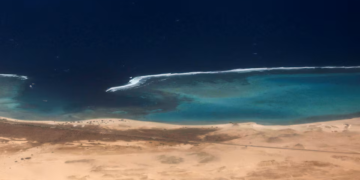
















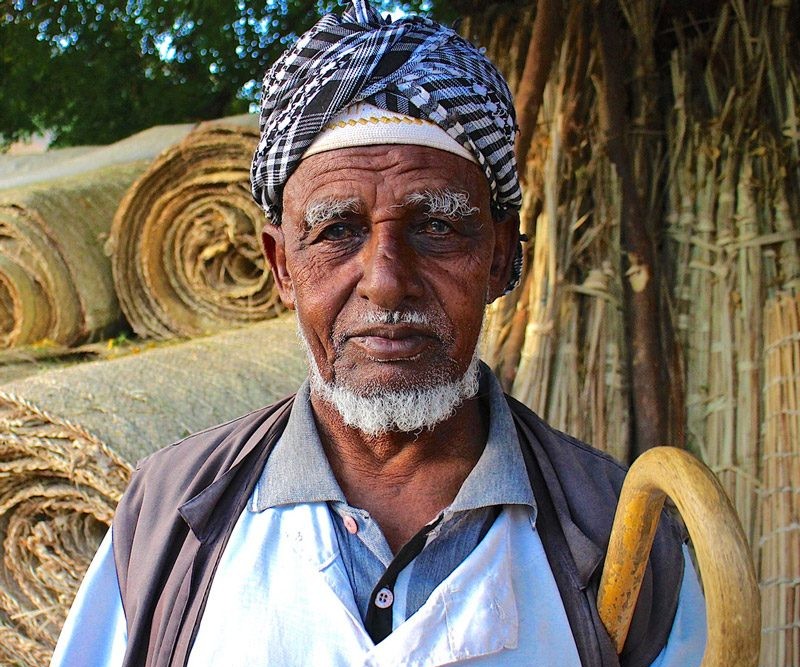
The Rashaida tribe is one of the nomadic Arab groups inhabiting the Red Sea coastal plain of East Africa, particularly in the territory stretching between eastern Sudan and northern Eritrea. This tribe is distinguished by its cultural identity and way of life, which have largely retained their authentic nomadic characteristics despite the political and economic transformations the region has witnessed over the past century.
The Rashaida trace their origins to the Arabian Peninsula, specifically the Hejaz region. Their major migration across the Red Sea is attributed to the mid-19th century (around 1846 CE), driven by harsh climatic conditions, including successive famines and droughts, as well as local tribal conflicts that compelled them to seek new grazing lands for their livestock.
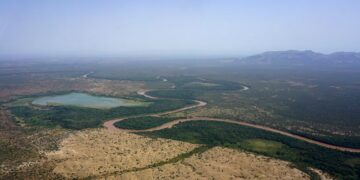
The first groups crossed the Red Sea and settled in the African coastal plain extending from the coasts of Suakin and Port Sudan in Sudan southward towards the Eritrean coastal region. With their settlement in these areas, they maintained their kinship and social ties with the main tribal clans, which helped them preserve their structural and linguistic identity without fully assimilating into neighbouring communities.
Historically, the Rashaida relied on nomadic herding as the cornerstone of their subsistence economy, adapting to the arid and barren environment of the coastal plain. They are known for their skill in breeding and raising excellent camel breeds, such as the Anafi and Bishari breeds, which are in high demand in the camel racing and trade markets of the Arabian Gulf states. They leveraged their geographical location and their knowledge of desert and sea routes to engage in trade across the Red Sea, including livestock, consumer goods, and means of transport.
Climate change, recurring droughts, and the closure of borders between newly formed states have reduced free grazing areas, prompting increasing numbers of them to settle on the outskirts of major cities such as Kassala and Port Sudan and to engage in small businesses, land transport, and irrigated agriculture.
The Rashaida have maintained a relatively conservative and closed social character compared to the surrounding population groups, which researchers attempt to explain by their desire to protect their Bedouin Hejazi heritage and culture. They speak a Hejazi Arabic dialect, which retains archaic linguistic structures and vocabulary that distinguish them from the Sudanese dialect or the local non-Arabic languages prevalent in the region, such as the one spoken by the Beja or Tigre.
Traditional clothing among the Rashaida is considered one of their most distinctive cultural features. They wear colourful dresses adorned with geometric patterns and cover their faces with a special veil known as the “burqa” or “mungab”, a covering decorated with silver pieces, coloured beads, and antique coins. The style and embellishments of the burqa vary according to the woman’s age and marital status.
Their men wear the traditional Arab robe with an agal or turban and often carry leather belts designed to hold daggers or personal tools while travelling in the desert.
The Rashaida share the coastal plain and eastern Sudan with other ethnic groups that have a longer history in the region, most notably the Beja tribes (such as the Hadendowa and Beni Amer).
These relationships have been marked by numerous tensions over the decades. On the one hand, economic interdependence and the livestock trade have led to shared interests and trade exchanges in local markets. On the other hand, competition for scarce water resources and limited grazing lands, coupled with local political polarisation, has resulted in tribal tensions and clashes at certain historical junctures.
Despite frequent exchanges, the Rashaida have preferred to maintain the practice of endogamy (marriage within the tribe), which has limited social interaction and demographic integration with neighbouring tribes.
During the second half of the 20th century, the Rashayda began striving to establish their civic and political rights in both Sudan and Eritrea.
In Sudan, feeling economically and socially marginalised in the eastern regions, tribal leaders established a political and military organisation in the 1990s known as the “Rashaida Free Lions”. This organisation later joined forces with other groups, mostly Beja, to form the “Eastern Front”, which clashed with the central government in Khartoum, demanding development and political participation for the region.
This movement culminated in the signing of the “Eastern Sudan Peace Agreement” in the Eritrean capital, Asmara, in 2006. The agreement stipulated the allocation of funds for the reconstruction of eastern Sudan and the provision of government jobs and seats for representatives of the region, thus enabling representatives of the Rashaida to enter the executive and parliamentary branches of government.
In Eritrea, the Rashaida are one of the nine officially recognised ethnic groups. They are primarily located in the northern and southern coastal regions and conduct their economic and commercial activities within the framework of Eritrean national laws.
The Rashaida communities currently face a range of structural and environmental challenges that affect the sustainability of their way of life. Reduced rainfall and the degradation of vegetation cover in the Red Sea coastal plain have diminished the capacity of natural pastures to support herds of camels and cattle, forcing many into the involuntary sale of their livestock.
Frequent political and security instability in the Horn of Africa, coupled with tightened customs and security controls on the border between Sudan and Eritrea, has restricted the annual movement of pastoralists and traders that once formed the backbone of the traditional economy.
With increasing settlement around urban centres, younger generations of Rashaida have increasingly pursued formal and university education, leading to a gradual shift in their professional values from traditional herding and trading to government jobs and modern professions.