
Qiraat Africa
عربي  |  Fr
Advertisement
  • News
    • All
    • Climate Change
    • Economy
    • Education
    • Energy
    • Health
    • Migration
    • Mining
    • Politics
    • Security
    • Society
    • Sport
    African Union delegation meets Congo rebels, calls for continued peace efforts

    African Union delegation meets Congo rebels, calls for continued peace efforts

    Kenya appoints Citi, Standard Bank to study possibility of borrowing in international markets

    Kenya infrastructure fund begins deploying $2.6 billion seed capital by buying bonds

    UN experts say war crimes committed in Ethiopia despite formal end to conflict

    Eritrean troops drive through northern Ethiopian town, witnesses say

    African Union to launch African credit rating agency in October, adviser says

    African Union to launch continent’s first credit rating agency

    Mali: Tuareg rebels inflict losses on Government and marcenary forces

    Mali separatists announce withdrawal from strategic northern town

    Why is Senegal’s billions in hidden debt an IMF concern

    Senegal aims for deal with official creditors, bondholders by December, sources say

    DR Congo says it is in talks with Zambia to quickly reopen closed border

    Zambia to sign $1.5 billion US health pact after resolving differences over data-sharing

    Nigeria says two nationals killed in anti-migrant violence in South Africa

    Nigeria nears 2,000 repatriations from South Africa after latest evacuation flight

    Zambia groups say freedom of expression under threat

    Zambia projects 7% rise in spending in 2027 budget

  • Analysis
    • All
    • Climate Change
    • Digital & Tech
    • Economy
    • Energy & Power
    • Health
    • Politics
    • Security
    • Society
    The global panel on inequality needs African evidence: here’s how it could work

    The global panel on inequality needs African evidence: here’s how it could work

    Why Africa needs a new credit agency

    Why Africa needs a new credit agency

    Japan signs deal with Namibia to explore for rare earth minerals

    Africa’s mineral strength is wasted if countries don’t work together – new report

    Ethiopia: at least 40 army allies killed in drone strike

    Ethiopia’s peace deal is unravelling – what went wrong with the Tigray agreement

    DRC on a mission to financing the world’s largest hydropower dam

    DR Congo: The INGA Dam Paradox

    Cameroon uncovers more than 200 illegal gold mines, mostly foreign-owned

    Mineral Beneficiation: A Pipedream of Prosperity in an Unequal Financial Architecture

    Zambia signs $1.1 Billion deal to build major oil refinery in Copperbelt

    Is Zambia’s Economy Rebounding Under President Hakainde Hichilema?

    Nigeria considers crude supply reforms to aid Dangote, other refiners

    Refinery rivalry: billion‑dollar oil projects expose East Africa’s long‑running regional tensions

    Zambia’s chaotic but decisive election: government demonstrates strength, democracy shows weakness

    Zambia’s chaotic but decisive election: government demonstrates strength, democracy shows weakness

  • Studies
    China could drive Africa’s renewable energy revolution, report says

    A study shows wind and solar projects in Kenya and South Africa don’t always benefit the communities that host them

    Angola’s lengthy war shaped the way farmers utilised fire—why it matters

    Angola’s lengthy war shaped the way farmers utilised fire—why it matters

    Schooling is the most severely affected by conflict when children are the target – Study

    Schooling is the most severely affected by conflict when children are the target – Study

    Pensions for Botswana’s elderly are expanding, but care services are lacking—study follows 20 years

    Pensions for Botswana’s elderly are expanding, but care services are lacking—study follows 20 years

    60 new cosmic structures have been discovered by South Africa’s MeerKAT telescope, which is mapping previously unseen gaps between galaxies

    60 new cosmic structures have been discovered by South Africa’s MeerKAT telescope, which is mapping previously unseen gaps between galaxies

    Benin government says armed forces foil coup attempt

    Coup contagion? A rash of African power grabs suggests copycats are taking note of others’ success

    One in three South Africans have never heard of AI: what this means for policy

    One in three South Africans have never heard of AI: what this means for policy

    Social Media as a Catalyst for the Spread of Dangerous Wealth Ritual Myths

    Social Media as a Catalyst for the Spread of Dangerous Wealth Ritual Myths

    Overcoming Education Barriers for Young Mothers in Sub-Saharan Africa

    Overcoming Education Barriers for Young Mothers in Sub-Saharan Africa

  • Infographics
  • Figures
    Namibia: Anger over Dubai COP28 trip by president Geingob’s children

    Hage Geingob (1941–2024): Former President of Namibia

    Cape Verde president says governments must discuss colonial reparations

    José Maria Neves: President of Cape Verde

    Jorge Bom Jesus: Linguist and former Prime Minister of São Tomé and Príncipe

    Jorge Bom Jesus: Linguist and former Prime Minister of São Tomé and Príncipe

    Joseph Leabua Jonathan (1914-1987): Former Prime Minister of Lesotho

    Joseph Leabua Jonathan (1914-1987): Former Prime Minister of Lesotho

    Gambia’s president Barrow faces backlash over ‘death wish’ on archrival

    Adama Barrow: President of the Republic of The Gambia

    Rwandan President Paul Kagame announces he will run for a fourth term

    Paul Kagame: Former military officer and president of Rwanda

    Zumbi dos Palmares (1655-1695): Afro-Brazilian leader of the great Palmares Quilombo

    Zumbi dos Palmares (1655-1695): Afro-Brazilian leader of the great Palmares Quilombo

    Léon M’ba (1902-1967): First president of independent Gabon

    Léon M’ba (1902-1967): First president of independent Gabon

    Namibia to vote in toughest election yet for ruling party

    Netumbo Nandi-Ndaitwah: President of Namibia

  • History
    Manovo-Gounda St. Floris National Park, Central African Republic

    Manovo-Gounda St. Floris National Park, Central African Republic

    Lake Malawi (Lake Nyasa) National Park, Malawi

    Lake Malawi (Lake Nyasa) National Park, Malawi

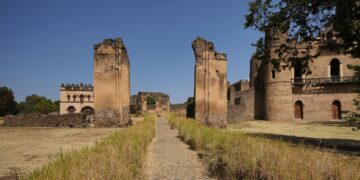
    Fasil Ghebbi, Gondar Region, Ethiopia

    Fasil Ghebbi, Gondar Region, Ethiopia

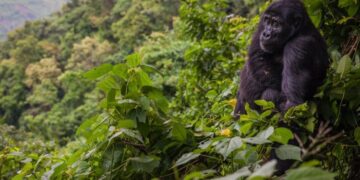
    Bwindi Impenetrable National Park, Uganda

    Bwindi Impenetrable National Park, Uganda

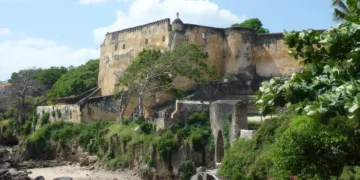
    Fort Jesus, Mombasa, Kenya

    Fort Jesus, Mombasa, Kenya

    Comoé National Park, Côte d’Ivoire (Ivory Coast)

    Comoé National Park, Côte d’Ivoire (Ivory Coast)

    Bassari and Bedik Cultural Landscapes, Senegal

    Bassari and Bedik Cultural Landscapes, Senegal

    Lower Valley of the Omo, Ethiopia

    Lower Valley of the Omo, Ethiopia

    Sudano-Sahelian style mosques, northern Côte d’Ivoire

    Sudano-Sahelian style mosques, northern Côte d’Ivoire

  • Others
    • Culture / Literature
    • Interview
    • Opinion
  • Countries
    • Country profiles
    • Regions
      • Central Africa
      • East Africa
      • Southern Africa
      • West Africa
No Result
View All Result
  • News
    • All
    • Climate Change
    • Economy
    • Education
    • Energy
    • Health
    • Migration
    • Mining
    • Politics
    • Security
    • Society
    • Sport
    African Union delegation meets Congo rebels, calls for continued peace efforts

    African Union delegation meets Congo rebels, calls for continued peace efforts

    Kenya appoints Citi, Standard Bank to study possibility of borrowing in international markets

    Kenya infrastructure fund begins deploying $2.6 billion seed capital by buying bonds

    UN experts say war crimes committed in Ethiopia despite formal end to conflict

    Eritrean troops drive through northern Ethiopian town, witnesses say

    African Union to launch African credit rating agency in October, adviser says

    African Union to launch continent’s first credit rating agency

    Mali: Tuareg rebels inflict losses on Government and marcenary forces

    Mali separatists announce withdrawal from strategic northern town

    Why is Senegal’s billions in hidden debt an IMF concern

    Senegal aims for deal with official creditors, bondholders by December, sources say

    DR Congo says it is in talks with Zambia to quickly reopen closed border

    Zambia to sign $1.5 billion US health pact after resolving differences over data-sharing

    Nigeria says two nationals killed in anti-migrant violence in South Africa

    Nigeria nears 2,000 repatriations from South Africa after latest evacuation flight

    Zambia groups say freedom of expression under threat

    Zambia projects 7% rise in spending in 2027 budget

  • Analysis
    • All
    • Climate Change
    • Digital & Tech
    • Economy
    • Energy & Power
    • Health
    • Politics
    • Security
    • Society
    The global panel on inequality needs African evidence: here’s how it could work

    The global panel on inequality needs African evidence: here’s how it could work

    Why Africa needs a new credit agency

    Why Africa needs a new credit agency

    Japan signs deal with Namibia to explore for rare earth minerals

    Africa’s mineral strength is wasted if countries don’t work together – new report

    Ethiopia: at least 40 army allies killed in drone strike

    Ethiopia’s peace deal is unravelling – what went wrong with the Tigray agreement

    DRC on a mission to financing the world’s largest hydropower dam

    DR Congo: The INGA Dam Paradox

    Cameroon uncovers more than 200 illegal gold mines, mostly foreign-owned

    Mineral Beneficiation: A Pipedream of Prosperity in an Unequal Financial Architecture

    Zambia signs $1.1 Billion deal to build major oil refinery in Copperbelt

    Is Zambia’s Economy Rebounding Under President Hakainde Hichilema?

    Nigeria considers crude supply reforms to aid Dangote, other refiners

    Refinery rivalry: billion‑dollar oil projects expose East Africa’s long‑running regional tensions

    Zambia’s chaotic but decisive election: government demonstrates strength, democracy shows weakness

    Zambia’s chaotic but decisive election: government demonstrates strength, democracy shows weakness

  • Studies
    China could drive Africa’s renewable energy revolution, report says

    A study shows wind and solar projects in Kenya and South Africa don’t always benefit the communities that host them

    Angola’s lengthy war shaped the way farmers utilised fire—why it matters

    Angola’s lengthy war shaped the way farmers utilised fire—why it matters

    Schooling is the most severely affected by conflict when children are the target – Study

    Schooling is the most severely affected by conflict when children are the target – Study

    Pensions for Botswana’s elderly are expanding, but care services are lacking—study follows 20 years

    Pensions for Botswana’s elderly are expanding, but care services are lacking—study follows 20 years

    60 new cosmic structures have been discovered by South Africa’s MeerKAT telescope, which is mapping previously unseen gaps between galaxies

    60 new cosmic structures have been discovered by South Africa’s MeerKAT telescope, which is mapping previously unseen gaps between galaxies

    Benin government says armed forces foil coup attempt

    Coup contagion? A rash of African power grabs suggests copycats are taking note of others’ success

    One in three South Africans have never heard of AI: what this means for policy

    One in three South Africans have never heard of AI: what this means for policy

    Social Media as a Catalyst for the Spread of Dangerous Wealth Ritual Myths

    Social Media as a Catalyst for the Spread of Dangerous Wealth Ritual Myths

    Overcoming Education Barriers for Young Mothers in Sub-Saharan Africa

    Overcoming Education Barriers for Young Mothers in Sub-Saharan Africa

  • Infographics
  • Figures
    Namibia: Anger over Dubai COP28 trip by president Geingob’s children

    Hage Geingob (1941–2024): Former President of Namibia

    Cape Verde president says governments must discuss colonial reparations

    José Maria Neves: President of Cape Verde

    Jorge Bom Jesus: Linguist and former Prime Minister of São Tomé and Príncipe

    Jorge Bom Jesus: Linguist and former Prime Minister of São Tomé and Príncipe

    Joseph Leabua Jonathan (1914-1987): Former Prime Minister of Lesotho

    Joseph Leabua Jonathan (1914-1987): Former Prime Minister of Lesotho

    Gambia’s president Barrow faces backlash over ‘death wish’ on archrival

    Adama Barrow: President of the Republic of The Gambia

    Rwandan President Paul Kagame announces he will run for a fourth term

    Paul Kagame: Former military officer and president of Rwanda

    Zumbi dos Palmares (1655-1695): Afro-Brazilian leader of the great Palmares Quilombo

    Zumbi dos Palmares (1655-1695): Afro-Brazilian leader of the great Palmares Quilombo

    Léon M’ba (1902-1967): First president of independent Gabon

    Léon M’ba (1902-1967): First president of independent Gabon

    Namibia to vote in toughest election yet for ruling party

    Netumbo Nandi-Ndaitwah: President of Namibia

  • History
    Manovo-Gounda St. Floris National Park, Central African Republic

    Manovo-Gounda St. Floris National Park, Central African Republic

    Lake Malawi (Lake Nyasa) National Park, Malawi

    Lake Malawi (Lake Nyasa) National Park, Malawi

    Fasil Ghebbi, Gondar Region, Ethiopia

    Fasil Ghebbi, Gondar Region, Ethiopia

    Bwindi Impenetrable National Park, Uganda

    Bwindi Impenetrable National Park, Uganda

    Fort Jesus, Mombasa, Kenya

    Fort Jesus, Mombasa, Kenya

    Comoé National Park, Côte d’Ivoire (Ivory Coast)

    Comoé National Park, Côte d’Ivoire (Ivory Coast)

    Bassari and Bedik Cultural Landscapes, Senegal

    Bassari and Bedik Cultural Landscapes, Senegal

    Lower Valley of the Omo, Ethiopia

    Lower Valley of the Omo, Ethiopia

    Sudano-Sahelian style mosques, northern Côte d’Ivoire

    Sudano-Sahelian style mosques, northern Côte d’Ivoire

  • Others
    • Culture / Literature
    • Interview
    • Opinion
  • Countries
    • Country profiles
    • Regions
      • Central Africa
      • East Africa
      • Southern Africa
      • West Africa
No Result
View All Result
Qiraat Africa
عربي  |  Fr
No Result
View All Result
Home Regions Central Africa

The global panel on inequality needs African evidence: here’s how it could work

October 7, 2026
The global panel on inequality needs African evidence: here’s how it could work

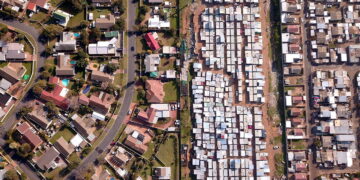
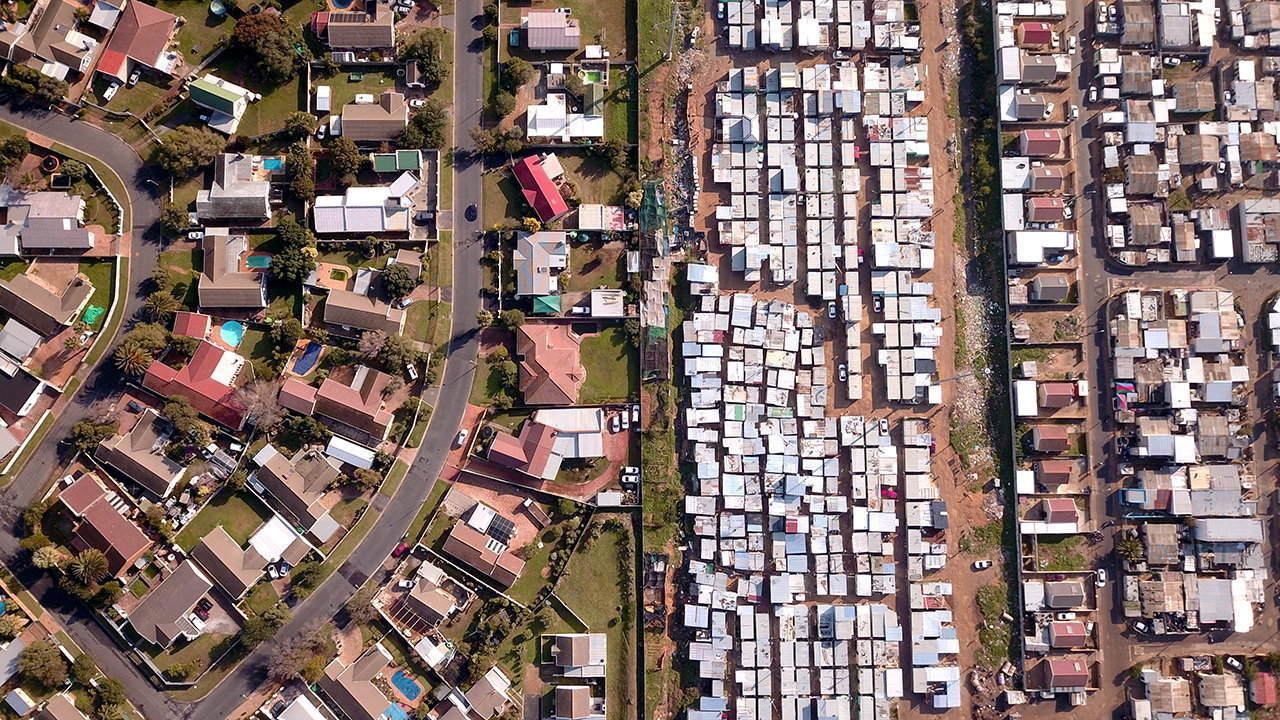
Aerial overhead township and wealthy suburb in South Africa

Share on FacebookShare on Twitter

By Murray Leibbrandt*, & Anda David*


World leaders have been asked to support a proposed International Panel on Inequality. Brazil, Norway, South Africa and Spain, together with Nobel laureate Joseph Stiglitz, made the call on the margins of the UN General Assembly meeting in New York in September 2026.

The panel would be modelled on the Intergovernmental Panel on Climate Change. It would assess the scale of inequality, its drivers and consequences, and the policies that can reduce it. The African Union endorsed the initiative in February, and South Africa intends to present a General Assembly resolution to establish it.

This is a significant step. Inequality could, for the first time, have a permanent scientific body within the multilateral system. But the usefulness of such a panel will depend on whose realities its assessments reflect.

Recent experience shows why this question matters. The Global Justice Report, released in June by the World Inequality Lab, puts forward ambitious proposals. But, as economists working on labour and informality recently argued, many of the proposals are based on how things work in high-income countries. They assume that certain kinds of employment relationships, labour protections and institutions exist.

For more than a decade the African Centre of Excellence for Inequality Research has produced country inequality diagnostics and analyses with African researchers and national statistical offices. Our work is summarised in our recent book on inequality in sub-Saharan Africa.

We think global initiatives are a great step forward. The problem is that frameworks built mainly on the data and institutions of the global north might not be accurate where inequality is most severe.

To address this problem, we have been closely involved in the development of the African Inequality Review. Its aim is to close the knowledge gap about inequality. It will start new cross-country research on African inequality and build a public resource linking the continent’s inequality datasets.

The review can offer three things:

  • African-led assessments of inequality, grounded in the continent’s institutions and labour markets
  • linked data infrastructure needed to study rents, assets and fiscal choices alongside household outcomes
  • a model of research designed with policymakers rather than delivered to them.

Africa will shape the future of global inequality

According to UN projections, sub-Saharan Africa will account for more than half of world population growth through to the end of this century. Almost all the global growth of the economically active population will come from Africa.

Most Africans are concentrated at the bottom of the global income distribution, so this demographic shift pulls the world’s distribution with it. Between 1990 and 2016, the share of the world’s poorest income decile living in sub-Saharan Africa rose from about one in five to one in three, according to African Development Bank and World Bank estimates.

Inequality within African countries is also among the highest in the world. The continent has seven of the world’s ten most unequal countries. In 2019, the richest 10% of Africans received about 54% of total income, and the poorest half received 9%.

The prospects of Africa’s young and growing population will therefore determine where global inequality goes. An international panel without a strong African evidence base would be assessing the past of global inequality rather than its future.

That evidence base remains thin. The picture of African inequality is based on fewer country observations than other regions. And different databases present markedly different pictures of the levels and changes in inequality on the continent.

Inputs on inequality

The African Inequality Review is modelled on two previous reviews:

  • the Deaton Review in the UK, a multi-year, multidisciplinary assessment of inequalities in income, wealth, health and opportunity led by the Institute for Fiscal Studies chaired by Nobel laureate Angus Deaton
  • the Latin American and Caribbean Inequality Review, a scholarly effort to explain why inequality in the region is still so high and what can be done about it.

The launch was held immediately after a meeting of the African Union and South Africa African Expert Panel. Having the panel involved ensured that senior African policymakers took part along with African and international practitioners and researchers. Participants were asked two questions.

  • Where are important policy choices being made without the evidence decision-makers need?
  • Which inequality questions, answered well, would change policy?

Several priorities emerged.

Read also

African Union delegation meets Congo rebels, calls for continued peace efforts

Kenya infrastructure fund begins deploying $2.6 billion seed capital by buying bonds

Eritrean troops drive through northern Ethiopian town, witnesses say

The first was that many of the most pressing evidence gaps lie where fiscal, corporate and asset data meet. Participants pointed to tax breaks that governments grant to individual large firms case by case, through negotiated agreements rather than through rules in tax law that apply to every firm. These incentives are rarely tied to results that can be checked, such as jobs created, purchases from local suppliers, or skills and technology passed on to local workers.

They also pointed to difficulties in assessing full economic and social returns to investments in public infrastructure. Impact studies routinely examine who is displaced by a new road and who gains market access. They far less often examine the impacts across the procurement chain and throughout time. In other words who wins contracts and subcontracts and who ultimately captures the rents.

Control over land, mineral resources and credit, and access to legal identity through civil registration, were raised in the same vein.

These patterns of control shape who gains access to opportunity and where productivity stays blocked. Assessments that ask whether a policy or an investment loosens those constraints, rather than only who gains and loses at the point of delivery, give a better account of its longer-term returns.

The second priority was that these questions build on household survey research rather than replace it. Decades of survey and panel data tell us who is poor, how people move in and out of poverty, and how disadvantage passes between generations. The frontier now is to link these microdata with tax records, administrative and firm-level data, and ownership and procurement registers. That would connect the distribution of outcomes to the mechanisms that produce them.

The third concerned the limits of single summary measures. A Gini coefficient, the single number ranging from 0 and 1 as inequality rises, summarises how unequally income is shared across a population. But it cannot tell a government whether its priority should be competition policy and progressive taxation, social protection, or early childhood investment.

Nor is there a known threshold where inequality becomes too high to sustain growth. This depends on what’s causing inequality in that context. For example, in many African contexts even low aggregate inequality masks strong gender biases.

The fourth was that policy design must start from the reality of informal livelihoods, rather than assume they can simply be regulated into formality.

Finally, participants stressed that researchers and policymakers need to work together from the outset if research is to inform decisions.

ـــــــــــــــــــــــــــــــ

* UCT Emeritus Professor and Senior Research Scholar; Director of ARUA’s African Centre of Excellence for Inequality Research within SALDRU., University of Cape Town

* Senior researcher, Agence Française de Développement (AFD)
Source: The Conversation
Tags: AfricaAfrican Development BankBrazilG20Gini CoefficientGlobal inequalityGlobal SouthInequalityNorwaySouth AfricaSpainWorld Bank

Related Posts

African Union to launch African credit rating agency in October, adviser says
African Union

African Union to launch continent’s first credit rating agency

October 7, 2026
Mali: Tuareg rebels inflict losses on Government and marcenary forces
Featured

Mali separatists announce withdrawal from strategic northern town

October 6, 2026
Why is Senegal’s billions in hidden debt an IMF concern
Economy

Senegal aims for deal with official creditors, bondholders by December, sources say

October 6, 2026
DR Congo says it is in talks with Zambia to quickly reopen closed border
Featured

Zambia to sign $1.5 billion US health pact after resolving differences over data-sharing

October 6, 2026
Nigeria says two nationals killed in anti-migrant violence in South Africa
Featured

Nigeria nears 2,000 repatriations from South Africa after latest evacuation flight

October 6, 2026
Why Africa needs a new credit agency
African Union

Why Africa needs a new credit agency

October 5, 2026

Search Qiraat Africa

No Result
View All Result

Follow on Twitter

Follow @africanqiraat

Trending

Kumbi Saleh, the capital of the ancient Ghana Empire

Kumbi Saleh, the capital of the ancient Ghana Empire

October 13, 2025
Tunka Manin (c. 1010–1078), the last ruler of the Ghana Empire

Tunka Manin (c. 1010–1078), the last ruler of the Ghana Empire

December 12, 2025
Africa’s 10 Strongest Currencies in June 2026

Africa’s 10 Strongest Currencies in June 2026

July 8, 2026
The identity and culture of Tadjourah, Djibouti

The identity and culture of Tadjourah, Djibouti

September 12, 2024
Samori Touré (1830-1900): Military leader and founder of Wassoulou Empire

Samori Touré (1830-1900): Military leader and founder of Wassoulou Empire

January 11, 2026
Mali, a historical empire in Africa

Mali, a historical empire in Africa

September 17, 2024

Facebook

Sections

  • About Us
  • Privacy Policy
  • Opinion
  • Infographics
  • News
  • Analysis
  • Figures
  • Culture & Literature
  • Follow Ups
  • Historical Readings
  • Interview
  • Studies


© Copyright Qiraat Africa. Developed by Bunnaj Media .

No Result
View All Result
  • News
  • Analysis & Report
  • Studies
  • Opinion
  • Interview
  • Culture & Literature
  • Figures
  • Historical Readings
  • Regions

© 2021 Copyright Qiraat Africa.