








Qiraat Africa
عربي  |  Fr
Advertisement
  • News
    • All
    • Climate Change
    • Economy
    • Education
    • Energy
    • Health
    • Migration
    • Mining
    • Politics
    • Security
    • Society
    • Sport
    Middle east fuel crisis keeps Mozambique fishermen ashore

    Middle east fuel crisis keeps Mozambique fishermen ashore

    Somaliland president visits Israel in defiance of Mogadishu

    Somaliland president visits Israel in defiance of Mogadishu

    Xenophobic attacks are hurting South Africa’s image abroad, says minister

    Xenophobic attacks are hurting South Africa’s image abroad, says minister

    Senegal opposition leader, Ousmane Sonko hints at election disruption if he can’t run

    Senegal’s Sonko softens tone on debt restructuring as IMF talks due

    Somali President says Israel exploiting row with Somaliland

    Somali President says Israel exploiting row with Somaliland

    Zimbabwe’s state gold miner plans to double output by 2029 as expansion projects take off

    Zimbabwe’s state gold miner plans to double output by 2029 as expansion projects take off

    DR Congo and Uganda report 263 confirmed Ebola cases with 43 deaths, Africa CDC says

    Health workers struggle to contain Ebola in Congo camps as distrust grows

    Somaliland says it has a right to choose its relationships as it opens new Taiwan office

    Somaliland says it has a right to choose its relationships as it opens new Taiwan office

    South African president seeks to stop impeachment probe over ‘Farmgate’ scandal

    South African president seeks to stop impeachment probe over ‘Farmgate’ scandal

  • Analysis
    • All
    • Climate Change
    • Digital & Tech
    • Economy
    • Energy & Power
    • Health
    • Politics
    • Security
    • Society
    The promise and risks of Kenya’s ambitious new strategy to close refugee camps

    The promise and risks of Kenya’s ambitious new strategy to close refugee camps

    Al Qaeda-linked militants curb their brutality in seized Malian territory

    Al Qaeda-linked militants curb their brutality in seized Malian territory

    Five Years After the Coup in Mali: Are Stability and Growth Within Reach?

    The Political Economy of Insecurity in Mali: Armed Groups, Resources, and State Fragility

    Ghana to evacuate 300 citizens from South Africa after xenophobic attacks

    Xenophobic Violence and Human Security in South Africa: Causes and Consequences

    Inside an African lab that helped crack the hantavirus outbreak

    Inside an African lab that helped crack the hantavirus outbreak

    Nigeria’s Agricultural sector: Problems and challenges

    Agriculture in Africa: science and research cannot have an impact without investments and good policies

    Mali’s junta creates a new ministerial-level post to oversee the mining sector

    African Mineral Resources: The Controversial Link to US Health Deals

    Ghana curbs offshore investments to protect cedi, boost stability

    Ghana’s mining law attempts to eradicate speculation, but leaves communities in limbo: insights from a lithium case study

    East African Community’s expansion has triggered financial difficulties: why solutions come with risks

    East African Community’s expansion has triggered financial difficulties: why solutions come with risks

  • Studies
    Schooling is the most severely affected by conflict when children are the target – Study

    Schooling is the most severely affected by conflict when children are the target – Study

    Pensions for Botswana’s elderly are expanding, but care services are lacking—study follows 20 years

    Pensions for Botswana’s elderly are expanding, but care services are lacking—study follows 20 years

    60 new cosmic structures have been discovered by South Africa’s MeerKAT telescope, which is mapping previously unseen gaps between galaxies

    60 new cosmic structures have been discovered by South Africa’s MeerKAT telescope, which is mapping previously unseen gaps between galaxies

    Benin government says armed forces foil coup attempt

    Coup contagion? A rash of African power grabs suggests copycats are taking note of others’ success

    One in three South Africans have never heard of AI: what this means for policy

    One in three South Africans have never heard of AI: what this means for policy

    Social Media as a Catalyst for the Spread of Dangerous Wealth Ritual Myths

    Social Media as a Catalyst for the Spread of Dangerous Wealth Ritual Myths

    Overcoming Education Barriers for Young Mothers in Sub-Saharan Africa

    Overcoming Education Barriers for Young Mothers in Sub-Saharan Africa

    Youth Empowerment Through Vocational Training in Rural Sub-Saharan Africa

    Youth Empowerment Through Vocational Training in Rural Sub-Saharan Africa

    Manufacturers in Ghana and Nigeria claim that although corruption damages businesses, digital technologies provide a chance to combat it

    Manufacturers in Ghana and Nigeria claim that although corruption damages businesses, digital technologies provide a chance to combat it

  • Infographics
  • Figures
    Eduardo Mondlane (1920-1969): Mozambican Revolutionary and Anthropologist

    Eduardo Mondlane (1920-1969): Mozambican Revolutionary and Anthropologist

    William Tubman (1895-1971): Liberian politician and longest-serving president in the country’s history

    William Tubman (1895-1971): Liberian politician and longest-serving president in the country’s history

    Abebe Bikila (1932-1973): Ethiopian marathoner and first black African to win an Olympic medal

    Abebe Bikila (1932-1973): Ethiopian marathoner and first black African to win an Olympic medal

    W. E. B. Du Bois (1868-1963): Sociologist, historian, and Pan-Africanist civil rights activist

    W. E. B. Du Bois (1868-1963): Sociologist, historian, and Pan-Africanist civil rights activist

    Frantz Fanon (1925-1961): Psychiatrist and political philosopher

    Frantz Fanon (1925-1961): Psychiatrist and political philosopher

    Percy Lavon Julian (1899-1975): African American researcher and chemist

    Percy Lavon Julian (1899-1975): African American researcher and chemist

    Harriet Tubman (Araminta Ross, 1822-1913): American abolitionist and social activist

    Harriet Tubman (Araminta Ross, 1822-1913): American abolitionist and social activist

    Dorothy Vaughan (1910-2008): African American mathematician and human computer

    Dorothy Vaughan (1910-2008): African American mathematician and human computer

    George Washington Carver (1864-1943): African American agricultural scientist and inventor

    George Washington Carver (1864-1943): African American agricultural scientist and inventor

  • History
    Laas Geel, Somalia

    Laas Geel, Somalia

    Lakes Of Ounianga, Chad

    Lakes Of Ounianga, Chad

    Nok Caves, Togo

    Nok Caves, Togo

    The Land of Punt (modern Somalia, Eritrea, Ethiopia, or eastern Sudan)

    The Land of Punt (modern Somalia, Eritrea, Ethiopia, or eastern Sudan)

    Avenue of the Baobabs, Madagascar

    Avenue of the Baobabs, Madagascar

    Lopé-Okanda (Gabon)

    Lopé-Okanda (Gabon)

    The Sudd wetland

    The Sudd wetland

    Khami Ruins (Zimbabwe), the capital of the Torwa state

    Khami Ruins (Zimbabwe), the capital of the Torwa state

    Royal Palace, Porto-Novo, Republic of Benin

    Royal Palace, Porto-Novo, Republic of Benin

  • Others
    • Culture / Literature
    • Interview
    • Opinion
  • Countries
    • Country profiles
    • Regions
      • Central Africa
      • East Africa
      • Southern Africa
      • West Africa
No Result
View All Result
  • News
    • All
    • Climate Change
    • Economy
    • Education
    • Energy
    • Health
    • Migration
    • Mining
    • Politics
    • Security
    • Society
    • Sport
    Middle east fuel crisis keeps Mozambique fishermen ashore

    Middle east fuel crisis keeps Mozambique fishermen ashore

    Somaliland president visits Israel in defiance of Mogadishu

    Somaliland president visits Israel in defiance of Mogadishu

    Xenophobic attacks are hurting South Africa’s image abroad, says minister

    Xenophobic attacks are hurting South Africa’s image abroad, says minister

    Senegal opposition leader, Ousmane Sonko hints at election disruption if he can’t run

    Senegal’s Sonko softens tone on debt restructuring as IMF talks due

    Somali President says Israel exploiting row with Somaliland

    Somali President says Israel exploiting row with Somaliland

    Zimbabwe’s state gold miner plans to double output by 2029 as expansion projects take off

    Zimbabwe’s state gold miner plans to double output by 2029 as expansion projects take off

    DR Congo and Uganda report 263 confirmed Ebola cases with 43 deaths, Africa CDC says

    Health workers struggle to contain Ebola in Congo camps as distrust grows

    Somaliland says it has a right to choose its relationships as it opens new Taiwan office

    Somaliland says it has a right to choose its relationships as it opens new Taiwan office

    South African president seeks to stop impeachment probe over ‘Farmgate’ scandal

    South African president seeks to stop impeachment probe over ‘Farmgate’ scandal

  • Analysis
    • All
    • Climate Change
    • Digital & Tech
    • Economy
    • Energy & Power
    • Health
    • Politics
    • Security
    • Society
    The promise and risks of Kenya’s ambitious new strategy to close refugee camps

    The promise and risks of Kenya’s ambitious new strategy to close refugee camps

    Al Qaeda-linked militants curb their brutality in seized Malian territory

    Al Qaeda-linked militants curb their brutality in seized Malian territory

    Five Years After the Coup in Mali: Are Stability and Growth Within Reach?

    The Political Economy of Insecurity in Mali: Armed Groups, Resources, and State Fragility

    Ghana to evacuate 300 citizens from South Africa after xenophobic attacks

    Xenophobic Violence and Human Security in South Africa: Causes and Consequences

    Inside an African lab that helped crack the hantavirus outbreak

    Inside an African lab that helped crack the hantavirus outbreak

    Nigeria’s Agricultural sector: Problems and challenges

    Agriculture in Africa: science and research cannot have an impact without investments and good policies

    Mali’s junta creates a new ministerial-level post to oversee the mining sector

    African Mineral Resources: The Controversial Link to US Health Deals

    Ghana curbs offshore investments to protect cedi, boost stability

    Ghana’s mining law attempts to eradicate speculation, but leaves communities in limbo: insights from a lithium case study

    East African Community’s expansion has triggered financial difficulties: why solutions come with risks

    East African Community’s expansion has triggered financial difficulties: why solutions come with risks

  • Studies
    Schooling is the most severely affected by conflict when children are the target – Study

    Schooling is the most severely affected by conflict when children are the target – Study

    Pensions for Botswana’s elderly are expanding, but care services are lacking—study follows 20 years

    Pensions for Botswana’s elderly are expanding, but care services are lacking—study follows 20 years

    60 new cosmic structures have been discovered by South Africa’s MeerKAT telescope, which is mapping previously unseen gaps between galaxies

    60 new cosmic structures have been discovered by South Africa’s MeerKAT telescope, which is mapping previously unseen gaps between galaxies

    Benin government says armed forces foil coup attempt

    Coup contagion? A rash of African power grabs suggests copycats are taking note of others’ success

    One in three South Africans have never heard of AI: what this means for policy

    One in three South Africans have never heard of AI: what this means for policy

    Social Media as a Catalyst for the Spread of Dangerous Wealth Ritual Myths

    Social Media as a Catalyst for the Spread of Dangerous Wealth Ritual Myths

    Overcoming Education Barriers for Young Mothers in Sub-Saharan Africa

    Overcoming Education Barriers for Young Mothers in Sub-Saharan Africa

    Youth Empowerment Through Vocational Training in Rural Sub-Saharan Africa

    Youth Empowerment Through Vocational Training in Rural Sub-Saharan Africa

    Manufacturers in Ghana and Nigeria claim that although corruption damages businesses, digital technologies provide a chance to combat it

    Manufacturers in Ghana and Nigeria claim that although corruption damages businesses, digital technologies provide a chance to combat it

  • Infographics
  • Figures
    Eduardo Mondlane (1920-1969): Mozambican Revolutionary and Anthropologist

    Eduardo Mondlane (1920-1969): Mozambican Revolutionary and Anthropologist

    William Tubman (1895-1971): Liberian politician and longest-serving president in the country’s history

    William Tubman (1895-1971): Liberian politician and longest-serving president in the country’s history

    Abebe Bikila (1932-1973): Ethiopian marathoner and first black African to win an Olympic medal

    Abebe Bikila (1932-1973): Ethiopian marathoner and first black African to win an Olympic medal

    W. E. B. Du Bois (1868-1963): Sociologist, historian, and Pan-Africanist civil rights activist

    W. E. B. Du Bois (1868-1963): Sociologist, historian, and Pan-Africanist civil rights activist

    Frantz Fanon (1925-1961): Psychiatrist and political philosopher

    Frantz Fanon (1925-1961): Psychiatrist and political philosopher

    Percy Lavon Julian (1899-1975): African American researcher and chemist

    Percy Lavon Julian (1899-1975): African American researcher and chemist

    Harriet Tubman (Araminta Ross, 1822-1913): American abolitionist and social activist

    Harriet Tubman (Araminta Ross, 1822-1913): American abolitionist and social activist

    Dorothy Vaughan (1910-2008): African American mathematician and human computer

    Dorothy Vaughan (1910-2008): African American mathematician and human computer

    George Washington Carver (1864-1943): African American agricultural scientist and inventor

    George Washington Carver (1864-1943): African American agricultural scientist and inventor

  • History
    Laas Geel, Somalia

    Laas Geel, Somalia

    Lakes Of Ounianga, Chad

    Lakes Of Ounianga, Chad

    Nok Caves, Togo

    Nok Caves, Togo

    The Land of Punt (modern Somalia, Eritrea, Ethiopia, or eastern Sudan)

    The Land of Punt (modern Somalia, Eritrea, Ethiopia, or eastern Sudan)

    Avenue of the Baobabs, Madagascar

    Avenue of the Baobabs, Madagascar

    Lopé-Okanda (Gabon)

    Lopé-Okanda (Gabon)

    The Sudd wetland

    The Sudd wetland

    Khami Ruins (Zimbabwe), the capital of the Torwa state

    Khami Ruins (Zimbabwe), the capital of the Torwa state

    Royal Palace, Porto-Novo, Republic of Benin

    Royal Palace, Porto-Novo, Republic of Benin

  • Others
    • Culture / Literature
    • Interview
    • Opinion
  • Countries
    • Country profiles
    • Regions
      • Central Africa
      • East Africa
      • Southern Africa
      • West Africa
No Result
View All Result
Qiraat Africa
عربي  |  Fr
No Result
View All Result
Home Figures

Aristides Pereira (1923-2011): First President of Cape Verde

July 26, 2025
Aristides Pereira (1923-2011): First President of Cape Verde
Share on FacebookShare on Twitter

Aristides Maria Pereira was born on November 17, 1923, in Fundo de Figueiras, Cabo Verde. He received his primary education in his hometown before moving to Mindelo on the island of São Vicente, where he completed his secondary education. In 1944, Pereira began working for the Portuguese colonial administration, holding a position in the Posts and Telegraphs Department. This seemingly ordinary position had a profound impact on the course of his life, allowing him the opportunity to travel between islands, witness the difficult living conditions of the archipelago’s inhabitants, and become acutely aware of the depth of Portuguese colonial oppression.

During his work, Pereira witnessed how the colonial system isolated the islands from each other and how the central authorities exploited local resources with little return for the population. Economic conditions were dire, with the population suffering from periodic famines and droughts. This situation fueled a deep sense of injustice and drove him to seek ways to achieve change.

In the mid-1950s, Pereira began connecting with groups of anti-colonial intellectuals and activists, many of whom, like himself, worked in the public sector. These individuals exchanged ideas about the need for liberation from Portuguese rule, and these meetings were conducted in complete secrecy for fear of retribution by the Portuguese Political Police (PIDE).

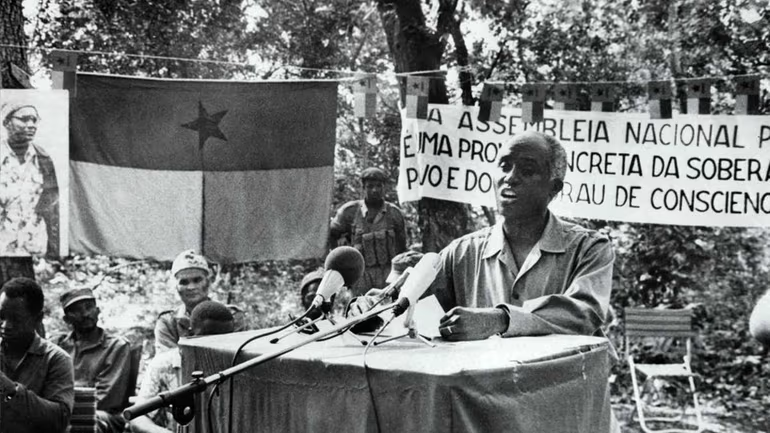
The major turning point in Pereira’s life came in 1956, when he participated in founding the African Party for the Independence of Guinea and Cabo Verde (PAIGC). The party had a unique goal: to unite Cabo Verde and Guinea-Bissau into a single state after independence. This idea came from the party’s founders, led by Amical Cabral, a charismatic figure and revolutionary thinker. Cabral believed that Guinea-Bissau and Cabo Verde shared deep historical and cultural ties, and that unification would give them greater political and economic strength to face the challenges of post-independence.

Pereira played a pivotal role in the party from the beginning. He possessed strong organizational skills and was able to connect with diverse social strata, from peasants to intellectuals. Initially, the party operated underground, with Pereira using his postal service to deliver secret messages and distribute anti-colonial leaflets.

As Portuguese repression escalated, the party decided to turn to armed action. In 1961, the party declared the start of armed struggle in Guinea-Bissau, where the geographical conditions allowed for a guerrilla war against Portuguese forces. In Cabo Verde, armed action was virtually impossible due to the small, isolated islands. Therefore, Pereira and his colleagues focused on organizing clandestine support networks, recruiting youth, and raising awareness of the national cause.

In 1965, Pereira moved to Guinea-Bissau to lead the party’s logistical and political operations. In 1973, Amical Cabral was assassinated, an event that shook the revolutionary movement. After Cabral’s death, Pereira assumed leadership of the party, placing him in a very difficult position. He had to fill the void left by Cabral, maintain party unity, and continue the struggle against Portuguese forces.

In September 1973, Guinea-Bissau unilaterally declared its independence. In 1974, the Carnation Revolution in Portugal overthrew the authoritarian regime, opening the door to peaceful negotiations with its former colonies.

In 1975, after intense negotiations, Cabo Verde gained independence from Portugal. On July 5, 1975, the Republic of Cabo Verde was proclaimed, and Aristides Pereira was elected its first president. This marked the beginning of a new era filled with challenges.

Read also

Schooling is the most severely affected by conflict when children are the target – Study

Senegal’s Sonko softens tone on debt restructuring as IMF talks due

Al Qaeda-linked militants curb their brutality in seized Malian territory

The challenges facing the new Cabo Verde were immense. The country suffered from severely weak infrastructure, a severe shortage of natural resources, and a near-total dependence on foreign aid and remittances from expatriates. The economic situation was extremely difficult, as the archipelago suffered from recurrent droughts.

Pereira’s presidency was characterized by realism and pragmatism. He realized that Cabo Verde could not rely on an agricultural economy, so he decided to focus on other sectors such as services, maritime navigation, and tourism. He also worked to attract foreign investment and improve diplomatic relations with European countries and the United States.

One of Pereira’s main goals was to maintain a close relationship with Guinea-Bissau, hoping to realize the dream of unification in the future. However, this dream did not come true. In 1980, a military coup in Guinea-Bissau led by João Bernardo Vieira strained relations between the two countries and led to the dissolution of the African Party for the Independence of Guinea and Cabo Verde (PAIGC). In response, Pereira founded a new party in Cabo Verde, the African Party for the Independence of Cabo Verde (PAICV), which became the country’s ruling party.

In domestic policy, Pereira adopted a one-party system, a decision common in many newly independent African states. He believed this system was necessary to achieve political stability and avoid ethnic or tribal conflicts, which were not prevalent in Cabo Verde. His rule was characterized by relative calm and stability, compared to many other African countries that had suffered coups and civil wars.

Pereira’s economic policies focused on central planning, but over time, he began to adopt a more open approach, encouraging the private sector and foreign investment. He believed that economic development was the foundation for true independence, and that the state should play a role in improving the quality of life for its citizens. In foreign policy, Pereira followed a nonaligned approach. He maintained good relations with socialist states such as the Soviet Union and Cuba, but at the same time did not sever ties with Western countries. His strategy was based on diversifying international partners to ensure the country received the aid and investments needed for its development. Cabo Verde played an active role in regional organizations such as the Economic Community of West African States (ECOWAS), seeking to serve as a bridge between Africa and Europe.

In the late 1980s, with increasing international pressure and domestic demands for multipartyism, the Pereira regime began to open up to democratic reforms. Cabo Verde was one of the first African countries to peacefully transition from a single-party system to a multiparty system.

In 1991, the country held its first free multiparty elections. Despite his popularity, Pereira lost the election to his rival, António Mascarenhas Monteiro, a candidate from the Movement for Democracy (MpD) party.

Pereira’s acceptance of electoral defeat and peaceful ceding power represented a rare democratic lesson on the African continent. He did not reject the results or attempt to remain in power, but rather accepted the judgment of the people, cementing his reputation as a wise and responsible leader. After stepping down from the presidency, Pereira remained a respected figure and political authority in Cabo Verde. He no longer participated in daily political life, devoting his time to writing and reflecting on his country’s history.

Aristides Pereira died on September 22, 2011, in Portugal, at the age of 87.
Tags: African Party for the Independence of Guinea and Cabo Verde (PAIGC)Aristides PereiraCape Verde

Related Posts

Niger inaugurates new power plant to ease electricity cuts
Energy

Niger inaugurates new power plant to ease electricity cuts

June 11, 2026
China’s Hengli seeks West African, Middle Eastern oil after sanctions, sources say
Energy

China’s Hengli seeks West African, Middle Eastern oil after sanctions, sources say

June 11, 2026
Senegal’s federation explains viral airport security footage ahead of World Cup
Featured

Senegal’s federation explains viral airport security footage ahead of World Cup

June 10, 2026
Bandits kill six, abduct more than 100 in Nigeria’s Zamfara state
Featured

Dozens kidnapped in northwest Nigeria after bandits invite them to talks

June 9, 2026
Mali
Featured

French national gets 20 years in Mali over alleged destabilisation plot

June 7, 2026
Nigeria’s military rescues 360 hostages in Borno state
Featured

Nigeria’s military rescues 360 hostages in Borno state

June 7, 2026

Search Qiraat Africa

No Result
View All Result

Follow on Twitter

Follow @africanqiraat

Trending

António Agostinho Neto (1922-1979), the “Father of Mothern Angola”

António Agostinho Neto (1922-1979), the “Father of Mothern Angola”

April 12, 2025
Kumbi Saleh, the capital of the ancient Ghana Empire

Kumbi Saleh, the capital of the ancient Ghana Empire

October 13, 2025
Infographic: Kidnapping in Nigeria – Facts and Figures

Infographic: Kidnapping in Nigeria – Facts and Figures

May 22, 2024
Eduardo Mondlane (1920-1969): Mozambican Revolutionary and Anthropologist

Eduardo Mondlane (1920-1969): Mozambican Revolutionary and Anthropologist

May 14, 2026
Samori Touré (1830-1900): Military leader and founder of Wassoulou Empire

Samori Touré (1830-1900): Military leader and founder of Wassoulou Empire

January 11, 2026
Abubakar Gumi (1924–1992): Nigerian Islamic scholar and Grand Khadi of the Northern Region of Nigeria

Abubakar Gumi (1924–1992): Nigerian Islamic scholar and Grand Khadi of the Northern Region of Nigeria

January 15, 2026

Facebook

Sections

  • About Us
  • Privacy Policy
  • Opinion
  • Infographics
  • News
  • Analysis
  • Figures
  • Culture & Literature
  • Follow Ups
  • Historical Readings
  • Interview
  • Studies


© Copyright Qiraat Africa. Developed by Bunnaj Media .

No Result
View All Result
  • News
  • Analysis & Report
  • Studies
  • Opinion
  • Interview
  • Culture & Literature
  • Figures
  • Historical Readings
  • Regions

© 2021 Copyright Qiraat Africa.