


Qiraat Africa
عربي  |  Fr
Advertisement
  • News
    • All
    • Climate Change
    • Economy
    • Education
    • Energy
    • Health
    • Migration
    • Mining
    • Politics
    • Security
    • Society
    • Sport
    Ethiopia’s central bank joins African payments system PAPSS

    Ethiopia’s central bank joins African payments system PAPSS

    South Africa grants long-term leases to oil majors at key Durban fuel hub

    South Africa to stop subsidizing imported vehicle kits, pushing automakers to build locally

    Here’s why inflation has dropped internationally but is still rising in Nigeria

    Nigeria’s inflation rate eases slightly in September, data shows

    Kenya raises fuel prices as Middle East conflict lifts import costs

    Kenya raises fuel prices as Middle East conflict lifts import costs

    Angola to maintain crude output at 1.1 million bpd into 2024

    Angola aims for faster oil and gas concessions as part of new regulatory revamp

    The arrest of Ansaru terror leaders marks a strategic change for Nigeria: What could happen next?

    Terrorists kill 10 soldiers in attack on northeast Nigeria army base

    Why is Senegal’s billions in hidden debt an IMF concern

    Senegal bondholders pick financial adviser for debt talks, sources say

    Abu Dhabi’s IRH seeks more mining assets in Zambia

    Abu Dhabi’s IRH seeks more mining assets in Zambia

    Guinea-Bissau says it has not approved hepatitis B vaccine trial in newborns

    Guinea-Bissau says it has not approved hepatitis B vaccine trial in newborns

  • Analysis
    • All
    • Climate Change
    • Digital & Tech
    • Economy
    • Energy & Power
    • Health
    • Politics
    • Security
    • Society
    The global panel on inequality needs African evidence: here’s how it could work

    The global panel on inequality needs African evidence: here’s how it could work

    Why Africa needs a new credit agency

    Why Africa needs a new credit agency

    Japan signs deal with Namibia to explore for rare earth minerals

    Africa’s mineral strength is wasted if countries don’t work together – new report

    Ethiopia: at least 40 army allies killed in drone strike

    Ethiopia’s peace deal is unravelling – what went wrong with the Tigray agreement

    DRC on a mission to financing the world’s largest hydropower dam

    DR Congo: The INGA Dam Paradox

    Cameroon uncovers more than 200 illegal gold mines, mostly foreign-owned

    Mineral Beneficiation: A Pipedream of Prosperity in an Unequal Financial Architecture

    Zambia signs $1.1 Billion deal to build major oil refinery in Copperbelt

    Is Zambia’s Economy Rebounding Under President Hakainde Hichilema?

    Nigeria considers crude supply reforms to aid Dangote, other refiners

    Refinery rivalry: billion‑dollar oil projects expose East Africa’s long‑running regional tensions

    Zambia’s chaotic but decisive election: government demonstrates strength, democracy shows weakness

    Zambia’s chaotic but decisive election: government demonstrates strength, democracy shows weakness

  • Studies
    China could drive Africa’s renewable energy revolution, report says

    A study shows wind and solar projects in Kenya and South Africa don’t always benefit the communities that host them

    Angola’s lengthy war shaped the way farmers utilised fire—why it matters

    Angola’s lengthy war shaped the way farmers utilised fire—why it matters

    Schooling is the most severely affected by conflict when children are the target – Study

    Schooling is the most severely affected by conflict when children are the target – Study

    Pensions for Botswana’s elderly are expanding, but care services are lacking—study follows 20 years

    Pensions for Botswana’s elderly are expanding, but care services are lacking—study follows 20 years

    60 new cosmic structures have been discovered by South Africa’s MeerKAT telescope, which is mapping previously unseen gaps between galaxies

    60 new cosmic structures have been discovered by South Africa’s MeerKAT telescope, which is mapping previously unseen gaps between galaxies

    Benin government says armed forces foil coup attempt

    Coup contagion? A rash of African power grabs suggests copycats are taking note of others’ success

    One in three South Africans have never heard of AI: what this means for policy

    One in three South Africans have never heard of AI: what this means for policy

    Social Media as a Catalyst for the Spread of Dangerous Wealth Ritual Myths

    Social Media as a Catalyst for the Spread of Dangerous Wealth Ritual Myths

    Overcoming Education Barriers for Young Mothers in Sub-Saharan Africa

    Overcoming Education Barriers for Young Mothers in Sub-Saharan Africa

  • Infographics
  • Figures
    Namibia: Anger over Dubai COP28 trip by president Geingob’s children

    Hage Geingob (1941–2024): Former President of Namibia

    Cape Verde president says governments must discuss colonial reparations

    José Maria Neves: President of Cape Verde

    Jorge Bom Jesus: Linguist and former Prime Minister of São Tomé and Príncipe

    Jorge Bom Jesus: Linguist and former Prime Minister of São Tomé and Príncipe

    Joseph Leabua Jonathan (1914-1987): Former Prime Minister of Lesotho

    Joseph Leabua Jonathan (1914-1987): Former Prime Minister of Lesotho

    Gambia’s president Barrow faces backlash over ‘death wish’ on archrival

    Adama Barrow: President of the Republic of The Gambia

    Rwandan President Paul Kagame announces he will run for a fourth term

    Paul Kagame: Former military officer and president of Rwanda

    Zumbi dos Palmares (1655-1695): Afro-Brazilian leader of the great Palmares Quilombo

    Zumbi dos Palmares (1655-1695): Afro-Brazilian leader of the great Palmares Quilombo

    Léon M’ba (1902-1967): First president of independent Gabon

    Léon M’ba (1902-1967): First president of independent Gabon

    Namibia to vote in toughest election yet for ruling party

    Netumbo Nandi-Ndaitwah: President of Namibia

  • History
    Manovo-Gounda St. Floris National Park, Central African Republic

    Manovo-Gounda St. Floris National Park, Central African Republic

    Lake Malawi (Lake Nyasa) National Park, Malawi

    Lake Malawi (Lake Nyasa) National Park, Malawi

    Fasil Ghebbi, Gondar Region, Ethiopia

    Fasil Ghebbi, Gondar Region, Ethiopia

    Bwindi Impenetrable National Park, Uganda

    Bwindi Impenetrable National Park, Uganda

    Fort Jesus, Mombasa, Kenya

    Fort Jesus, Mombasa, Kenya

    Comoé National Park, Côte d’Ivoire (Ivory Coast)

    Comoé National Park, Côte d’Ivoire (Ivory Coast)

    Bassari and Bedik Cultural Landscapes, Senegal

    Bassari and Bedik Cultural Landscapes, Senegal

    Lower Valley of the Omo, Ethiopia

    Lower Valley of the Omo, Ethiopia

    Sudano-Sahelian style mosques, northern Côte d’Ivoire

    Sudano-Sahelian style mosques, northern Côte d’Ivoire

  • Others
    • Culture / Literature
    • Interview
    • Opinion
  • Countries
    • Country profiles
    • Regions
      • Central Africa
      • East Africa
      • Southern Africa
      • West Africa
No Result
View All Result
  • News
    • All
    • Climate Change
    • Economy
    • Education
    • Energy
    • Health
    • Migration
    • Mining
    • Politics
    • Security
    • Society
    • Sport
    Ethiopia’s central bank joins African payments system PAPSS

    Ethiopia’s central bank joins African payments system PAPSS

    South Africa grants long-term leases to oil majors at key Durban fuel hub

    South Africa to stop subsidizing imported vehicle kits, pushing automakers to build locally

    Here’s why inflation has dropped internationally but is still rising in Nigeria

    Nigeria’s inflation rate eases slightly in September, data shows

    Kenya raises fuel prices as Middle East conflict lifts import costs

    Kenya raises fuel prices as Middle East conflict lifts import costs

    Angola to maintain crude output at 1.1 million bpd into 2024

    Angola aims for faster oil and gas concessions as part of new regulatory revamp

    The arrest of Ansaru terror leaders marks a strategic change for Nigeria: What could happen next?

    Terrorists kill 10 soldiers in attack on northeast Nigeria army base

    Why is Senegal’s billions in hidden debt an IMF concern

    Senegal bondholders pick financial adviser for debt talks, sources say

    Abu Dhabi’s IRH seeks more mining assets in Zambia

    Abu Dhabi’s IRH seeks more mining assets in Zambia

    Guinea-Bissau says it has not approved hepatitis B vaccine trial in newborns

    Guinea-Bissau says it has not approved hepatitis B vaccine trial in newborns

  • Analysis
    • All
    • Climate Change
    • Digital & Tech
    • Economy
    • Energy & Power
    • Health
    • Politics
    • Security
    • Society
    The global panel on inequality needs African evidence: here’s how it could work

    The global panel on inequality needs African evidence: here’s how it could work

    Why Africa needs a new credit agency

    Why Africa needs a new credit agency

    Japan signs deal with Namibia to explore for rare earth minerals

    Africa’s mineral strength is wasted if countries don’t work together – new report

    Ethiopia: at least 40 army allies killed in drone strike

    Ethiopia’s peace deal is unravelling – what went wrong with the Tigray agreement

    DRC on a mission to financing the world’s largest hydropower dam

    DR Congo: The INGA Dam Paradox

    Cameroon uncovers more than 200 illegal gold mines, mostly foreign-owned

    Mineral Beneficiation: A Pipedream of Prosperity in an Unequal Financial Architecture

    Zambia signs $1.1 Billion deal to build major oil refinery in Copperbelt

    Is Zambia’s Economy Rebounding Under President Hakainde Hichilema?

    Nigeria considers crude supply reforms to aid Dangote, other refiners

    Refinery rivalry: billion‑dollar oil projects expose East Africa’s long‑running regional tensions

    Zambia’s chaotic but decisive election: government demonstrates strength, democracy shows weakness

    Zambia’s chaotic but decisive election: government demonstrates strength, democracy shows weakness

  • Studies
    China could drive Africa’s renewable energy revolution, report says

    A study shows wind and solar projects in Kenya and South Africa don’t always benefit the communities that host them

    Angola’s lengthy war shaped the way farmers utilised fire—why it matters

    Angola’s lengthy war shaped the way farmers utilised fire—why it matters

    Schooling is the most severely affected by conflict when children are the target – Study

    Schooling is the most severely affected by conflict when children are the target – Study

    Pensions for Botswana’s elderly are expanding, but care services are lacking—study follows 20 years

    Pensions for Botswana’s elderly are expanding, but care services are lacking—study follows 20 years

    60 new cosmic structures have been discovered by South Africa’s MeerKAT telescope, which is mapping previously unseen gaps between galaxies

    60 new cosmic structures have been discovered by South Africa’s MeerKAT telescope, which is mapping previously unseen gaps between galaxies

    Benin government says armed forces foil coup attempt

    Coup contagion? A rash of African power grabs suggests copycats are taking note of others’ success

    One in three South Africans have never heard of AI: what this means for policy

    One in three South Africans have never heard of AI: what this means for policy

    Social Media as a Catalyst for the Spread of Dangerous Wealth Ritual Myths

    Social Media as a Catalyst for the Spread of Dangerous Wealth Ritual Myths

    Overcoming Education Barriers for Young Mothers in Sub-Saharan Africa

    Overcoming Education Barriers for Young Mothers in Sub-Saharan Africa

  • Infographics
  • Figures
    Namibia: Anger over Dubai COP28 trip by president Geingob’s children

    Hage Geingob (1941–2024): Former President of Namibia

    Cape Verde president says governments must discuss colonial reparations

    José Maria Neves: President of Cape Verde

    Jorge Bom Jesus: Linguist and former Prime Minister of São Tomé and Príncipe

    Jorge Bom Jesus: Linguist and former Prime Minister of São Tomé and Príncipe

    Joseph Leabua Jonathan (1914-1987): Former Prime Minister of Lesotho

    Joseph Leabua Jonathan (1914-1987): Former Prime Minister of Lesotho

    Gambia’s president Barrow faces backlash over ‘death wish’ on archrival

    Adama Barrow: President of the Republic of The Gambia

    Rwandan President Paul Kagame announces he will run for a fourth term

    Paul Kagame: Former military officer and president of Rwanda

    Zumbi dos Palmares (1655-1695): Afro-Brazilian leader of the great Palmares Quilombo

    Zumbi dos Palmares (1655-1695): Afro-Brazilian leader of the great Palmares Quilombo

    Léon M’ba (1902-1967): First president of independent Gabon

    Léon M’ba (1902-1967): First president of independent Gabon

    Namibia to vote in toughest election yet for ruling party

    Netumbo Nandi-Ndaitwah: President of Namibia

  • History
    Manovo-Gounda St. Floris National Park, Central African Republic

    Manovo-Gounda St. Floris National Park, Central African Republic

    Lake Malawi (Lake Nyasa) National Park, Malawi

    Lake Malawi (Lake Nyasa) National Park, Malawi

    Fasil Ghebbi, Gondar Region, Ethiopia

    Fasil Ghebbi, Gondar Region, Ethiopia

    Bwindi Impenetrable National Park, Uganda

    Bwindi Impenetrable National Park, Uganda

    Fort Jesus, Mombasa, Kenya

    Fort Jesus, Mombasa, Kenya

    Comoé National Park, Côte d’Ivoire (Ivory Coast)

    Comoé National Park, Côte d’Ivoire (Ivory Coast)

    Bassari and Bedik Cultural Landscapes, Senegal

    Bassari and Bedik Cultural Landscapes, Senegal

    Lower Valley of the Omo, Ethiopia

    Lower Valley of the Omo, Ethiopia

    Sudano-Sahelian style mosques, northern Côte d’Ivoire

    Sudano-Sahelian style mosques, northern Côte d’Ivoire

  • Others
    • Culture / Literature
    • Interview
    • Opinion
  • Countries
    • Country profiles
    • Regions
      • Central Africa
      • East Africa
      • Southern Africa
      • West Africa
No Result
View All Result
Qiraat Africa
عربي  |  Fr
No Result
View All Result
Home Figures

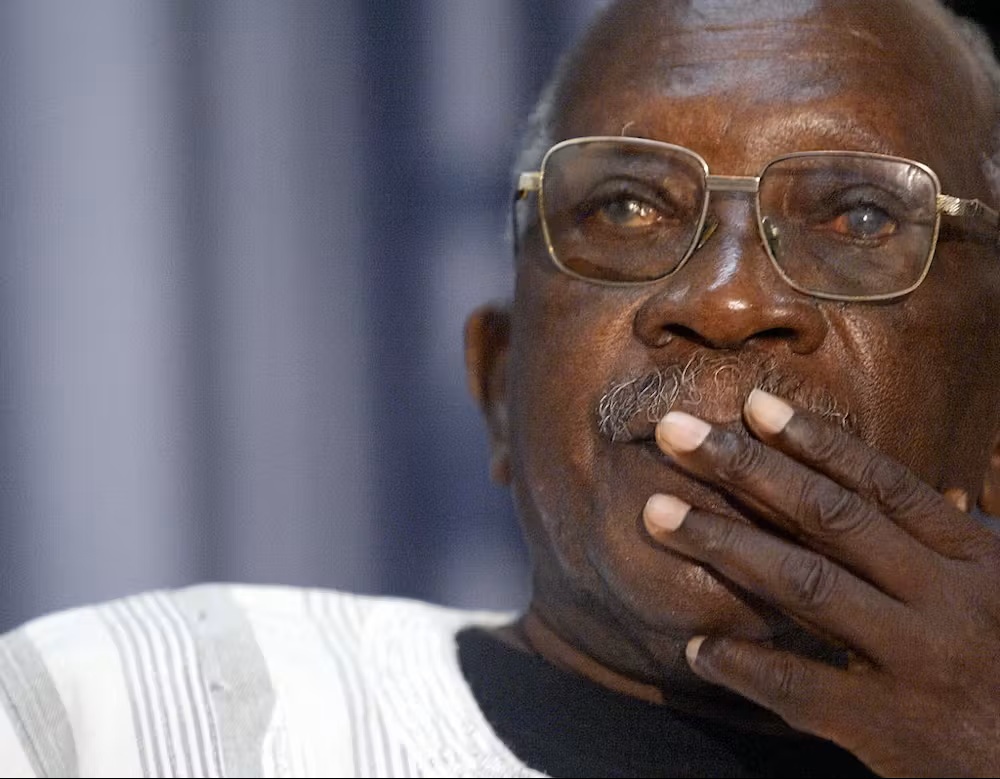
Ousmane Sembène (1923-2007): Senegalese film director and writer

August 12, 2025
Ousmane Sembène (1923-2007): Senegalese film director and writer
Share on FacebookShare on Twitter

Ousmane Sembène was born on January 1, 1923, in Ziguinchor, in the Casamance region of southern Senegal. He belonged to the Lebo community, whose members traditionally work as fishermen, a profession his father followed. His educational path was short-lived; after a brief stint at a French school, he was expelled due to a dispute with a teacher. This early interruption of formal education marked a turning point, propelling Sembène toward a path of self-education and reliance on life experiences as a source of knowledge.

As a young man, Sembène worked in various manual jobs, including as a mechanic and a bricklayer, giving him a firsthand understanding of the lives of the Senegalese working class. In 1944, he was conscripted into the French army to fight in World War II as part of the Tirailleurs Sénégalais (Senegalese Riflemen). His military experience took him to the Congo and North Africa, then to Europe to participate in the liberation of France. This period was crucial in shaping his political consciousness. It allowed him to see the stark contradictions of the colonial system, which required Africans to sacrifice their lives for a “freedom” that did not include them. It also revealed to him the discriminatory treatment African soldiers faced compared to their French counterparts, an experience he would later recount in his film, Camp de Thiaroye.

After his discharge from the army, Sembène chose to remain in France rather than return to Senegal. He settled in Marseille and worked as a port worker for more than a decade. This period was a period of intense intellectual formation. He became involved in trade union activism within the General Confederation of Workers (CGT) and joined the French Communist Party. Through these affiliations, he delved deeply into Marxist thought and theories of class struggle and anti-imperialism. At the same time, he was an avid reader, independently studying world literature, philosophy, and history, compensating for his limited formal education. The migrant worker’s experience, accompanied by racism and exploitation, as well as his political and intellectual engagement, formed the raw material for his early literary works.

Sembène began his literary career in France, inspired by his personal experience as an African migrant worker. His early writings were a direct reflection of his life circumstances and his critical perspective on relations between Africa and Europe.

His first novel, “Le Docker Noir” (The Black Worker), was published in 1956. The autobiographical novel tells the story of Diaw Fala, a Senegalese dockworker in Marseille who writes a novel about the suffering of his people, but a French writer steals it and publishes it under his own name. When Diaw confronts him, the confrontation ends with the French writer’s death, and Diaw is sentenced to life imprisonment. The novel explores themes of racism, economic exploitation, and injustice within the French judicial system. It also highlights the difficulties faced by African intellectuals in expressing their voice within a dominant European cultural structure.

In his second novel, “O Pays, mon beau peuple!” (My Beautiful People!) (1957), Sembène shifted the focus from France to Senegal. The protagonist is Omar Faye, a former soldier who returns to his village in Casamance with his white French wife and attempts to introduce modern agricultural methods and establish a cooperative to counter the dominance of colonial traders. His reformist ambitions encounter twofold resistance: from the colonial administration, which views his activism as a threat to their interests, and from some members of his community, who cling to tradition and are suspicious of his intentions. The novel ends tragically with Omar’s death. Through this story, Sembène addresses the problem of the “returnee,” a person who harbors progressive ideas but fails to effect change due to the power of existing structures, whether colonial or traditional.

Sembène’s most notable literary work is Les Bouts de bois de Dieu (The Remains of God’s Wood), published in 1960. The novel deals with a real historical event: the great strike of railway workers on the Dakar-Niger line in 1947-1948, which lasted for several months. What distinguishes this novel is its multi-voiced narrative structure, as the narrative shifts between different cities (Dakar, Thiès, and Bamako) and presents the perspectives of diverse characters: from strike leaders like Ibrahima Bakayoko to ordinary workers, the elderly, and women.

One of the most important aspects of the novel is its emphasis on the pivotal role women played in the success of the strike. While men were the strikers, it was women who shouldered the burden of managing families in the absence of income and organized protests, culminating in the famous “Women’s March” from Thiès to Dakar to pressure the French authorities. Characters like Ramatoulaye and Pinda demonstrate the strength and resilience of African women as key actors in political and social struggles, not merely marginal figures. The novel is an epic of the workers’ struggle against colonial exploitation and an embodiment of the power of solidarity and collective action to achieve legitimate demands.

Read also

Nigeria’s inflation rate eases slightly in September, data shows

Terrorists kill 10 soldiers in attack on northeast Nigeria army base

Senegal bondholders pick financial adviser for debt talks, sources say

In later films, Sembène explored African history from an African perspective, challenging colonial narratives.

Emitai (1971) depicts the resistance of a Diola village in southern Senegal to orders from French authorities during World War II to surrender their rice crop. The film depicts the conflict between the village’s traditional religious beliefs and external pressures, highlighting the role of women as guardians of tradition and symbols of resistance.

Ceddo (1977) is an epic historical work about the resistance of the Ceddo people (common people who refused to submit to aristocratic authorities) to attempts to impose Islam on them in the 17th century. The film addresses the issue of religious imperialism, whether Islamic or Christian, and its impact on indigenous African cultural identity. The film sparked controversy with the government of President Léopold Sédar Senghor over the spelling of the word “Ceddo” and was banned in Senegal for years.

In Camp de Thiaroye (1988), co-directed with Tierno Faty Sow, Sembène revisits his World War II experience to tell the true and tragic story of the massacre of African soldiers at the Thiaroye camp in 1944. These soldiers, having returned from fighting in Europe, demanded their back pay and equal treatment with French soldiers, and the French authorities responded by shooting them. The film is a powerful condemnation of colonial brutality and a work aimed at correcting the official history that attempted to erase this crime.

Ousmane Sembène died on June 9, 2007, leaving behind a vast cultural and artistic legacy. He is often referred to as the “Father of African Cinema,” not only because he was a pioneer, but also because he laid the theoretical and aesthetic foundations for a committed and independent African cinema. He inspired and influenced generations of African directors who followed in his footsteps in using cinema as a tool for identity expression and social critique.

Tags: Ousmane SembèneSenegalZiguinchor

Related Posts

Guinea-Bissau says it has not approved hepatitis B vaccine trial in newborns
Featured

Guinea-Bissau says it has not approved hepatitis B vaccine trial in newborns

October 14, 2026
Guinea-Bissau to delay elections following last year’s coup
Featured

Guinea-Bissau to delay elections following last year’s coup

October 11, 2026
Ghana’s cocoa regulator secures $288 million for farmer purchases
Economy

Ghana’s cocoa regulator secures $288 million for farmer purchases

October 8, 2026
The global panel on inequality needs African evidence: here’s how it could work
Central Africa

The global panel on inequality needs African evidence: here’s how it could work

October 7, 2026
Mali: Tuareg rebels inflict losses on Government and marcenary forces
Featured

Mali separatists announce withdrawal from strategic northern town

October 6, 2026
Why is Senegal’s billions in hidden debt an IMF concern
Economy

Senegal aims for deal with official creditors, bondholders by December, sources say

October 6, 2026

Search Qiraat Africa

No Result
View All Result

Follow on Twitter

Follow @africanqiraat

Trending

Samori Touré (1830-1900): Military leader and founder of Wassoulou Empire

Samori Touré (1830-1900): Military leader and founder of Wassoulou Empire

January 11, 2026
Africa’s 10 Strongest Currencies in June 2026

Africa’s 10 Strongest Currencies in June 2026

July 8, 2026
Tunka Manin (c. 1010–1078), the last ruler of the Ghana Empire

Tunka Manin (c. 1010–1078), the last ruler of the Ghana Empire

December 12, 2025
Kumbi Saleh, the capital of the ancient Ghana Empire

Kumbi Saleh, the capital of the ancient Ghana Empire

October 13, 2025
Brief History and Culture of the City of Lagos, Nigeria

Brief History and Culture of the City of Lagos, Nigeria

July 24, 2024
Zaghawa people of northeastern Chad and western Sudan

Zaghawa people of northeastern Chad and western Sudan

March 3, 2026

Facebook

Sections

  • About Us
  • Privacy Policy
  • Opinion
  • Infographics
  • News
  • Analysis
  • Figures
  • Culture & Literature
  • Follow Ups
  • Historical Readings
  • Interview
  • Studies


© Copyright Qiraat Africa. Developed by Bunnaj Media .

No Result
View All Result
  • News
  • Analysis & Report
  • Studies
  • Opinion
  • Interview
  • Culture & Literature
  • Figures
  • Historical Readings
  • Regions

© 2021 Copyright Qiraat Africa.