
























Qiraat Africa
عربي  |  Fr
Advertisement
  • News
    • All
    • Climate Change
    • Economy
    • Education
    • Energy
    • Health
    • Migration
    • Mining
    • Politics
    • Security
    • Society
    • Sport
    Ukraine says Niger’s move to cut relations is ‘regrettable’

    Gunfire erupts near airport in Niger’s capital

    China’s exports to Africa surge after US trade upheaval

    China’s African tariff removals, trade surge spur yuan adoption

    Namibia

    Namibia’s energy minister confirms removal of petroleum commissioner Shino

    UN assembly adopts resolution backing ongoing efforts to eliminate ‘blood diamonds’ trade

    Congo miners seek delay to 5% worker equity rule before July deadline, sources say

    Somaliland receiving Israeli military training but not in talks for base, minister says

    Somaliland receiving Israeli military training but not in talks for base, minister says

    Taiwan says its delegates have been barred from ocean conference in Kenya

    Taiwan says its delegates have been barred from ocean conference in Kenya

    Rwanda’s presidential election set for July 15, 2024

    Rwanda stepping up precautions against Ebola, health minister says

    Senegalese leader calls out UN Security Council’s “inertia” in face of destabilization of Sahel

    As IMF visits Senegal, more investors view default as inevitable

    South African labour unions urge workers to shun anti-migrant protests

    South African labour unions urge workers to shun anti-migrant protests

  • Analysis
    • All
    • Climate Change
    • Digital & Tech
    • Economy
    • Energy & Power
    • Health
    • Politics
    • Security
    • Society
    Detained Ugandan lawyer charged with complicity in treason

    Detained Ugandan lawyer charged with complicity in treason

    The promise and risks of Kenya’s ambitious new strategy to close refugee camps

    The promise and risks of Kenya’s ambitious new strategy to close refugee camps

    Al Qaeda-linked militants curb their brutality in seized Malian territory

    Al Qaeda-linked militants curb their brutality in seized Malian territory

    Five Years After the Coup in Mali: Are Stability and Growth Within Reach?

    The Political Economy of Insecurity in Mali: Armed Groups, Resources, and State Fragility

    Ghana to evacuate 300 citizens from South Africa after xenophobic attacks

    Xenophobic Violence and Human Security in South Africa: Causes and Consequences

    Inside an African lab that helped crack the hantavirus outbreak

    Inside an African lab that helped crack the hantavirus outbreak

    Nigeria’s Agricultural sector: Problems and challenges

    Agriculture in Africa: science and research cannot have an impact without investments and good policies

    Mali’s junta creates a new ministerial-level post to oversee the mining sector

    African Mineral Resources: The Controversial Link to US Health Deals

    Ghana curbs offshore investments to protect cedi, boost stability

    Ghana’s mining law attempts to eradicate speculation, but leaves communities in limbo: insights from a lithium case study

  • Studies
    Schooling is the most severely affected by conflict when children are the target – Study

    Schooling is the most severely affected by conflict when children are the target – Study

    Pensions for Botswana’s elderly are expanding, but care services are lacking—study follows 20 years

    Pensions for Botswana’s elderly are expanding, but care services are lacking—study follows 20 years

    60 new cosmic structures have been discovered by South Africa’s MeerKAT telescope, which is mapping previously unseen gaps between galaxies

    60 new cosmic structures have been discovered by South Africa’s MeerKAT telescope, which is mapping previously unseen gaps between galaxies

    Benin government says armed forces foil coup attempt

    Coup contagion? A rash of African power grabs suggests copycats are taking note of others’ success

    One in three South Africans have never heard of AI: what this means for policy

    One in three South Africans have never heard of AI: what this means for policy

    Social Media as a Catalyst for the Spread of Dangerous Wealth Ritual Myths

    Social Media as a Catalyst for the Spread of Dangerous Wealth Ritual Myths

    Overcoming Education Barriers for Young Mothers in Sub-Saharan Africa

    Overcoming Education Barriers for Young Mothers in Sub-Saharan Africa

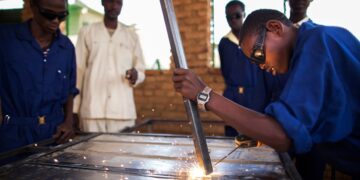
    Youth Empowerment Through Vocational Training in Rural Sub-Saharan Africa

    Youth Empowerment Through Vocational Training in Rural Sub-Saharan Africa

    Manufacturers in Ghana and Nigeria claim that although corruption damages businesses, digital technologies provide a chance to combat it

    Manufacturers in Ghana and Nigeria claim that although corruption damages businesses, digital technologies provide a chance to combat it

  • Infographics
  • Figures
    Eduardo Mondlane (1920-1969): Mozambican Revolutionary and Anthropologist

    Eduardo Mondlane (1920-1969): Mozambican Revolutionary and Anthropologist

    William Tubman (1895-1971): Liberian politician and longest-serving president in the country’s history

    William Tubman (1895-1971): Liberian politician and longest-serving president in the country’s history

    Abebe Bikila (1932-1973): Ethiopian marathoner and first black African to win an Olympic medal

    Abebe Bikila (1932-1973): Ethiopian marathoner and first black African to win an Olympic medal

    W. E. B. Du Bois (1868-1963): Sociologist, historian, and Pan-Africanist civil rights activist

    W. E. B. Du Bois (1868-1963): Sociologist, historian, and Pan-Africanist civil rights activist

    Frantz Fanon (1925-1961): Psychiatrist and political philosopher

    Frantz Fanon (1925-1961): Psychiatrist and political philosopher

    Percy Lavon Julian (1899-1975): African American researcher and chemist

    Percy Lavon Julian (1899-1975): African American researcher and chemist

    Harriet Tubman (Araminta Ross, 1822-1913): American abolitionist and social activist

    Harriet Tubman (Araminta Ross, 1822-1913): American abolitionist and social activist

    Dorothy Vaughan (1910-2008): African American mathematician and human computer

    Dorothy Vaughan (1910-2008): African American mathematician and human computer

    George Washington Carver (1864-1943): African American agricultural scientist and inventor

    George Washington Carver (1864-1943): African American agricultural scientist and inventor

  • History
    Laas Geel, Somalia

    Laas Geel, Somalia

    Lakes Of Ounianga, Chad

    Lakes Of Ounianga, Chad

    Nok Caves, Togo

    Nok Caves, Togo

    The Land of Punt (modern Somalia, Eritrea, Ethiopia, or eastern Sudan)

    The Land of Punt (modern Somalia, Eritrea, Ethiopia, or eastern Sudan)

    Avenue of the Baobabs, Madagascar

    Avenue of the Baobabs, Madagascar

    Lopé-Okanda (Gabon)

    Lopé-Okanda (Gabon)

    The Sudd wetland

    The Sudd wetland

    Khami Ruins (Zimbabwe), the capital of the Torwa state

    Khami Ruins (Zimbabwe), the capital of the Torwa state

    Royal Palace, Porto-Novo, Republic of Benin

    Royal Palace, Porto-Novo, Republic of Benin

  • Others
    • Culture / Literature
    • Interview
    • Opinion
  • Countries
    • Country profiles
    • Regions
      • Central Africa
      • East Africa
      • Southern Africa
      • West Africa
No Result
View All Result
  • News
    • All
    • Climate Change
    • Economy
    • Education
    • Energy
    • Health
    • Migration
    • Mining
    • Politics
    • Security
    • Society
    • Sport
    Ukraine says Niger’s move to cut relations is ‘regrettable’

    Gunfire erupts near airport in Niger’s capital

    China’s exports to Africa surge after US trade upheaval

    China’s African tariff removals, trade surge spur yuan adoption

    Namibia

    Namibia’s energy minister confirms removal of petroleum commissioner Shino

    UN assembly adopts resolution backing ongoing efforts to eliminate ‘blood diamonds’ trade

    Congo miners seek delay to 5% worker equity rule before July deadline, sources say

    Somaliland receiving Israeli military training but not in talks for base, minister says

    Somaliland receiving Israeli military training but not in talks for base, minister says

    Taiwan says its delegates have been barred from ocean conference in Kenya

    Taiwan says its delegates have been barred from ocean conference in Kenya

    Rwanda’s presidential election set for July 15, 2024

    Rwanda stepping up precautions against Ebola, health minister says

    Senegalese leader calls out UN Security Council’s “inertia” in face of destabilization of Sahel

    As IMF visits Senegal, more investors view default as inevitable

    South African labour unions urge workers to shun anti-migrant protests

    South African labour unions urge workers to shun anti-migrant protests

  • Analysis
    • All
    • Climate Change
    • Digital & Tech
    • Economy
    • Energy & Power
    • Health
    • Politics
    • Security
    • Society
    Detained Ugandan lawyer charged with complicity in treason

    Detained Ugandan lawyer charged with complicity in treason

    The promise and risks of Kenya’s ambitious new strategy to close refugee camps

    The promise and risks of Kenya’s ambitious new strategy to close refugee camps

    Al Qaeda-linked militants curb their brutality in seized Malian territory

    Al Qaeda-linked militants curb their brutality in seized Malian territory

    Five Years After the Coup in Mali: Are Stability and Growth Within Reach?

    The Political Economy of Insecurity in Mali: Armed Groups, Resources, and State Fragility

    Ghana to evacuate 300 citizens from South Africa after xenophobic attacks

    Xenophobic Violence and Human Security in South Africa: Causes and Consequences

    Inside an African lab that helped crack the hantavirus outbreak

    Inside an African lab that helped crack the hantavirus outbreak

    Nigeria’s Agricultural sector: Problems and challenges

    Agriculture in Africa: science and research cannot have an impact without investments and good policies

    Mali’s junta creates a new ministerial-level post to oversee the mining sector

    African Mineral Resources: The Controversial Link to US Health Deals

    Ghana curbs offshore investments to protect cedi, boost stability

    Ghana’s mining law attempts to eradicate speculation, but leaves communities in limbo: insights from a lithium case study

  • Studies
    Schooling is the most severely affected by conflict when children are the target – Study

    Schooling is the most severely affected by conflict when children are the target – Study

    Pensions for Botswana’s elderly are expanding, but care services are lacking—study follows 20 years

    Pensions for Botswana’s elderly are expanding, but care services are lacking—study follows 20 years

    60 new cosmic structures have been discovered by South Africa’s MeerKAT telescope, which is mapping previously unseen gaps between galaxies

    60 new cosmic structures have been discovered by South Africa’s MeerKAT telescope, which is mapping previously unseen gaps between galaxies

    Benin government says armed forces foil coup attempt

    Coup contagion? A rash of African power grabs suggests copycats are taking note of others’ success

    One in three South Africans have never heard of AI: what this means for policy

    One in three South Africans have never heard of AI: what this means for policy

    Social Media as a Catalyst for the Spread of Dangerous Wealth Ritual Myths

    Social Media as a Catalyst for the Spread of Dangerous Wealth Ritual Myths

    Overcoming Education Barriers for Young Mothers in Sub-Saharan Africa

    Overcoming Education Barriers for Young Mothers in Sub-Saharan Africa

    Youth Empowerment Through Vocational Training in Rural Sub-Saharan Africa

    Youth Empowerment Through Vocational Training in Rural Sub-Saharan Africa

    Manufacturers in Ghana and Nigeria claim that although corruption damages businesses, digital technologies provide a chance to combat it

    Manufacturers in Ghana and Nigeria claim that although corruption damages businesses, digital technologies provide a chance to combat it

  • Infographics
  • Figures
    Eduardo Mondlane (1920-1969): Mozambican Revolutionary and Anthropologist

    Eduardo Mondlane (1920-1969): Mozambican Revolutionary and Anthropologist

    William Tubman (1895-1971): Liberian politician and longest-serving president in the country’s history

    William Tubman (1895-1971): Liberian politician and longest-serving president in the country’s history

    Abebe Bikila (1932-1973): Ethiopian marathoner and first black African to win an Olympic medal

    Abebe Bikila (1932-1973): Ethiopian marathoner and first black African to win an Olympic medal

    W. E. B. Du Bois (1868-1963): Sociologist, historian, and Pan-Africanist civil rights activist

    W. E. B. Du Bois (1868-1963): Sociologist, historian, and Pan-Africanist civil rights activist

    Frantz Fanon (1925-1961): Psychiatrist and political philosopher

    Frantz Fanon (1925-1961): Psychiatrist and political philosopher

    Percy Lavon Julian (1899-1975): African American researcher and chemist

    Percy Lavon Julian (1899-1975): African American researcher and chemist

    Harriet Tubman (Araminta Ross, 1822-1913): American abolitionist and social activist

    Harriet Tubman (Araminta Ross, 1822-1913): American abolitionist and social activist

    Dorothy Vaughan (1910-2008): African American mathematician and human computer

    Dorothy Vaughan (1910-2008): African American mathematician and human computer

    George Washington Carver (1864-1943): African American agricultural scientist and inventor

    George Washington Carver (1864-1943): African American agricultural scientist and inventor

  • History
    Laas Geel, Somalia

    Laas Geel, Somalia

    Lakes Of Ounianga, Chad

    Lakes Of Ounianga, Chad

    Nok Caves, Togo

    Nok Caves, Togo

    The Land of Punt (modern Somalia, Eritrea, Ethiopia, or eastern Sudan)

    The Land of Punt (modern Somalia, Eritrea, Ethiopia, or eastern Sudan)

    Avenue of the Baobabs, Madagascar

    Avenue of the Baobabs, Madagascar

    Lopé-Okanda (Gabon)

    Lopé-Okanda (Gabon)

    The Sudd wetland

    The Sudd wetland

    Khami Ruins (Zimbabwe), the capital of the Torwa state

    Khami Ruins (Zimbabwe), the capital of the Torwa state

    Royal Palace, Porto-Novo, Republic of Benin

    Royal Palace, Porto-Novo, Republic of Benin

  • Others
    • Culture / Literature
    • Interview
    • Opinion
  • Countries
    • Country profiles
    • Regions
      • Central Africa
      • East Africa
      • Southern Africa
      • West Africa
No Result
View All Result
Qiraat Africa
عربي  |  Fr
No Result
View All Result
Home Analysis & Report Society

The NYSC SCHEME in Nigeria: Impacts, Challenges, and the Path Forward

Ahmadulbadawy AbdulRaheem by Ahmadulbadawy AbdulRaheem
June 19, 2025
The NYSC SCHEME in Nigeria: Impacts, Challenges, and the Path Forward
Share on FacebookShare on Twitter

The National Youth Service Corps (NYSC) is a compulsory one-year program for Nigerian graduates. The Scheme, which was established by the Federal Government of Nigeria, solely aims at promoting national unity and fostering development, through the integration of graduates into various locations across the country. The scheme is known to be a critical part of Nigeria’s national development, as it was designed to promote cultural understanding, overlook ethnic differences, and instill a spirit of patriotism among Nigerian youths.

The establishment of the scheme was conceived after the Nigerian Civil War (1967 – 1970), under the leadership of General Yakubu Gowon. Due to the woes, which the civil war brought upon the nation, there was a need for the Nigerian government to take a step towards healing the nation and preventing future conflicts by dismantling ethnic barriers, and promoting a sense of patriotism across the nation, thus, the NYSC scheme was introduced, as part of the Gowon’s administration “3Rs” strategy, which focuses on Reconstruction, Rehabilitation, and Reconciliation. Also, another reason behind the establishment of the scheme was the urgent need to address the country’s drastic underdevelopment challenges, which includes severe poverty, widespread illiteracy, shortage of skilled manpower, and inadequate socio-economic infrastructure. The scheme was then designed to serve as a strategic tool to solve these problems, through leveraging the nation’s youth for socio-economic development. The scheme became formally established on May 22, 1973, through the promulgation of Decree No. 24.

The primary aim of the scheme, as enshrined in the aforementioned decree, was to reconstruct, reconcile, and rebuild Nigeria after the civil war. However, the decree was replaced by Decree 51 of 1993, in which the key objectives of the scheme was outlined, as crucial approach towards nation-building. These Objectives includes fostering National Unity and Cultural Integration through the deployment of graduates to states different from their own; Inculcating discipline, patriotism, and self-reliance by encouraging skill development for self-employment; Contributing to National Economic Growth and Manpower Development by deploying corps members into areas of national need.

Read also

Gunfire erupts near airport in Niger’s capital

China’s African tariff removals, trade surge spur yuan adoption

As IMF visits Senegal, more investors view default as inevitable

Impacts of the NYSC Scheme

The NYSC scheme, over its five-decade history, has made significant impacts and positive contributions to Nigeria’s development. Among these impacts is the substantial contributions that the scheme makes toward fostering national unity. The scheme’s method of deploying corps members to states different from their own has achieved peaceful coexistence among individuals from diverse ethnic, religious, and linguistic backgrounds. This step has upheld mutual understanding, respect for one another’s beliefs, and cultural integration.

Another major impact that the scheme has made is the evident roles it plays in developing rural infrastructure in communities across the country. Corps members have actively initiated numerous developmental projects that are beneficial to rural communities, such as the construction of roads, market stalls, schools, health centers, public toilets, etc. All these are being carried out through the Community Development Service (CDS) activities, which corps members are mandated to indulge in.

The Skills Acquisition and Entrepreneurship Development (SAED) program, which was introduced in 2012, also signifies a major impact of the NYSC scheme. The program has been widely applauded as beneficial for youth empowerment and as a viable tool for eradicating unemployment among graduates. This is because the SAED program creates alternative entrepreneurial opportunities, offering a range of skills acquisition training and creating awareness of self-employment opportunities. Reports indicates that almost a million youths have been trained through the SAED program, with more than 7000 reported stories of successful beneficiaries’ post-NYSC.

Also, the NYSC scheme has been very impactful for the nation, as it extends support for the democratic process by deploying corps members to the Independent National Electoral Commission (INEC) to serve as ad hoc staffs during elections. This highlights the scheme’s capacity to contribute to the nation’s governance and electoral integrity.

Challenges of the NYSC Scheme

The NYSC’s core aims and objectives, embedded in promoting unity through the inter-regional deployment of corps members, have been undermined severely by numerous factors and circumstances, putting the scheme in the face of critical challenges. The most contributing factor is the escalating insecurity in Nigeria. This has raised security concerns for corps members, as they are frequently being targets of kidnapping, ethnic violence, murders, and fatal stabbings. In August 2024, eight corps members traveling from Uyo to Sokoto were abducted in Zamfara state. In the following month, a female corps member deployed to Osun State was kidnapped in Delta State, with her captors demanding a 5 million naira ransom. Another female corps member was brutally murdered in Kaduna in the following month. Road accidents have also accounted for a significant number of fatalities among corps members. For instance, four prospective corps members died in an accident in Ebonyi State in January 2025 while en route to orientation camp.

Another notable challenge that undermines the core value of the NYSC scheme is the financial constraints and poor welfare conditions. The FG has numerously struggled to adequately fund the scheme, resulting in delayed implementation of approved allowances for corps members. Though, there had been a recent increase in the monthly stipend known as “allawee” from 33,000 naira to 77,000 naira. Despite this, the amount is insufficient for survival, taking Nigeria’s high cost of living and its fluctuating inflation rate into consideration. Besides allowance, most corps members are subjected to poor welfare conditions, such as dilapidated or nonexistent accommodation at their places of primary assignments (PPAs), while some are even often exploited and poorly treated by their employers.

One of the crucial aims of the scheme, which has been severely undermined, is manpower development, an aim that demands the deployment of corps members into areas of national need. Unfortunately, the posting process has been manipulated by the presence of a career mismatch in the deployment process, such as posting corps members to PPAs unrelated to their qualifications and skills and non-functional or non-existent PPAs. Additionally, the increasing number of Nigerian graduates has led to a drastic surge in the scheme’s participants, resulting in a shift from a single-batch system to multiple batches and streams, thus making efficient management and oversight increasingly challenging.

Also, the scheme suffers from a plague of administrative and operational inefficiencies, totally undermining the scheme’s relevance. Poor infrastructure, inadequate camp facilities, wrong data submission, technical glitches of the official portal/website, and different forms of corruption have all stripped the scheme of its relevance. The phenomenon of “ghost corps members,” where individuals register for the scheme and collect stipends without actually rendering the needed service from them at their PPAs, is a recurring issue that reduces the program’s overall effectiveness. Also, some corps members often resort to payment of bribes to NYSC officials to get them posted to their preferred states or to secure desired places of primary assignments. Some other corps members even go to extra lengths to avoid the scheme entirely.

Path Forward – A Reformed NYSC Scheme for the Modern Nigeria

Different observers and analysts have criticized the NYSC scheme due to the number of challenges it faces, despite its applauded aims, objectives, and achievements. These criticisms have sparked a crucial debate on whether the scheme is still relevant to the country or not in the modern Nigerian era. Many analysts dispute its importance, arguing that the primary goals of the scheme, which include national unity and cultural integration, are far out of reach due to the increasing insecurity and tribal and ethnic violence in the country. This has led to the rise of some voices calling for the total abolition of the scheme, with claims that it endangers the lives of the Nigerian youths. Some others have argued that the scheme lacks the adaptation to democratic context, with claims that the “paramilitary” public perception of the scheme has enabled a military control of the scheme’s affairs and thus infringed the rights of corps members to exercise political activities, despite the scheme not being a paramilitary body legally.

However, the call for the total reform of the scheme seems to be the path forward, as the notable roles that the scheme plays in upholding the national unity of the country cannot be underrated. Analysts who abide by this opinion have consistently suggested solutions to the scheme’s crucial challenges, such as enhanced collaboration with security agencies, voluntary deployment to high-risk areas, and improved intelligence gathering in terms of security. Increased allowance, better accommodation infrastructure, better nutrition, and mandatory payment by employers to corps members have all been suggested as possible solutions to the scheme’s financial and welfare challenges. Also, improved posting algorithms, increased partnerships with private sectors for job placements and internships, restructuring and expanding the SAED programs are suggested measures to boost career development. To ensure administrative efficiency, robust anti-corruption measures have been raised, including the availability of online platforms for reporting concerns and a regular upgrade of technical facilities, while the re-evaluation of the scheme’s core objectives, aimed at making the scheme voluntary, has been suggested to cut back the rising numbers of participants.

Notably, the Federal Government of Nigeria seems to have showed concerns about the criticisms being levelled against the scheme, by taking a bold step towards the reformation, revitalization, and modernization of the scheme, through the inauguration of the NYSC Reform Committee in May 2025. This primary assignment of this committee is to assess the current operations of the scheme, identifying overdue policies, and also propose long-term reforms that will guarantee the scheme’s effectiveness as a tool for youth empowerment and nation building. Among the notable proposals that have been suggested so far by the committee is the creation of special service corps within the NYSC framework, such as the Teachers’ Corps, which will target the recruitment of NCE-certified graduates for an optional two-year period, and also the Medical Corps, which is set to focus on deploying healthcare practitioners to needed communities across the country. The committee is expected to submit a comprehensive report alongside its recommendations to the Ministry of Youth Development within an agreed timeframe.
Source: Qiraat Africa
Tags: National Youth Service Corps (NYSC)NYSC SCHEME
Ahmadulbadawy AbdulRaheem

Ahmadulbadawy AbdulRaheem

Nigerian graduate of the Islamic University in Niger (B.A. in Arabic Literature); researcher at Alafarika for Studies and Consultancy; and writer at Cultural.ng.

Related Posts

Nigeria arrests ex-power minister Mamman after 75-year graft sentence
Featured

Nigeria puts hundreds more people on trial in crackdown on militancy

June 16, 2026
The promise and risks of Kenya’s ambitious new strategy to close refugee camps
East Africa

The promise and risks of Kenya’s ambitious new strategy to close refugee camps

June 15, 2026
Schooling is the most severely affected by conflict when children are the target – Study
Central Africa

Schooling is the most severely affected by conflict when children are the target – Study

June 15, 2026
Senegal opposition leader, Ousmane Sonko hints at election disruption if he can’t run
Featured

Senegal’s Sonko softens tone on debt restructuring as IMF talks due

June 15, 2026
Al Qaeda-linked militants curb their brutality in seized Malian territory
Featured

Al Qaeda-linked militants curb their brutality in seized Malian territory

June 14, 2026
Niger inaugurates new power plant to ease electricity cuts
Energy

Niger inaugurates new power plant to ease electricity cuts

June 11, 2026

Search Qiraat Africa

No Result
View All Result

Follow on Twitter

Follow @africanqiraat

Trending

Africa’s I0 Most Socially Progressive Nations in 2026

Africa’s I0 Most Socially Progressive Nations in 2026

March 25, 2026
Kumbi Saleh, the capital of the ancient Ghana Empire

Kumbi Saleh, the capital of the ancient Ghana Empire

October 13, 2025
Infographic: Kidnapping in Nigeria – Facts and Figures

Infographic: Kidnapping in Nigeria – Facts and Figures

May 22, 2024
Mansa Musa of Mali Empire

Mansa Musa of Mali Empire

April 14, 2025
Abubakar Gumi (1924–1992): Nigerian Islamic scholar and Grand Khadi of the Northern Region of Nigeria

Abubakar Gumi (1924–1992): Nigerian Islamic scholar and Grand Khadi of the Northern Region of Nigeria

January 15, 2026
Eduardo Mondlane (1920-1969): Mozambican Revolutionary and Anthropologist

Eduardo Mondlane (1920-1969): Mozambican Revolutionary and Anthropologist

May 14, 2026

Facebook

Sections

  • About Us
  • Privacy Policy
  • Opinion
  • Infographics
  • News
  • Analysis
  • Figures
  • Culture & Literature
  • Follow Ups
  • Historical Readings
  • Interview
  • Studies


© Copyright Qiraat Africa. Developed by Bunnaj Media .

No Result
View All Result
  • News
  • Analysis & Report
  • Studies
  • Opinion
  • Interview
  • Culture & Literature
  • Figures
  • Historical Readings
  • Regions

© 2021 Copyright Qiraat Africa.