




Qiraat Africa
عربي  |  Fr
Advertisement
  • News
    • All
    • Climate Change
    • Economy
    • Education
    • Energy
    • Health
    • Migration
    • Mining
    • Politics
    • Security
    • Society
    • Sport
    Ghana, UK sign growth partnership deal to address education and job creation

    Ghana, UK sign growth partnership deal to address education and job creation

    WHO declares Ebola outbreak in Congo, Uganda an emergency of international concern

    WHO says suspected Ebola cases drop to 116 after hundreds ruled out

    Zimbabwe: Mnangagwa faces internal revolt over his legitimacy

    Zimbabwe presses ahead with bill that would extend president’s term to 2030

    Counting underway after Guinea votes in legislative and municipal elections

    Counting underway after Guinea votes in legislative and municipal elections

    Rwanda declares that Marburg virus outbreak is over

    WHO chief to meet Congo president, as group warns Ebola likely spread undetected for months

    Britain will not have to pay Rwanda millions over asylum deal, court rules

    Britain will not have to pay Rwanda millions over asylum deal, court rules

    Nigeria’s Obi to run for president again after opposition split

    Nigeria’s Obi to run for president again after opposition split

    Ethiopian election expected to give leader Abiy’s party a landslide win

    Ethiopian election expected to give leader Abiy’s party a landslide win

    Nigeria declares state of emergency in Rivers State over pipeline vandalism

    Nigeria’s Tinubu says reforms stabilising economy despite hardship

  • Analysis
    • All
    • Climate Change
    • Digital & Tech
    • Economy
    • Energy & Power
    • Health
    • Politics
    • Security
    • Society
    Five Years After the Coup in Mali: Are Stability and Growth Within Reach?

    The Political Economy of Insecurity in Mali: Armed Groups, Resources, and State Fragility

    Ghana to evacuate 300 citizens from South Africa after xenophobic attacks

    Xenophobic Violence and Human Security in South Africa: Causes and Consequences

    Inside an African lab that helped crack the hantavirus outbreak

    Inside an African lab that helped crack the hantavirus outbreak

    Nigeria’s Agricultural sector: Problems and challenges

    Agriculture in Africa: science and research cannot have an impact without investments and good policies

    Mali’s junta creates a new ministerial-level post to oversee the mining sector

    African Mineral Resources: The Controversial Link to US Health Deals

    Ghana curbs offshore investments to protect cedi, boost stability

    Ghana’s mining law attempts to eradicate speculation, but leaves communities in limbo: insights from a lithium case study

    East African Community’s expansion has triggered financial difficulties: why solutions come with risks

    East African Community’s expansion has triggered financial difficulties: why solutions come with risks

    Nigeria’s new election laws leaves gaps: Here are 5 reforms for free, fair, and credible elections

    Nigeria’s new election laws leaves gaps: Here are 5 reforms for free, fair, and credible elections

    Impact of Kenya’s long-overdue new infrastructure fund may be limited by design problems

    Impact of Kenya’s long-overdue new infrastructure fund may be limited by design problems

  • Studies
    Pensions for Botswana’s elderly are expanding, but care services are lacking—study follows 20 years

    Pensions for Botswana’s elderly are expanding, but care services are lacking—study follows 20 years

    60 new cosmic structures have been discovered by South Africa’s MeerKAT telescope, which is mapping previously unseen gaps between galaxies

    60 new cosmic structures have been discovered by South Africa’s MeerKAT telescope, which is mapping previously unseen gaps between galaxies

    Benin government says armed forces foil coup attempt

    Coup contagion? A rash of African power grabs suggests copycats are taking note of others’ success

    One in three South Africans have never heard of AI: what this means for policy

    One in three South Africans have never heard of AI: what this means for policy

    Social Media as a Catalyst for the Spread of Dangerous Wealth Ritual Myths

    Social Media as a Catalyst for the Spread of Dangerous Wealth Ritual Myths

    Overcoming Education Barriers for Young Mothers in Sub-Saharan Africa

    Overcoming Education Barriers for Young Mothers in Sub-Saharan Africa

    Youth Empowerment Through Vocational Training in Rural Sub-Saharan Africa

    Youth Empowerment Through Vocational Training in Rural Sub-Saharan Africa

    Manufacturers in Ghana and Nigeria claim that although corruption damages businesses, digital technologies provide a chance to combat it

    Manufacturers in Ghana and Nigeria claim that although corruption damages businesses, digital technologies provide a chance to combat it

    Environmental Threats and Conservation Efforts in Namibia

    Environmental Threats and Conservation Efforts in Namibia

  • Infographics
  • Figures
    Eduardo Mondlane (1920-1969): Mozambican Revolutionary and Anthropologist

    Eduardo Mondlane (1920-1969): Mozambican Revolutionary and Anthropologist

    William Tubman (1895-1971): Liberian politician and longest-serving president in the country’s history

    William Tubman (1895-1971): Liberian politician and longest-serving president in the country’s history

    Abebe Bikila (1932-1973): Ethiopian marathoner and first black African to win an Olympic medal

    Abebe Bikila (1932-1973): Ethiopian marathoner and first black African to win an Olympic medal

    W. E. B. Du Bois (1868-1963): Sociologist, historian, and Pan-Africanist civil rights activist

    W. E. B. Du Bois (1868-1963): Sociologist, historian, and Pan-Africanist civil rights activist

    Frantz Fanon (1925-1961): Psychiatrist and political philosopher

    Frantz Fanon (1925-1961): Psychiatrist and political philosopher

    Percy Lavon Julian (1899-1975): African American researcher and chemist

    Percy Lavon Julian (1899-1975): African American researcher and chemist

    Harriet Tubman (Araminta Ross, 1822-1913): American abolitionist and social activist

    Harriet Tubman (Araminta Ross, 1822-1913): American abolitionist and social activist

    Dorothy Vaughan (1910-2008): African American mathematician and human computer

    Dorothy Vaughan (1910-2008): African American mathematician and human computer

    George Washington Carver (1864-1943): African American agricultural scientist and inventor

    George Washington Carver (1864-1943): African American agricultural scientist and inventor

  • History
    Laas Geel, Somalia

    Laas Geel, Somalia

    Lakes Of Ounianga, Chad

    Lakes Of Ounianga, Chad

    Nok Caves, Togo

    Nok Caves, Togo

    The Land of Punt (modern Somalia, Eritrea, Ethiopia, or eastern Sudan)

    The Land of Punt (modern Somalia, Eritrea, Ethiopia, or eastern Sudan)

    Avenue of the Baobabs, Madagascar

    Avenue of the Baobabs, Madagascar

    Lopé-Okanda (Gabon)

    Lopé-Okanda (Gabon)

    The Sudd wetland

    The Sudd wetland

    Khami Ruins (Zimbabwe), the capital of the Torwa state

    Khami Ruins (Zimbabwe), the capital of the Torwa state

    Royal Palace, Porto-Novo, Republic of Benin

    Royal Palace, Porto-Novo, Republic of Benin

  • Others
    • Culture / Literature
    • Interview
    • Opinion
  • Countries
    • Country profiles
    • Regions
      • Central Africa
      • East Africa
      • Southern Africa
      • West Africa
No Result
View All Result
  • News
    • All
    • Climate Change
    • Economy
    • Education
    • Energy
    • Health
    • Migration
    • Mining
    • Politics
    • Security
    • Society
    • Sport
    Ghana, UK sign growth partnership deal to address education and job creation

    Ghana, UK sign growth partnership deal to address education and job creation

    WHO declares Ebola outbreak in Congo, Uganda an emergency of international concern

    WHO says suspected Ebola cases drop to 116 after hundreds ruled out

    Zimbabwe: Mnangagwa faces internal revolt over his legitimacy

    Zimbabwe presses ahead with bill that would extend president’s term to 2030

    Counting underway after Guinea votes in legislative and municipal elections

    Counting underway after Guinea votes in legislative and municipal elections

    Rwanda declares that Marburg virus outbreak is over

    WHO chief to meet Congo president, as group warns Ebola likely spread undetected for months

    Britain will not have to pay Rwanda millions over asylum deal, court rules

    Britain will not have to pay Rwanda millions over asylum deal, court rules

    Nigeria’s Obi to run for president again after opposition split

    Nigeria’s Obi to run for president again after opposition split

    Ethiopian election expected to give leader Abiy’s party a landslide win

    Ethiopian election expected to give leader Abiy’s party a landslide win

    Nigeria declares state of emergency in Rivers State over pipeline vandalism

    Nigeria’s Tinubu says reforms stabilising economy despite hardship

  • Analysis
    • All
    • Climate Change
    • Digital & Tech
    • Economy
    • Energy & Power
    • Health
    • Politics
    • Security
    • Society
    Five Years After the Coup in Mali: Are Stability and Growth Within Reach?

    The Political Economy of Insecurity in Mali: Armed Groups, Resources, and State Fragility

    Ghana to evacuate 300 citizens from South Africa after xenophobic attacks

    Xenophobic Violence and Human Security in South Africa: Causes and Consequences

    Inside an African lab that helped crack the hantavirus outbreak

    Inside an African lab that helped crack the hantavirus outbreak

    Nigeria’s Agricultural sector: Problems and challenges

    Agriculture in Africa: science and research cannot have an impact without investments and good policies

    Mali’s junta creates a new ministerial-level post to oversee the mining sector

    African Mineral Resources: The Controversial Link to US Health Deals

    Ghana curbs offshore investments to protect cedi, boost stability

    Ghana’s mining law attempts to eradicate speculation, but leaves communities in limbo: insights from a lithium case study

    East African Community’s expansion has triggered financial difficulties: why solutions come with risks

    East African Community’s expansion has triggered financial difficulties: why solutions come with risks

    Nigeria’s new election laws leaves gaps: Here are 5 reforms for free, fair, and credible elections

    Nigeria’s new election laws leaves gaps: Here are 5 reforms for free, fair, and credible elections

    Impact of Kenya’s long-overdue new infrastructure fund may be limited by design problems

    Impact of Kenya’s long-overdue new infrastructure fund may be limited by design problems

  • Studies
    Pensions for Botswana’s elderly are expanding, but care services are lacking—study follows 20 years

    Pensions for Botswana’s elderly are expanding, but care services are lacking—study follows 20 years

    60 new cosmic structures have been discovered by South Africa’s MeerKAT telescope, which is mapping previously unseen gaps between galaxies

    60 new cosmic structures have been discovered by South Africa’s MeerKAT telescope, which is mapping previously unseen gaps between galaxies

    Benin government says armed forces foil coup attempt

    Coup contagion? A rash of African power grabs suggests copycats are taking note of others’ success

    One in three South Africans have never heard of AI: what this means for policy

    One in three South Africans have never heard of AI: what this means for policy

    Social Media as a Catalyst for the Spread of Dangerous Wealth Ritual Myths

    Social Media as a Catalyst for the Spread of Dangerous Wealth Ritual Myths

    Overcoming Education Barriers for Young Mothers in Sub-Saharan Africa

    Overcoming Education Barriers for Young Mothers in Sub-Saharan Africa

    Youth Empowerment Through Vocational Training in Rural Sub-Saharan Africa

    Youth Empowerment Through Vocational Training in Rural Sub-Saharan Africa

    Manufacturers in Ghana and Nigeria claim that although corruption damages businesses, digital technologies provide a chance to combat it

    Manufacturers in Ghana and Nigeria claim that although corruption damages businesses, digital technologies provide a chance to combat it

    Environmental Threats and Conservation Efforts in Namibia

    Environmental Threats and Conservation Efforts in Namibia

  • Infographics
  • Figures
    Eduardo Mondlane (1920-1969): Mozambican Revolutionary and Anthropologist

    Eduardo Mondlane (1920-1969): Mozambican Revolutionary and Anthropologist

    William Tubman (1895-1971): Liberian politician and longest-serving president in the country’s history

    William Tubman (1895-1971): Liberian politician and longest-serving president in the country’s history

    Abebe Bikila (1932-1973): Ethiopian marathoner and first black African to win an Olympic medal

    Abebe Bikila (1932-1973): Ethiopian marathoner and first black African to win an Olympic medal

    W. E. B. Du Bois (1868-1963): Sociologist, historian, and Pan-Africanist civil rights activist

    W. E. B. Du Bois (1868-1963): Sociologist, historian, and Pan-Africanist civil rights activist

    Frantz Fanon (1925-1961): Psychiatrist and political philosopher

    Frantz Fanon (1925-1961): Psychiatrist and political philosopher

    Percy Lavon Julian (1899-1975): African American researcher and chemist

    Percy Lavon Julian (1899-1975): African American researcher and chemist

    Harriet Tubman (Araminta Ross, 1822-1913): American abolitionist and social activist

    Harriet Tubman (Araminta Ross, 1822-1913): American abolitionist and social activist

    Dorothy Vaughan (1910-2008): African American mathematician and human computer

    Dorothy Vaughan (1910-2008): African American mathematician and human computer

    George Washington Carver (1864-1943): African American agricultural scientist and inventor

    George Washington Carver (1864-1943): African American agricultural scientist and inventor

  • History
    Laas Geel, Somalia

    Laas Geel, Somalia

    Lakes Of Ounianga, Chad

    Lakes Of Ounianga, Chad

    Nok Caves, Togo

    Nok Caves, Togo

    The Land of Punt (modern Somalia, Eritrea, Ethiopia, or eastern Sudan)

    The Land of Punt (modern Somalia, Eritrea, Ethiopia, or eastern Sudan)

    Avenue of the Baobabs, Madagascar

    Avenue of the Baobabs, Madagascar

    Lopé-Okanda (Gabon)

    Lopé-Okanda (Gabon)

    The Sudd wetland

    The Sudd wetland

    Khami Ruins (Zimbabwe), the capital of the Torwa state

    Khami Ruins (Zimbabwe), the capital of the Torwa state

    Royal Palace, Porto-Novo, Republic of Benin

    Royal Palace, Porto-Novo, Republic of Benin

  • Others
    • Culture / Literature
    • Interview
    • Opinion
  • Countries
    • Country profiles
    • Regions
      • Central Africa
      • East Africa
      • Southern Africa
      • West Africa
No Result
View All Result
Qiraat Africa
عربي  |  Fr
No Result
View All Result
Home Regions East Africa

Impact of Kenya’s long-overdue new infrastructure fund may be limited by design problems

April 1, 2026
Impact of Kenya’s long-overdue new infrastructure fund may be limited by design problems
Share on FacebookShare on Twitter

By Odongo Kodongo*

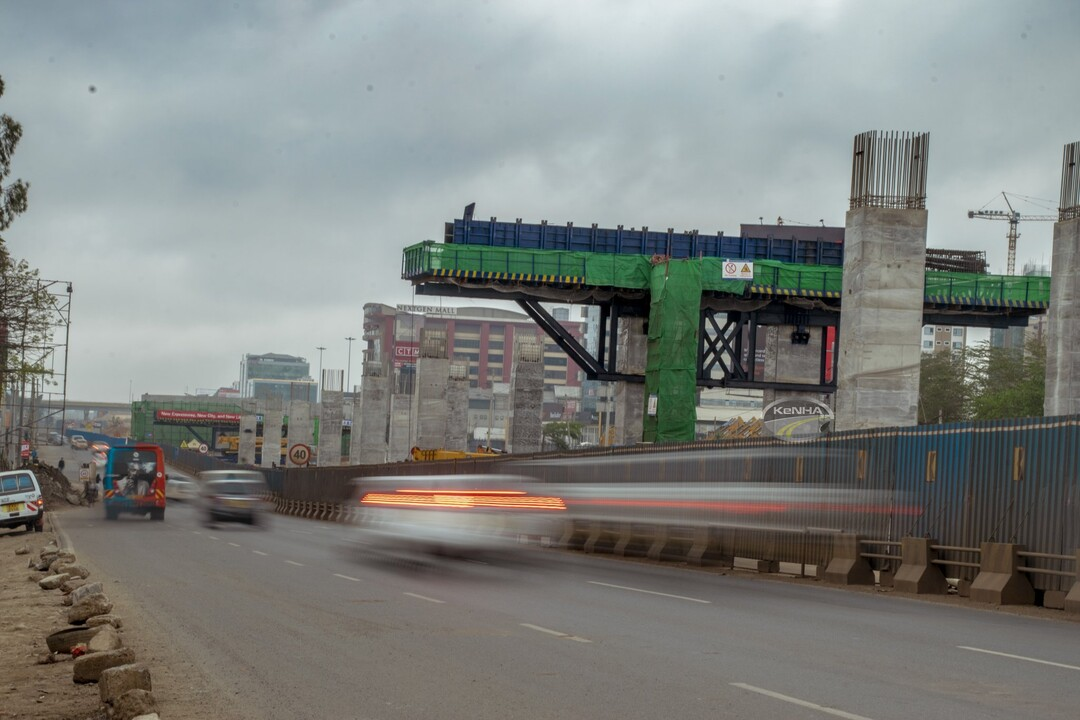
Kenya is laying the ground for an infrastructure fund which will raise money for new projects – such as roads, energy and ports – through public-private partnerships, privatisation proceeds, and institutional capital. We asked Odongo Kodongo, a project finance expert, to unpack the potential risks and rewards of this strategy – and where it falls short.

Why now?

Kenya is weighed down by public debt that has built up rapidly over the last few years. The country’s public debt stood at about 12.30 trillion Kenya shillings (US$94.6 billion) as of December 2025, having risen from about 9.15 trillion shillings (US$70.3 billion) in December 2022. That is, public debt grew by over 34% in only three years.

Public debt as a percentage of GDP in 2022 was 67.9%. Thanks to an appreciating local currency, the debt to GDP ratio remained almost unchanged at 67.5% in 2025. For emerging and developing economies, a debt limit of no more than 64% of the country’s production (gross domestic product or GDP) is recommended.

In the financial year 2024/25, 71.2% of all government revenue went towards the servicing of debt. This left very little resources for other government activities including social programmes and capital projects such as infrastructure investments.

Kenya faces a massive infrastructure gap. Estimates show that the country needs to invest over US$12 billion annually in infrastructure until 2040 to meet its development goals. It doesn’t have this, resulting in an infrastructure financing gap of roughly US$2.1 billion annually.

However, due to the country’s excessive public debt, Kenyans must consider avenues other than tax revenues and public debt to pay for infrastructure. In this regard, the new fund is long overdue.

How will the fund work?

The National Infrastructure Fund Act establishes the fund as a corporate entity run by a board of directors. The board includes state officers and independent directors, recruited in accordance with the legislation governing state owned enterprises.

The treasury secretary is expected to formulate the act’s supporting regulations and guidelines. These include the fund’s investment policy, government support mechanisms, and standards and procedures.

However, the fund’s proposed legislation appears to indicate that its major responsibilities will include:

  • identifying and setting priorities for public infrastructure investments
  • conducting feasibility studies and developing bankable proposals
  • identifying an optimal mix of financing options for infrastructure projects
  • negotiating and closing financing deals with infrastructure financiers
  • overseeing implemented projects to manage risks and minimise time and cost overruns
  • audit to ensure past experiences inform project planning.

What are the potential risks and rewards?

The potential benefits of an infrastructure fund include greater infrastructure endowment, its potential cascading effects on development, and reduced reliance on the public purse.

But the success of such a fund hinges on many things. First, the fund’s design as a state owned enterprise creates the expectation that it will have autonomy to make its decisions without political interference and executive meddling.

However, some provisions of the act cast doubt that this will be possible. For example, the power to appoint independent directors is vested in the treasury cabinet secretary. This is a red flag. Given that the same cabinet secretary is a member of that board, independent board members may feel under pressure to agree with their appointing authority, making them effectively nonindependent.

Second, the fund must incentivise superior performance. Part III of the act recognises this need. The treasury cabinet secretary can set the board’s performance targets and evaluate its performance. But the cabinet secretary is a member of the same board and cannot be a fair referee.

Third, the act identifies the fund’s audited financial statements as a basis for performance evaluation. While this conventional approach appears sound, the structure of a more appropriate incentive system should focus on the objectives for which the fund is being set up. That is, performance should be based on:

  • the quantity of financial resources mobilised, especially from private sources
  • the amount of mobilised resources actually invested in infrastructure projects
  • efficiency in the management of projects
  • existence of feedback loops at various points between project origination and termination to support monitoring and corrective actions when necessary
  • capacity development and skills transfer.

The last point is important, given that human capital constraints have limited the region’s capacity to generate a pipeline of bankable projects, rendering its infrastructure sectors unattractive to private sector capital.

The fourth major weakness is the significance attached to financing derived from the disposal of government assets. Given that these assets are in short supply, monies from such sales must not be regarded as a primary source of financing.

Indeed, while the motivation for setting up the fund is to diversify funding sources and increase fiscal headroom, the act does not say much about private sector involvement.

In contrast, a similar fund created in South Africa in 2020 is specifically mandated to employ blended finance instruments. This involves using concessional finance (such as borrowing from development banks) to make an investment less risky to encourage private sector participation.

Finally, there is an ominous clause in the act that empowers the treasury secretary to issue government support in the form of letters of credit, guarantees and firm commitments to support projects. Because some of these mechanisms constitute public debt, this clause contradicts another clause that motivates the fund’s establishment on the grounds of “reduction in the reliance on public debt”.

What’s missing from the strategy, what needs fixing?

First, the implementation guidelines to be developed by the cabinet secretary should clearly spell out the fund’s goals. These include:

  • specific capital mobilisation targets: what is the volume of financial resources expected to be mobilised?
  • infrastructure investment targets: what are the immediate, medium and longer term infrastructure investment goals? These would be consistent with the country’s development plans, which often have specific timelines, such as year 2030.

Second, the underpinning law links performance measurement to the fund’s ability to “make a return commensurate with its level of investment”. This “economic/financial” view of performance ignores the social return potential of infrastructure investments.

For example, investing in hospitals and schools creates a healthier and higher quality manpower with greater longevity (social returns) and receptiveness to new knowledge. This increases labour productivity (economic returns).

Third, one of the more important beneficial spillovers of the fund’s operations is likely to be the development of the country’s capital markets. The fund could access capital from financial institutions such as pension and wealth funds, and diaspora resources, through innovative design of financial instruments.

The increased diversity of financial instruments and larger pool of capital could deepen the country’s capital markets. Thus, the act ought to have included capital markets development as one of the fund’s objectives.

At the operational level, several things need fixing. For example, the government must provide “seed” capital to support the fund’s initial activities. The amount of the seed capital, the justification for it, and its source(s) must be anchored in law.

Further, given the highlighted flaws of the cabinet secretary’s dual roles as a member of the board and its oversight agent, the cabinet secretary should be made an ex-officio member by law.

Read also

WHO says suspected Ebola cases drop to 116 after hundreds ruled out

Britain will not have to pay Rwanda millions over asylum deal, court rules

Ethiopian election expected to give leader Abiy’s party a landslide win

Finally, all proceeds, if any, from the sale of public assets in future should be ring-fenced to the fund. This, too, should be anchored in law.

____________________

* Associate professor, Finance, University of the Witwatersrand
Source: The Conversation Africa
Tags: Design problemsKenyaNew infrastructure fund

Related Posts

Ethiopian prime minister’s hometown shows strong support ahead of polls
East Africa

Ethiopian prime minister’s hometown shows strong support ahead of polls

May 31, 2026
DR Congo and Uganda report 263 confirmed Ebola cases with 43 deaths, Africa CDC says
East Africa

DR Congo and Uganda report 263 confirmed Ebola cases with 43 deaths, Africa CDC says

May 31, 2026
Five Years After the Coup in Mali: Are Stability and Growth Within Reach?
Economy

The Political Economy of Insecurity in Mali: Armed Groups, Resources, and State Fragility

May 25, 2026
Ghana to evacuate 300 citizens from South Africa after xenophobic attacks
Economy

Xenophobic Violence and Human Security in South Africa: Causes and Consequences

May 25, 2026
Infographic: Top 10 African Nations With The Lowest Diesel Prices In March 2026
Central Africa

Infographic: Top 10 African Nations With The Lowest Diesel Prices In March 2026

May 23, 2026
Rwanda says DR Congo shelling injured its citizens
East Africa

Rwanda tightens border controls over deadly Ebola outbreak in DR Congo

May 20, 2026

Search Qiraat Africa

No Result
View All Result

Follow on Twitter

Follow @africanqiraat

Trending

Mariama Bâ (1929-1981): Senegalese author and women’s rights activist

Mariama Bâ (1929-1981): Senegalese author and women’s rights activist

August 3, 2025
Samori Touré (1830-1900): Military leader and founder of Wassoulou Empire

Samori Touré (1830-1900): Military leader and founder of Wassoulou Empire

January 11, 2026
Kumbi Saleh, the capital of the ancient Ghana Empire

Kumbi Saleh, the capital of the ancient Ghana Empire

October 13, 2025
Mali, a historical empire in Africa

Mali, a historical empire in Africa

September 17, 2024
The Great Mosque of Djenne, Mali

The Great Mosque of Djenne, Mali

March 25, 2025
Brief History and Culture of the City of Lagos, Nigeria

Brief History and Culture of the City of Lagos, Nigeria

July 24, 2024

Facebook

Sections

  • About Us
  • Privacy Policy
  • Opinion
  • Infographics
  • News
  • Analysis
  • Figures
  • Culture & Literature
  • Follow Ups
  • Historical Readings
  • Interview
  • Studies


© Copyright Qiraat Africa. Developed by Bunnaj Media .

No Result
View All Result
  • News
  • Analysis & Report
  • Studies
  • Opinion
  • Interview
  • Culture & Literature
  • Figures
  • Historical Readings
  • Regions

© 2021 Copyright Qiraat Africa.