































East Africa, a region that has been working to deepen economic integration for more than 25 years, has a history of disagreements about the location of energy infrastructure. Uganda discovered oil in 2006 with the potential to pump an estimated 210,000 to 230,000 barrels of oil per day at peak production. Back in 2014, Kenya and Uganda agreed on a joint crude oil pipeline from Uganda’s oil fields at Lake Albert to the Indian Ocean. But the plan was shelved in 2016. Eventually, Uganda chose a southern route through Tanzania, forcing Kenya back to the drawing board.
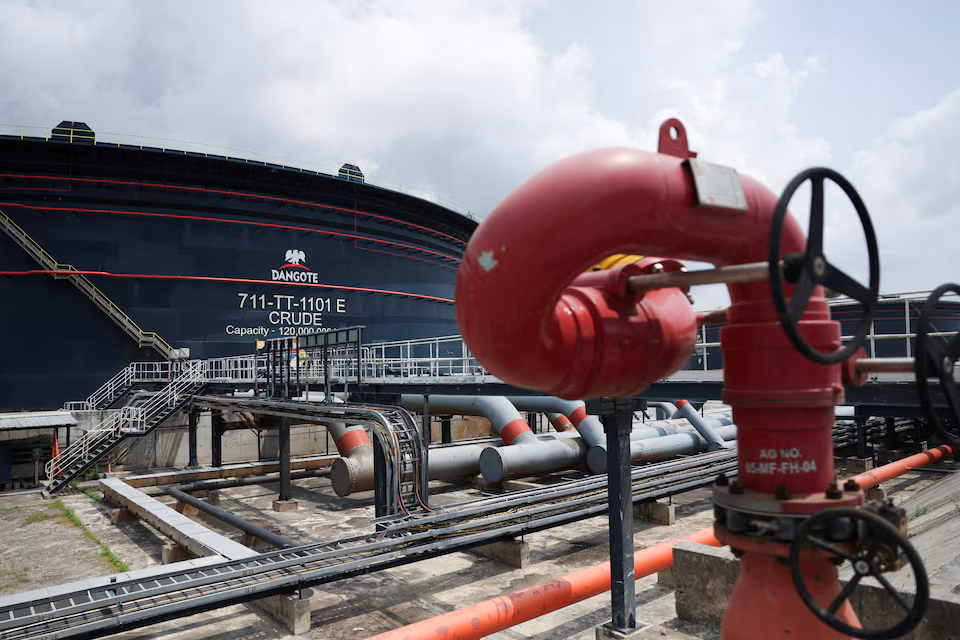
This year, Kenya’s president William Ruto and Uganda’s Yoweri Museveni announced plans for a new east African oil refinery, reportedly in Tanzania by Nigeria’s Aliko Dangote, Africa’s richest person and the founder, president and chief executive of the Dangote Group. The refinery plans looked like a win for east African solidarity and sovereignty. However, days later, President Samia Hassan said she hadn’t been consulted on the plans to build it in Tanzania.
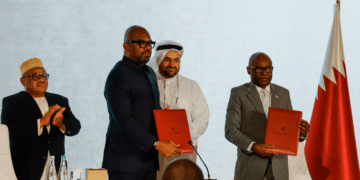
The Dangote refinery has now been slated for Lamu, Kenya’s new port north of Mombasa. That should have closed the matter but it did not. Uganda and Tanzania have since signed a memorandum of understanding with commodity trader Vitol Bahrain to build a US$20 billion regional energy hub in Tanga, Tanzania complete with petroleum storage, refining, logistics, trading and distribution facilities.
Brendon J. Cannon and Stephen Mogaka have written about east African politics, pipelines and security for over a decade. They shed light on these latest developments.
You studied the regional energy rivalry in east Africa over a crude oil pipeline. How did it play out?
Uganda and Kenya agreed in 2014 to jointly build a pipeline from Uganda’s oilfields to Kenya’s planned port at Lamu.
The deal collapsed within two years. Kenya’s push for its northern route, inflated security concerns and land compensation issues all played a part.
But the decisive factor was Total, the French oil major developing Uganda’s fields. It lobbied for and helped finance an alternative pipeline bypassing Kenya entirely to Tanzania’s port of Tanga. Landlocked Uganda’s chronic unease about depending on Kenya did the rest.
By 2016, the pipeline deal was dead. The Uganda-Tanzania route, known as the East African Crude Oil Pipeline, is becoming a reality, at reportedly 90% complete as of August 2026. The first oil is expected in early 2027.
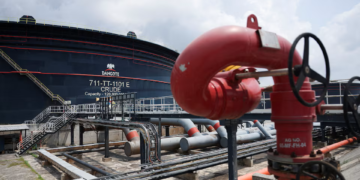
The heated pipeline will carry Uganda’s waxy crude oil from its Lake Albert oilfields to Tanga in Tanzania for export.
What drives mistrust and competitive statecraft in the east African region?
Competitive statecraft in east Africa, particularly between Kenya and Tanzania, is old and deep. It is rooted in divergent post-independence ideologies, and in recent decades by rival ambitions to be the region’s main commercial gateway to international markets.
Kenya’s post-independence leaders were once dismissed by Tanzanian president Julius Nyerere as running a “man-eat-man” society on account of Nairobi’s capitalism. Kenyan attorney-general Charles Njonjo shot back, calling socialist Tanzania a “man-eat-nothing” society.
The legacy of mutual suspicion continues to cast a shadow despite some improvements in bilateral relations between Kenya and Tanzania.
Kenya has pushed for decades to fully develop its northern transport corridor. Tanzania has attempted to do the same for its central and southern routes. As early as 2016, journalists were already describing Kenya’s planned port at Lamu and Tanzania’s answer at Bagamoyo as rivals in the race to become east Africa’s most important port.
Kenyan transport officials are still weighing upgrades to the northern corridor to fend off Tanzania’s expanding central corridor and its new electric railway.
Each has courted landlocked Uganda and Rwanda, and more recently Uganda’s oil, as the prize that determines which corridor prevails. But the biggest prize of all would be a pipeline corridor to South Sudan and its oil, with proven reserves of of 3.5 billion barrels, making it the third-largest holder of oil reserves in sub-Saharan Africa and the primary major oil producer in east Africa.
Kenya, Uganda and Tanzania have been consulted on the Dangote-financed refinery. Does the Lamu decision mark a break from past rivalries?
The decision to build what is billed as east Africa’s only refinery in Lamu seems, at first, to be more of the same politics of intrigue.
But it’s worth pointing out that the Tanga idea began as a joint regional concept: Kenya, Uganda, Tanzania and others floated a Dangote-style refinery in early 2026.
And Dangote offered to lead its construction if governments agreed on a site.
Ruto’s early embrace of Tanga was itself widely misread in Kenya as him favouring Tanzania over his own country. It prompted uncomfortable questions about his motives before Dangote’s own commercial preference for the Kenyan coast settled the matter. His public rebuke by Tanzania’s president only added to the ill will.
Reports on the deliberations indicate Dangote’s team weighed Uganda’s oilfields near Hoima, Mombasa and Tanga before settling on Lamu. This was on the strength of ample land suitable for large-scale industrial development and a functioning deep-water port. Kenya’s more liquid banking sector was also capable of helping underwrite the US$16-US$17 billion project.
As with the east African pipeline saga in 2014, an external investor’s commercial calculus, not regional consensus, decided the outcome.
Dangote does not need east African solidarity. If one government proves difficult, he can build elsewhere, exactly as Total once did.
Kenya, chastened by its clumsy pipeline diplomacy circa 2014, appears to have lobbied more skilfully this time. It has reportedly pledged seed capital totalling KSH 21.5 billion (approximately US$166 million) and invited its neighbours to take stakes.
Yet within weeks, Uganda and Tanzania answered with their own Tanga hub, framed around retaining more value from regional oil rather than exporting crude and importing refined fuel.
Uganda, notably, keeps hedging: attempting to finance its own Hoima refinery while backing both Lamu and Tanga.
Rivalry has not disappeared from east Africa. It has simply been repackaged as parallel, competing “regional” projects.
How strong is the case for a regional refinery?
The underlying economic logic for a refinery is strong.
East Africa refines almost none of its own fuel despite an estimated 4.7 billion barrels of reserves across Uganda, Kenya, South Sudan and the Democratic Republic of Congo. Iran’s threats and attacks against shipping in the Gulf this year underscored how vulnerable the region is to Middle Eastern supply shocks.
A Lamu refinery sits at the terminus of a multi-country corridor: the Lamu Port-South Sudan-Ethiopia Transport project. This is a multi-decade, multi-billion-dollar plan to link the deep-water port at Lamu with road, rail, pipeline and airport infrastructure reaching South Sudan and Ethiopia.
It will also potentially carry South Sudan’s abundant, higher-quality crude (still shipped mostly through Sudan), plus Kenya’s own onshore reserves in Turkana and prospective offshore fields.
Linking this to a refinery, rather than only a crude export pipeline, would give Lamu a far more durable rationale than the aborted Uganda-Kenya pipeline ever had. Whether this happens depends less on engineering than on east Africa’s politics and financing.
ــــــــــــــــــــــــــــــ
* Associate Professor, Khalifa University