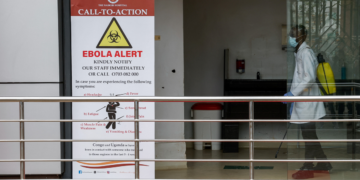



































The latest Ebola outbreak in the eastern Democratic Republic of the Congo (DRC), which is triggered by the Bundibugyo strain, has once again uncovered the brittle connection between public health and economic stability in East and Central Africa. The unprecedented rate at which cases are increasing and deaths are mounting has made the DRC epidemic the fastest-spreading Ebola outbreak ever documented. Compounding the danger, the virus spreading in the DRC is Bundibugyo virus (Orthoebolavirus bundibugyoense), which is the rarest of the four variants of Ebola known to affect humans and currently has no approved vaccines or treatments.
With over 1,300 confirmed infections and more than 300 deaths reported since May 15 and fears that the virus may spread into additional provinces and neighbouring countries, policymakers are confronting not only a humanitarian emergency but also the outlook of a substantial economic decline.
The DRC-Uganda outbreak poses a public health risk to neighbouring countries, the United Nations health agency said, advising countries to activate their national disaster and emergency management mechanisms and undertake cross-border screening and screening at main internal roads. Before now, the WHO advised immediate isolation of confirmed cases, allowing only restricted national travel and no international travel until 21 days after exposure. It urged countries not to close their borders or restrict travel and trade, as this could lead to people and goods making unmonitored border crossings.
The United Nations warned that a worst-case scenario where the disease spreads to other countries, including Rwanda and Angola, and coincides with higher fuel costs linked to the Iran crisis could cost Africa about US$3.6 billion and eliminate hundreds of thousands of jobs. Such predictions show how localised disease outbreaks can quickly advance into regional economic disasters.
This article studies how Ebola has transformed the economies of East and Central Africa and recommends policy actions to strengthen regional resilience against future health crises.
Understanding the Current Outbreak
The ongoing Bundibugyo Virus Disease (BVD) outbreak, according to the Africa Centres for Disease Control and Prevention (Africa CDC), is affecting the Democratic Republic of the Congo and Uganda.
Bundibugyo virus disease is a severe and often fatal form of Ebola caused by the Bundibugyo strain, one of the six known Ebola virus species. The disease poses a serious threat to public health, regional stability, cross-border movement, and vulnerable communities, particularly in areas with active population mobility and limited health resources. The virus spreads through direct contact with infected animals, bodily fluids from infected individuals, contaminated surfaces, and unsafe burial practices. Early symptoms include fever, severe headache, weakness, vomiting, diarrhoea, muscle pain, and, in some cases, unexplained bleeding or bruising (Africa CDC, 2026).
Transmission has been ongoing for weeks, with confirmed cases in urban centres such as Kampala, Uganda, and Goma, DR Congo, and likely many undetected transmission chains. Ebola virus disease initially presents with fever and other non-specific symptoms that are indistinguishable from malaria and other common infections, so any person showing these symptoms from an area with potentially unknown transmission chains could be infected.
The practical challenge is to screen the large numbers of people with these symptoms quickly enough to prevent further spread. PCR remains essential for confirmation, but even automated PCR is unlikely to have the throughput needed for this scale of screening. Rapid antigen tests could help fill this need and enable more people to be screened and isolated quickly. If deployed widely, rapid tests, even if less sensitive, could potentially achieve transmission control more quickly than more accurate but slower and less scalable conventional testing.
Unlike previous Ebola outbreaks largely dominated by the Zaire strain, the current outbreak involves Bundibugyo ebolavirus, a rare species for which validated vaccines, therapeutics and diagnostics remain extremely limited. Beyond its epidemiological significance, however, this outbreak is emerging as a defining opportunity to accelerate the operationalisation of Africa’s Health Security and Sovereignty (AHSS) agenda. Nevertheless, the economic consequences are equally serious because outbreaks taking place in conflict zones are generally pricier to control and produce longer-lasting economic disruptions.
The Economics of Ebola Epidemics in Africa
Previous studies have shown that the impacts on affected countries are severe. Most are driven by aversion behaviour, including increased labour absenteeism and reduced economic interaction owing to a fear of contracting the disease. A slowdown in regular consumption forces companies to cut working hours and layoff staff to maintain operations. In turn, livelihoods are affected, informality becomes the norm rather than the exception, and the market responds with rising prices, fuelled by speculation, lack of supply of goods and currency fluctuations, affecting regular domestic production patterns.
The aggregate effect of the changes in consumption patterns can also have an impact on international consumption patterns. Regular trade partners may be diverted from dealing with Ebola-affected countries in the immediate, perhaps because of new preventive regulations and changes in logistical services. Some countries have already announced possible visa restrictions for visitors from affected regions. Planes, trains and trucks, carrying cargo or people, may see their activities reduced or suspended altogether.
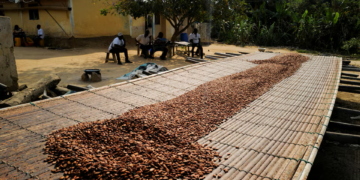
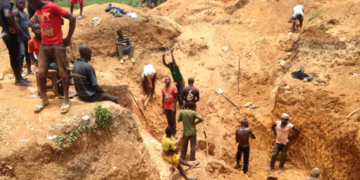
The altered business environment is not limited to any particular sector, though it affects some more than others, varying by country and reflecting the economic structure. Effects are emerging in the primary sector, such as agriculture, mining and forestry; in the secondary sector in manufacturing and construction; and in the tertiary sector, usually tourism, financial services and trade. The ripples of economic downturn are likely to cross-cut a range of sectors. The crisis and economic downturn are influencing investment and capital flows. In the public sector, implementation of large-scale projects has been affected, both from a labour perspective and from financial incapacity to meet costs owing to curtailed public revenue.
In turn, this is cooling the economy and feeding back into the downturn, possibly deterring foreign investment, reducing the country’s stock of financial capital, increasing risk ratings and affecting monetary and fiscal stability. From a continental perspective, Ebola can also affect regional integration: suspension of trade in goods and services can force traditional partners to look for alternative sources to maintain supply – undermining moves towards transformation and greater productivity.
A Case of Two Regions
Epidemics distress economies via numerous interconnected channels. Meanwhile, the United Nations has warned that the ongoing Ebola outbreak in Central and East Africa could cost the continent as much as $3.6 billion in economic output and wipe out more than 328,000 jobs if the virus spreads beyond its current hotspots. Authorities have said they are playing catch-up with the virus. Dwindling medical supplies and widespread scepticism about the disease have made health workers’ jobs more challenging, and a vaccine is likely weeks away.
In July, protesting Ebola health workers in the DR Congo alleged that they hadn’t been paid for their work, putting efforts to contain the virus spread further at risk. The striking staff includes epidemiologists, case investigators, drivers and gravediggers. “We are burying people who have been in their homes for four days, and you can clearly see they died from Ebola. We are burying people in plastic bags to protect ourselves,” said John Bahati Nguna of the burial team. “Now they are coming from Kinshasa, claiming to be the bosses, and staying in hotels. They eat well, they sleep well and don’t even know what’s happening on the ground,” he added. “We haven’t been paid. It’s been 45 days. As they said, with great bitterness, we haven’t been paid,” said Olivier Duciel, who works on a team raising awareness about Ebola in the community.
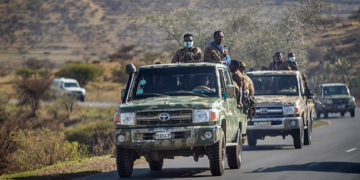
African health authorities have warned that the latest outbreak is the “fastest-growing” ever; medics in DR Congo were already facing almost impossible working conditions given the lack of medical supplies — a shortfall caused in part by sudden Western aid cuts — as well as the spread of misinformation. Reported cases in areas controlled by armed militias have raised fears that the disease could expand beyond authorities’ reach. “We have to plan actively around an explosion of cases,” a health expert working in militia-held territory told The New York Times.
Health authorities continue to race against time to contain the outbreak despite funding shortages, operational constraints and the absence of an approved vaccine for the Bundibugyo strain currently driving infections. To reduce the risk of wider transmission, the Congolese government has introduced travel restrictions requiring passengers flying from Ituri to Kinshasa to refrain from onwards travel for 21 days. According to Africa CDC Director-General Dr Jean Kaseya, the approved Ebola response plan initially required $518 million. Although international donors have pledged about $910 million, only 13% of those commitments have so far been released.
Gustave Bolingo, an economic analyst based in Goma, says the restrictions have dealt a heavy blow to communities that were already struggling. “The epidemic struck without warning. Unfortunately, its arrival is undermining the livelihoods of many families who trade between our respective towns. In the town of Goma, which is already economically vulnerable without a bank or an airport, closing the borders has serious consequences.” Associations representing small traders say they are continuing talks with both the Rwandan authorities and the AFC-M23 authorities in Goma in the hope of easing restrictions.
The UNDP outlined three scenarios for the outbreak. In the best scenario, where the epidemic remains contained in the two countries, the cost is $1bn for the DRC’s gross domestic product (GDP), the report said. In the worst-case scenario, the disease spreads to other countries, including Rwanda and Angola, and coincides with higher fuel costs linked to the Iran crisis, cutting continental GDP by $3.6bn and resulting in 328,000 job losses, the report added. The conflict-hit province of Ituri is the epicentre of the country’s latest Ebola outbreak – its 17th – which started in May. In many cases, the virus has spread at funerals, where the highly infectious bodies of Ebola victims are handled.
What is the Way Forward?
From an epidemiological angle, the current outbreak of Ebola virus disease caused by the Bundibugyo virus in DR Congo and Uganda is not only a biomedical emergency but also a test of whether global health diplomacy can be made operational in a conflict zone. WHO has declared the event a public HEALTH emergency of international concern, citing insecurity, population mobility, health-care worker infections, and uncertainty about the extent of transmission. The affected area sits within one of the world’s most complex humanitarian crises, with armed violence, contested authority, displacement, and disrupted access to health care affecting large parts of eastern DR Congo.
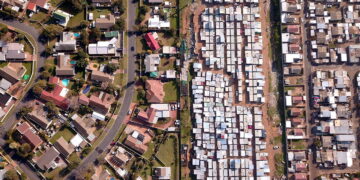
An Ebola response in this setting must cross front lines, checkpoints, areas controlled or influenced by different armed actors, and communities that have experienced years of violence and mistrust. The response should also reach displaced populations: recent data from the International Organization for Migration estimate that more than 2.1 million people have been internally displaced in North Kivu and Ituri alone. Overcrowding, poor water and sanitation, and fragile health services in such settings can turn delayed detection, unsafe care, or disrupted burial practices into amplified transmission.
Immediate investment is also needed to develop and validate new rapid tests specifically optimised for Bundibugyo virus. In addition to immunoassays, newer CRISPR-based platforms such as SHERLOCK, which have not yet been validated or manufactured for large-scale field deployment, should also be explored. The current outbreak should catalyse both immediate evaluation of existing assays and accelerated development of Bundibugyo-sensitive rapid diagnostics.
The response requires rapid implementation of the Incident Management Support Team structure and strengthened cross-border collaboration between affected and neighbouring countries. Early detection with immediate isolation through strengthened surveillance and decentralised diagnostics must be urgently expanded. Infection prevention and control measures also require immediate reinforcement.
Safe and dignified burials, regular handwashing, and avoidance of direct contact with symptomatic individuals and sick or dead animals must be prioritised to reduce community transmission and reduce exposure during caregiving and funeral practices. Community engagement and culturally sensitive risk communication are essential to counter fear, stigma, misinformation, and resistance to public health measures. Accelerated research and development are urgently needed to evaluate candidate vaccines, therapeutics, and diagnostics for Bundibugyo virus disease.
The outbreak simultaneously exposes persistent inequities in global epidemic preparedness systems. Substantial investments have been made globally for vaccines and therapeutics targeting Zaire ebolavirus, yet far less attention has been devoted to Bundibugyo and other Ebola species. Africa is once again confronting a severe outbreak with limited validated vaccines, therapeutics and diagnostics. This inequity reinforces the urgency of strengthening African-led research, genomic surveillance, operational science, local manufacturing and clinical trial ecosystems capable of addressing pathogens most relevant to African epidemiology.
Importantly, the declaration of a Public Health Emergency of Continental Security (PHECS) should not trigger unnecessary border closures or punitive travel restrictions. Previous outbreaks repeatedly demonstrated that blanket border closures undermine surveillance, disrupt humanitarian and economic activities, fuel informal movement, and weaken trust between communities and authorities. Instead, the Africa CDC and partners are prioritising strengthened screening at points of entry, cross-border surveillance, laboratory readiness and preparedness activities while maintaining coordinated regional mobility.
Ultimately, the Bundibugyo Ebola outbreak may be remembered not only for its epidemiological complexity but also for accelerating the transformation of the Africa Health Security and Sovereignty agenda from vision to implementation. The operationalisation of the PHECS mechanism, the rapid deployment of EORS, the strengthening of digital surveillance systems, the advancement of local manufacturing discussions, the mobilisation of African financing, and the consolidation of the IMST coordination model collectively demonstrate the growing maturity of African leadership in public health emergency governance.
From an economic viewpoint, in devising fiscal measures, the East and Central African governments should include social protection and safety net programmes to help families of victims and their immediate communities. The governments and their partners should invest in building skills and human capital in the three counties in the short, medium and long term so as to enhance labour supply. The monetary authorities should cut interest rates to boost growth.
To conclude, East and Central Africa’s tourism authorities should refocus their efforts on strategies to increase connectivity among them and the countries of the region more broadly and on business-friendly travel, such as easing procedures for entry visas and encouraging competitive rates at hotels. Governments should reinforce border health checks rather than shut down borders, given the huge damage to economic activity that such closure entails in affected and non-affected countries.