

Qiraat Africa
عربي  |  Fr
Advertisement
  • News
    • All
    • Climate Change
    • Economy
    • Education
    • Energy
    • Health
    • Migration
    • Mining
    • Politics
    • Security
    • Society
    • Sport
    Nigeria says two nationals killed in anti-migrant violence in South Africa

    Nigeria says two nationals killed in anti-migrant violence in South Africa

    What the AU’s new mission means for Somalia?

    Somalia peacekeeping mission at risk as US blocks UN support, sources say

    Insurgents stage coordinated attacks on army positions across Mali

    Insurgents stage coordinated attacks on army positions across Mali

    Tanzania’s president dismisses foreign, information ministers

    US to give Tanzania $1.3 billion under five-year health pact

    Kenyan activists launch new court case against luxury lodges in Maasai Mara reserve

    Kenyan activists launch new court case against luxury lodges in Maasai Mara reserve

    Ethiopia says Ghebreyesus, WHO chief has links to rebellious Tigrayan forces

    Trial for Bundibugyo Ebola treatment starts in DRC, WHO says

    Ukraine says Niger’s move to cut relations is ‘regrettable’

    Niger arrests at least 16 for same-sex sexual acts, judicial source says

    South African labour unions urge workers to shun anti-migrant protests

    Over 900 arrested during South African anti-migrant protests

    Burkina Faso assembly votes to send troops to Niger

    Burkina Faso: what will change after the diplomatic rupture with France?

  • Analysis
    • All
    • Climate Change
    • Digital & Tech
    • Economy
    • Energy & Power
    • Health
    • Politics
    • Security
    • Society
    Senegal’s top opposition leader Sonko vows to help win March 24 election

    Senegal at a Political Crossroads: The Faye–Sonko Rivalry and the Future of Democratic Governance

    Ulysses in isiZulu: Why an African translation of the classic Irish novel is important in today’s world

    Ulysses in isiZulu: Why an African translation of the classic Irish novel is important in today’s world

    The promise and risks of Kenya’s ambitious new strategy to close refugee camps

    The promise and risks of Kenya’s ambitious new strategy to close refugee camps

    Al Qaeda-linked militants curb their brutality in seized Malian territory

    Al Qaeda-linked militants curb their brutality in seized Malian territory

    Five Years After the Coup in Mali: Are Stability and Growth Within Reach?

    The Political Economy of Insecurity in Mali: Armed Groups, Resources, and State Fragility

    Ghana to evacuate 300 citizens from South Africa after xenophobic attacks

    Xenophobic Violence and Human Security in South Africa: Causes and Consequences

    Inside an African lab that helped crack the hantavirus outbreak

    Inside an African lab that helped crack the hantavirus outbreak

    Nigeria’s Agricultural sector: Problems and challenges

    Agriculture in Africa: science and research cannot have an impact without investments and good policies

    Mali’s junta creates a new ministerial-level post to oversee the mining sector

    African Mineral Resources: The Controversial Link to US Health Deals

  • Studies
    Angola’s lengthy war shaped the way farmers utilised fire—why it matters

    Angola’s lengthy war shaped the way farmers utilised fire—why it matters

    Schooling is the most severely affected by conflict when children are the target – Study

    Schooling is the most severely affected by conflict when children are the target – Study

    Pensions for Botswana’s elderly are expanding, but care services are lacking—study follows 20 years

    Pensions for Botswana’s elderly are expanding, but care services are lacking—study follows 20 years

    60 new cosmic structures have been discovered by South Africa’s MeerKAT telescope, which is mapping previously unseen gaps between galaxies

    60 new cosmic structures have been discovered by South Africa’s MeerKAT telescope, which is mapping previously unseen gaps between galaxies

    Benin government says armed forces foil coup attempt

    Coup contagion? A rash of African power grabs suggests copycats are taking note of others’ success

    One in three South Africans have never heard of AI: what this means for policy

    One in three South Africans have never heard of AI: what this means for policy

    Social Media as a Catalyst for the Spread of Dangerous Wealth Ritual Myths

    Social Media as a Catalyst for the Spread of Dangerous Wealth Ritual Myths

    Overcoming Education Barriers for Young Mothers in Sub-Saharan Africa

    Overcoming Education Barriers for Young Mothers in Sub-Saharan Africa

    Youth Empowerment Through Vocational Training in Rural Sub-Saharan Africa

    Youth Empowerment Through Vocational Training in Rural Sub-Saharan Africa

  • Infographics
  • Figures
    Marcus Garvey (1887-1940): Activist, Black nationalist, and Pan-Africanist

    Marcus Garvey (1887-1940): Activist, Black nationalist, and Pan-Africanist

    John B. Russwurm (1799–1851): Jamaican-born American abolitionist, publisher, and colonial governor

    John B. Russwurm (1799–1851): Jamaican-born American abolitionist, publisher, and colonial governor

    Winnie Mandela (1936-2018): South African politician and anti-apartheid activist

    Winnie Mandela (1936-2018): South African politician and anti-apartheid activist

    Abdias do Nascimento (1914-2011): Prominent African Brazilian scholar, artist, and politician

    Abdias do Nascimento (1914-2011): Prominent African Brazilian scholar, artist, and politician

    Edward Wilmot Blyden (1832-1912): Educator and former Secretary of State of Liberia

    Edward Wilmot Blyden (1832-1912): Educator and former Secretary of State of Liberia

    Eduardo Mondlane (1920-1969): Mozambican Revolutionary and Anthropologist

    Eduardo Mondlane (1920-1969): Mozambican Revolutionary and Anthropologist

    William Tubman (1895-1971): Liberian politician and longest-serving president in the country’s history

    William Tubman (1895-1971): Liberian politician and longest-serving president in the country’s history

    Abebe Bikila (1932-1973): Ethiopian marathoner and first black African to win an Olympic medal

    Abebe Bikila (1932-1973): Ethiopian marathoner and first black African to win an Olympic medal

    W. E. B. Du Bois (1868-1963): Sociologist, historian, and Pan-Africanist civil rights activist

    W. E. B. Du Bois (1868-1963): Sociologist, historian, and Pan-Africanist civil rights activist

  • History
    Laas Geel, Somalia

    Laas Geel, Somalia

    Lakes Of Ounianga, Chad

    Lakes Of Ounianga, Chad

    Nok Caves, Togo

    Nok Caves, Togo

    The Land of Punt (modern Somalia, Eritrea, Ethiopia, or eastern Sudan)

    The Land of Punt (modern Somalia, Eritrea, Ethiopia, or eastern Sudan)

    Avenue of the Baobabs, Madagascar

    Avenue of the Baobabs, Madagascar

    Lopé-Okanda (Gabon)

    Lopé-Okanda (Gabon)

    The Sudd wetland

    The Sudd wetland

    Khami Ruins (Zimbabwe), the capital of the Torwa state

    Khami Ruins (Zimbabwe), the capital of the Torwa state

    Royal Palace, Porto-Novo, Republic of Benin

    Royal Palace, Porto-Novo, Republic of Benin

  • Others
    • Culture / Literature
    • Interview
    • Opinion
  • Countries
    • Country profiles
    • Regions
      • Central Africa
      • East Africa
      • Southern Africa
      • West Africa
No Result
View All Result
  • News
    • All
    • Climate Change
    • Economy
    • Education
    • Energy
    • Health
    • Migration
    • Mining
    • Politics
    • Security
    • Society
    • Sport
    Nigeria says two nationals killed in anti-migrant violence in South Africa

    Nigeria says two nationals killed in anti-migrant violence in South Africa

    What the AU’s new mission means for Somalia?

    Somalia peacekeeping mission at risk as US blocks UN support, sources say

    Insurgents stage coordinated attacks on army positions across Mali

    Insurgents stage coordinated attacks on army positions across Mali

    Tanzania’s president dismisses foreign, information ministers

    US to give Tanzania $1.3 billion under five-year health pact

    Kenyan activists launch new court case against luxury lodges in Maasai Mara reserve

    Kenyan activists launch new court case against luxury lodges in Maasai Mara reserve

    Ethiopia says Ghebreyesus, WHO chief has links to rebellious Tigrayan forces

    Trial for Bundibugyo Ebola treatment starts in DRC, WHO says

    Ukraine says Niger’s move to cut relations is ‘regrettable’

    Niger arrests at least 16 for same-sex sexual acts, judicial source says

    South African labour unions urge workers to shun anti-migrant protests

    Over 900 arrested during South African anti-migrant protests

    Burkina Faso assembly votes to send troops to Niger

    Burkina Faso: what will change after the diplomatic rupture with France?

  • Analysis
    • All
    • Climate Change
    • Digital & Tech
    • Economy
    • Energy & Power
    • Health
    • Politics
    • Security
    • Society
    Senegal’s top opposition leader Sonko vows to help win March 24 election

    Senegal at a Political Crossroads: The Faye–Sonko Rivalry and the Future of Democratic Governance

    Ulysses in isiZulu: Why an African translation of the classic Irish novel is important in today’s world

    Ulysses in isiZulu: Why an African translation of the classic Irish novel is important in today’s world

    The promise and risks of Kenya’s ambitious new strategy to close refugee camps

    The promise and risks of Kenya’s ambitious new strategy to close refugee camps

    Al Qaeda-linked militants curb their brutality in seized Malian territory

    Al Qaeda-linked militants curb their brutality in seized Malian territory

    Five Years After the Coup in Mali: Are Stability and Growth Within Reach?

    The Political Economy of Insecurity in Mali: Armed Groups, Resources, and State Fragility

    Ghana to evacuate 300 citizens from South Africa after xenophobic attacks

    Xenophobic Violence and Human Security in South Africa: Causes and Consequences

    Inside an African lab that helped crack the hantavirus outbreak

    Inside an African lab that helped crack the hantavirus outbreak

    Nigeria’s Agricultural sector: Problems and challenges

    Agriculture in Africa: science and research cannot have an impact without investments and good policies

    Mali’s junta creates a new ministerial-level post to oversee the mining sector

    African Mineral Resources: The Controversial Link to US Health Deals

  • Studies
    Angola’s lengthy war shaped the way farmers utilised fire—why it matters

    Angola’s lengthy war shaped the way farmers utilised fire—why it matters

    Schooling is the most severely affected by conflict when children are the target – Study

    Schooling is the most severely affected by conflict when children are the target – Study

    Pensions for Botswana’s elderly are expanding, but care services are lacking—study follows 20 years

    Pensions for Botswana’s elderly are expanding, but care services are lacking—study follows 20 years

    60 new cosmic structures have been discovered by South Africa’s MeerKAT telescope, which is mapping previously unseen gaps between galaxies

    60 new cosmic structures have been discovered by South Africa’s MeerKAT telescope, which is mapping previously unseen gaps between galaxies

    Benin government says armed forces foil coup attempt

    Coup contagion? A rash of African power grabs suggests copycats are taking note of others’ success

    One in three South Africans have never heard of AI: what this means for policy

    One in three South Africans have never heard of AI: what this means for policy

    Social Media as a Catalyst for the Spread of Dangerous Wealth Ritual Myths

    Social Media as a Catalyst for the Spread of Dangerous Wealth Ritual Myths

    Overcoming Education Barriers for Young Mothers in Sub-Saharan Africa

    Overcoming Education Barriers for Young Mothers in Sub-Saharan Africa

    Youth Empowerment Through Vocational Training in Rural Sub-Saharan Africa

    Youth Empowerment Through Vocational Training in Rural Sub-Saharan Africa

  • Infographics
  • Figures
    Marcus Garvey (1887-1940): Activist, Black nationalist, and Pan-Africanist

    Marcus Garvey (1887-1940): Activist, Black nationalist, and Pan-Africanist

    John B. Russwurm (1799–1851): Jamaican-born American abolitionist, publisher, and colonial governor

    John B. Russwurm (1799–1851): Jamaican-born American abolitionist, publisher, and colonial governor

    Winnie Mandela (1936-2018): South African politician and anti-apartheid activist

    Winnie Mandela (1936-2018): South African politician and anti-apartheid activist

    Abdias do Nascimento (1914-2011): Prominent African Brazilian scholar, artist, and politician

    Abdias do Nascimento (1914-2011): Prominent African Brazilian scholar, artist, and politician

    Edward Wilmot Blyden (1832-1912): Educator and former Secretary of State of Liberia

    Edward Wilmot Blyden (1832-1912): Educator and former Secretary of State of Liberia

    Eduardo Mondlane (1920-1969): Mozambican Revolutionary and Anthropologist

    Eduardo Mondlane (1920-1969): Mozambican Revolutionary and Anthropologist

    William Tubman (1895-1971): Liberian politician and longest-serving president in the country’s history

    William Tubman (1895-1971): Liberian politician and longest-serving president in the country’s history

    Abebe Bikila (1932-1973): Ethiopian marathoner and first black African to win an Olympic medal

    Abebe Bikila (1932-1973): Ethiopian marathoner and first black African to win an Olympic medal

    W. E. B. Du Bois (1868-1963): Sociologist, historian, and Pan-Africanist civil rights activist

    W. E. B. Du Bois (1868-1963): Sociologist, historian, and Pan-Africanist civil rights activist

  • History
    Laas Geel, Somalia

    Laas Geel, Somalia

    Lakes Of Ounianga, Chad

    Lakes Of Ounianga, Chad

    Nok Caves, Togo

    Nok Caves, Togo

    The Land of Punt (modern Somalia, Eritrea, Ethiopia, or eastern Sudan)

    The Land of Punt (modern Somalia, Eritrea, Ethiopia, or eastern Sudan)

    Avenue of the Baobabs, Madagascar

    Avenue of the Baobabs, Madagascar

    Lopé-Okanda (Gabon)

    Lopé-Okanda (Gabon)

    The Sudd wetland

    The Sudd wetland

    Khami Ruins (Zimbabwe), the capital of the Torwa state

    Khami Ruins (Zimbabwe), the capital of the Torwa state

    Royal Palace, Porto-Novo, Republic of Benin

    Royal Palace, Porto-Novo, Republic of Benin

  • Others
    • Culture / Literature
    • Interview
    • Opinion
  • Countries
    • Country profiles
    • Regions
      • Central Africa
      • East Africa
      • Southern Africa
      • West Africa
No Result
View All Result
Qiraat Africa
عربي  |  Fr
No Result
View All Result
Home Featured

Senegal at a Political Crossroads: The Faye–Sonko Rivalry and the Future of Democratic Governance

Oyebamiji Usman Adesoji by Oyebamiji Usman Adesoji
July 3, 2026
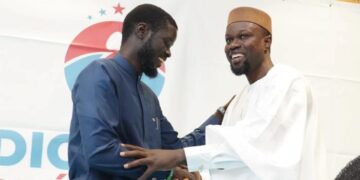
Senegal’s top opposition leader Sonko vows to help win March 24 election
Share on FacebookShare on Twitter

Senegal has had a long, rich history of electoral politics, extending back into the colonial period. The alternation of executive power achieved in the presidential election of 2000 seemed to bode well for the consolidation of democracy in Senegal, but alas, this road was not taken. Yes, the country has long been seen as one of the most stable democracies in West Africa. It is the only country on mainland West Africa that has never had a military coup. It has had three largely peaceful handovers of power and never delayed a presidential election.

President Bassirou Diomaye Faye’s 2024 electoral victory was initially prominent as another milestone in Senegal’s democratic development. His win signified the zenith of a popular anti-establishment movement led by his political mentor and ally, Ousmane Sonko. Just two years after taking the helm of Senegal, the governing partnership of President Bassirou Diomaye Faye and long-time ally Ousmane Sonko collapsed on the evening of Friday, May 23, plunging the country into political crisis. The break was formalised in a brief statement read around 9:30 pm on public television.

Without any prior announcement, Oumar Samba Ba, secretary general of the presidency and the official responsible for government communications, appeared on-screen and announced that Diomaye had dismissed Prime Minister Sonko and his government. This marked a dramatic end to a political partnership that had begun 12 years earlier, when the two leaders co-founded African Patriots of Senegal for Work, Ethics and Fraternity (Pastef) with the goal of seizing power. The alliance survived years of repression and months in prison in 2023 but could not withstand the realities of governing. President Diomaye drew much of his legitimacy from his enormously popular prime minister, Sonko. But now, the PM’s dismissal has thrown the country into political instability.

The split comes as Senegal faces mounting economic pressure. The International Monetary Fund ​froze its $1.8 billion lending programme with Senegal following the discovery of misreported debt, pushing the country’s end-2024 debt level to 132% of its economic ​output. Faye’s move raises the risk of further delays in reaching a new agreement with the IMF, seen as key to reviving the economy. This article studies the geopolitical and governance implications of the Faye–Sonko rivalry, evaluates the risks of institutional paralysis, assesses consequences for Senegal’s debt negotiations, and explores broader consequences for democratic governance across West Africa.

The Origins of the Faye–Sonko Alliance

Carried to power by a wave of hope in 2024, Bassirou Diomaye Faye and Ousmane Sonko made economic sovereignty, institutional reform, and transparent governance the cornerstones of their political agenda. But the harsh realities of economic restructuring have quickly put that momentum to the test. Faced with the threat of default and weighed down by a massive debt burden, a new government has been formed with a priority mission: reopening negotiations with the International Monetary Fund (IMF). Senegal has already announced its intention to reach an agreement with the Bretton Woods institution before June 30.

Sonko was a popular opposition leader under the previous administration of President Macky Sall, whose decision to delay the 2024 election spurred unrest. Both Faye and Sonko are former tax officials who were jailed ahead of the 2024 election. They were released 10 days before the rescheduled contest.

On 24 March 2024, the opposition politician Bassirou Diomaye Diakhar Faye was elected the fifth President of the Republic of Senegal. Turning 44 the next day, Faye is not only the youngest candidate to date to have taken up the country’s highest office. This is also the first time that a new presidential candidate gained the necessary majority of at least 50% of the votes cast in the first round of voting, obviating the need for a run-off between the two candidates with the most votes. Another first in this election was the fact that a Senegalese president, Macky Sall, organised the election for this office but did not stand for election himself.

During the early months of Sonko’s tenure as prime minister, an audit of the previous administration’s finances was conducted. The findings uncovered a much higher level of debt and a larger budget deficit than had previously been reported and led the International Monetary Fund (IMF) to suspend its support package for the country in October. Sonko accused the previous administration, led by Sall, of having manipulated the economic data.

Read also

Nigeria says two nationals killed in anti-migrant violence in South Africa

Somalia peacekeeping mission at risk as US blocks UN support, sources say

Insurgents stage coordinated attacks on army positions across Mali

Attempts by Sonko and Faye to enact their legislative agenda met resistance in the National Assembly, where Sall’s BBY coalition still held about half of the seats; Pastef and allied YAW parties held about one-third. (The 2023 order dissolving Pastef had been repealed by the Sall administration three days after the presidential election.) Faye dissolved the legislature in September 2024 and called snap elections, which were held on November 17. Pastef alone won more than three-quarters of the body’s seats, providing Sonko and Faye with a smoother path for their legislative goals (Encyclopedia Britannica, 2026).

In March, Sonko said he would be willing to take his Pastef party out of the government ​and return to opposition if Faye departed from the party’s agenda, fuelling speculation that the two men’s ​power struggle was ⁠irresolvable. Pastef dominates the National Assembly, meaning it could complicate governance and the passage of reforms needed to secure IMF support.

Also in the month of April, lawmakers overwhelmingly approved electoral code changes that could pave the way for Sonko to run for president in 2029. Among the anti-establishment, pan-Africanist prime minister’s signature initiatives was an audit ⁠of Senegal’s ​resource deals, including those governing its emerging oil and gas sectors. Similarly in March, Sonko declared ​a BP gas contract for the Greater Tortue Ahmeyim project unfair and revoked some 71 mining licences. He had argued that renegotiating oil and gas contracts would lower domestic energy prices ​and help rebuild Senegal’s battered finances.

Sonko remains the undisputed leader of Pastef, the party he founded in 2014 – to which Faye also belongs – and which controls 130 of the 165 seats in Senegal’s only legislative body. Sonko would almost certainly have won the top job if he had not been barred from the presidential election due to a defamation conviction. With his pan-Africanist rhetoric, Sonko had gained a following among young Senegalese after a power struggle with former President Macky Sall, who ruled from 2012 to 2024.

Mr Sonko, 51, has accused Mr Faye, now 46, of sidelining their party and drifting away from campaign promises, such as tackling corruption and taking on the elite. Mr Faye has said the party was building a cult of personality around Mr Sonko, its founder, and abandoning its principles. The two men also disagree on how to manage Senegal’s huge debt, but the fallout between them mostly appears to be centred on who should run in the 2029 presidential election. While some items on their populist agenda have been addressed — revoking mining licences, driving out the French military and seeking transparency on massacres carried out during World War II — many voters say little has been achieved since Mr Sonko and Mr Faye rose to power.

Can Senegal Avoid Institutional Paralysis?

Tensions began to surface in July when the outspoken Sonko accused Faye of a “failure of leadership” by not backing him up enough against his many critics. In May, the president took a shot at Sonko, saying the party needed to be “depersonalised” from any leader dominating it. While Faye is open to discussions with the International Monetary Fund on a new loan programme, Sonko has advocated a more sovereign approach. Faye faces the difficult task of governing and implementing reforms in a country troubled by serious economic difficulties.

Senegal is a multiparty republic. The 2001 constitution provides for a strongly centralised presidential regime—the head of state is the president, who is elected by direct universal adult suffrage and can be elected to two five-year terms. The prime minister, appointed by the president, is the head of government. Ministers are appointed by the president. Senegal has a unicameral legislature (the National Assembly), with most members directly elected; the remaining members are indirectly elected. All legislators serve five-year terms. Judicial, executive, and legislative powers are separate (Encyclopedia Britannica, 2026).

Toumani Traoré, a doctoral student in political science at Cheikh Anta Diop University of Dakar, noted that from the perspective of the theory of domination and symbolic reproduction, Sonko built what could be called “proxy capital” (borrowed influence). Their symbolic fusion created a unique shared identity – “partisan habitus” – in which Pastef supporters no longer perceived two distinct figures but a single political force. Rivalry between the two leaders was inevitable, despite the “complementarity” that initially defined their entry into executive power. Senegal’s political system demands a clear hierarchy. The president’s authority is not shared. The powers of the president of the republic and the prime minister are defined by Senegal’s constitution in articles 42 through 52.

He added that this already created a kind of “soft rivalry”. Faye tends to adopt a restrained posture, acting as a guarantor of the proper functioning of institutions. Sonko, on the other hand, maintains a style of mobilisation and disruption. As French sociologist Pierre Bourdieu argues, institutional structures dictate individual actions, language, and posture. Not the other way round. The office of the presidency imposes a “sovereign habitus” that naturally differs from the habitus or mindset of the prime minister and party leader. In line with the principle of separation between the functions of head of state and party politics, Faye resigned from all leadership positions in Pastef, including secretary-general. By law, however, Sonko was allowed to retain his leadership positions in the party. This further fuelled their stand-off.

But analysts say Mr Sonko’s control of the party is not absolute. Out of 20 ministers who were in the president’s cabinet before the government was dissolved, at least four sided with Mr Faye. They could join him if he forges ahead with his own movement. And while Mr Sonko pushes for aggressive changes, Mr Faye has had to face the realities of governing as president. “You cannot have a prime minister who’s trying to be more powerful than the president,” said Mvemba Dizolele, a senior fellow at the Foreign Policy Institute of the Johns Hopkins School of Advanced International Studies. “It doesn’t work,” he added. “No system in the world will tolerate that.”

However, the main risk would be that this parliamentary majority might resort to institutional mechanisms such as votes of no confidence to weaken or topple the government. Such a scenario would create a period of political paralysis at a time when the country urgently needs coordinated economic governance. What seems increasingly likely is that Senegal is entering a period of contested politics between two leaders who once shared a transformative vision, but who are now separated by the pressures and realities of governing. That contest will play out in parliament, in the streets, and in the next round of budget negotiations.

Regional Implications for West Africa

The public clash, conducted through official communiqués, reveals a fundamental struggle over power. Analysts are now questioning President Faye’s ability to govern effectively without Sonko, who commands a powerful political party and significant popular legitimacy, demonstrated by the thousands of supporters he recently rallied. The confrontation leaves the ruling coalition fractured and the West African nation facing a period of profound political uncertainty.

The implications of the Faye-Sonko split go well beyond Senegal’s borders. Senegal holds the Economic Community of West African States (ECOWAS) Commission presidency for 2026–2030. The bloc’s authority has been severely degraded by its repeated failure to mount a credible response to the wave of military takeovers in the Sahel, as well as the departure of junta-led governments in Mali, Burkina Faso, and Niger that formed the Alliance of Sahel States (AES) and exited ECOWAS in early 2025. Yet, despite these challenges, Senegal has functioned as one of the region’s most credible democratic anchors.

Now, the ideological fault line running through Senegalese domestic politics maps directly onto the broader fracture dividing West Africa. Sonko’s belief in economic sovereignty and rejection of IMF conditionality as neocolonial place him in closer ideological proximity to the AES juntas than to the establishment of the ECOWAS order, with which Faye is now effectively aligned. A government paralysed by internal rivalry and compelled to implement austerity under duress—while its most popular political figure positions himself as the tribune of economic sovereignty—is poorly placed to sustain that role. In this sense, the regional contest between those two visions of African governance is being relitigated in real time inside Senegal’s own institutions.

Conclusion

Senegal is at a critical point in its political life. After what seemed like years of torpidity, the Senegalese political sphere is in a state of rapid change and fluctuation. The collapse of the Faye–Sonko alliance represents more than a personal rivalry; it is a contest over leadership, governance, economic policy, and the future path of the Senegalese state.
Tags: Senegal
Oyebamiji Usman Adesoji

Oyebamiji Usman Adesoji

Writer and researcher on business, entrepreneurship and geopolitical affairs.

Related Posts

Tanzania’s president dismisses foreign, information ministers
East Africa

US to give Tanzania $1.3 billion under five-year health pact

July 2, 2026
Kenyan activists launch new court case against luxury lodges in Maasai Mara reserve
East Africa

Kenyan activists launch new court case against luxury lodges in Maasai Mara reserve

July 2, 2026
Ethiopia says Ghebreyesus, WHO chief has links to rebellious Tigrayan forces
East Africa

Trial for Bundibugyo Ebola treatment starts in DRC, WHO says

July 2, 2026
Ukraine says Niger’s move to cut relations is ‘regrettable’
Featured

Niger arrests at least 16 for same-sex sexual acts, judicial source says

July 2, 2026
South African labour unions urge workers to shun anti-migrant protests
Featured

Over 900 arrested during South African anti-migrant protests

July 2, 2026
Burkina Faso assembly votes to send troops to Niger
Politics

Burkina Faso: what will change after the diplomatic rupture with France?

July 1, 2026

Search Qiraat Africa

No Result
View All Result

Follow on Twitter

Follow @africanqiraat

Trending

Kumbi Saleh, the capital of the ancient Ghana Empire

Kumbi Saleh, the capital of the ancient Ghana Empire

October 13, 2025
Abdon Atangana: Cameroonian scientist and professor of applied mathematics

Abdon Atangana: Cameroonian scientist and professor of applied mathematics

July 28, 2025
New date set for return of Patrice Lumumba’s tooth

Patrice Lumumba (1925-1961), Congolese politician and independence leader

March 4, 2025
Meja Mwangi: The Literary Genius with a Mighty pen

Meja Mwangi: The Literary Genius with a Mighty pen

May 24, 2025
Tuareg: The Blue People of the Sahara

Tuareg: The Blue People of the Sahara

May 23, 2025
Côte d’Ivoire (Ivory Coast)

Côte d’Ivoire (Ivory Coast)

January 30, 2025

Facebook

Sections

  • About Us
  • Privacy Policy
  • Opinion
  • Infographics
  • News
  • Analysis
  • Figures
  • Culture & Literature
  • Follow Ups
  • Historical Readings
  • Interview
  • Studies


© Copyright Qiraat Africa. Developed by Bunnaj Media .

No Result
View All Result
  • News
  • Analysis & Report
  • Studies
  • Opinion
  • Interview
  • Culture & Literature
  • Figures
  • Historical Readings
  • Regions

© 2021 Copyright Qiraat Africa.