



















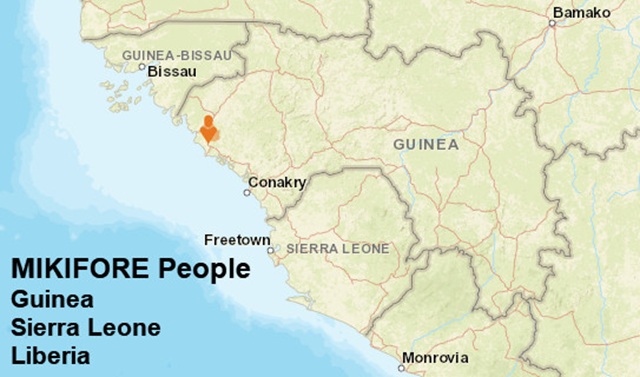
The Mikifore people are an ethnic and cultural subgroup whose linguistic origins and roots belong to the Manding family. Members of this group are primarily distributed between Guinea, Sierra Leone, and Liberia.
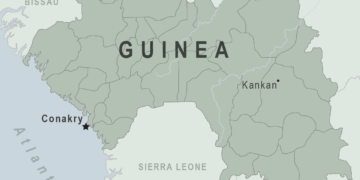
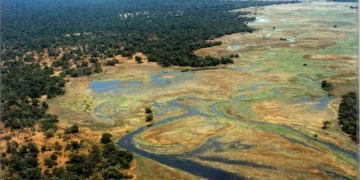
Guinea is the Mikifore’s primary and historical homeland, specifically in areas adjacent to waterways and forested regions near the coast. They historically settled in areas such as Boké, Boffa, and parts of Lower Guinea. From these centres, members of the group expanded through seasonal migrations, trade, or fleeing historical conflicts towards the northern and northeastern borders of Sierra Leone and remote border regions of Liberia.
In Sierra Leone, intermarriage and coexistence with the Soussou (or Susu) and Limba peoples have led to a hybrid identity or complete assimilation into larger communities. In Liberia, Mikifore presence is very small, and they are often classified as Manding speakers or culturally assimilated under broader ethnic umbrellas.
Language is the primary tool for defining the ethnic identity of the Mikifore people. Mikifore (also known as Mogofin or Mixifore) belongs to the western branch of the Mande languages, which are part of the Niger-Congo language family. It is closely related to Soussou and Yalunkë, to the point that some linguists classify it as a local dialect, while others consider it a distinct language with a declining number of speakers.
Due to demographic and social pressures in the three countries, the Mikifore language faces challenges. In Guinea, the majority of speakers tend to speak Soussou, given Soussou’s economic and cultural dominance in Lower Guinea. In Sierra Leone, the language has almost completely disappeared in urban centres, replaced by Soussou, Limba, or Krio, which is the lingua franca of the country.
In Liberia, Mikifore speakers have become intermingled with Mandinka-speaking groups, making the original Mikifore language rare and lacking proper linguistic documentation.
Mikifore societies have been organised according to a strict patriarchal system, where clans and extended families play a central role in guiding daily life. Society is divided into traditional social classes, much like those of other Mandinka peoples. These classes include free people (farmers and warriors), professionals (blacksmiths, folk singers, or storytellers known as “griots”), and, in earlier times, a class of slaves and servants, which was abolished with modern legislation.
Villages and towns are administered by a council of elders headed by a “traditional chief” or village head. Leaders are chosen based on seniority, wisdom, or belonging to the founding clan of the region. Although these traditional systems have been incorporated into the modern administrative structures of the three countries, the authority of local chiefs is still widely respected in resolving local land and family disputes.
The subsistence economy of the Mikifore people is based primarily on traditional agriculture and fishing, driven by the nature of their geographical environment. Rice cultivation (the staple food) is the dominant activity, along with other crops such as groundnuts, cassava, bananas, and sweet potatoes. Families use traditional farming techniques based on hand tools and crop rotation.
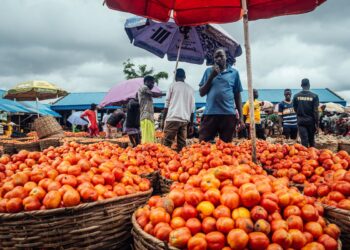
Due to their proximity to rivers and coastal waterways in Guinea and Sierra Leone, a segment of the Mikifore engage in traditional river and sea fishing, which contributes to food self-sufficiency and provides a small surplus for local trade. Members of the group participate in regular weekly markets, where they exchange agricultural products and dried fish for manufactured goods and clothing.
Throughout the modern history of the three countries, the Mikifore people have not formed an independent political bloc or political party specifically representing their ethnic interests due to their small numbers and geographical dispersion. Instead, they became politically involved within the larger party structures of their countries.
In Guinea, they integrated politically and culturally with the Susu community and had a presence in the political landscape through their representation in local administrations of coastal regions. In Sierra Leone, they engaged in the political movements of the northern region, and their electoral votes were often aligned with the general political orientations of the dominant ethnic alliances there. In Liberia, they live under a numerical marginalisation that prevents them from exerting direct influence as a separate group, leading them to integrate under the umbrella of general citizenship or to ally with political forces representing the broader Mande ethnic groups.
The Mikifore people currently face a range of socio-economic and cultural challenges. Due to a lack of linguistic documentation and the absence of educational curricula written in the Mikifore language, the younger generation is rapidly adopting dominant languages (such as Soussou and French in Guinea and Krio and English in Sierra Leone and Liberia). This linguistic erosion threatens the very existence of the group’s cultural identity within the next few decades.
Most of the historical villages and settlements of the Mikifore are located in rural areas lacking basic services such as advanced healthcare, secondary and higher education, and paved roads. This reality drives young people to continuously migrate to the capital cities (Conakry, Freetown, and Monrovia) in search of employment opportunities, thus draining rural communities of their human capital and dismantling traditional family structures.
In many official statistics and censuses, the Mikifore are not listed as a distinct ethnic group but are automatically categorised as “other” or classified as part of the Soussou or Mandinka peoples.