







































The Kaonde people are one of the major ethnic and linguistic groups that make up the demographic map of Zambia, particularly in the Northwest Province and parts of the Central Province, as well as in areas near the border with the Democratic Republic of Congo. They speak KiiKaonde, a language belonging to the major Bantu language family, which is spoken across Central and Southern Africa.
Historical and oral traditions suggest that the Kaonde people originated from the great migrations of Bantu peoples from the Congo Basin. Their early political and social history is linked to the Luba Empire, which flourished in what is now the Democratic Republic of Congo during the 16th and 17th centuries.
Power struggles, competition for natural resources, and population growth within the Luba Empire led to the secession of several groups and their migration southward. These migrating groups settled in the mineral-rich areas and arable land suitable for hunting and fishing in present-day Zambia. During these migrations, incoming groups either integrated with or displaced the indigenous population, resulting in the formation of the Kaonde’s distinct ethnic identity, based on linguistic and geographical differences from the other Luba and Londa branches.
The traditional Kaonde society is based on a matrilineal system. In this social structure, children are considered part of the maternal clan, not the paternal one, and social identity, family ties, and inheritance rights are passed down through the female line. This organisation grants women a central role in clan continuity and the determination of blood ties, with the maternal uncle (the mother’s brother) being the most authoritative and influential male figure in guiding the sons and making crucial decisions regarding marriage and property, surpassing even the biological father in this regard.
The group is divided into several totemic clans, each associated with a natural or animal symbol that members of the clan are forbidden to hunt or eat. This system also regulates marital relations, as incest is prohibited within the clan, leading to the formation of alliances with other clans to strengthen social cohesion.
From a traditional political perspective, the community is governed by local leaders or chiefs whose positions are also inherited through the matrilineal system. These leaders manage the affairs of their communities in consultation with a council of elders and wise men. Their traditional role focuses on resolving land disputes, settling clan feuds, and administering seasonal rituals.
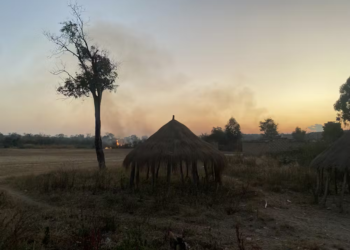
Agriculture is the cornerstone of the Kaonde subsistence economy. The population relies on subsistence farming, with crops such as maize, millet, cassava, sweet potatoes, and beans forming the basis of their daily diet. The traditional “cut-and-burn” or shift farming system is used to manage soils that may lack sustainable fertility. Areas of forest are cleared, and plant debris is burnt to enrich the soil before planting for a few years. The land is then left to rest for an extended period to regenerate, after which farmers move to new plots.
In addition to agriculture, hunting and fishing in local rivers are important supplementary activities for protein. While livestock farming is limited in some areas due to the prevalence of the tsetse fly, which transmits sleeping sickness to cattle, raising small animals such as goats and poultry is common in the villages.
The Kaonde region is rich in mineral resources, particularly copper. Traditional inhabitants of the region have known copper smelting and shaping techniques for centuries, long before European colonisation. They extracted the ore from open-pit mines to craft tools, weapons, and jewellery and used copper ingots as currency for trade with neighbouring communities and traders from the eastern coast. In modern times, these areas have become major centres of industrial mining in Zambia, directly impacting the traditional economic model and attracting migrant labour, thus altering the region’s demographics.
The KiiKaonde language is a key instrument for preserving the group’s intellectual heritage. Lacking systematic writing in earlier times, the community relied entirely on oral literature to transmit knowledge from generation to generation. This oral literature includes a vast repertoire of proverbs, legends, and riddles, which serve as educational tools to teach children moral values such as respect for elders, cooperation, and justice.
The language is characterised by its complex noun and prefix structure, a feature common to Bantu languages. In contemporary Zambia, KiiKaonde is one of the seven official languages recognised in basic education, government media, radio and television, which have helped to protect it from extinction and give it an institutional character that contributes to its linguistic stability.
The Kaonde community currently faces a number of structural challenges linked to the economic and political transformations in Zambia as a modern state. The massive expansion of the copper mining sector in the North Western Province has led to the expropriation of some traditional farmland for industrial use, creating tensions between local communities and multinational corporations over employment quotas, compensation, and environmental pollution affecting water sources and farmland.
Furthermore, the ongoing migration of young people from rural villages to urban centres in search of employment and education is weakening traditional matrilineal family ties. In cities, economic and social conditions are driving the nuclear family model (parents and children), diminishing the role of the maternal uncle and extended clan in daily decision-making and gradually leading to a decline in knowledge of ancient rituals and oral history among younger generations growing up in mixed urban environments.