






























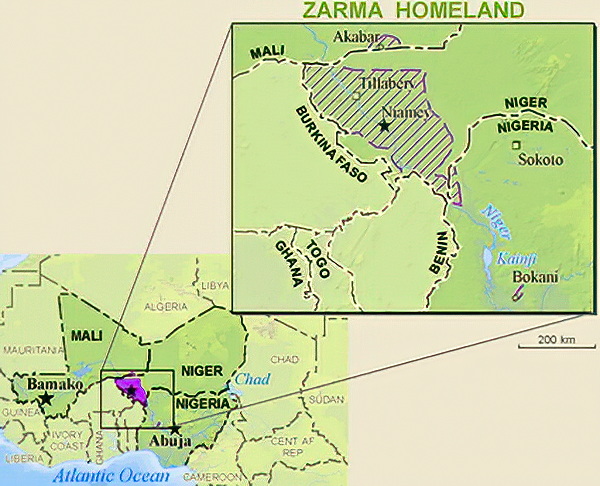
The Zarma (or Djerma) people are one of the most prominent settled ethnic groups in West Africa, specifically in the Niger River basin. They constitute the second largest ethnic group in Niger after the Hausa, with their presence concentrated in the western regions of the country, including the capital, Niamey. Their presence extends across the borders into neighbouring countries such as Nigeria, Benin, Burkina Faso, and Mali.
The Zarma share close historical, cultural, and linguistic ties with the Songhai people, to the point that many historians and anthropologists classify them as a major branch of this larger ethnic group, often referring to them collectively as “Songhai-Zerma”.
The historical origins of the Zarma are directly linked to the Songhai Empire, one of the greatest Islamic empires in West Africa during the 15th and 16th centuries. Oral traditions and historical studies indicate that the original homeland of the Zarma was in the Dendi region, a border area now located between Niger, Benin, and Nigeria. Following the fall of the Songhai Empire in the late 16th century as a result of the Moroccan invasion (the Battle of Tondibi in 1591), the region experienced political instability and insecurity. This situation prompted the Zarma groups to gradually migrate north and west along the Niger River valley by the 17th and 18th centuries, seeking safer and more arable lands. Settling in these new areas required them to form alliances and engage in conflicts with other ethnic groups inhabiting or vying for control of the region, such as the Tuareg, Fulani, and Hausa.
During the 19th century, the Zarma faced increasing military pressure from Fulani jihad and Tuareg expansion. Although their groups were scattered across independent sheikhdoms, they demonstrated organised resistance, particularly under the leadership of local chieftains who managed to temporarily unite them to repel external attacks and maintain their territorial independence until the French colonisation of the region in the late 19th and early 20th centuries.
The Zarma people speak Zarma (also known as Zarma Sanni), a language belonging to the Songhai language family. Linguists have historically differed in classifying this language family; while the linguist Joseph Greenberg included it within the Nilo-Saharan language family, contemporary researchers consider it a distinct language family due to its unique characteristics.
Zarma is a tonal language, where the meaning of a word changes with the intonation of the voice. Given the Zarma people’s geographical and political position in Niger, their language is one of the most important national languages and is widely used in government, media, and education after French (the country’s official language). It is the primary language of communication in the capital, Niamey, and the surrounding areas.
Their population is concentrated in the western regions of Niger, such as the Tillabéri and Dosso regions, and the capital region. They are present in smaller numbers as settled minorities in northern Benin (Alibori State), northwestern Nigeria (Kebbi State), and eastern Burkina Faso.
Zarma society is characterised by a rigid, traditional, and hierarchical social structure, influenced by the region’s military and political history. Traditionally, society is divided into distinct social classes and categories, including nobles and freemen who descended from the lineage of rulers and veteran warriors; they traditionally possess land and political power. The craftsmen’s class comprises practitioners of inherited professions such as blacksmiths, tanners, and troubadours (griots), who are responsible for preserving oral history and genealogies.
Former slaves and serfs formed the bottom of the social hierarchy. Although slavery has been legally abolished and its practice has largely disappeared.
The Zarma kinship system is patrilineal. The extended family is the basic unit of society, where the father, his married sons, and his grandchildren live in a single residential compound. The eldest male manages the affairs of this compound and is responsible for making key decisions and distributing agricultural land among family members.
Polygamy is a common and socially and religiously accepted practice in the Zarma community, often linked to a man’s economic capacity and need for additional labour to assist with agricultural activities.
Agriculture forms the backbone of the Zarma economy. Located in the Sahel region of Africa, with its semi-arid climate and summer rainy season, their agricultural activity is closely tied to the short rainy season, which typically lasts from June to September.
The Zarma primarily cultivate millet and sorghum, strategic, drought-resistant food crops that form the basis of their daily diet. They also grow cowpeas, peanuts, and sesame as cash crops that provide them with income. In the areas bordering the banks of the Niger River, the Zarma utilise the flowing water to cultivate rice and vegetables using traditional or semi-modern irrigation canals.
In addition to agriculture, the Zarma raise livestock such as cattle, sheep, and goats, although their focus on herding is less than that of their Fulani or Tuareg neighbours. For the Zarma, livestock represents a store of capital value that they resort to selling during times of economic crisis or drought. Fishing in the Niger River is also an important complementary economic activity for the groups settled along its banks.
Due to climate change and the increasing frequency of droughts in the Sahel region, the Zarma have developed a pattern of seasonal migration (exode). After the harvest season ends in the fall, many young people migrate to major cities or to more economically prosperous West African coastal countries, such as Ivory Coast, Ghana, and Togo, in search of temporary employment opportunities in trade or manual labour and then return to their villages with the start of the next rainy season to prepare for planting.
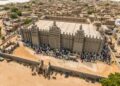
The vast majority of the Zarma people adhere to Islam (of the Sunni Maliki school), and Islam has been present in their society since the Songhai Empire, deepening further in subsequent centuries through Sufi orders, particularly the Tijaniyya and Qadiriyya. Religious commitment is evident in their daily practices, the construction of mosques in villages, and their dedication to enrolling children in Quranic schools (mahadras) to learn Arabic and memorise the Quran.
Despite their firmly established Islamic identity, some pre-Islamic beliefs and ritual practices persist in Zarma folk culture, especially in rural areas. Zarma culture is reflected in their clothing, music, and traditional architecture, expressions of their distinct identity within the diverse environment of West Africa.
Zarma men are distinguished by their boubou, a long, loose-fitting robe, often made of cotton, adorned with geometric embroidery around the neck and chest. This robe is sometimes paired with a sturdy, round hat or turban to protect the head from the scorching Sahel sun. Women wear two-piece dresses made of printed pagne fabric with matching headdresses. They are known for using henna to decorate their hands and feet and for wearing silver and gold jewellery on social occasions and celebrations such as weddings and religious festivals.
Music is a fundamental tool for transmitting history and moral values in Zarma society. “Praisers,” or oral poets, play a pivotal role in preserving collective memory by singing heroic epics that glorify past war leaders and recount genealogies. Their music uses traditional instruments such as the Kountougi, a small stringed instrument similar to the oud.
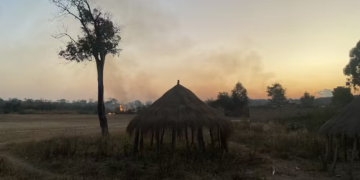
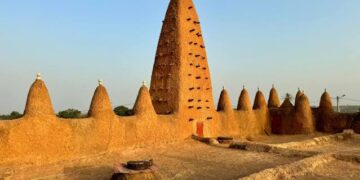
The molo is another stringed instrument used in rituals and ceremonies. Drums of various sizes: used to set the rhythm during folk dances. In traditional villages, the Zarma build their circular or rectangular mud houses with conical roofs made of thatch and palm fronds. These houses are designed to withstand the high temperatures, with the thick mud walls insulating against the heat during the day. Family housing complexes are surrounded by thatched or mud walls for privacy and security.
Since Niger gained independence from France in 1960, the Zarma people have played a significant political and administrative role, disproportionate to their demographic size compared to the Hausa. The majority of the political, military, and educational elites who led the country in the early decades after independence were of Zarma-Songhay origin, including the country’s first president, Hamani Diori, and many subsequent coup leaders and presidents, such as Seyni Kountché.
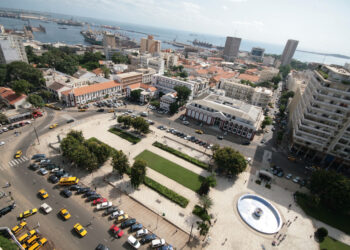
This historical political influence is partly attributed to the concentration of the Zarma in the capital, Niamey, and the western regions that were the centre of French colonial administration. This afforded their children early access to modern education and administrative positions within the state.
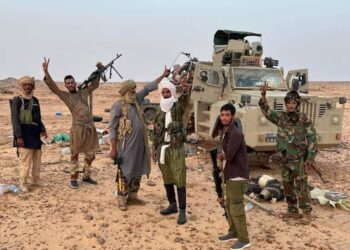
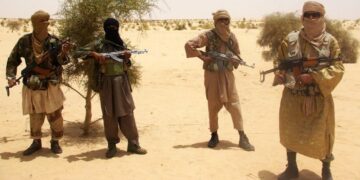
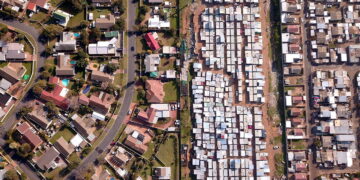
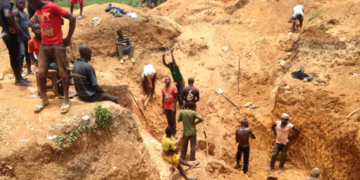
Today, Zarma communities face the same developmental challenges as the Sahel region as a whole: recurring droughts caused by climate change, rapid population growth, pressure on limited natural resources such as arable land and water, and security challenges linked to political instability and armed activity in the border region shared by Niger, Mali, and Burkina Faso.