

Qiraat Africa
عربي  |  Fr
Advertisement
  • News
    • All
    • Climate Change
    • Economy
    • Education
    • Energy
    • Health
    • Migration
    • Mining
    • Politics
    • Security
    • Society
    • Sport
    Ethiopia’s central bank joins African payments system PAPSS

    Ethiopia’s central bank joins African payments system PAPSS

    South Africa grants long-term leases to oil majors at key Durban fuel hub

    South Africa to stop subsidizing imported vehicle kits, pushing automakers to build locally

    Here’s why inflation has dropped internationally but is still rising in Nigeria

    Nigeria’s inflation rate eases slightly in September, data shows

    Kenya raises fuel prices as Middle East conflict lifts import costs

    Kenya raises fuel prices as Middle East conflict lifts import costs

    Angola to maintain crude output at 1.1 million bpd into 2024

    Angola aims for faster oil and gas concessions as part of new regulatory revamp

    The arrest of Ansaru terror leaders marks a strategic change for Nigeria: What could happen next?

    Terrorists kill 10 soldiers in attack on northeast Nigeria army base

    Why is Senegal’s billions in hidden debt an IMF concern

    Senegal bondholders pick financial adviser for debt talks, sources say

    Abu Dhabi’s IRH seeks more mining assets in Zambia

    Abu Dhabi’s IRH seeks more mining assets in Zambia

    Guinea-Bissau says it has not approved hepatitis B vaccine trial in newborns

    Guinea-Bissau says it has not approved hepatitis B vaccine trial in newborns

  • Analysis
    • All
    • Climate Change
    • Digital & Tech
    • Economy
    • Energy & Power
    • Health
    • Politics
    • Security
    • Society
    The global panel on inequality needs African evidence: here’s how it could work

    The global panel on inequality needs African evidence: here’s how it could work

    Why Africa needs a new credit agency

    Why Africa needs a new credit agency

    Japan signs deal with Namibia to explore for rare earth minerals

    Africa’s mineral strength is wasted if countries don’t work together – new report

    Ethiopia: at least 40 army allies killed in drone strike

    Ethiopia’s peace deal is unravelling – what went wrong with the Tigray agreement

    DRC on a mission to financing the world’s largest hydropower dam

    DR Congo: The INGA Dam Paradox

    Cameroon uncovers more than 200 illegal gold mines, mostly foreign-owned

    Mineral Beneficiation: A Pipedream of Prosperity in an Unequal Financial Architecture

    Zambia signs $1.1 Billion deal to build major oil refinery in Copperbelt

    Is Zambia’s Economy Rebounding Under President Hakainde Hichilema?

    Nigeria considers crude supply reforms to aid Dangote, other refiners

    Refinery rivalry: billion‑dollar oil projects expose East Africa’s long‑running regional tensions

    Zambia’s chaotic but decisive election: government demonstrates strength, democracy shows weakness

    Zambia’s chaotic but decisive election: government demonstrates strength, democracy shows weakness

  • Studies
    China could drive Africa’s renewable energy revolution, report says

    A study shows wind and solar projects in Kenya and South Africa don’t always benefit the communities that host them

    Angola’s lengthy war shaped the way farmers utilised fire—why it matters

    Angola’s lengthy war shaped the way farmers utilised fire—why it matters

    Schooling is the most severely affected by conflict when children are the target – Study

    Schooling is the most severely affected by conflict when children are the target – Study

    Pensions for Botswana’s elderly are expanding, but care services are lacking—study follows 20 years

    Pensions for Botswana’s elderly are expanding, but care services are lacking—study follows 20 years

    60 new cosmic structures have been discovered by South Africa’s MeerKAT telescope, which is mapping previously unseen gaps between galaxies

    60 new cosmic structures have been discovered by South Africa’s MeerKAT telescope, which is mapping previously unseen gaps between galaxies

    Benin government says armed forces foil coup attempt

    Coup contagion? A rash of African power grabs suggests copycats are taking note of others’ success

    One in three South Africans have never heard of AI: what this means for policy

    One in three South Africans have never heard of AI: what this means for policy

    Social Media as a Catalyst for the Spread of Dangerous Wealth Ritual Myths

    Social Media as a Catalyst for the Spread of Dangerous Wealth Ritual Myths

    Overcoming Education Barriers for Young Mothers in Sub-Saharan Africa

    Overcoming Education Barriers for Young Mothers in Sub-Saharan Africa

  • Infographics
  • Figures
    Namibia: Anger over Dubai COP28 trip by president Geingob’s children

    Hage Geingob (1941–2024): Former President of Namibia

    Cape Verde president says governments must discuss colonial reparations

    José Maria Neves: President of Cape Verde

    Jorge Bom Jesus: Linguist and former Prime Minister of São Tomé and Príncipe

    Jorge Bom Jesus: Linguist and former Prime Minister of São Tomé and Príncipe

    Joseph Leabua Jonathan (1914-1987): Former Prime Minister of Lesotho

    Joseph Leabua Jonathan (1914-1987): Former Prime Minister of Lesotho

    Gambia’s president Barrow faces backlash over ‘death wish’ on archrival

    Adama Barrow: President of the Republic of The Gambia

    Rwandan President Paul Kagame announces he will run for a fourth term

    Paul Kagame: Former military officer and president of Rwanda

    Zumbi dos Palmares (1655-1695): Afro-Brazilian leader of the great Palmares Quilombo

    Zumbi dos Palmares (1655-1695): Afro-Brazilian leader of the great Palmares Quilombo

    Léon M’ba (1902-1967): First president of independent Gabon

    Léon M’ba (1902-1967): First president of independent Gabon

    Namibia to vote in toughest election yet for ruling party

    Netumbo Nandi-Ndaitwah: President of Namibia

  • History
    Manovo-Gounda St. Floris National Park, Central African Republic

    Manovo-Gounda St. Floris National Park, Central African Republic

    Lake Malawi (Lake Nyasa) National Park, Malawi

    Lake Malawi (Lake Nyasa) National Park, Malawi

    Fasil Ghebbi, Gondar Region, Ethiopia

    Fasil Ghebbi, Gondar Region, Ethiopia

    Bwindi Impenetrable National Park, Uganda

    Bwindi Impenetrable National Park, Uganda

    Fort Jesus, Mombasa, Kenya

    Fort Jesus, Mombasa, Kenya

    Comoé National Park, Côte d’Ivoire (Ivory Coast)

    Comoé National Park, Côte d’Ivoire (Ivory Coast)

    Bassari and Bedik Cultural Landscapes, Senegal

    Bassari and Bedik Cultural Landscapes, Senegal

    Lower Valley of the Omo, Ethiopia

    Lower Valley of the Omo, Ethiopia

    Sudano-Sahelian style mosques, northern Côte d’Ivoire

    Sudano-Sahelian style mosques, northern Côte d’Ivoire

  • Others
    • Culture / Literature
    • Interview
    • Opinion
  • Countries
    • Country profiles
    • Regions
      • Central Africa
      • East Africa
      • Southern Africa
      • West Africa
No Result
View All Result
  • News
    • All
    • Climate Change
    • Economy
    • Education
    • Energy
    • Health
    • Migration
    • Mining
    • Politics
    • Security
    • Society
    • Sport
    Ethiopia’s central bank joins African payments system PAPSS

    Ethiopia’s central bank joins African payments system PAPSS

    South Africa grants long-term leases to oil majors at key Durban fuel hub

    South Africa to stop subsidizing imported vehicle kits, pushing automakers to build locally

    Here’s why inflation has dropped internationally but is still rising in Nigeria

    Nigeria’s inflation rate eases slightly in September, data shows

    Kenya raises fuel prices as Middle East conflict lifts import costs

    Kenya raises fuel prices as Middle East conflict lifts import costs

    Angola to maintain crude output at 1.1 million bpd into 2024

    Angola aims for faster oil and gas concessions as part of new regulatory revamp

    The arrest of Ansaru terror leaders marks a strategic change for Nigeria: What could happen next?

    Terrorists kill 10 soldiers in attack on northeast Nigeria army base

    Why is Senegal’s billions in hidden debt an IMF concern

    Senegal bondholders pick financial adviser for debt talks, sources say

    Abu Dhabi’s IRH seeks more mining assets in Zambia

    Abu Dhabi’s IRH seeks more mining assets in Zambia

    Guinea-Bissau says it has not approved hepatitis B vaccine trial in newborns

    Guinea-Bissau says it has not approved hepatitis B vaccine trial in newborns

  • Analysis
    • All
    • Climate Change
    • Digital & Tech
    • Economy
    • Energy & Power
    • Health
    • Politics
    • Security
    • Society
    The global panel on inequality needs African evidence: here’s how it could work

    The global panel on inequality needs African evidence: here’s how it could work

    Why Africa needs a new credit agency

    Why Africa needs a new credit agency

    Japan signs deal with Namibia to explore for rare earth minerals

    Africa’s mineral strength is wasted if countries don’t work together – new report

    Ethiopia: at least 40 army allies killed in drone strike

    Ethiopia’s peace deal is unravelling – what went wrong with the Tigray agreement

    DRC on a mission to financing the world’s largest hydropower dam

    DR Congo: The INGA Dam Paradox

    Cameroon uncovers more than 200 illegal gold mines, mostly foreign-owned

    Mineral Beneficiation: A Pipedream of Prosperity in an Unequal Financial Architecture

    Zambia signs $1.1 Billion deal to build major oil refinery in Copperbelt

    Is Zambia’s Economy Rebounding Under President Hakainde Hichilema?

    Nigeria considers crude supply reforms to aid Dangote, other refiners

    Refinery rivalry: billion‑dollar oil projects expose East Africa’s long‑running regional tensions

    Zambia’s chaotic but decisive election: government demonstrates strength, democracy shows weakness

    Zambia’s chaotic but decisive election: government demonstrates strength, democracy shows weakness

  • Studies
    China could drive Africa’s renewable energy revolution, report says

    A study shows wind and solar projects in Kenya and South Africa don’t always benefit the communities that host them

    Angola’s lengthy war shaped the way farmers utilised fire—why it matters

    Angola’s lengthy war shaped the way farmers utilised fire—why it matters

    Schooling is the most severely affected by conflict when children are the target – Study

    Schooling is the most severely affected by conflict when children are the target – Study

    Pensions for Botswana’s elderly are expanding, but care services are lacking—study follows 20 years

    Pensions for Botswana’s elderly are expanding, but care services are lacking—study follows 20 years

    60 new cosmic structures have been discovered by South Africa’s MeerKAT telescope, which is mapping previously unseen gaps between galaxies

    60 new cosmic structures have been discovered by South Africa’s MeerKAT telescope, which is mapping previously unseen gaps between galaxies

    Benin government says armed forces foil coup attempt

    Coup contagion? A rash of African power grabs suggests copycats are taking note of others’ success

    One in three South Africans have never heard of AI: what this means for policy

    One in three South Africans have never heard of AI: what this means for policy

    Social Media as a Catalyst for the Spread of Dangerous Wealth Ritual Myths

    Social Media as a Catalyst for the Spread of Dangerous Wealth Ritual Myths

    Overcoming Education Barriers for Young Mothers in Sub-Saharan Africa

    Overcoming Education Barriers for Young Mothers in Sub-Saharan Africa

  • Infographics
  • Figures
    Namibia: Anger over Dubai COP28 trip by president Geingob’s children

    Hage Geingob (1941–2024): Former President of Namibia

    Cape Verde president says governments must discuss colonial reparations

    José Maria Neves: President of Cape Verde

    Jorge Bom Jesus: Linguist and former Prime Minister of São Tomé and Príncipe

    Jorge Bom Jesus: Linguist and former Prime Minister of São Tomé and Príncipe

    Joseph Leabua Jonathan (1914-1987): Former Prime Minister of Lesotho

    Joseph Leabua Jonathan (1914-1987): Former Prime Minister of Lesotho

    Gambia’s president Barrow faces backlash over ‘death wish’ on archrival

    Adama Barrow: President of the Republic of The Gambia

    Rwandan President Paul Kagame announces he will run for a fourth term

    Paul Kagame: Former military officer and president of Rwanda

    Zumbi dos Palmares (1655-1695): Afro-Brazilian leader of the great Palmares Quilombo

    Zumbi dos Palmares (1655-1695): Afro-Brazilian leader of the great Palmares Quilombo

    Léon M’ba (1902-1967): First president of independent Gabon

    Léon M’ba (1902-1967): First president of independent Gabon

    Namibia to vote in toughest election yet for ruling party

    Netumbo Nandi-Ndaitwah: President of Namibia

  • History
    Manovo-Gounda St. Floris National Park, Central African Republic

    Manovo-Gounda St. Floris National Park, Central African Republic

    Lake Malawi (Lake Nyasa) National Park, Malawi

    Lake Malawi (Lake Nyasa) National Park, Malawi

    Fasil Ghebbi, Gondar Region, Ethiopia

    Fasil Ghebbi, Gondar Region, Ethiopia

    Bwindi Impenetrable National Park, Uganda

    Bwindi Impenetrable National Park, Uganda

    Fort Jesus, Mombasa, Kenya

    Fort Jesus, Mombasa, Kenya

    Comoé National Park, Côte d’Ivoire (Ivory Coast)

    Comoé National Park, Côte d’Ivoire (Ivory Coast)

    Bassari and Bedik Cultural Landscapes, Senegal

    Bassari and Bedik Cultural Landscapes, Senegal

    Lower Valley of the Omo, Ethiopia

    Lower Valley of the Omo, Ethiopia

    Sudano-Sahelian style mosques, northern Côte d’Ivoire

    Sudano-Sahelian style mosques, northern Côte d’Ivoire

  • Others
    • Culture / Literature
    • Interview
    • Opinion
  • Countries
    • Country profiles
    • Regions
      • Central Africa
      • East Africa
      • Southern Africa
      • West Africa
No Result
View All Result
Qiraat Africa
عربي  |  Fr
No Result
View All Result
Home Regions Central Africa

Schooling is the most severely affected by conflict when children are the target – Study

June 15, 2026
Schooling is the most severely affected by conflict when children are the target – Study

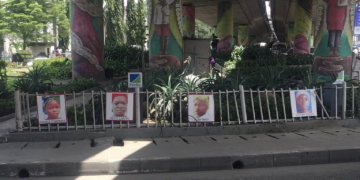
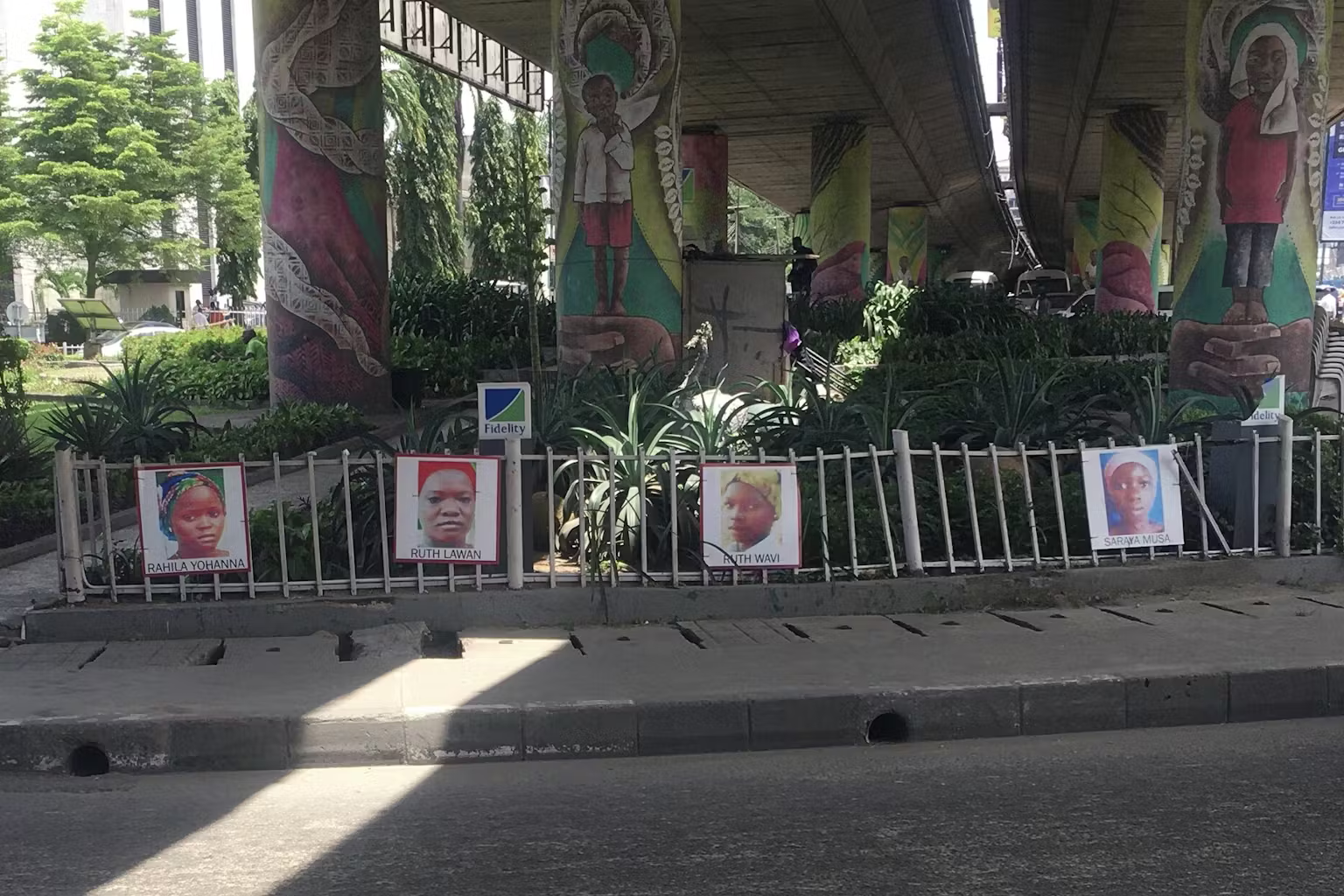
Wall of remembrance in Lagos for missing Nigerian schoolgirls. Beendy234 - Own work, CC BY-SA 4.0, CC BY

Share on FacebookShare on Twitter

By Roos van der Haer*, Andreas Forø Tollefsen*, Gudrun Østby*, Ragnhild Nordås*, & Siri Aas Rustad*


According to Unesco, around 250 million children (16%) globally are out of school although they are of an age to be at school in their countries. Available evidence suggests that out-of-school numbers are extremely high in conflict-affected countries, though the exact number is hard to quantify. For example, in the Central African Republic, South Sudan and Eritrea, more than 50% of primary school-age children are not going to school.

Research has long shown that conflict disrupts education. But armed groups do not all operate in the same way. Some use tactics that directly target children, such as recruiting child soldiers or committing sexual violence against minors. These tactics do more than create general insecurity. They directly threaten children’s safety and wellbeing.

We are a group of researchers who work on understanding the human consequences of conflict. In our recent publication on warfare’s impact on schooling, assessing 30 sub-Saharan African countries, we argue that this distinction between general violence and child-targeted tactics is key to understanding school enrolment decisions.

When children are targeted by armed groups, parents and caretakers reassess safety and the risk that they are willing to take. In some cases, schools may no longer be seen as safe spaces, and the risk of sending children to school, especially younger or more vulnerable children, can feel too high.

We show that when armed groups use child recruitment or sexual violence, the impact of conflict on school enrolment is much more severe than conflicts in which these tactics are not used. They also widen existing inequalities, especially for girls.

These new findings highlight a point that’s often overlooked: education systems cannot function if children do not feel safe. Protecting schooling in conflict settings therefore goes beyond rebuilding infrastructure. It requires addressing the threats that keep children out of classrooms.

Evidence from 700,000 potential school starters

Our study used nationally representative data from 59 Demographic and Health Surveys across 30 countries in sub-Saharan Africa conducted between 2010 and 2021. In total, this covered almost 700,000 children of the age that should have been starting primary school during this period. We combined this information with detailed data on where and when armed conflict occurred, and whether child soldier recruitment and sexual violence against minors took place within 25km of where children lived in the year before they were due to start school.

The results confirm a pattern many might expect: children living in areas affected by conflict are less likely to start school. But the effect is much stronger when conflict involves tactics that target children, such as recruitment and sexual violence.

In areas where children are recruited into armed groups, school enrolment falls by about 3.2% compared to children living in conflict-affected areas where this tactic was not used.

In places where they are exposed to sexual violence, the decline is even larger, around 9.5%.

These effects are not the same for all children. Girls are hit especially hard. Their likelihood of enrolling in school drops by roughly twice as much as that of boys. This is true even in contexts of child soldier recruitment – an issue often thought to mainly affect boys.

Fear, risk and parental decision-making

Why do these types of violence have such strong effects on school enrolment?

Although we cannot test this directly, anecdotal evidence suggests that fear plays a central role. When armed groups that are known to recruit children or commit sexual violence against them are active in the area, parents may begin especially to see the journey to and from school as unsafe. In some cases, it is not only the journey but also the schools themselves that are considered to be unsafe, as they are targeted or occupied by armed groups.

For example, in South Sudan in 2014 armed groups attacked schools and forcibly recruited more than 100 pupils into their ranks. In other cases, children have been exposed to sexual violence during or after school attacks, or while travelling to and from school. One stark example comes from early March 2017, when a militia attacked a school in the Congolese province of Luiza, beating male students and raping several schoolgirls.

Read also

Ethiopia’s central bank joins African payments system PAPSS

South Africa to stop subsidizing imported vehicle kits, pushing automakers to build locally

Nigeria’s inflation rate eases slightly in September, data shows

In these contexts, fear can decrease the willingness of children to go to school. For example, a witness of a Boko Haram attack on a school in Buni Yadi, Nigeria, told the interviewer:

After the attack, I went home. I was too afraid and decided not to go back. I told my parents I would never go back to school. They were also too afraid.

Parents and caretakers are affected too. For example, after more than 200 schoolgirls were abducted from Chibok in northern Nigeria by Boko Haram in 2014, a local parent-teacher association leader told journalists that the attack

has left families traumatised and entire communities living in fear that if their children went to school, they might never return home.

When insecurity increases, these existing challenges can tip the balance, making schooling feel like a less safe or less realistic option, especially for daughters. Girls are often perceived as particularly vulnerable during times of insecurity. At the same time, they often face additional barriers to education, such as early marriage and household responsibilities.

Implications

Our findings add an important layer to how we understand the relationship between conflict and education. It is not enough to know whether conflict is present or how intense it is in terms of casualties. What also matters is how conflict is carried out, and whether children are directly targeted.

For policymakers and international organisations, this has clear implications. Many efforts to support education in conflict-affected areas focus on rebuilding schools, providing learning materials or improving access. These are crucial steps, but they are not enough on their own.

If children are not going to school in the first place, it is often because families do not feel it is safe to send them there. This means that protecting education also requires establishing and implementing policy that decreases child recruitment and sexual violence in conflict settings. It requires safe routes to and from school, and addressing gender-specific barriers.
ــــــــــــــــــــــــــــــــــــ

  • * Assistant professor of International Relations at the Institute of Political Science, Leiden University
  • * Senior Researcher
  • * Research Professor, Peace Research Institute Oslo (PRIO)
  • * Associate professor, University of Michigan
  • * Senior Researcher, Peace Research Institute Oslo (PRIO)
Source: The Conversation
Tags: ConflictSchoolingUNESCO

Related Posts

Kenya raises fuel prices as Middle East conflict lifts import costs
East Africa

Kenya raises fuel prices as Middle East conflict lifts import costs

October 15, 2026
Angola to maintain crude output at 1.1 million bpd into 2024
Energy

Angola aims for faster oil and gas concessions as part of new regulatory revamp

October 15, 2026
The arrest of Ansaru terror leaders marks a strategic change for Nigeria: What could happen next?
Featured

Terrorists kill 10 soldiers in attack on northeast Nigeria army base

October 15, 2026
Why is Senegal’s billions in hidden debt an IMF concern
Economy

Senegal bondholders pick financial adviser for debt talks, sources say

October 14, 2026
Abu Dhabi’s IRH seeks more mining assets in Zambia
Featured

Abu Dhabi’s IRH seeks more mining assets in Zambia

October 14, 2026
Guinea-Bissau says it has not approved hepatitis B vaccine trial in newborns
Featured

Guinea-Bissau says it has not approved hepatitis B vaccine trial in newborns

October 14, 2026

Search Qiraat Africa

No Result
View All Result

Follow on Twitter

Follow @africanqiraat

Trending

Africa’s 10 Strongest Currencies in June 2026

Africa’s 10 Strongest Currencies in June 2026

July 8, 2026
Samori Touré (1830-1900): Military leader and founder of Wassoulou Empire

Samori Touré (1830-1900): Military leader and founder of Wassoulou Empire

January 11, 2026
Kumbi Saleh, the capital of the ancient Ghana Empire

Kumbi Saleh, the capital of the ancient Ghana Empire

October 13, 2025
Tunka Manin (c. 1010–1078), the last ruler of the Ghana Empire

Tunka Manin (c. 1010–1078), the last ruler of the Ghana Empire

December 12, 2025
The Sudd wetland

The Sudd wetland

February 13, 2026
The Great Mosque of Djenne, Mali

The Great Mosque of Djenne, Mali

March 25, 2025

Facebook

Sections

  • About Us
  • Privacy Policy
  • Opinion
  • Infographics
  • News
  • Analysis
  • Figures
  • Culture & Literature
  • Follow Ups
  • Historical Readings
  • Interview
  • Studies


© Copyright Qiraat Africa. Developed by Bunnaj Media .

No Result
View All Result
  • News
  • Analysis & Report
  • Studies
  • Opinion
  • Interview
  • Culture & Literature
  • Figures
  • Historical Readings
  • Regions

© 2021 Copyright Qiraat Africa.