



















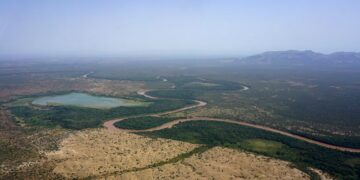

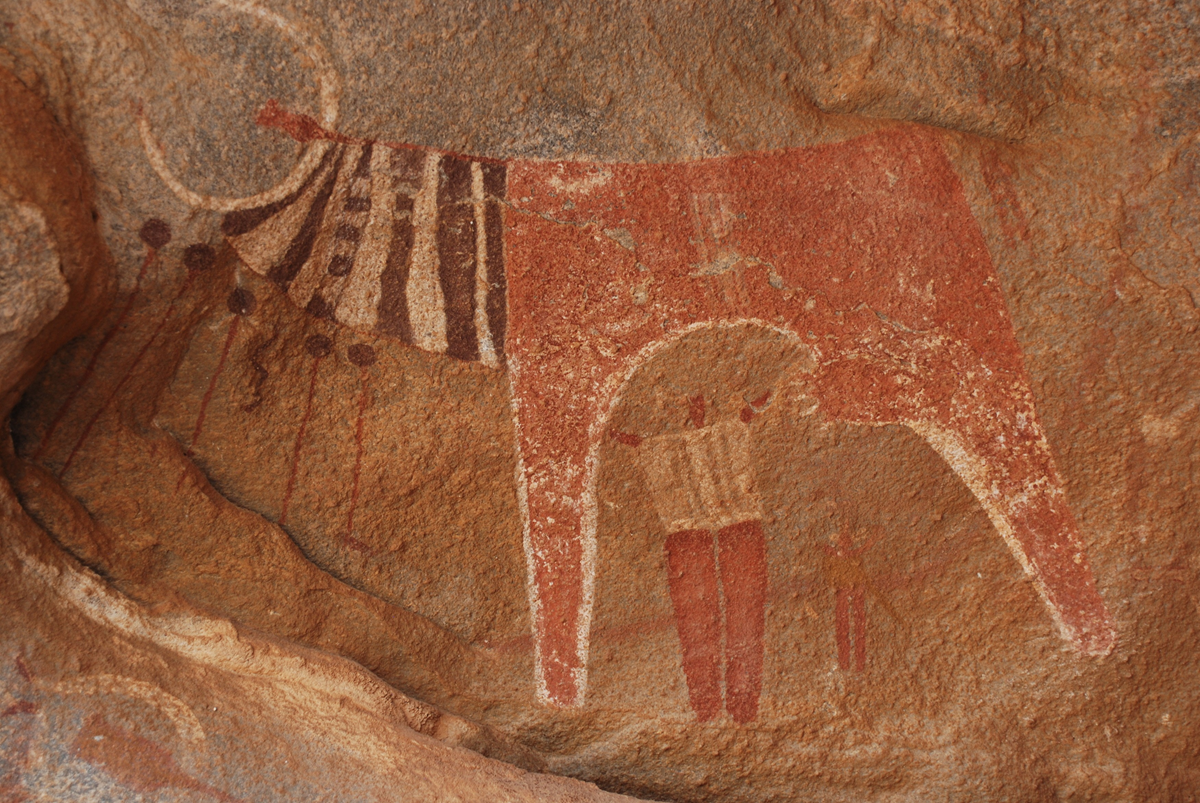
Laas Geel is located in northern Somalia (within the region administratively known as the self-declared Republic of Somaliland). Situated approximately 55 kilometres northeast of the regional capital, Hargeisa, the site comprises granite rock formations and cliffs containing a number of caves and natural rock shelters. These caves and shelters feature colourful paintings and murals that are exceptionally well-preserved.
The scientific documentation of the site is credited to a French archaeological mission led by researcher Mireille Duwan in late 2002 and early 2003, which was conducting an archaeological survey of the area in search of rock shelters that document the Neolithic period and the transition to pastoralism and animal domestication.
The Laas Geel paintings are estimated to date from 5000 to 3000 BCE, a crucial transitional period in the history of East Africa, during which human societies gradually shifted from a hunter-gatherer lifestyle to a pastoral one. The paintings provide direct visual evidence of this shift, focusing primarily on depictions of domesticated animals, reflecting the economic and religious importance these animals began to hold in the lives of early pastoral societies.
The murals at Laas Geel are distinguished by their unique artistic style and the techniques used in their creation. Ancient artists used natural pigments extracted from local minerals, such as red ochre and yellow oxide, as well as charcoal and white chalk. They mixed these pigments with binding agents like animal blood, milk, or plant resin to ensure their adhesion to the rock walls. The region’s dry climate, along with the natural caves that protected the paintings from direct sunlight and rain, helped preserve these colours and their fine details to this day.
The central and dominant theme in Laas Geel’s murals is cattle, specifically long-horned cows shaped like bows or harps. These cows are depicted in a striking, stylised manner, with their necks adorned with what appear to be colourful scarves or necklaces, suggesting a ritualistic veneration or sacred status for cattle in that era. The cows in the murals are portrayed with plump bodies and contrasting colours, with the back painted one colour and the belly another, in an attempt to emphasise their aesthetic appeal and size.
Alongside the cattle, the murals also feature distinctive human figures. The people depicted on-site are portrayed in abstract forms and are much smaller than the animals, often with their arms outstretched towards the cows in poses resembling worship or caregiving. Some of these figures wear clothing or skins covering parts of their bodies, while others wear what appear to be masks or headdresses. This contrast in size and type between humans and animals in the murals reflects the artist’s desire to highlight the numerical and economic dominance of the herd and the close spiritual bond between the herders and their animals.

The rock art also depicts other creatures and wild animals that inhabited the region during that era, offering a glimpse into the prevailing environment. These animals include domesticated dogs accompanying herders, giraffes, antelopes, and a number of felines and wild animals that either posed a threat to the herds or were targets for hunting. This ecological diversity indicates that the region once possessed vegetation and water sources that supported a rich wildlife, in contrast to the semi-arid nature of the area today.
From an archaeological and anthropological perspective, the significance of Laas Geel lies in its refutation of previous hypotheses that the Horn of Africa lacked independent, locally developed pastoral societies or that the rock art in this region was merely a late extension of North African or Arabian cultures. The unique artistic style, now known in academic circles as the “Laas Geel style”, demonstrates the existence of an independent cultural and civilisational centre that developed in response to local environmental and social conditions and formed an important link in understanding the spread of pastoral culture in East Africa.
Despite the site’s global significance, it faces complex challenges related to the region’s political and administrative status. Because the “Republic of Somaliland” lacks formal international recognition from the United Nations, Laas Geel cannot be officially inscribed on UNESCO’s World Heritage List, a designation that grants archaeological sites international protection and dedicated funding for maintenance and restoration. This legal status limits the amount of external technical and financial support that could contribute to the site’s protection and sustainable development.
Locally, the Hargeisa administration is making efforts to protect and manage the site by appointing local guards and erecting fences around some of the caves to prevent vandalism or direct contact with the paintings by visitors. However, these efforts remain limited compared to the site’s actual needs. It faces constant natural erosion from sand-laden winds and temperature fluctuations that cause the rocks to crack and crumble. Additionally, the growth of certain parasitic plants and fungi can affect the stability of the murals over time.
Economically and in terms of tourism, Laas Geel is the region’s premier tourist destination, attracting researchers, archaeologists, expatriates, and some foreign tourists interested in cultural heritage. The limited revenue from entrance fees contributes to the local economy of the surrounding villages and provides employment for some residents as tour guides or rangers. However, the lack of developed infrastructure, such as paved roads, hotels, and well-equipped information centres, limits the site’s potential to become a major international tourist attraction.