


Qiraat Africa
عربي  |  Fr
Advertisement
  • News
    • All
    • Climate Change
    • Economy
    • Education
    • Energy
    • Health
    • Migration
    • Mining
    • Politics
    • Security
    • Society
    • Sport
    Somalia launches Centennial Vision 2060 roadmap for ‘peace, prospertity and progress’

    Somalia orders UAE ambassador to leave, citing ‘invasion’

    Nigeria’s president Tinubu says economy is recovering, calls for end to protests against hardship

    Nigeria’s Tinubu asks parliament to decriminalise attempted suicide

    South Africans vote as anger over failing services threatens ANC

    South Africa’s ANC and partners near coalition deal to sideline poll-topping DA in Johannesburg

    Mozambique: Opposition leader Mondlane announces break in election protests

    Mozambique’s main opposition leader goes on trial over post-election unrest

    Eritrea wary of ‘war-mongering’ Ethiopia

    Ethiopia and Eritrea amass forces along border, heightening war fears, sources say

    Nigeria’s state-owned NNPC records $4.2 billion after-tax profit in 2025

    Nigeria’s central bank, NNPC sign deal to support forex inflows, energy funding

    South Africa arrests four men suspected of planning to fight for Russia

    South Africa police searches for motive behind deadly shootings

    Guinea plans regional gold refining hub as West African race intensifies

    Guinea’s miners stockpile gold after refinery rules halted exports, sources say

    Nigerian lawmakers mediate rift with Africa’s richest man

    Dangote Refinery to expand IPO by up to 30% to $2.1 billion, sources say

  • Analysis
    • All
    • Climate Change
    • Digital & Tech
    • Economy
    • Energy & Power
    • Health
    • Politics
    • Security
    • Society
    Free trade across Africa? Why policy must catch up with small-scale cross-border traders

    Free trade across Africa? Why policy must catch up with small-scale cross-border traders

    Hormuz block affected Africa in four places: what the continent must do to avoid future shocks

    Hormuz block affected Africa in four places: what the continent must do to avoid future shocks

    What is standing in the way of science’s ability to eradicate malaria? 3 areas where action can have an influence

    What is standing in the way of science’s ability to eradicate malaria? 3 areas where action can have an influence

    African Union summit clouded by Saudi-UAE rivalry in Horn of Africa

    Opportunities and Challenges of the AU’s Education in Emergencies Initiative

    Abiy Ahmed Tested: How the Tigray Alliance Is Reshaping Ethiopia’s Security—And What Comes Next

    Abiy Ahmed Tested: How the Tigray Alliance Is Reshaping Ethiopia’s Security—And What Comes Next

    UN report says Africa’s share of global trade stands at 3 percent

    AfCFTA: The Trade Rules Poised to Weave Africa’s Fragmented Textile Markets into One

    The global panel on inequality needs African evidence: here’s how it could work

    The global panel on inequality needs African evidence: here’s how it could work

    Why Africa needs a new credit agency

    Why Africa needs a new credit agency

    Japan signs deal with Namibia to explore for rare earth minerals

    Africa’s mineral strength is wasted if countries don’t work together – new report

  • Studies
    China could drive Africa’s renewable energy revolution, report says

    A study shows wind and solar projects in Kenya and South Africa don’t always benefit the communities that host them

    Angola’s lengthy war shaped the way farmers utilised fire—why it matters

    Angola’s lengthy war shaped the way farmers utilised fire—why it matters

    Schooling is the most severely affected by conflict when children are the target – Study

    Schooling is the most severely affected by conflict when children are the target – Study

    Pensions for Botswana’s elderly are expanding, but care services are lacking—study follows 20 years

    Pensions for Botswana’s elderly are expanding, but care services are lacking—study follows 20 years

    60 new cosmic structures have been discovered by South Africa’s MeerKAT telescope, which is mapping previously unseen gaps between galaxies

    60 new cosmic structures have been discovered by South Africa’s MeerKAT telescope, which is mapping previously unseen gaps between galaxies

    Benin government says armed forces foil coup attempt

    Coup contagion? A rash of African power grabs suggests copycats are taking note of others’ success

    One in three South Africans have never heard of AI: what this means for policy

    One in three South Africans have never heard of AI: what this means for policy

    Social Media as a Catalyst for the Spread of Dangerous Wealth Ritual Myths

    Social Media as a Catalyst for the Spread of Dangerous Wealth Ritual Myths

    Overcoming Education Barriers for Young Mothers in Sub-Saharan Africa

    Overcoming Education Barriers for Young Mothers in Sub-Saharan Africa

  • Infographics
  • Figures
    Sedick Isaacs (1940-2012): From a Robben Island prison cell to pioneering medical informatics

    Sedick Isaacs (1940-2012): From a Robben Island prison cell to pioneering medical informatics

    Prince Louis Rwagasore (1932-1961) and the Dream of Independence in Burundi

    Prince Louis Rwagasore (1932-1961) and the Dream of Independence in Burundi

    Josina Muthemba Machel (1945–1971): Reshaping of Women’s Role in the Mozambican Revolution

    Josina Muthemba Machel (1945–1971): Reshaping of Women’s Role in the Mozambican Revolution

    Yaa Asantewaa (1840-1921): Defending the Golden Stool and Asante Sovereignty in the Face of Colonialism

    Yaa Asantewaa (1840-1921): Defending the Golden Stool and Asante Sovereignty in the Face of Colonialism

    Usman Dan Fodio (1754-1817): Teacher, philosopher, and revolutionary reformer

    Usman Dan Fodio (1754-1817): Teacher, philosopher, and revolutionary reformer

    Sokhna Magat Diop (1917–2003): Senegalese cleric

    Sokhna Magat Diop (1917–2003): Senegalese cleric

    Ahmad Baba al-Timbukti (1556-1627): Writer and scholar

    Ahmad Baba al-Timbukti (1556-1627): Writer and scholar

    Namibia: Anger over Dubai COP28 trip by president Geingob’s children

    Hage Geingob (1941–2024): Former President of Namibia

    Cape Verde president says governments must discuss colonial reparations

    José Maria Neves: President of Cape Verde

  • History
    Kwanza Corridor-Cultural Landscape, Angola

    Kwanza Corridor-Cultural Landscape, Angola

    Gasumo, the southernmost source of the Nile, Burundi

    Gasumo, the southernmost source of the Nile, Burundi

    Loango ancient slavery harbour, the Republic of the Congo

    Loango ancient slavery harbour, the Republic of the Congo

    Archaeological site of Tchitundu-Hulu, Angola

    Archaeological site of Tchitundu-Hulu, Angola

    Manovo-Gounda St. Floris National Park, Central African Republic

    Manovo-Gounda St. Floris National Park, Central African Republic

    Lake Malawi (Lake Nyasa) National Park, Malawi

    Lake Malawi (Lake Nyasa) National Park, Malawi

    Fasil Ghebbi, Gondar Region, Ethiopia

    Fasil Ghebbi, Gondar Region, Ethiopia

    Bwindi Impenetrable National Park, Uganda

    Bwindi Impenetrable National Park, Uganda

    Fort Jesus, Mombasa, Kenya

    Fort Jesus, Mombasa, Kenya

  • Others
    • Culture / Literature
    • Interview
    • Opinion
  • Countries
    • Country profiles
    • Regions
      • Central Africa
      • East Africa
      • Southern Africa
      • West Africa
No Result
View All Result
Qiraat Africa
عربي  |  Fr
No Result
View All Result
Home Regions Central Africa

The Zombo (Bambata) of Angola and Congo

April 21, 2026
The Zombo (Bambata) of Angola and Congo

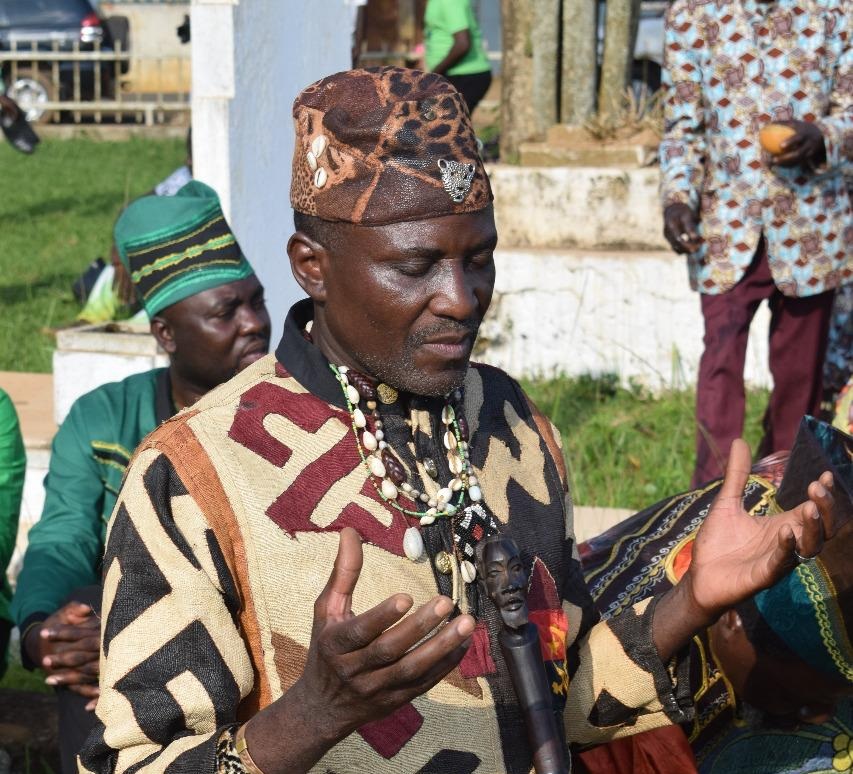
King Nzola Messo Antônio, of Mbata and the Kingdom of Congo.

Share on FacebookShare on Twitter

The Zombo, or Bazombo (plural), are one of the major subgroups of the Bakongo ethnic group. Their population is concentrated in the border region between northern Angola and the Democratic Republic of Congo (DRC), with cultural and social extensions into the DRC.

The Zombo people inhabit a strategic geographical area, as the capital of their kingdom (Mbata / Zombo / Bambata) was the town of Makela Ma Zombo, located in the Uíge Province of northern Angola. Their traditional sphere of influence extends into parts of the Central Congo region of the DRC.

Their lands are characterised by high plateaus and a relatively temperate climate compared to the low-lying tropical regions, which has influenced their way of life. Due to the colonial borders drawn at the end of the 19th century, the Zombo found themselves politically divided between Portuguese administration in Angola and Belgian administration in the Congo. This created a state of “transnational identity”, making their movement between the two countries a natural and spontaneous occurrence over the past decades.

Historically, the Zombo belong to the political and cultural expansion of the Kingdom of Kongo, which flourished from the 14th century onwards. They formed one of the main pillars of the kingdom’s northern and eastern peripheries. As central authority in the capital, M’banza-Kongo, declined, subgroups like the Zombo began to develop more distinct local identities while maintaining symbolic loyalty to the throne and a shared language.

The name “Zombo” has historically been associated with migration and movement. According to oral tradition, their settlement in their current areas was driven by the search for trade security and a desire to escape the centres of military conflict in the kingdom’s heartland. This geographical positioning made them a link between the coastal and inland populations of the Congo River basin.

The Zombo people are known in anthropological literature as “professional traders”. While many Bakongo groups focused on agriculture or hunting, the Zombo specialised in long-distance trade from the 18th century onwards. They excelled at organising trade caravans that transported goods between the Atlantic Ocean and the interior. They carried textiles, salt, metal tools, and later, cash crops. They also acted as intermediaries between European companies on the coast and the kingdoms and tribes of the African interior. This commercial skill granted them financial independence and social influence, distinguishing them from their neighbours.

In modern times, particularly during the colonial period in Angola, the Zombo became major coffee producers in the Uíge province. This activity contributed to the creation of an educated and prosperous middle class, which formed the nucleus of national political consciousness.

Like other Congolese peoples, the Zombo follow a matrilineal system. In this system, the family is traced through the maternal line, and material and symbolic heritage is passed down through the maternal half-brothers to their nephews. The Kanda (plural: makanda; sometimes dikanda or likanda) is the basic unit of society, with its members sharing a single female ancestor. The Kanda is responsible for protecting its members and distributing agricultural land.

The maternal uncle (the mother’s brother) possesses legal and social authority that surpasses that of the father in many traditional aspects, such as making decisions regarding marriage and resolving family disputes. The Zombo are characterised by very strong internal solidarity, which is evident in their diaspora communities. When a Zombo migrates to a large city like Kinshasa or Luanda, they find a clan support network that provides them with housing and employment, which has helped them dominate certain commercial sectors in major cities.

Read also

Vadoma in Zimbabwe: Social structure and environmental adaptation

South Africa’s ANC and partners near coalition deal to sideline poll-topping DA in Johannesburg

Sedick Isaacs (1940-2012): From a Robben Island prison cell to pioneering medical informatics

The Zombo speak Kizombo, a major dialect of the Kikongo language. Kizombo is characterised by phonetic features that make it easily understandable to other Bakongo groups, yet it possesses a unique vocabulary tied to trade and the mountainous environment inhabited by its speakers.

The language has played a crucial role in preserving national and political identity. During the armed struggle, Kizombo served as a secret language of communication between fighters and refugees. It is also a language rich in proverbs and maxims used in traditional courts and social gatherings, reflecting a social intelligence and a philosophy based on balance and caution.

The Zombo have a rich political history, particularly in Angola. Due to their border location and their exposure to Portuguese colonial pressures, they were among the first to organise modern political action.

In the 1950s, Zombo elites contributed to the founding of the Union of the People of Northern Angola (UPNA), which later evolved into the National Front for the Liberation of Angola (FNLA) under the leadership of Holden Roberto. The Zombo region was the main stronghold of this movement during the years of the War of Independence (1961–1974).

The major uprising in March 1961 in northern Angola provoked a brutal response from the Portuguese colonial administration, forcing hundreds of thousands of Zombo to flee and seek refuge in the Democratic Republic of Congo (formerly Zaire). This mass exodus created a unique situation of “political diaspora” in Kinshasa, where the Zombo maintained their social and political organisation while awaiting their return.

Following Angola’s independence in 1975 and the end of the civil war in 2002, waves of Zombos began returning from the Congo to Angola. These returnees, known in Angola as “Regressados,” faced significant challenges in integration, as many Zombos born in exile spoke French and Lingala instead of Portuguese, creating a cultural barrier with other Angolans. Thanks to the trade skills they acquired in Kinshasa, the Zombos came to dominate large segments of the informal trade and markets in Luanda (such as the once-famous Roque Sant’eiro market), leading to social tensions with the local population.

The Zombos continued to face accusations of “not fully belonging” to Angola due to their strong ties to the Congo, a challenge they continue to address by highlighting their role in the history of the national struggle.

Zombo art expresses their social and spiritual status. Their skill is evident in wooden or stone statues used to honour chiefs and prominent traders after their death, and they are characterised by intricate details that reflect their profession or status. They were historically renowned for the production and sale of textiles made from plant fibres, which were used as currency in some trades before the colonial era. Zombo villages are characterised by a meticulous organisation that respects family privacy and includes public spaces designated for trade and clan gatherings.

Tags: BambataDemocratic Republic of Congo (DRC)Zombo

Related Posts

Free trade across Africa? Why policy must catch up with small-scale cross-border traders
African Union

Free trade across Africa? Why policy must catch up with small-scale cross-border traders

November 17, 2026
Hormuz block affected Africa in four places: what the continent must do to avoid future shocks
Central Africa

Hormuz block affected Africa in four places: what the continent must do to avoid future shocks

November 17, 2026
South Africa arrests four men suspected of planning to fight for Russia
Featured

South Africa police searches for motive behind deadly shootings

November 17, 2026
AU grants $10.4m for Mpox emergency response
Central Africa

Africa CDC says Ebola outbreak still out of control six months since it was declared

November 16, 2026
Prince Louis Rwagasore (1932-1961) and the Dream of Independence in Burundi
Central Africa

Prince Louis Rwagasore (1932-1961) and the Dream of Independence in Burundi

November 16, 2026
DR Congo’s former leader, Kabila rejects accusations he harboured rebels
Central Africa

DR Congo: At least 44 dead in attack by ISIS-linked gunmen

November 15, 2026

Search Qiraat Africa

No Result
View All Result

Follow on Twitter

Follow @africanqiraat

Trending

Africa’s 10 Strongest Currencies in June 2026

Africa’s 10 Strongest Currencies in June 2026

July 8, 2026
Kumbi Saleh, the capital of the ancient Ghana Empire

Kumbi Saleh, the capital of the ancient Ghana Empire

October 13, 2025
DR Congo’s President Tshisekedi calls for sanctions against Rwanda

DR Congo president orders probe into copper and cobalt export revenues, document shows

April 28, 2026
Zaghawa people of northeastern Chad and western Sudan

Zaghawa people of northeastern Chad and western Sudan

March 3, 2026
Tunka Manin (c. 1010–1078), the last ruler of the Ghana Empire

Tunka Manin (c. 1010–1078), the last ruler of the Ghana Empire

December 12, 2025
Malagasy leader to seek re-election amid citizenship row

Madagascar strips ex-president Rajoelina of citizenship as former aid arrested for money laundering

October 26, 2025

Facebook

Sections

  • About Us
  • Privacy Policy
  • Opinion
  • Infographics
  • News
  • Analysis
  • Figures
  • Culture & Literature
  • Follow Ups
  • Historical Readings
  • Interview
  • Studies


© Copyright Qiraat Africa. Developed by Bunnaj Media .

No Result
View All Result
  • News
  • Analysis & Report
  • Studies
  • Opinion
  • Interview
  • Culture & Literature
  • Figures
  • Historical Readings
  • Regions

© 2021 Copyright Qiraat Africa.