

























The Zombo, or Bazombo (plural), are one of the major subgroups of the Bakongo ethnic group. Their population is concentrated in the border region between northern Angola and the Democratic Republic of Congo (DRC), with cultural and social extensions into the DRC.
The Zombo people inhabit a strategic geographical area, as the capital of their kingdom (Mbata / Zombo / Bambata) was the town of Makela Ma Zombo, located in the Uíge Province of northern Angola. Their traditional sphere of influence extends into parts of the Central Congo region of the DRC.
Their lands are characterised by high plateaus and a relatively temperate climate compared to the low-lying tropical regions, which has influenced their way of life. Due to the colonial borders drawn at the end of the 19th century, the Zombo found themselves politically divided between Portuguese administration in Angola and Belgian administration in the Congo. This created a state of “transnational identity”, making their movement between the two countries a natural and spontaneous occurrence over the past decades.
Historically, the Zombo belong to the political and cultural expansion of the Kingdom of Kongo, which flourished from the 14th century onwards. They formed one of the main pillars of the kingdom’s northern and eastern peripheries. As central authority in the capital, M’banza-Kongo, declined, subgroups like the Zombo began to develop more distinct local identities while maintaining symbolic loyalty to the throne and a shared language.
The name “Zombo” has historically been associated with migration and movement. According to oral tradition, their settlement in their current areas was driven by the search for trade security and a desire to escape the centres of military conflict in the kingdom’s heartland. This geographical positioning made them a link between the coastal and inland populations of the Congo River basin.
The Zombo people are known in anthropological literature as “professional traders”. While many Bakongo groups focused on agriculture or hunting, the Zombo specialised in long-distance trade from the 18th century onwards. They excelled at organising trade caravans that transported goods between the Atlantic Ocean and the interior. They carried textiles, salt, metal tools, and later, cash crops. They also acted as intermediaries between European companies on the coast and the kingdoms and tribes of the African interior. This commercial skill granted them financial independence and social influence, distinguishing them from their neighbours.
In modern times, particularly during the colonial period in Angola, the Zombo became major coffee producers in the Uíge province. This activity contributed to the creation of an educated and prosperous middle class, which formed the nucleus of national political consciousness.
Like other Congolese peoples, the Zombo follow a matrilineal system. In this system, the family is traced through the maternal line, and material and symbolic heritage is passed down through the maternal half-brothers to their nephews. The Kanda (plural: makanda; sometimes dikanda or likanda) is the basic unit of society, with its members sharing a single female ancestor. The Kanda is responsible for protecting its members and distributing agricultural land.
The maternal uncle (the mother’s brother) possesses legal and social authority that surpasses that of the father in many traditional aspects, such as making decisions regarding marriage and resolving family disputes. The Zombo are characterised by very strong internal solidarity, which is evident in their diaspora communities. When a Zombo migrates to a large city like Kinshasa or Luanda, they find a clan support network that provides them with housing and employment, which has helped them dominate certain commercial sectors in major cities.
The Zombo speak Kizombo, a major dialect of the Kikongo language. Kizombo is characterised by phonetic features that make it easily understandable to other Bakongo groups, yet it possesses a unique vocabulary tied to trade and the mountainous environment inhabited by its speakers.
The language has played a crucial role in preserving national and political identity. During the armed struggle, Kizombo served as a secret language of communication between fighters and refugees. It is also a language rich in proverbs and maxims used in traditional courts and social gatherings, reflecting a social intelligence and a philosophy based on balance and caution.
The Zombo have a rich political history, particularly in Angola. Due to their border location and their exposure to Portuguese colonial pressures, they were among the first to organise modern political action.
In the 1950s, Zombo elites contributed to the founding of the Union of the People of Northern Angola (UPNA), which later evolved into the National Front for the Liberation of Angola (FNLA) under the leadership of Holden Roberto. The Zombo region was the main stronghold of this movement during the years of the War of Independence (1961–1974).
The major uprising in March 1961 in northern Angola provoked a brutal response from the Portuguese colonial administration, forcing hundreds of thousands of Zombo to flee and seek refuge in the Democratic Republic of Congo (formerly Zaire). This mass exodus created a unique situation of “political diaspora” in Kinshasa, where the Zombo maintained their social and political organisation while awaiting their return.
Following Angola’s independence in 1975 and the end of the civil war in 2002, waves of Zombos began returning from the Congo to Angola. These returnees, known in Angola as “Regressados,” faced significant challenges in integration, as many Zombos born in exile spoke French and Lingala instead of Portuguese, creating a cultural barrier with other Angolans. Thanks to the trade skills they acquired in Kinshasa, the Zombos came to dominate large segments of the informal trade and markets in Luanda (such as the once-famous Roque Sant’eiro market), leading to social tensions with the local population.
The Zombos continued to face accusations of “not fully belonging” to Angola due to their strong ties to the Congo, a challenge they continue to address by highlighting their role in the history of the national struggle.
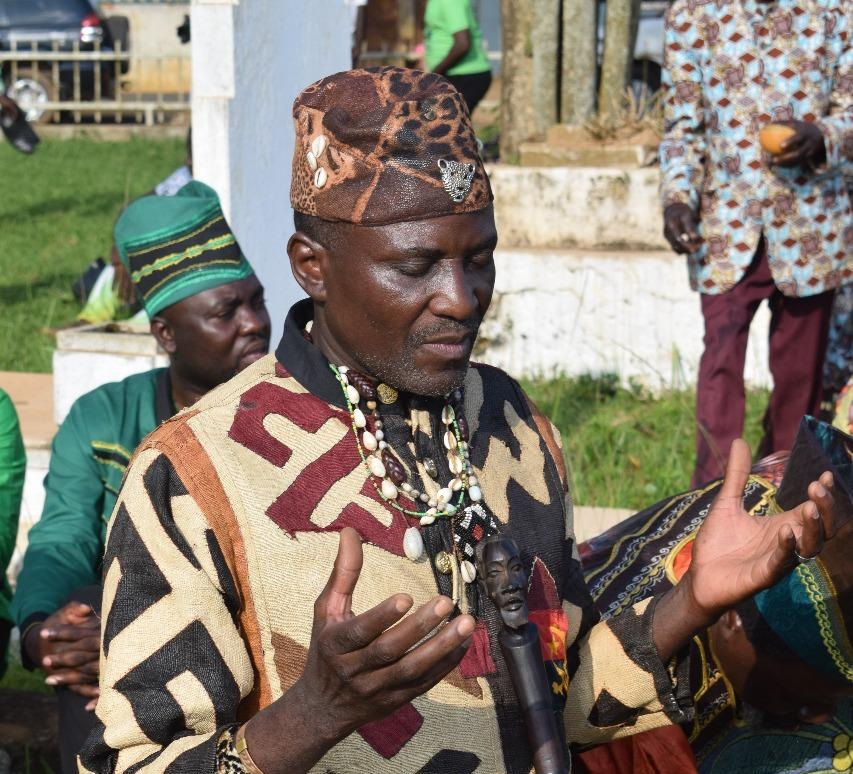
Zombo art expresses their social and spiritual status. Their skill is evident in wooden or stone statues used to honour chiefs and prominent traders after their death, and they are characterised by intricate details that reflect their profession or status. They were historically renowned for the production and sale of textiles made from plant fibres, which were used as currency in some trades before the colonial era. Zombo villages are characterised by a meticulous organisation that respects family privacy and includes public spaces designated for trade and clan gatherings.