
























By Adam Abdurraheem* & Ahmadulbadawy Abdul Raheem
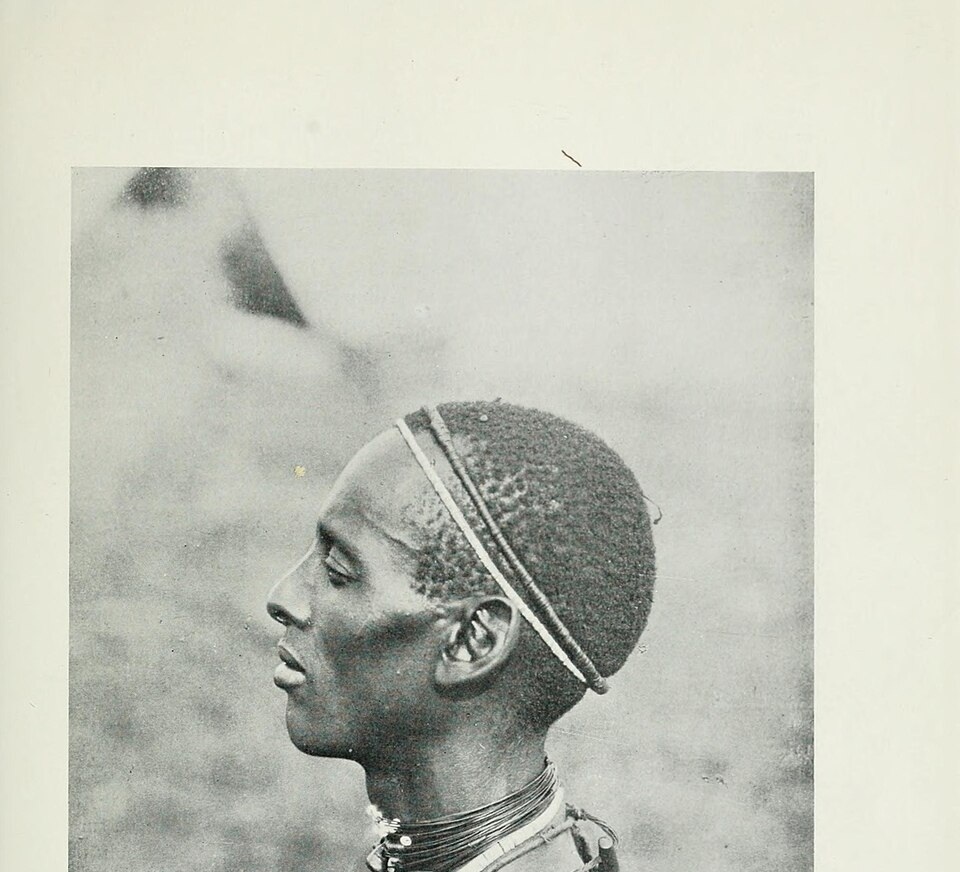
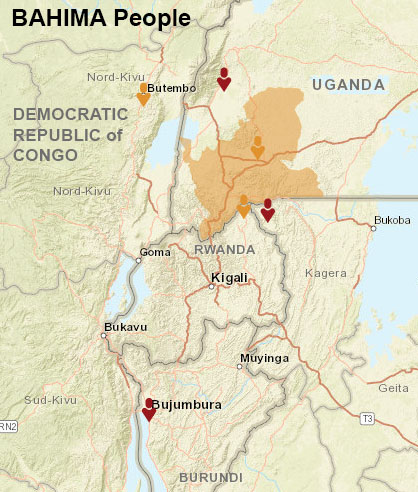
The terms Bahima, Hima, Bahema, and Hema refer to pastoralist and ethnic groups historically and culturally linked to the Great Lakes region of East and Central Africa—specifically southwestern Uganda, northern Tanzania (formerly the Kingdom of Karagwe), and the Ituri province in the northeastern Democratic Republic of the Congo.
The variations in spelling and morphology arise from the rules of phonetic agreement and pluralisation found in Bantu languages; the prefix “”Ba-“—for instance, typically denotes the plural—as seen in “Bahima”, “Bahema”, or “Bahuma” (in the Kingdom of Bunyoro)—while the singular or general term is often rendered as “Muhima”, “Hima”, or “Hema”, depending on the specific ethnographic or linguistic convention.
In southwestern Uganda and the Karagwe region of Tanzania, the term “Bahima” or “Hima” has been associated with a pastoralist lifestyle centred on cattle herding within the social fabric of historical kingdoms such as Ankole, Bunyoro, Toro, and Karagwe. This label should not necessarily be understood as defining a rigid ethnic boundary isolated from political and social contexts.
Ethnographic studies indicate that the classification of individuals as either “Hima” or “Iru” (agriculturalists) was influenced by economic status, professional role, and the specific kingdom in which an individual or clan resided; in some instances, a given clan might be categorised as “Hima” in one context, yet as “Iru” in another.
In the Ituri province of the northeastern Democratic Republic of the Congo, the group is known as the Hema or Bahema—a Bantu-speaking people primarily distributed across the territories of Djugu and Irumu. Researchers often distinguish between two main branches of the Bahema in Ituri: the Northern Hema (Gegere), who reside in the Djugu territory and speak the Lendu (or Batha) language—a result of historical interaction and intermarriage with the Lendu majority—and the Southern Hema (Nyoro), who speak Kihema (or Kinyoro) and are concentrated in the Irumu territory, having historically remained more distinct from Lendu communities.
Historical Roots and Anthropological Hypotheses
Historical and anthropological literature has explored the origins of the Hema and Bahema from various perspectives, drawing upon oral traditions, the history of kingdoms, historical linguistics, and genetic studies. Certain historical sources and early writings link this group—or the broader cultural network to which it belongs—to patterns of migration and intermingling within the Great Lakes region. These accounts often suggest historical connections or cultural parallels with other pastoralist groups in the region, such as the Tutsi, while noting that the distinctions between population groups in the Great Lakes region have undergone significant evolution over the course of centuries.
Linguistically, the Bahima of southwestern Uganda speak “Runyankole”, a language belonging to the Rutara branch of the Bantu language family. The languages of the Hima and Rura peoples in the broader region are linked to this same linguistic network, though local variations exist—such as those found in the Ituri region, where distinct northern and southern Hima groups are identified.
Some researchers exploring the etymology of these ethnonyms have suggested that the term “Hima” may be connected to clan-based or totemic terminology found in certain Bantu languages; meanwhile, in the context of the Bunyoro kingdom, the term “Bahuma” has been traced to a verb denoting the sounds associated with cattle herds—the movement of the animals, their lowing, and the calls of the herders.
In the fields of genetics and physiology, various studies have highlighted a higher prevalence of lactase persistence (lactose tolerance) among certain pastoralist groups in East Africa compared to neighbouring Bantu-speaking agriculturalist communities. In population genetics, this is interpreted as an evolutionary adaptation resulting from a long-term reliance on milk and dairy products.
At the same time, historians and local researchers have cautioned against overgeneralising physical stereotypes as definitive criteria for distinguishing between groups, emphasising that extensive demographic and social intermingling means that individual and intra-group differences are far too complex to be reduced to a single, monolithic category.
The Pastoral Economy and Social Structure
Cattle—most notably the Ankole breed, recognised for their large, sweeping horns—occupy a central position in the pastoral economy and cultural symbolism of the Bahima people. In this system, the value of a herd extends far beyond the provision of milk, dairy products, meat, or income; it encompasses social status, kinship ties, life-cycle rituals, ownership, and prestige within the community.
Field studies on the pastoral practices of the Bahima in southwestern Uganda reveal that reproductive females (cows and heifers) make up the majority of the herd, ensuring both reproductive sustainability and milk production. Within the pastoral household, there is a clear division of labour: the head of the household or male herders typically manage daily grazing, determine routes to pasture and water, and make major decisions regarding the sale, purchase, or breeding of cattle. Meanwhile, women play a pivotal role in processing and preserving dairy products. Individual family members may hold ownership over specific portions of the herd, in accordance with local customs.
The lives of the Bahima have undergone significant shifts—moving from extensive seasonal nomadism toward relative stability on more defined farms and grazing lands—though some pastoral movement still occurs during periods of severe drought or prolonged water and fodder scarcity. In recent decades, some cattle keepers have begun crossbreeding their herds with other varieties, such as the Holstein-Friesian, to increase milk yields. At the same time, a large segment of the pastoralist community remains committed to preserving the distinct characteristics of the Ankole breed and its associated pastoral heritage.
Political Transformations and Conflicts in the Ituri Province
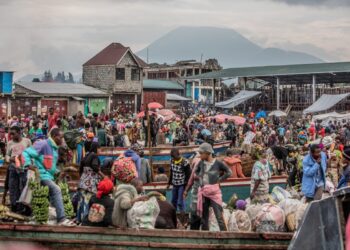
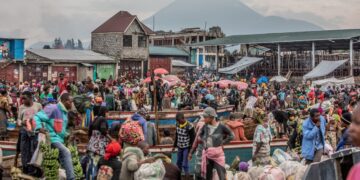
In the northeastern Democratic Republic of the Congo, the name “Hema” (or “Bahima”) has, in contemporary history, become associated with intense tensions and armed conflicts in the Ituri province—most notably the protracted struggle between the Hema and Lendu communities. This conflict escalated sharply between 1999 and 2003, with its repercussions persisting and occasionally resurfacing in the years that followed. The conflict did not stem from a single cause; rather, it was driven by a complex interplay of historical factors—including land rights, administrative influence, and political representation—exacerbated by deepening ethnic polarisation during the Second Congo War, the influx of weaponry, and the intervention of various regional and local armed actors.
Political and administrative developments in Ituri—such as the restructuring of administrative frameworks and the appointment of local officials amidst military interventions and divisions among armed factions—deepened mutual suspicion between the Hema and Lendu, transforming local disputes into large-scale, bloody confrontations.
The conflict in Ituri resulted in a staggering human toll, mass displacement of civilians, and, at its peak, widespread outbreaks of disease and malnutrition. While it prompted international and regional security and humanitarian interventions, these efforts failed to fully eradicate the root causes of instability in certain parts of the province. These divergent trajectories—between southwestern Uganda and the Ituri region—demonstrate that closely related terms such as “Bahima”, “Hima”, and “Bahima” share an intertwined linguistic, cultural, and pastoral root within the Great Lakes region; yet, they take on distinct political, economic, and social contexts depending on the specific state, territory, and historical period.
ــــــــــــــــــــــــــــــــــــــــــــــــ
- 101 Last Tribes. (n.d.). Bahima people. https://www.101lasttribes.com/tribes/bahima.html
- Nakra Safaris Uganda. (2025, June 7). Bahima cultural heritage. https://nakrasafarisuganda.com/the-bahima-cultural-heritage/
- UCDP (). Hema 1989-2025. Uppsala Conflict Data Program, https://ucdp.uu.se/actor/616
- Henri Boshoff (2003). TENSION IN ITURI: AN UPDATE ON THE DEMOCRATIC REPUBLIC OF THE CONGO. Institute for Security Studies – AFRICAN SECURITY ANALYSIS PROGRAMME, https://www.files.ethz.ch/isn/136902/ITURIAPR03.PDF
- Wurzinger, M., Ndumu, D., Baumung, R., Drucker, A., Okeyo, A. M., Semambo, D. K., Byamungu, N., & Sölkner, J. (2008). Lifestyle and herding practices of Bahima pastoralists in Uganda. African Journal of Agricultural Research, 3(8), 542–548.