






Qiraat Africa
عربي  |  Fr
Advertisement
  • News
    • All
    • Climate Change
    • Economy
    • Education
    • Energy
    • Health
    • Migration
    • Mining
    • Politics
    • Security
    • Society
    • Sport
    UN-backed court in CAR issued arrest warrant for ex-president François Bozizé

    Former CAR president faces crimes against humanity trial

    Ten in Kenya suffer gunshot wounds at rallies marking anniversary of deadly protests

    Kenya to pay compensation to almost 2,000 victims of violent protests

    South African president seeks to stop impeachment probe over ‘Farmgate’ scandal

    South Africa’s Ramaphosa warns against scapegoating migrants for economic woes

    G7 leaders call for strong, coordinated response to Ebola outbreak

    G7 leaders call for strong, coordinated response to Ebola outbreak

    Nigeria arrests ex-power minister Mamman after 75-year graft sentence

    Nigeria puts hundreds more people on trial in crackdown on militancy

    Middle east fuel crisis keeps Mozambique fishermen ashore

    Middle east fuel crisis keeps Mozambique fishermen ashore

    Somaliland president visits Israel in defiance of Mogadishu

    Somaliland president visits Israel in defiance of Mogadishu

    Xenophobic attacks are hurting South Africa’s image abroad, says minister

    Xenophobic attacks are hurting South Africa’s image abroad, says minister

    Senegal opposition leader, Ousmane Sonko hints at election disruption if he can’t run

    Senegal’s Sonko softens tone on debt restructuring as IMF talks due

  • Analysis
    • All
    • Climate Change
    • Digital & Tech
    • Economy
    • Energy & Power
    • Health
    • Politics
    • Security
    • Society
    The promise and risks of Kenya’s ambitious new strategy to close refugee camps

    The promise and risks of Kenya’s ambitious new strategy to close refugee camps

    Al Qaeda-linked militants curb their brutality in seized Malian territory

    Al Qaeda-linked militants curb their brutality in seized Malian territory

    Five Years After the Coup in Mali: Are Stability and Growth Within Reach?

    The Political Economy of Insecurity in Mali: Armed Groups, Resources, and State Fragility

    Ghana to evacuate 300 citizens from South Africa after xenophobic attacks

    Xenophobic Violence and Human Security in South Africa: Causes and Consequences

    Inside an African lab that helped crack the hantavirus outbreak

    Inside an African lab that helped crack the hantavirus outbreak

    Nigeria’s Agricultural sector: Problems and challenges

    Agriculture in Africa: science and research cannot have an impact without investments and good policies

    Mali’s junta creates a new ministerial-level post to oversee the mining sector

    African Mineral Resources: The Controversial Link to US Health Deals

    Ghana curbs offshore investments to protect cedi, boost stability

    Ghana’s mining law attempts to eradicate speculation, but leaves communities in limbo: insights from a lithium case study

    East African Community’s expansion has triggered financial difficulties: why solutions come with risks

    East African Community’s expansion has triggered financial difficulties: why solutions come with risks

  • Studies
    Schooling is the most severely affected by conflict when children are the target – Study

    Schooling is the most severely affected by conflict when children are the target – Study

    Pensions for Botswana’s elderly are expanding, but care services are lacking—study follows 20 years

    Pensions for Botswana’s elderly are expanding, but care services are lacking—study follows 20 years

    60 new cosmic structures have been discovered by South Africa’s MeerKAT telescope, which is mapping previously unseen gaps between galaxies

    60 new cosmic structures have been discovered by South Africa’s MeerKAT telescope, which is mapping previously unseen gaps between galaxies

    Benin government says armed forces foil coup attempt

    Coup contagion? A rash of African power grabs suggests copycats are taking note of others’ success

    One in three South Africans have never heard of AI: what this means for policy

    One in three South Africans have never heard of AI: what this means for policy

    Social Media as a Catalyst for the Spread of Dangerous Wealth Ritual Myths

    Social Media as a Catalyst for the Spread of Dangerous Wealth Ritual Myths

    Overcoming Education Barriers for Young Mothers in Sub-Saharan Africa

    Overcoming Education Barriers for Young Mothers in Sub-Saharan Africa

    Youth Empowerment Through Vocational Training in Rural Sub-Saharan Africa

    Youth Empowerment Through Vocational Training in Rural Sub-Saharan Africa

    Manufacturers in Ghana and Nigeria claim that although corruption damages businesses, digital technologies provide a chance to combat it

    Manufacturers in Ghana and Nigeria claim that although corruption damages businesses, digital technologies provide a chance to combat it

  • Infographics
  • Figures
    Eduardo Mondlane (1920-1969): Mozambican Revolutionary and Anthropologist

    Eduardo Mondlane (1920-1969): Mozambican Revolutionary and Anthropologist

    William Tubman (1895-1971): Liberian politician and longest-serving president in the country’s history

    William Tubman (1895-1971): Liberian politician and longest-serving president in the country’s history

    Abebe Bikila (1932-1973): Ethiopian marathoner and first black African to win an Olympic medal

    Abebe Bikila (1932-1973): Ethiopian marathoner and first black African to win an Olympic medal

    W. E. B. Du Bois (1868-1963): Sociologist, historian, and Pan-Africanist civil rights activist

    W. E. B. Du Bois (1868-1963): Sociologist, historian, and Pan-Africanist civil rights activist

    Frantz Fanon (1925-1961): Psychiatrist and political philosopher

    Frantz Fanon (1925-1961): Psychiatrist and political philosopher

    Percy Lavon Julian (1899-1975): African American researcher and chemist

    Percy Lavon Julian (1899-1975): African American researcher and chemist

    Harriet Tubman (Araminta Ross, 1822-1913): American abolitionist and social activist

    Harriet Tubman (Araminta Ross, 1822-1913): American abolitionist and social activist

    Dorothy Vaughan (1910-2008): African American mathematician and human computer

    Dorothy Vaughan (1910-2008): African American mathematician and human computer

    George Washington Carver (1864-1943): African American agricultural scientist and inventor

    George Washington Carver (1864-1943): African American agricultural scientist and inventor

  • History
    Laas Geel, Somalia

    Laas Geel, Somalia

    Lakes Of Ounianga, Chad

    Lakes Of Ounianga, Chad

    Nok Caves, Togo

    Nok Caves, Togo

    The Land of Punt (modern Somalia, Eritrea, Ethiopia, or eastern Sudan)

    The Land of Punt (modern Somalia, Eritrea, Ethiopia, or eastern Sudan)

    Avenue of the Baobabs, Madagascar

    Avenue of the Baobabs, Madagascar

    Lopé-Okanda (Gabon)

    Lopé-Okanda (Gabon)

    The Sudd wetland

    The Sudd wetland

    Khami Ruins (Zimbabwe), the capital of the Torwa state

    Khami Ruins (Zimbabwe), the capital of the Torwa state

    Royal Palace, Porto-Novo, Republic of Benin

    Royal Palace, Porto-Novo, Republic of Benin

  • Others
    • Culture / Literature
    • Interview
    • Opinion
  • Countries
    • Country profiles
    • Regions
      • Central Africa
      • East Africa
      • Southern Africa
      • West Africa
No Result
View All Result
  • News
    • All
    • Climate Change
    • Economy
    • Education
    • Energy
    • Health
    • Migration
    • Mining
    • Politics
    • Security
    • Society
    • Sport
    UN-backed court in CAR issued arrest warrant for ex-president François Bozizé

    Former CAR president faces crimes against humanity trial

    Ten in Kenya suffer gunshot wounds at rallies marking anniversary of deadly protests

    Kenya to pay compensation to almost 2,000 victims of violent protests

    South African president seeks to stop impeachment probe over ‘Farmgate’ scandal

    South Africa’s Ramaphosa warns against scapegoating migrants for economic woes

    G7 leaders call for strong, coordinated response to Ebola outbreak

    G7 leaders call for strong, coordinated response to Ebola outbreak

    Nigeria arrests ex-power minister Mamman after 75-year graft sentence

    Nigeria puts hundreds more people on trial in crackdown on militancy

    Middle east fuel crisis keeps Mozambique fishermen ashore

    Middle east fuel crisis keeps Mozambique fishermen ashore

    Somaliland president visits Israel in defiance of Mogadishu

    Somaliland president visits Israel in defiance of Mogadishu

    Xenophobic attacks are hurting South Africa’s image abroad, says minister

    Xenophobic attacks are hurting South Africa’s image abroad, says minister

    Senegal opposition leader, Ousmane Sonko hints at election disruption if he can’t run

    Senegal’s Sonko softens tone on debt restructuring as IMF talks due

  • Analysis
    • All
    • Climate Change
    • Digital & Tech
    • Economy
    • Energy & Power
    • Health
    • Politics
    • Security
    • Society
    The promise and risks of Kenya’s ambitious new strategy to close refugee camps

    The promise and risks of Kenya’s ambitious new strategy to close refugee camps

    Al Qaeda-linked militants curb their brutality in seized Malian territory

    Al Qaeda-linked militants curb their brutality in seized Malian territory

    Five Years After the Coup in Mali: Are Stability and Growth Within Reach?

    The Political Economy of Insecurity in Mali: Armed Groups, Resources, and State Fragility

    Ghana to evacuate 300 citizens from South Africa after xenophobic attacks

    Xenophobic Violence and Human Security in South Africa: Causes and Consequences

    Inside an African lab that helped crack the hantavirus outbreak

    Inside an African lab that helped crack the hantavirus outbreak

    Nigeria’s Agricultural sector: Problems and challenges

    Agriculture in Africa: science and research cannot have an impact without investments and good policies

    Mali’s junta creates a new ministerial-level post to oversee the mining sector

    African Mineral Resources: The Controversial Link to US Health Deals

    Ghana curbs offshore investments to protect cedi, boost stability

    Ghana’s mining law attempts to eradicate speculation, but leaves communities in limbo: insights from a lithium case study

    East African Community’s expansion has triggered financial difficulties: why solutions come with risks

    East African Community’s expansion has triggered financial difficulties: why solutions come with risks

  • Studies
    Schooling is the most severely affected by conflict when children are the target – Study

    Schooling is the most severely affected by conflict when children are the target – Study

    Pensions for Botswana’s elderly are expanding, but care services are lacking—study follows 20 years

    Pensions for Botswana’s elderly are expanding, but care services are lacking—study follows 20 years

    60 new cosmic structures have been discovered by South Africa’s MeerKAT telescope, which is mapping previously unseen gaps between galaxies

    60 new cosmic structures have been discovered by South Africa’s MeerKAT telescope, which is mapping previously unseen gaps between galaxies

    Benin government says armed forces foil coup attempt

    Coup contagion? A rash of African power grabs suggests copycats are taking note of others’ success

    One in three South Africans have never heard of AI: what this means for policy

    One in three South Africans have never heard of AI: what this means for policy

    Social Media as a Catalyst for the Spread of Dangerous Wealth Ritual Myths

    Social Media as a Catalyst for the Spread of Dangerous Wealth Ritual Myths

    Overcoming Education Barriers for Young Mothers in Sub-Saharan Africa

    Overcoming Education Barriers for Young Mothers in Sub-Saharan Africa

    Youth Empowerment Through Vocational Training in Rural Sub-Saharan Africa

    Youth Empowerment Through Vocational Training in Rural Sub-Saharan Africa

    Manufacturers in Ghana and Nigeria claim that although corruption damages businesses, digital technologies provide a chance to combat it

    Manufacturers in Ghana and Nigeria claim that although corruption damages businesses, digital technologies provide a chance to combat it

  • Infographics
  • Figures
    Eduardo Mondlane (1920-1969): Mozambican Revolutionary and Anthropologist

    Eduardo Mondlane (1920-1969): Mozambican Revolutionary and Anthropologist

    William Tubman (1895-1971): Liberian politician and longest-serving president in the country’s history

    William Tubman (1895-1971): Liberian politician and longest-serving president in the country’s history

    Abebe Bikila (1932-1973): Ethiopian marathoner and first black African to win an Olympic medal

    Abebe Bikila (1932-1973): Ethiopian marathoner and first black African to win an Olympic medal

    W. E. B. Du Bois (1868-1963): Sociologist, historian, and Pan-Africanist civil rights activist

    W. E. B. Du Bois (1868-1963): Sociologist, historian, and Pan-Africanist civil rights activist

    Frantz Fanon (1925-1961): Psychiatrist and political philosopher

    Frantz Fanon (1925-1961): Psychiatrist and political philosopher

    Percy Lavon Julian (1899-1975): African American researcher and chemist

    Percy Lavon Julian (1899-1975): African American researcher and chemist

    Harriet Tubman (Araminta Ross, 1822-1913): American abolitionist and social activist

    Harriet Tubman (Araminta Ross, 1822-1913): American abolitionist and social activist

    Dorothy Vaughan (1910-2008): African American mathematician and human computer

    Dorothy Vaughan (1910-2008): African American mathematician and human computer

    George Washington Carver (1864-1943): African American agricultural scientist and inventor

    George Washington Carver (1864-1943): African American agricultural scientist and inventor

  • History
    Laas Geel, Somalia

    Laas Geel, Somalia

    Lakes Of Ounianga, Chad

    Lakes Of Ounianga, Chad

    Nok Caves, Togo

    Nok Caves, Togo

    The Land of Punt (modern Somalia, Eritrea, Ethiopia, or eastern Sudan)

    The Land of Punt (modern Somalia, Eritrea, Ethiopia, or eastern Sudan)

    Avenue of the Baobabs, Madagascar

    Avenue of the Baobabs, Madagascar

    Lopé-Okanda (Gabon)

    Lopé-Okanda (Gabon)

    The Sudd wetland

    The Sudd wetland

    Khami Ruins (Zimbabwe), the capital of the Torwa state

    Khami Ruins (Zimbabwe), the capital of the Torwa state

    Royal Palace, Porto-Novo, Republic of Benin

    Royal Palace, Porto-Novo, Republic of Benin

  • Others
    • Culture / Literature
    • Interview
    • Opinion
  • Countries
    • Country profiles
    • Regions
      • Central Africa
      • East Africa
      • Southern Africa
      • West Africa
No Result
View All Result
Qiraat Africa
عربي  |  Fr
No Result
View All Result
Home Culture & Literature

Dassanech people of Ethiopia, Kenya, and South Sudan

May 8, 2026
Dassanech people of Ethiopia, Kenya, and South Sudan

Image copyright from: 101lasttribes.com

Share on FacebookShare on Twitter

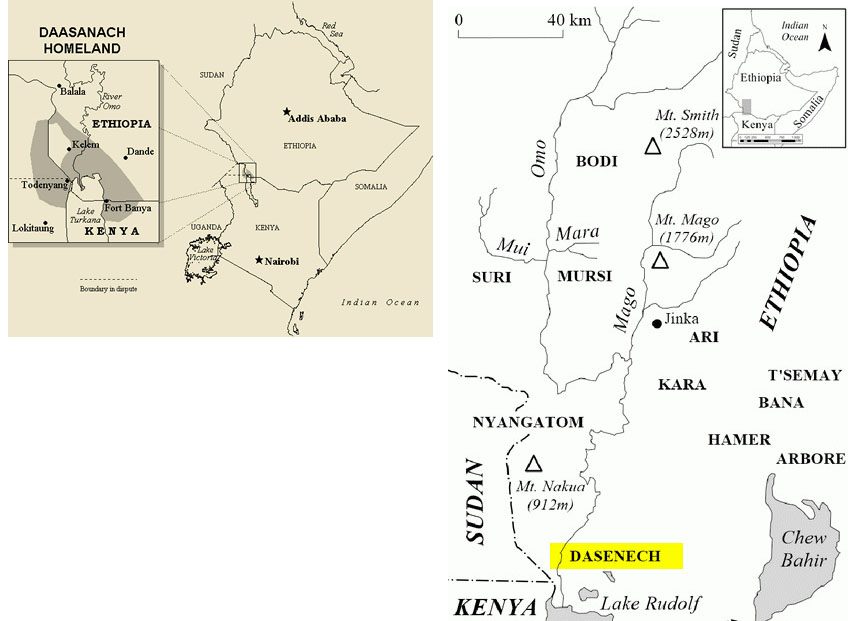
The Dassanech stand out as one of the ethnic groups inhabiting the border region shared by Ethiopia, Kenya, and South Sudan. The demographic and cultural centre of this group is located on the southern outskirts of Omorate town, along the Omo River delta in Ethiopia. Their pastoral movements extend northward into Kenya around the northern shores of Lake Turkana, as well as parts of the Ilemi Triangle and areas bordering South Sudan.

Linguistically, the Dassanech belong to the Eastern Cushitic group, which falls under the umbrella of Afro-Asiatic languages, specifically the Omo-Tana branch. Their language is characterised by syntactic features that distinguish them from their Nilotic neighbours, such as the Turkana and Nyangatom. However, the Dassanech’s ethnic structure is the product of centuries of historical intermingling and integration.

The Dassanech (or Daasanach) people of the Omo Valley are divided into eight main exogamous, patrilineal, and non-territorial clans known as ‘tur’ (or ‘tuuro’), the most prominent of which are the Turinyerim, Fargar, Galbur, Turat, Ili, Mur, Edze, and Tiyeme.

The historical backgrounds of these clans reveal that some trace their origins to other ethnic groups; for example, the Randal clan is historically descended from the Somali or Kenyan Randal tribes, while other clans are associated with the Samburu or Boran groups. This open social system allowed individuals and small groups who lost their livestock or were afflicted by epidemics and famines in neighbouring communities to join the Dassanech and fully integrate into their social structure after adopting their language and customs. This gave the tribe a distinct demographic and defensive advantage in the region.

The harsh geographical environment of the Lower Omo Basin, characterised by extremely high temperatures and scarce rainfall, necessitates a dual economic model based primarily on livestock herding, along with floodplain agriculture and fishing.

Read also

Kenya to pay compensation to almost 2,000 victims of violent protests

G7 leaders call for strong, coordinated response to Ebola outbreak

The promise and risks of Kenya’s ambitious new strategy to close refugee camps

Livestock (cattle, sheep, goats, and camels) is central to the Dasanesh economy and cultural identity. Livestock is a source of food and a store of wealth, a measure of social status, and a key element in dowry, blood money, and rites of passage. The Dassanech rely on a structured seasonal migration pattern. During the dry season, cattle herds move towards latrines and wetlands along the Omo River delta or towards the Kenyan and South Sudanese borders in search of grazing land. During the rainy season, they return to higher ground to avoid flooding and the threat of ticks and blood-sucking flies.

Unlike the purely pastoral groups neighbouring them, the Dassanech practice seasonal agriculture entirely dependent on the annual flooding of the Omo River. When the river overflows its banks between July and September, inundating the lowlands with silt and fertile mud, the tribe uses the receding waters to cultivate sorghum, maize, cowpeas, and pumpkins. These crops provide a vital food source, compensating for the reduced milk and meat production during severe droughts.

Within the Dassanech community, there is a distinct socioeconomic class known as the “Dies”. This group comprises individuals and families who lost their entire livestock herds due to wars, epidemics, or droughts and were forced to settle on the shores of Lake Turkana or riverbanks to fish, hunt crocodiles, and catch hippos. Historically, this segment of the population has been viewed with a degree of social inferiority by the pastoral majority, with intermarriage between herders and the “Dies” being prohibited. However, this group plays a protective and economic role as a buffer against environmental shocks; the “Dies” can gradually rebuild their livestock herds by bartering fish for cattle and eventually returning to a nomadic lifestyle.

The Dassanech society is organised according to a rigid social structure based on kinship and a complex age-group system. This system defines the political, legal, and ritual roles of individuals within the tribe, dividing male life into successive stages: childhood, young warriors, and finally, the elder class.

The “young warrior” stage is responsible for protecting and securing the herds, conducting cattle raids against neighbouring tribes, and exploring new grazing lands. Strategic decision-making, resolving clan disputes, and managing relations with other tribes and local governments rest entirely with the council of elders and leaders, who possess ritual powers that include offering sacrifices, blessing crops, and imposing punishments on those who violate tribal customs.

The Daasanach live in one of the most volatile regions of East Africa, where the political borders of three countries intersect with traditional grazing routes. The Daasanach’s historical relations with their neighbours, such as the Turkana (in Kenya), the Nyangatom (in Ethiopia), and the Toposa (in South Sudan), are characterised by ongoing and intermittent conflict centred on two main issues: control of scarce water resources and cattle raids.

These conflicts have intensified in recent decades due to several factors. The influx of weapons from conflict zones in South Sudan and Somalia has led to the replacement of traditional spears with automatic rifles, increasing lethality and casualties during skirmishes and transforming the conflict from ritualistic skirmishes into paramilitary confrontations.

Prolonged and recurring droughts and the declining water levels of Lake Turkana have reduced available grazing land, prompting various groups to engage in fierce competition for specific geographic areas, such as the Ilmi Triangle (a disputed territory between Kenya, South Sudan, and Ethiopia).

The political borders of the three countries fail to restrain the movements of pastoralists who do not recognise these arbitrary lines in their search for grazing land for their livestock, often resulting in diplomatic tensions between the central governments when cross-border attacks occur. Contemporary Transformations and Threats to Sustainability

The Daasanach community faces increasing pressures that threaten the foundations of their traditional way of life and force them to adapt to a new political and economic reality imposed by large-scale development projects undertaken by central governments, particularly on the Ethiopian side.

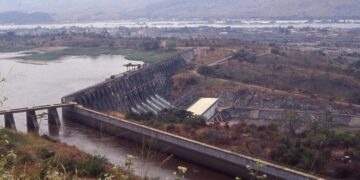
The construction of the Gilgel Gibe III Dam on the Omo River, inaugurated by the Ethiopian government for hydroelectric power generation, along with the development of large-scale commercial agricultural projects for sugarcane and cotton cultivation in the river’s lower basin, are among the most significant structural transformations impacting the local environment. These projects have regulated the river’s flow and eliminated the natural seasonal flooding upon which the Daasanach’s floodplain agriculture depended. Furthermore, land acquisitions for state farms and investment companies have reduced traditional grazing areas and deprived the tribes of free access to the riverbanks.

The Daasanach’s responses to these transformations range from attempts to maintain their traditional pastoral lifestyle by moving further into Kenyan territory, to being forced to shift towards alternative activities such as marginal wage labour in agricultural projects, or permanent settlement in government-established centres that provide basic education and health services. These dynamics contribute to a gradual erosion of the tribe’s cultural and ritual structure and a change in traditional clan solidarity patterns, paving the way for the emergence of new economic values ​​linked to a cash economy and the authority of the central state.
Tags: DassanechEthiopiaKenyaSouth Sudan

Related Posts

Schooling is the most severely affected by conflict when children are the target – Study
Central Africa

Schooling is the most severely affected by conflict when children are the target – Study

June 15, 2026
Middle east fuel crisis keeps Mozambique fishermen ashore
East Africa

Middle east fuel crisis keeps Mozambique fishermen ashore

June 15, 2026
Somaliland president visits Israel in defiance of Mogadishu
East Africa

Somaliland president visits Israel in defiance of Mogadishu

June 15, 2026
Somali President says Israel exploiting row with Somaliland
East Africa

Somali President says Israel exploiting row with Somaliland

June 14, 2026
DR Congo and Uganda report 263 confirmed Ebola cases with 43 deaths, Africa CDC says
Central Africa

Health workers struggle to contain Ebola in Congo camps as distrust grows

June 14, 2026
Somaliland says it has a right to choose its relationships as it opens new Taiwan office
East Africa

Somaliland says it has a right to choose its relationships as it opens new Taiwan office

June 14, 2026

Search Qiraat Africa

No Result
View All Result

Follow on Twitter

Follow @africanqiraat

Trending

António Agostinho Neto (1922-1979), the “Father of Mothern Angola”

António Agostinho Neto (1922-1979), the “Father of Mothern Angola”

April 12, 2025
Kumbi Saleh, the capital of the ancient Ghana Empire

Kumbi Saleh, the capital of the ancient Ghana Empire

October 13, 2025
Infographic: Kidnapping in Nigeria – Facts and Figures

Infographic: Kidnapping in Nigeria – Facts and Figures

May 22, 2024
Eduardo Mondlane (1920-1969): Mozambican Revolutionary and Anthropologist

Eduardo Mondlane (1920-1969): Mozambican Revolutionary and Anthropologist

May 14, 2026
Abubakar Gumi (1924–1992): Nigerian Islamic scholar and Grand Khadi of the Northern Region of Nigeria

Abubakar Gumi (1924–1992): Nigerian Islamic scholar and Grand Khadi of the Northern Region of Nigeria

January 15, 2026
Samori Touré (1830-1900): Military leader and founder of Wassoulou Empire

Samori Touré (1830-1900): Military leader and founder of Wassoulou Empire

January 11, 2026

Facebook

Sections

  • About Us
  • Privacy Policy
  • Opinion
  • Infographics
  • News
  • Analysis
  • Figures
  • Culture & Literature
  • Follow Ups
  • Historical Readings
  • Interview
  • Studies


© Copyright Qiraat Africa. Developed by Bunnaj Media .

No Result
View All Result
  • News
  • Analysis & Report
  • Studies
  • Opinion
  • Interview
  • Culture & Literature
  • Figures
  • Historical Readings
  • Regions

© 2021 Copyright Qiraat Africa.